Live from the annual Nuclear Energy Policy Forum, NEI President and CEO Maria Korsnick presented industry policy priorities and shared her perspective on the present and future state of nuclear energy.
The below remarks are as prepared.
Transcript
Good morning.
I am thrilled to be here with you, the people who make nuclear energy happen.
Friends, momentum is on our side.
Over the last year, we've seen:
- Four Executive Orders from President Trump accelerating momentum for nuclear technology;
- Strong support for nuclear policy from state houses;
- Significant progress toward a more modern Nuclear Regulatory Commission;
- Serious investment from the private sector;
- And major projects underway across the country and around the world.
This is our moment. Because of your leadership, we have an opening — right here, right now — to define the future of our industry, our nation, and the entire world over.
I often make the case for nuclear energy by noting the urgency of the moment.
And it's true: Once stalled, electricity demand is now surging.
As manufacturing becomes more advanced, it needs more energy.
More artificial intelligence requires more data centers which require more power.
Globally, data center electricity use is expected to double by 2030.
In the United States, it's expected to triple.
As the only source that's both clean and reliable, nuclear energy is essential.
But if we think of nuclear energy only in the immediate, we diminish its importance.
Nuclear energy is not just clean and reliable; it's durable.
As Ford might say, it's "built to last."
As Energizer might say, "It keeps going and going and going."
In other words, nuclear power is staying power.
95% of our current fleet intends to operate for 80 years or more.
The reactors we're building now may well be operational in the year 2100 and beyond.
These new units will outlast all of us.
They will power a world that none of us can yet imagine.
It's clear: More than clean energy, more than reliable energy, nuclear energy is generational energy.
Every time we build, we are building the future.
Nuclear offers what the grid needs— from the reliability and scalability of large reactors to the versatility and deployability of microreactors.
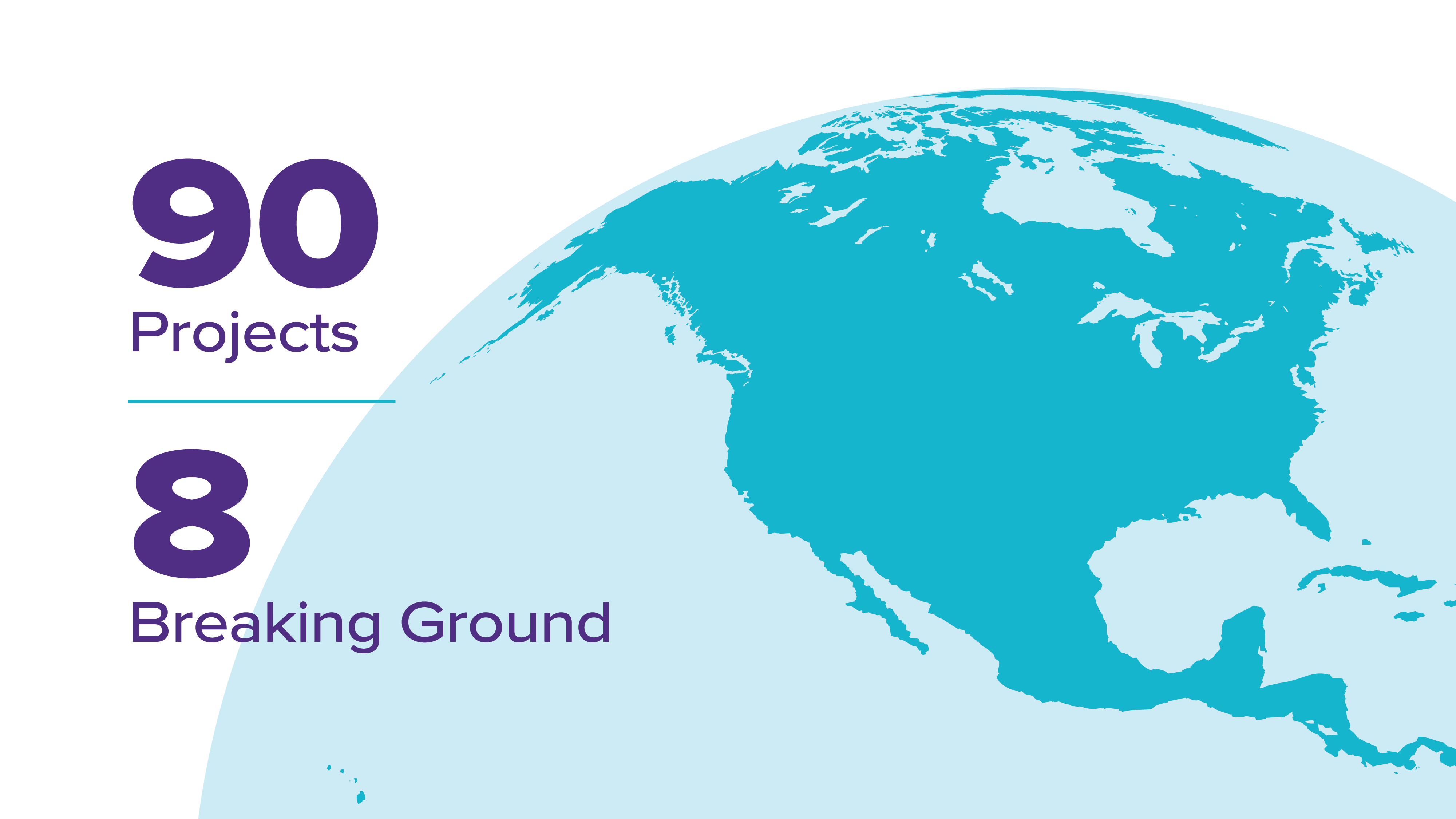
As we speak:
- 90 projects are in development across North America;
- 8 are already breaking ground;
- With many aiming to start by 2030.
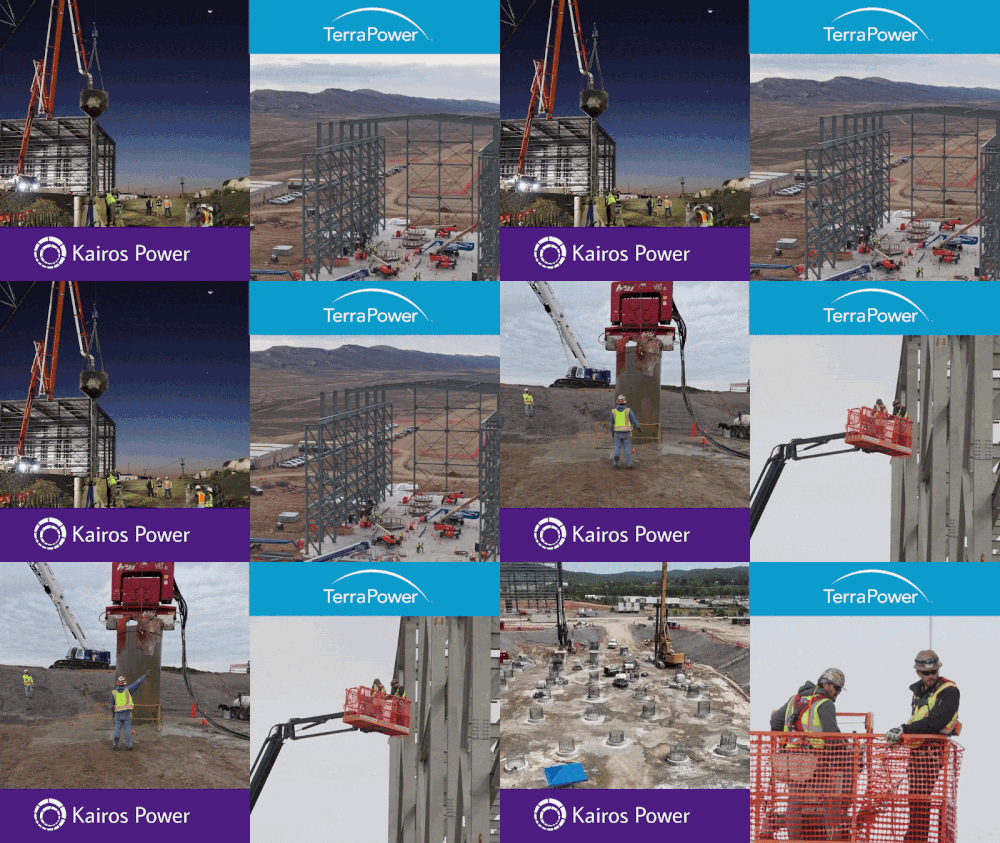
Last month, just days after Kairos Power broke ground on its Hermes 2 reactor in Tennessee, TerraPower and Bechtel began construction on the Natrium reactor in Wyoming.
I can't remember the last time we've had a week like that.
So, the question before us is not whether we can build— it's clear we can.
The question before us now is whether we have what it takes to build at scale.
And when I look across our industry—
- At the innovation we've demonstrated,
- The capital we've attracted,
- And the construction we've started— the answer is yes.
Today, the state of the nuclear energy industry is strong and getting stronger.
While I stand here as the President and CEO of NEI, many of you know that my background is in engineering.
And if I've learned one thing, it's this:
Invention is the beginning, not the end.
Whether solving problems or improving solutions, adapting to change or driving it — innovation is essential to accelerating expansion.
We can't scale if we think small.
This is a policy conference, so let's start there.
Politicians have long been advised to campaign in poetry and govern in prose.
But what we have seen this past year is leadership with purpose.
States, for their part, are on the cutting edge of change.
- Indiana enacted the nation's first 20% nuclear manufacturing tax credit.
- Utah made progress on Operation Gigawatt— their plan to double the state's power production with clean, reliable energy.
- New York has committed to 5 GW of new nuclear.
- Illinois, already the biggest fleet in the nation, plans to get even bigger.
- So far this year, thirteen governors have championed nuclear in their State of the State addresses — more than ever before.
- Since Texas established a new nuclear office to coordinate its projects, eight other states have introduced similar legislation.
- And all six New England governors signed on to a regional commitment to explore advanced nuclear.
- Leaders from these states and more have joined us today. Thank you, all.
Leaders in Washington, meanwhile, have made a decision:
The United States should lead the world on nuclear energy.
The Trump Administration has set an ambitious goal to quadruple U.S. commercial nuclear capacity by 2050.
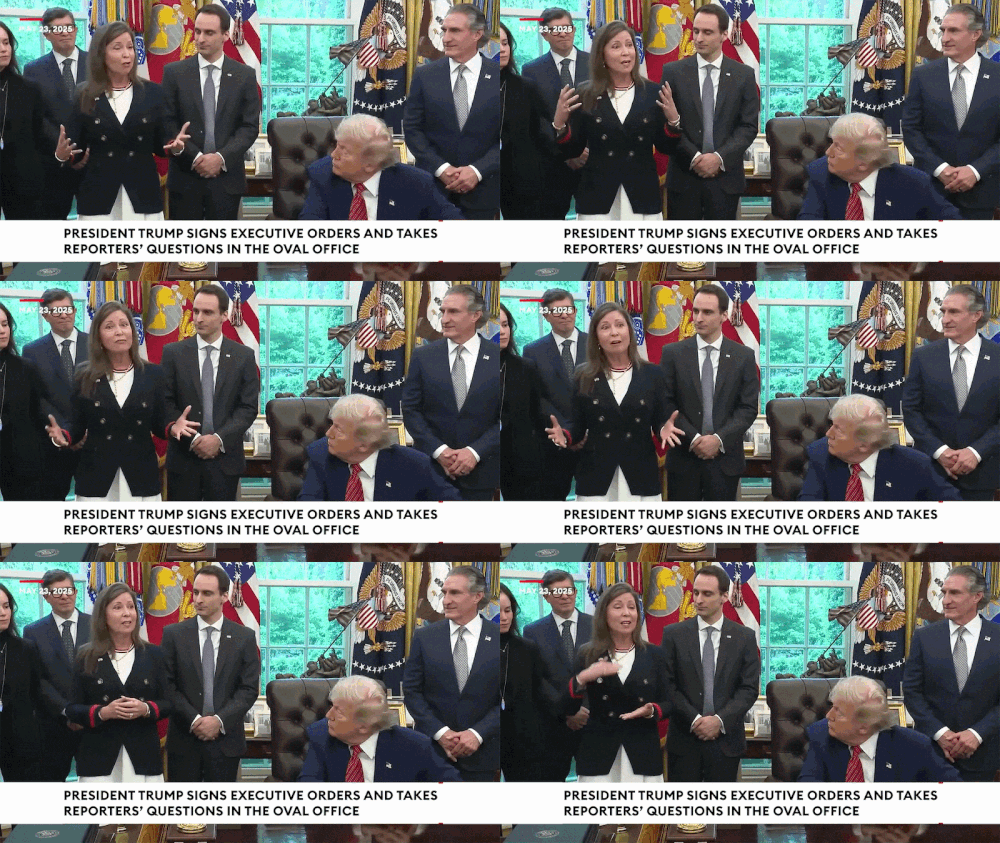
Shortly after I delivered my last State of the Industry remarks, I was honored to join President Trump in the Oval Office as he signed four executive orders to accelerate nuclear deployment.
These orders reflect what our industry has long called for:
- Government support to restart and construct nuclear plants,
- Modernize the NRC,
- Expand the nuclear workforce,
- Strengthen the domestic fuel cycle,
- And export nuclear technology abroad.
We are seizing this moment.
- Already, Westinghouse is working with the U.S. government to implement the Administration's objective of having ten large reactors under construction in the United States by 2030.
- The Department of Energy is also reviewing a financing proposal involving billions of dollars' worth of long-lead equipment for several U.S. utility companies interested in AP1000 deployment.
- Ten other companies were selected for the Department of Energy's Reactor Pilot Program.
Fittingly, they're working to achieve criticality by the Fourth of July.
- Then there's the Nuclear Energy Launch Pad, which will continue the advanced nuclear deployment work that the reactor pilot program started.
Four technology developers have already been selected.
And the U.S. military is developing its nuclear capabilities as well:
- The Navy is exploring onshore SMRs,
- The Army is building out its microreactor program,
- The Air Force just selected Radiant, Westinghouse, and Antares to help them do the same.
- Plus, a prototype mobile microreactor is being built in partnership with BWX Technologies under Project PELE.
Throughout my remarks today, you'll hear examples of how the Trump Administration's support is unlocking industry activity— and vice versa.
This includes taking steps to address a long-standing need: an integrated approach to used fuel management by leveraging advancements in recycling technology and innovative reactor design.
That's how it should work:
Powering the future requires all hands on deck.
One of President Trump's orders focused on the NRC.
I want to talk about that for a minute.
If quadrupling nuclear capacity is our moonshot, regulatory change is our launchpad.
Without systems built for the future, even the best innovations never get off the ground.
That's why, today, modernization is happening across the entire nuclear regulatory framework.
All I can say is: It's about time.
According to a survey conducted by NEI, utilities with nuclear today are pursuing license renewals at 20 plants and power uprates at 29 units.
Our utility members also have 23.4 gigawatts of new nuclear planned over the next 15 years.
There is every reason for the NRC to shift into high gear, because we're going to need a lot more than what I just mentioned to quadruple nuclear capacity and meet the President's goal.
To help, Washington is responding to our call for change.
The ADVANCE Act was passed with broad support on both sides of the aisle — and President Trump's Executive Orders added urgency.
Lawmakers are speaking with one voice: It is time for the NRC to modernize.
Last year, NEI weighed in to help move things forward and submitted to the NRC 100 recommendations
to fix more than 1,000 outdated regulations and guidance documents.
Already, we are seeing progress:
- Subsequent license renewal timelines and estimated review timeframes have been cut by more than 50%.
- New changes to the Reactor Oversight Process will reduce baseline inspection hours by 40%.
- We're accelerating approvals while ensuring environmental protections remain in place.
- And this Spring, the NRC issued frameworks more flexible and better suited to advanced reactor designs and high-volume deployment.
The results speak for themselves:
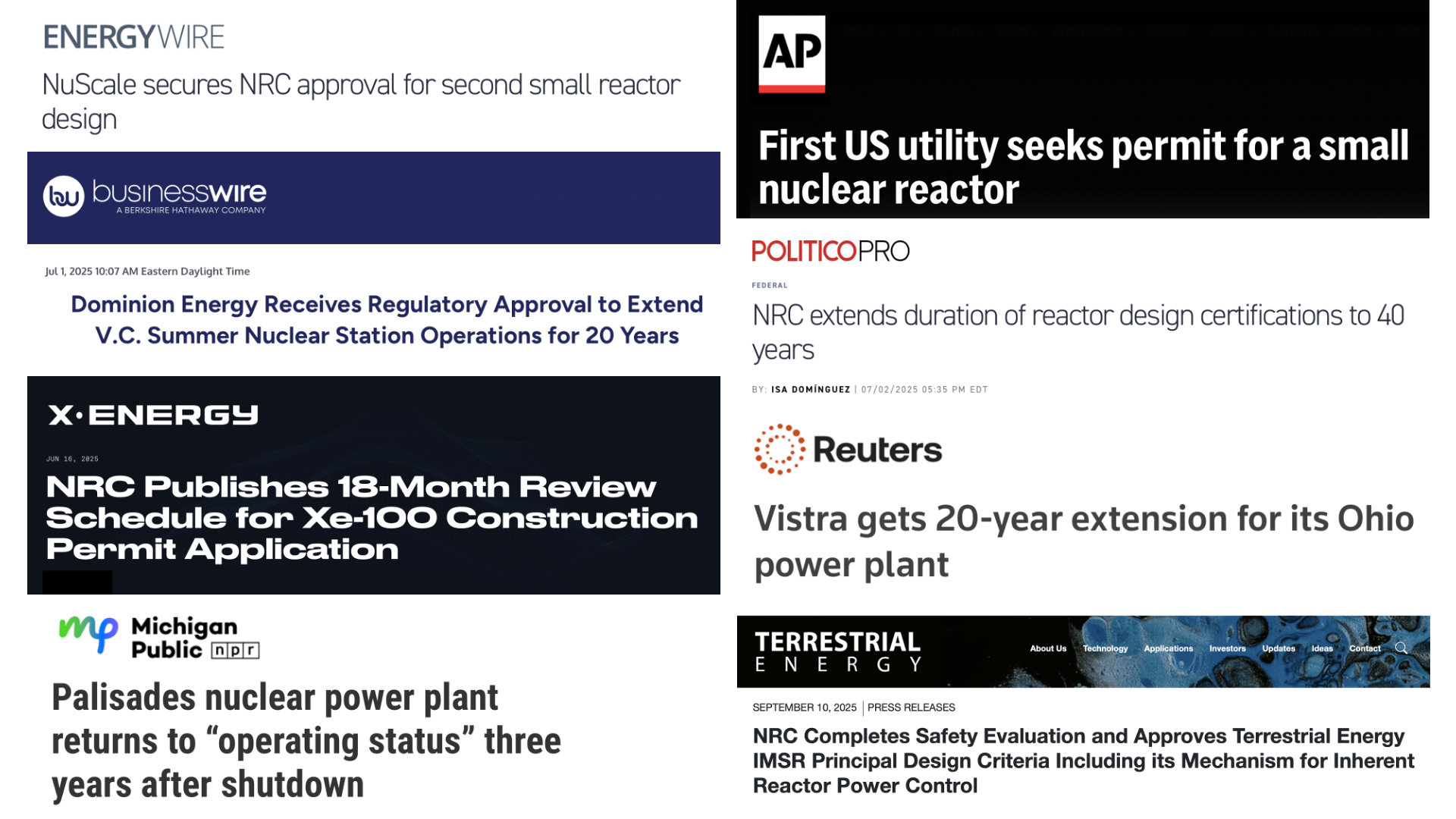
- The NRC is now routinely beating their review timelines for advanced designs, including Kairos' Hermes demonstration reactor and X-energy's XE-100 Reactor.
- TerraPower's Natrium Reactor review was completed in 18 months— nine months ahead of schedule. Their construction permit approval was the first for a non-light water reactor in half a century.
- And just last month, the NRC completed the fastest ever license renewal for Duke Energy's Robinson Unit 2, and they intend to replicate that schedule for future renewal applications.
Here's the truth:
We cannot address 21st century challenges with a 20th century rulebook.
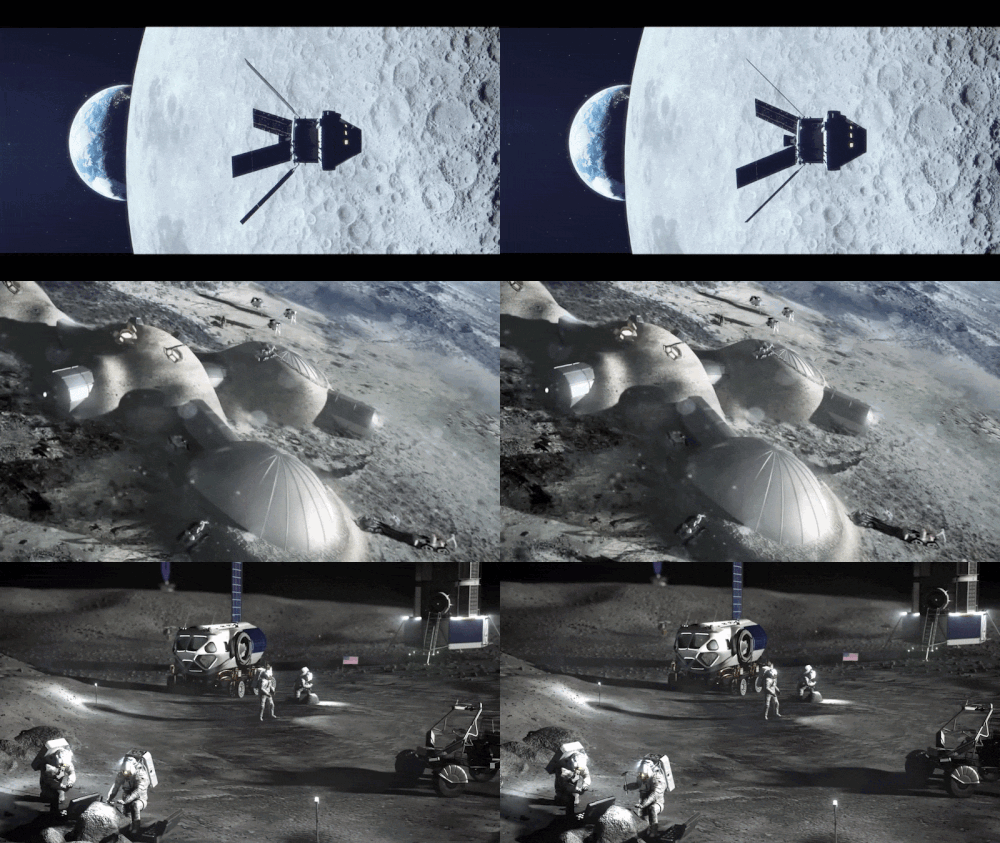
This is exactly the kind of upward motion we need to plant our flag on the moon.
(And I mean that literally by the way. NASA is planning to build a lunar surface reactor by 2030.)
I want to acknowledge all those who have long advocated that safety and efficiency go hand in hand.
Your persistence is paying off.
Thank you!
Now to the global stage, where innovation can be found through partnerships.
- We signed a major trade agreement with Japan.When the Japanese Prime Minister visited Washington earlier this year, she announced that Japan will invest in SMRs built by GE Vernova Hitachi.
- GE is also building four BWRX-300 reactors in Ontario.
- And Poland has secured financing to build its very first reactor in partnership with Westinghouse and Bechtel.
- After signing a series of landmark agreements with the U.S., including some commercial agreements with nuclear developers, the United Kingdom created a framework for bringing advanced nuclear to market.When we export our technologies, we see high returns at home, and we set high standards globally.
- Countries like Canada, Hungary, and Bulgaria are working to expand their nuclear energy capacity.
- Others like Taiwan and Italy are reversing course and looking to restart their nuclear programs.
- Then there's countries like the Philippines, El Salvador and Saudi Arabia that are new to nuclear and taking steps to get started.
- And in Finland, where I visited last year, the world's first deep nuclear repository will soon be operational.And Sweden will be soon to follow.
I want to underscore these achievements.
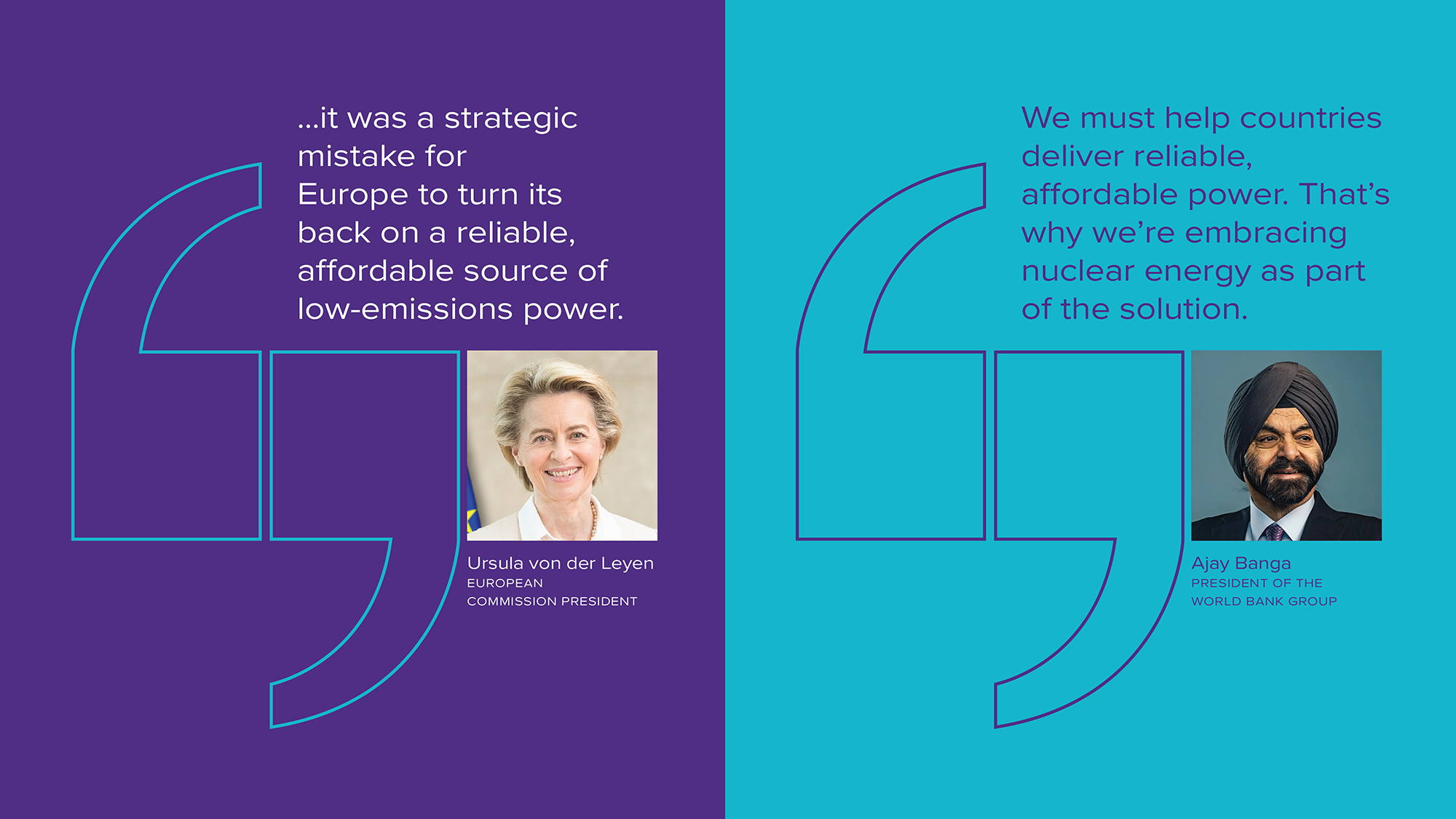
Recently, European Commission President Ursula von der Leyen said that it was "a strategic mistake for Europe to turn its back" on nuclear.
And when the World Bank ended its longstanding ban on nuclear, President Ajay Banga described the change as long overdue.
I've travelled around the world over the last year, so I can attest: They're not alone in this realization.
With threats to energy security and opportunities for greater prosperity, leaders worldwide have come to the same conclusion:
Nuclear is the way forward.
Which brings me to investment.
We need dollars to follow declarations.
Today, we are on the edge of a real breakthrough… of building at the scale required to power our future.
Our industry is ready.
But it will take government funding, private-sector capital, and international buy-in to achieve our goals.
On government funding…
The U.S. government has made serious commitments over the past year:
- $80 billion pledged for the construction of Westinghouse AP1000 reactors;
- $2.7 billion awarded to Orano, General Matter, and Centrus to strengthen domestic uranium enrichment;
- $2.5 billion slated for Constellation to restart Crane Clean Energy Center and Holtec to restart Palisades;
And I could keep going.
And that's just the federal government, at the state level:
- Texas opened a $350 million nuclear grant fund;
- Tennessee has secured more than $90 million for nuclear companies, on top of $60 million that had already been invested by the state;
- Wyoming has announced $100 million to support a new fuel fabrication facility;
And again, I could keep going.
These commitments are the foundation upon which we must build.
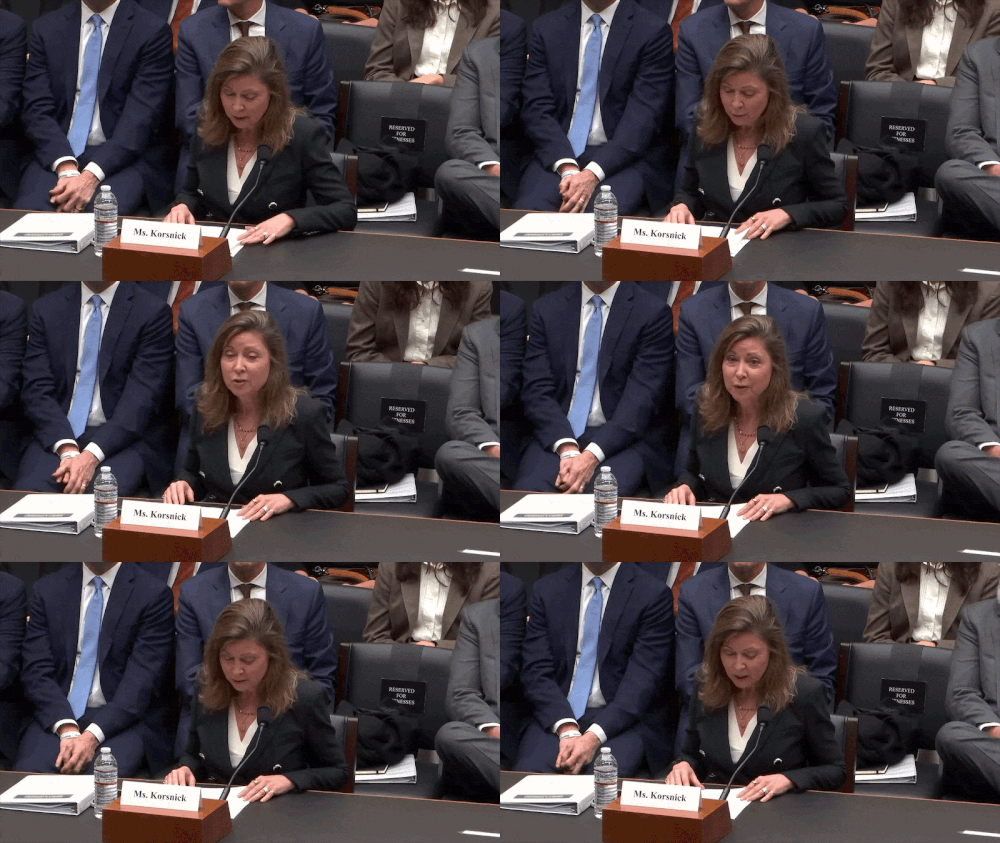
Earlier this year I testified in front of the U.S. House Committee on Energy and Commerce.
There, I explained the flywheel of first-of-its-kind projects:
Developers need certainty; certainty depends on managing risk; and managing that risk requires government support.
The bipartisan ARC Act was recently introduced by Senators Risch and Gallego.
It would help early movers build orderbooks for new plants and bring down construction costs in the process.
I believe I speak for everyone gathered when I say: Congress, we urge you to pass this bill.
Last June, Congress, with support from the Trump Administration, protected the nuclear tax credits.
These tax credits have helped our industry retain and grow the nation's nuclear capacity.
They have also helped consumers. I know affordability is top of mind for many, so I want to share an example.
- Duke Energy operates 11 units across six sites in the Carolinas.
- Their plants deliver reliable power to 8 million homes in a region prone to heavy storms.
- And now Duke is passing $600 million in savings from nuclear tax credits directly to consumers to help lower electricity bills.
Thanks to the tax credits, Americans can count on nuclear in more ways than one.
In April, Representatives Harrigan and Panetta introduced bipartisan legislation called the Nuclear Rate Stabilization Act.
It will strengthen the existing credits— helping utilities move projects forward and keep costs down for consumers.
Again, we say: Congress, please pass this bill.
So, that's government funding— onto private capital…
Morgan Stanley now projects $2.2 trillion in nuclear investments through 2050.
- That's a 47% increase from last year's projection.
- At that rate, we will be at more than $3 trillion this time next year.
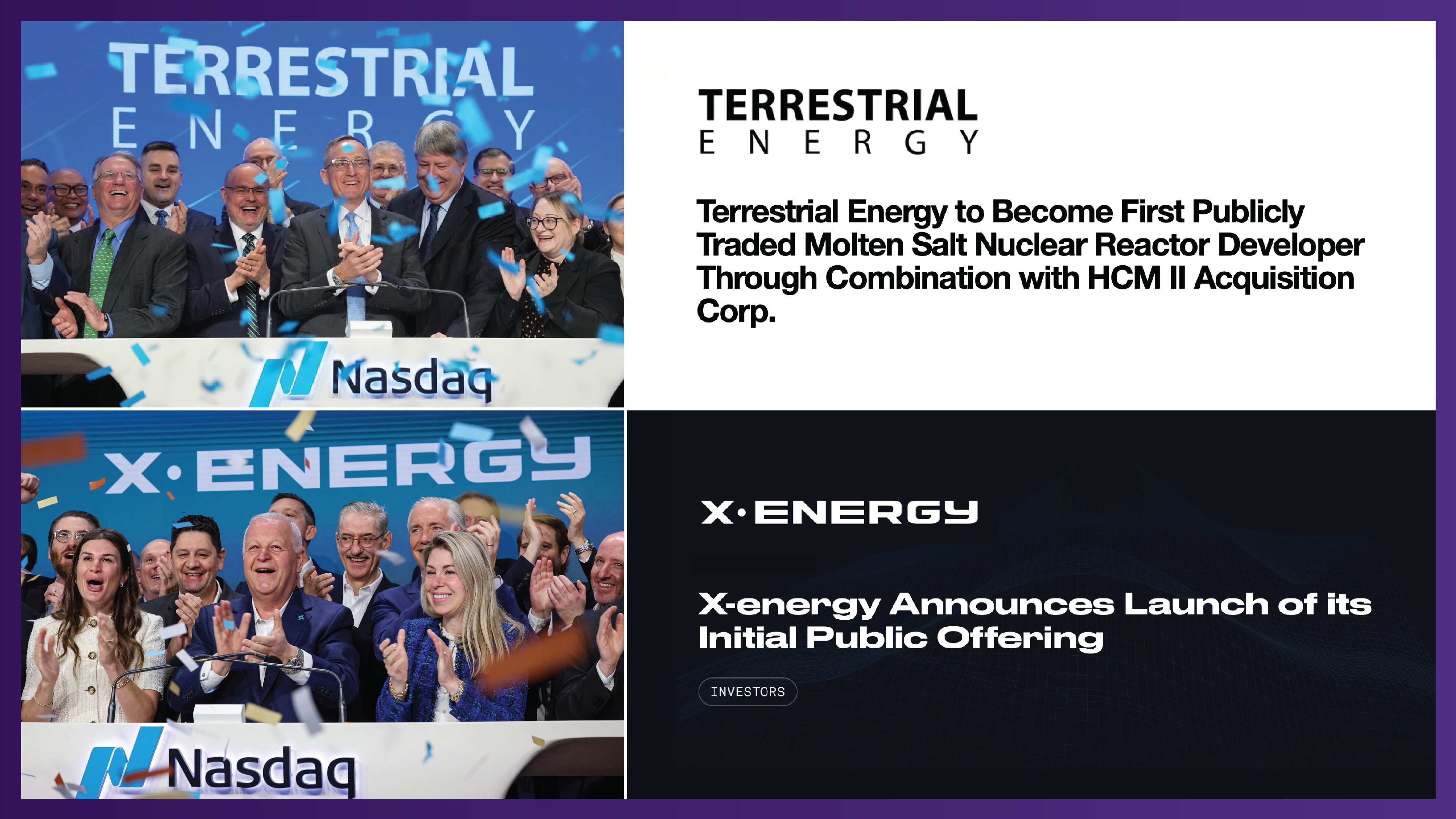
Nuclear startups raised nearly $3 billion in 2025.
- After Terrestrial Energy went public last year, X-energy went public last month.
- Raising more than $1 billion, it was the largest nuclear public offering on record.
- And just weeks ago, Brookfield and The Nuclear Company formed a brand-new joint venture to execute Westinghouse designs, including V.C. Summer in South Carolina.
As impressive as this all is… it isn't the finish line, it's the starting line and we need to get moving.
Big Tech now has 40 gigawatts of nuclear power in the pipeline:
- Meta announced landmark deals with TerraPower, Oklo and Vistra.
- Google reached an agreement with NextEra to restart their Duane Arnold plant in Iowa.
- And Kairos Power is collaborating with Google and the Tennessee Valley Authority to power data centers.
- Amazon has invested more than a billion dollars in nuclear projects.
Again, incredible, but not the finish line.
These investments hinge on and have spurred on investments in a stable, secure domestic fuel supply:
- To date, Urenco has attracted $5 billion in private capital for its National Enrichment Facility.
- Global Laser Enrichment has announced plans to invest $1.8 billion for an enrichment facility in Paducah, Kentucky.
- And LIS Technologies has announced plans to invest $1.4 billion toward a uranium enrichment facility in Oak Ridge, Tennessee.
Again, there is still more we must do— for the good of our nation and its security.
On international buy-in…
Earlier, I mentioned Japan's $40 billion investment for SMR construction in Tennessee and Alabama.
But that's only one model for investment.
- Right now, Amazon and X-energy are working with South Korean companies to mobilize $50 billion to expand the supply chain.
- South Korean companies are also manufacturing components for the TerraPower reactor under construction.
This is exactly what we need: Quadrupling nuclear output may be a domestic priority, but it is a global project.
As important as financial investments are, if our industry is going to go the distance, we have to invest in our people, too.
The reality is:
.gif?language=en-US "SNC (1)")
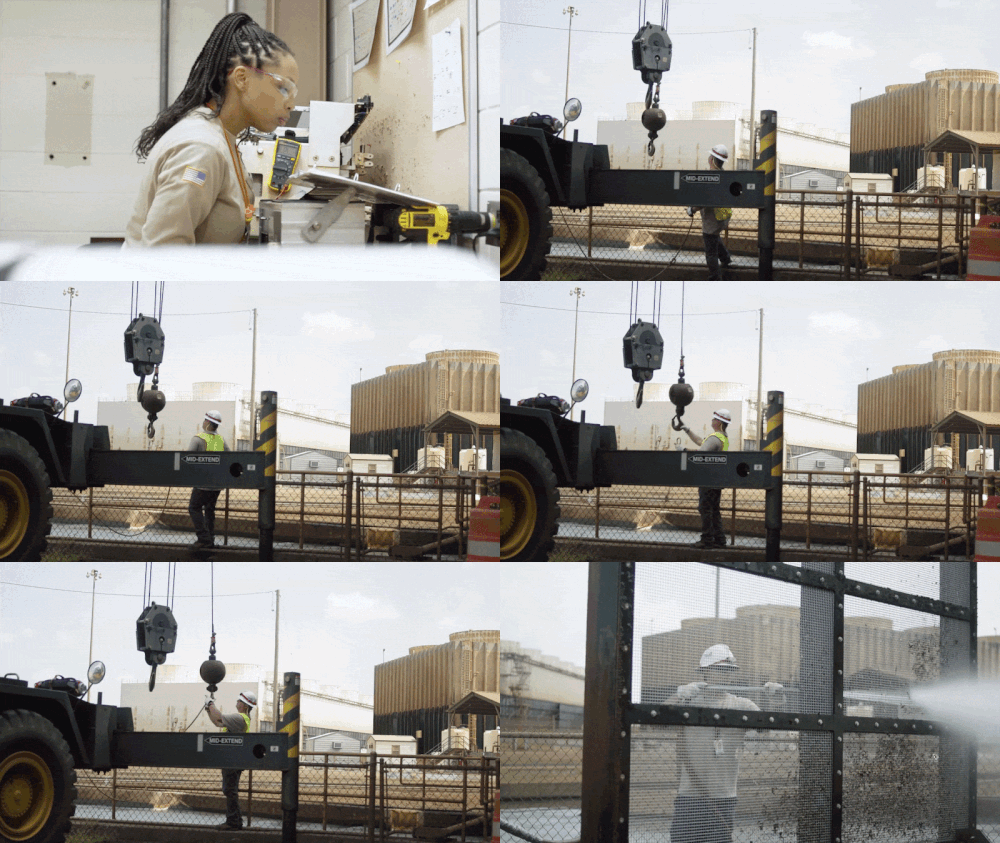
We need to triple our workforce by 2050.
And that's going to take some work.
It's been three years since Vogtle Units 3 and 4 came online.
And they were built by more than 8,000 members of North America's Building Trades Unions.
Today, the union is seeing their greatest increase in apprenticeship programs since the 1950s.
And we are working closely with them as we scale.
I meant what I said at earlier:
We are building… but it's just a start.
We can and must unleash a wave of new projects that will move us down the cost curve in the U.S. and unlock more opportunities globally.
The goal here isn't one and done; it's many and multiplying.
Today's 94 licensed nuclear power reactors operating in the United States generate almost 20% of the nation's electricity.
The work we have underway now will grow that share — and help guarantee clean, reliable energy well into the future.
First, we are restarting plants that were once closed.
- For the first time ever, the NRC approved the restart of a reactor: Holtec's Palisades in Michigan.
- It is scheduled to come back online later this year.
- Constellation's Crane Clean Energy Center in Pennsylvania is set to restart in 2027.
- And Duane Arnold will follow in 2029.
We are showing the nation: Plants are built to last.
Second, we're reinforcing existing plants with new technologies.
- Limerick Units 1 and 2 in Pennsylvania have been approved to digitize their control systems.
- This first-of-its-kind retrofit proves it's possible to make these powerful assets even more resilient.
Third, we're re-imagining our approach to construction— so we're not just working harder, we're building smarter.
- Through the Genesis Mission, teams of scientists and engineers are determining how best to leverage AI to advance nuclear.
- And Microsoft and NVIDIA just announced a partnership to create new generative AI tools for the nuclear industry— to make permitting more efficient and easier to replicate.
- We're already seeing promising results.
Finally, and most importantly, we are breaking new ground on advanced nuclear projects.
We've talked about TerraPower's Natrium reactor in Wyoming.
We've talked about Kairos' Hermes reactor in Tennessee.
Let me end with one more: The Natura M-S-R.
In the early 1950s, the president of Penn State had a familiar last name: Eisenhower.
Milton shared his brother Ike's belief in the promise of nuclear energy, and he backed a powerful idea: a reactor on campus.
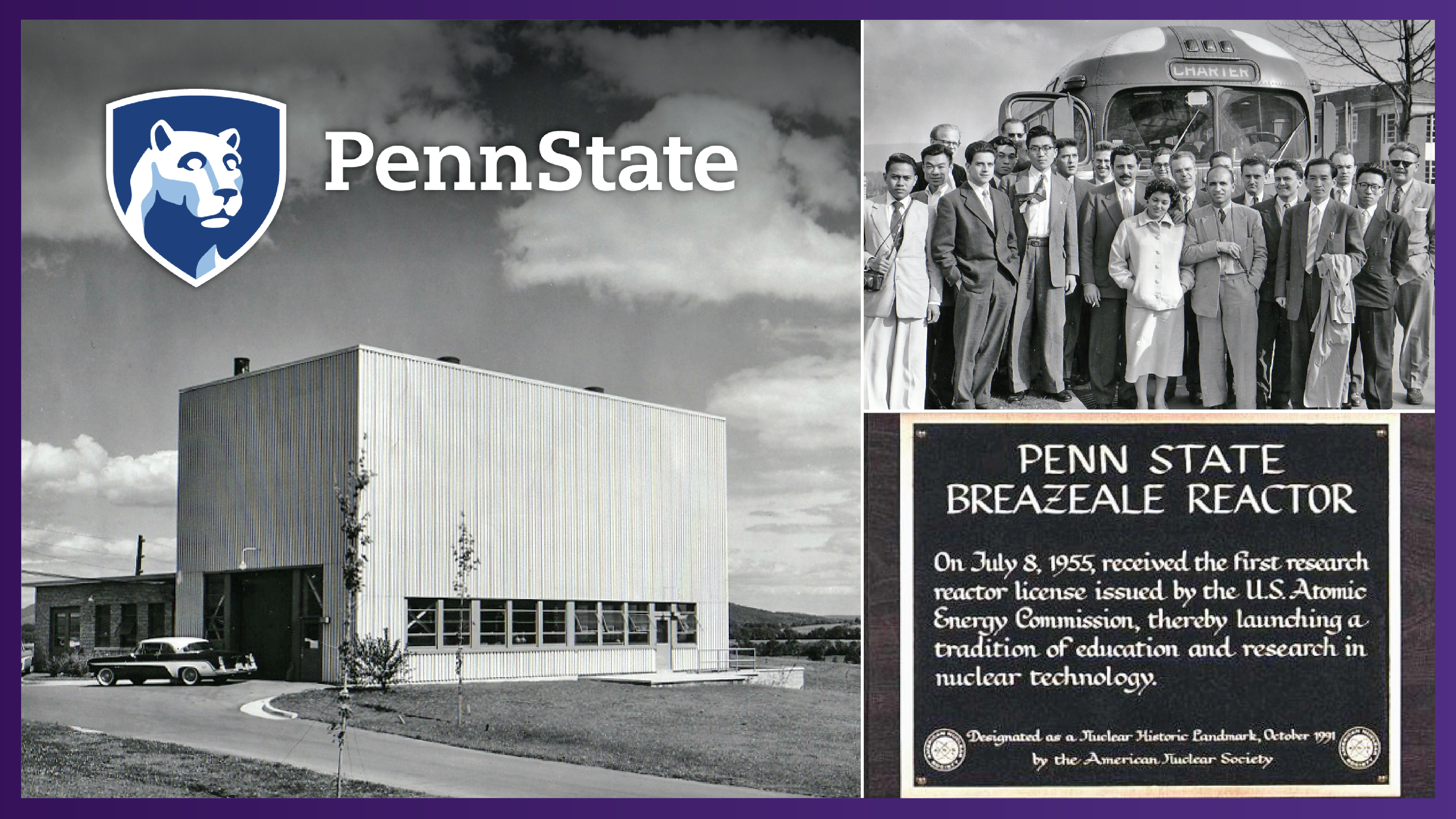
In 1955, Penn State's Breazeale Reactor was among the first at an American university to reach criticality.
Today, it remains the oldest licensed reactor in the nation.
For more than 70 years, it has helped drive new technologies, inform new regulations, and inspire new generations to join our industry.
Fast-forward to a new century, and a similar story is beginning.
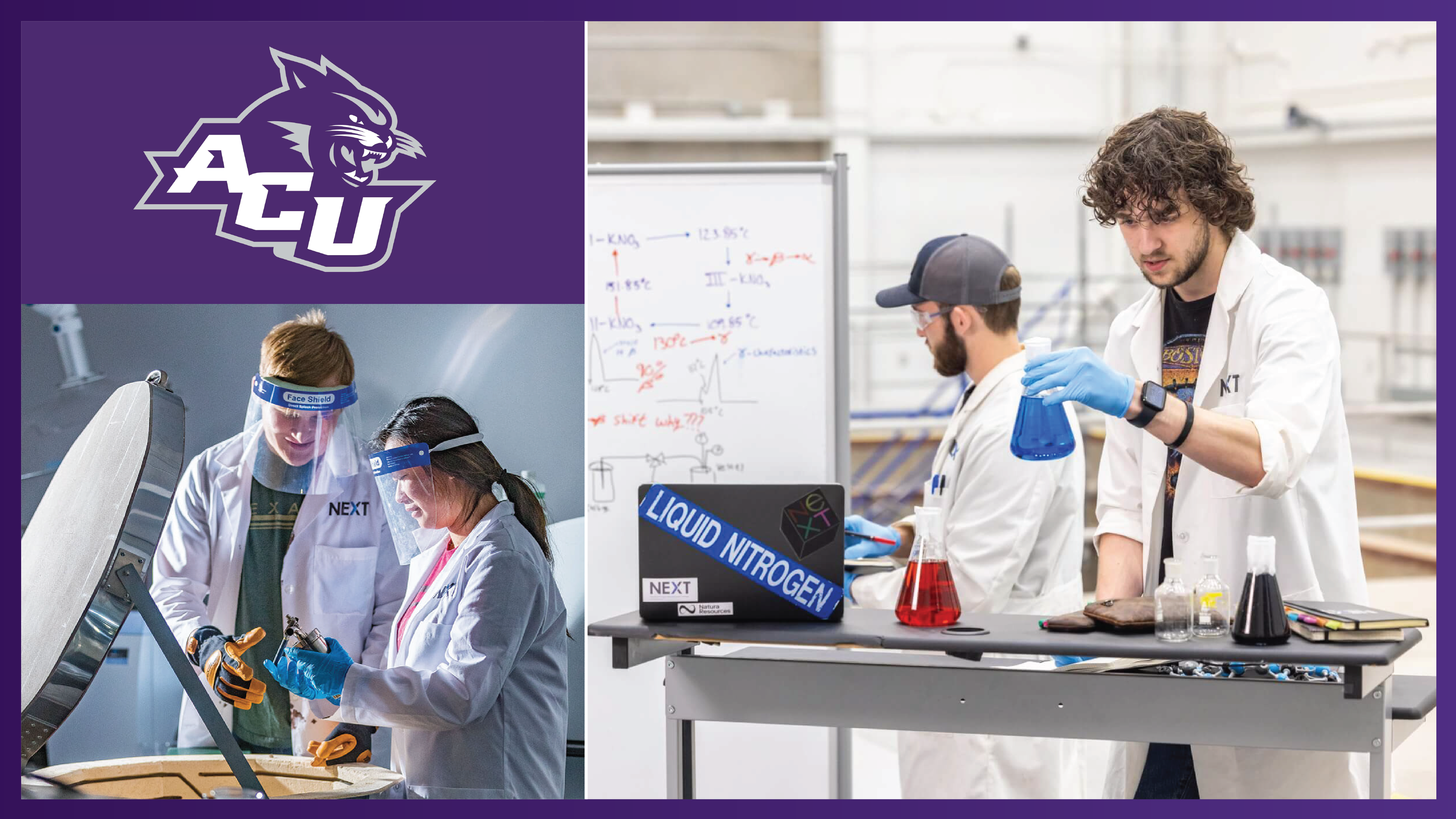
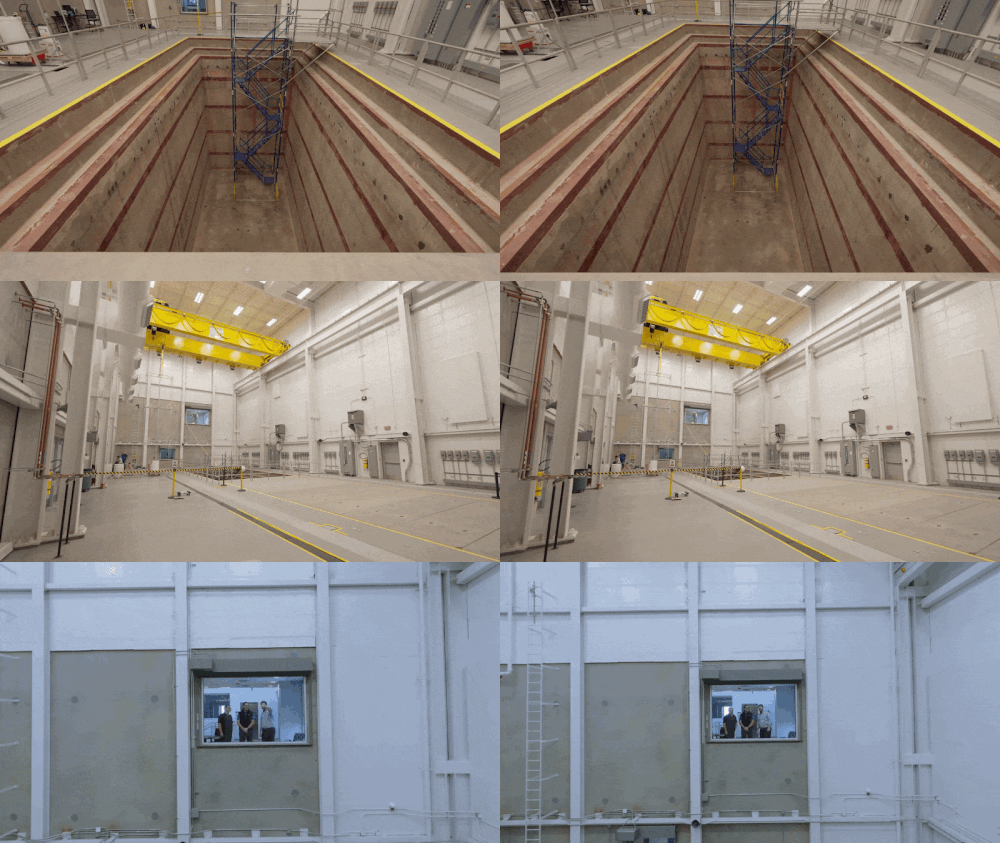
Some 1,500 miles from University Park, students at Abilene Christian University are now working alongside scientists and engineers to build a molten salt research reactor.
.gif?language=en-US "Natura (1)")
The Natura M-S-R is the
first of its kind to be licensed— and the first new university research reactor to be approved in decades.
I am confident that, 70 years from now, whoever sits in this room or stands on this stage (for that matter)...
Will be able to point to the generational impact of this project— and the generational energy it created.
This is the nuclear way.
It's the American way.
Nuclear energy is, in every sense, a great American experiment.
We could not anticipate the full potential, but we developed reactors anyway.
- Through highs and lows, we did not give up.
- Through support and skepticism, we refused to give in.
Because of that persistence, today, nuclear energy is not just a product of American innovation; it is a producer of it.
- Nuclear energy is a testament to policymaking.
- It's a driver of opportunity.
- It's a prerequisite to security.
It's a pillar of America's strength.
And it can stand the test of time.
As we look back on 250 years of history, it's clear that nuclear energy will make the next 250 possible.
That is, it can… if we are willing to do what it takes.
We have shown what's possible— and now, we must scale.
Today, we stand at the precipice.
- So, let us dare, so generations-to-come can dream.
- And let us build, so generations-to-come can build upon.
If we do that, I promise: Nuclear will make the future happen.
Thank you, all.
.png?language=en-US)