
- Nuclear power plants are among the most robust U.S. civilian infrastructure
- All nuclear plants in region continue to provide electricity through monster storm
- Two reactors in Alabama reduce power as precaution
In the wake of Hurricane Michael, nuclear power plant operators in the affected region continue working hard to keep their communities safe and powered. As the hurricane passed through Florida, Alabama and Georgia, operators implemented their well-rehearsed emergency response plans.
Nuclear power plants have several layers of safety-related equipment including steel-reinforced concrete reactor containment structures, and are the most robust facilities in the U.S. energy infrastructure. They are designed to withstand extreme natural events including hurricanes, earthquakes, flooding and tornadoes. They also are able to provide electricity to homes and businesses as soon as off-site power is restored and the electricity grid can accommodate the power.
Each facility prepares an emergency response plan with one goal in mind: to protect their communities and employees. The federal government approves these plans, and plant personnel test them frequently to identify areas of improvement.
Nuclear Power Plants in the Path of Hurricane Michael
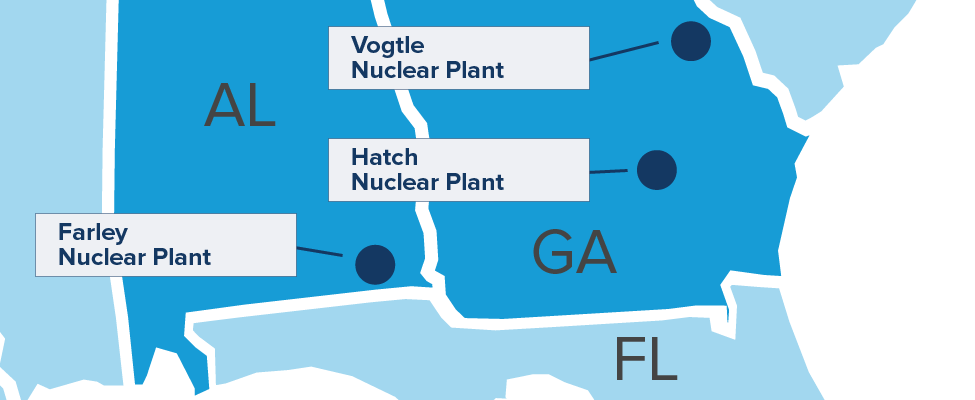
Nuclear power plants in the path of Hurricane Michael have implemented these plans where warranted, and are continuing to monitor conditions as the storm passes through. Their activities include:
- Southern Nuclear, which operates several nuclear plants in the region, have staffed their emergency response organizations (EROs) at all their sites. ERO staff augment on-shift staff and are prepared to relieve them, if necessary.
- The Joseph M. Farley Nuclear Plant, located near Dothan in southeast Alabama, reduced power for units 1 and 2 as “a precautionary safety measure.”
- In addition, the Nuclear Regulatory Commission activated its regional Incident Response Center and monitored the hurricane as it passed over Farley. The NRC said that the plant does not plan to shut down and that no hurricane force winds are being expected at the site.
NEI has more resources on the industry’s emergency response protocols, including a historical look at recent extreme natural events, as well as last month’s Hurricane Florence.