

- Nuclear energy and renewables critical to clean energy future
- Environmentalists, states recognize the climate, clean air benefits of nuclear energy
- ZECs, like renewable portfolio standards, compensate plants for carbon-free electricity
Environmentalist Norris McDonald advocates for nuclear energy because he knows the value of clean air firsthand.
“I’m a chronic, acute asthmatic,” McDonald says. “I’ve almost died twice from asthma. I was intubated for four days each time, in 1991 and 1996.”
McDonald is founder and president of the African American Environmentalist Association and of Environmental Hope and Justice, organizations that seek to protect those most vulnerable to the negative effects of pollution, such as the poor and communities of color.
“I take the smog issue very seriously because of the thousands of people who have died from asthma and other respiratory failures from smog pollution,” he says. As a new global air pollution study shows, 95 percent of the world’s population breathes polluted air and the poorest communities are most affected by unsafe air quality.
“I don’t have to wait for the threat of climate change. I have a threat right here, right now and so that’s how I come at this issue.”
When it comes to fighting air pollution and climate change, “if it’s emission-free, I’m pretty much for it,” he adds. “I would have thought that the climate change issue would have converted all the environmental groups because nuclear energy is your biggest weapon in that war.”
McDonald’s sentiment is gaining traction across the country. If we truly value clean air and protecting the climate, the clean energy conversation must include nuclear as well as renewable energy.
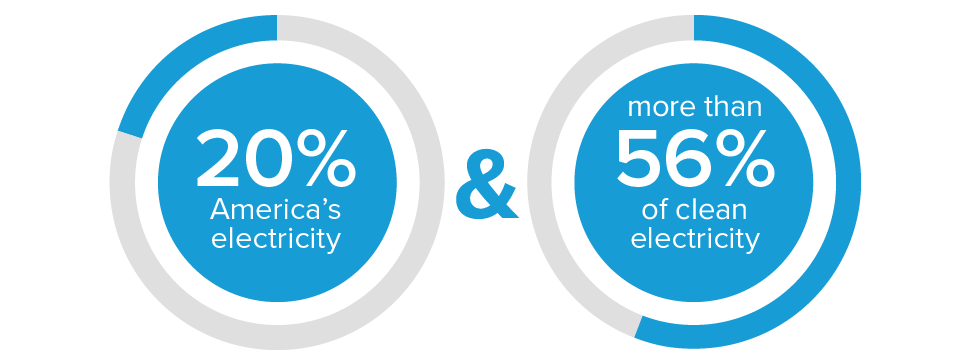
More than 56 percent of all electricity generated without carbon emissions in the United States comes from the country’s 99 nuclear power plants. Plus, those nuclear plants provide about 20 percent of all the electricity generated in the U.S. They save our atmosphere from more than 555 million metric tons of carbon dioxide emissions every year that would otherwise come from fossil fuels. That’s the same as taking 117 million passenger vehicles off the road.
Bob Perciasepe, president of the Center for Climate and Energy Solutions, strongly believes that nuclear energy and renewables belong in the same conversation.
“If we’re looking at zero emissions or near-zero emissions from electricity generation toward the middle of the century, you cannot do it without a lot more renewables and without maintaining and growing nuclear.”
Nuclear plants across the country have recently come under pressure as more plants announce the threat of premature closure due to markets conditions. FirstEnergy Solutions Corp. will be forced to shut down its plants in Ohio and Pennsylvania, barring any state or federal action. Combined with the announced closure of Exelon Corp.’s Three Mile Island, this spells bad news for decarbonization efforts as these plants avoid over 21 million metric tons of carbon emissions, equivalent to 4.5 million cars.
Research firm The Brattle Group recently released a report on the effect of shutting down the Ohio and Pennsylvania plants and they estimate that the power they now provide will be replaced by electricity from fossil fuels. Unfortunately, this has happened before. After Vermont Yankee closed in 2014, the New England grid operator reported an increase in carbon emissions the next year.
Some environmentalists support renewables to the exclusion of nuclear energy. Stanford University professor Mark Jacobson co-authored a 2015 study that claimed the U.S. electrical grid could be powered entirely with wind, solar and hydropower, without nuclear or other sources. But last year, twenty-one climate scientists rebutted Jacobson’s findings—and they aren’t alone in thinking the answer must go beyond renewables and include all clean energy solutions.
The centrist think tank Third Way released a report last week warning that the loss of nuclear plants is a loss for renewables, because of the shared goal of preventing climate change.
“At the end of the day, two things really matter in the fight against climate change: growing our total zero-carbon energy production so we can shift away from fossil fuels, and doing it quickly. If we allow today’s zero-carbon nuclear power to disappear from the grid, much of the growth in renewable power that we’re working so hard to accelerate will be wasted, and precious years will be lost in the process.”
Josh Freed, director of Third Way’s clean energy program, thinks that there is a growing appreciation for every carbon-free solution available, including nuclear.
“I wouldn’t call it a consensus, but I would say that there is a growing coalescence around [using] every zero-carbon tool we have,” Freed says. When it comes to reducing carbon emissions, “we need every zero-emissions tool in the toolbox to get us there.”
Even David Roberts, energy writer for Vox and noted nuclear energy skeptic, joined the chorus saying that closing nuclear plants would harm climate change efforts.
“When an operating nuclear plant shuts down, a big chunk of carbon-free energy is lost. A big chunk. There’s just no way to spin that as a good thing,” Roberts writes. “No matter what it’s replaced with, the loss of carbon-free energy is a tragedy, a blow to climate change efforts when there is no time to lose.”
State legislatures are waking up to these consequences and beginning to take action. Last week, the New Jersey Legislature passed a bill to join New York and Illinois in compensating nuclear plants for their carbon-free electricity production using zero-emissions credits (ZECs).
New Jersey’s legislation “levels the playing field for nuclear energy with other carbon-free energy sources. The clean energy benefits from this action are significant,” said NEI President and Chief Executive Officer Maria Korsnick.
Zero-emission credits parallel the renewable energy credits received by wind and solar under many state policies, under renewable portfolio standards. The credits in New York and Illinois and the proposed program in New Jersey extend similar compensation to nuclear plants, aiming to correct markets that don’t properly value the benefits nuclear energy brings to air quality and the climate with reliable, zero-carbon electricity.
“Nuclear plants are paid for their electricity, but wholesale power prices have fallen dramatically over the last five years, leaving the plants’ future operation in doubt,” says a new NEI report on ZEC programs.
Unless the plants are compensated for the reliability and clean air that they provide, there will not be an incentive to provide those benefits.
The question comes down to whether we value carbon-free generation, no matter where it comes from. Nuclear energy provides the lion’s share of clean energy in the United States but many plants are suffering because of distorted markets.
Perciasepe put it bluntly.
“Given the fact that [existing nuclear plants] are already licensed, and they’re producing no greenhouse gases and other pollutants by the way, it’s a no-regrets strategy to keep them running now.”
If we value clean air and reducing carbon emissions, we must act to value and preserve our nuclear plants.