
- Time to process some nuclear export licenses has quadrupled since 1990s
- From an average of 130 days to over one year for special authorizations
- Rep. Johnson says lengthening export approval time could be inhibiting trade
A new study from the Nuclear Innovation Alliance (NIA) is calling for changes to the rules governing U.S. exports of commercial nuclear technology. The study says its recommendations could make these rules more efficient so that U.S.-based companies can compete better in the face of increasing international competition.
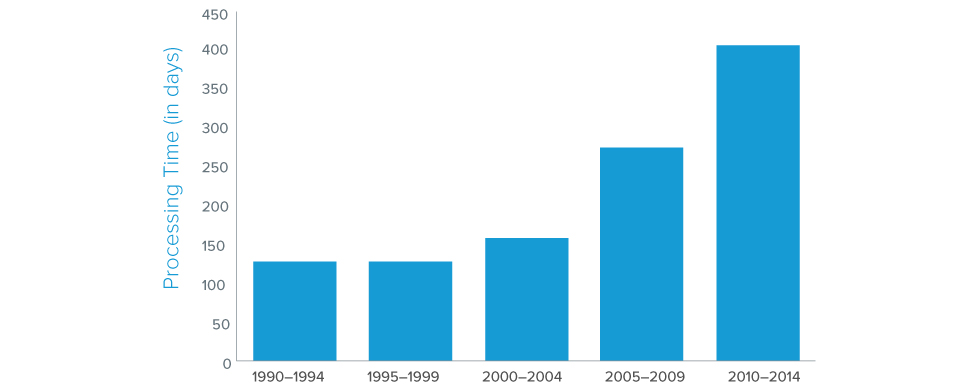
Inefficiency in the Part 810 approval process is not new. The report notes that in the 1990s, specific authorizations for commercial nuclear exports took 130 days on average for the U.S. Department of Energy to process. Now, these authorizations take an average of almost 400 days to complete.
Average Processing Times for Specific Authorization Applications
 Source: DOE reading room
“The pace of the [DOE] 810 process may actually be inhibiting nuclear commerce,” Rep. Bill Johnson (R-Ohio) said at an event this week promoting the report’s release.
“That increased length in time is concerning, especially as countries like Russia are in a race with our domestic nuclear suppliers to convince other countries to use their nuclear technology over ours. I don’t know about you folks, but I prefer countries engaging with the United States rather than Russia and Vladimir Putin to meet their peaceful nuclear energy needs.”
Matt Bunn, professor of practice at the Harvard Kennedy School and co-principal investigator at the Project on Managing the Atom of the Belfer Center for Science and International Affairs, underlined the national security importance of a U.S. presence in international commercial nuclear markets.
I do think in the big picture, a U.S. role in the international markets is important. We have used that role effectively in the past.
The report includes several recommendations on how to improve DOE’s Part 810 regulations which govern commercial nuclear exports. One recommendation is that DOE re-examine the requirement that the energy secretary sign off on every Part 810 specific authorization without the ability to delegate this task.
“It doesn’t make sense to me for the secretary of energy to have to sign off on every action under Part 810,” NIA’s Senior Policy Fellow Matt Bowen said. “I don’t think this a good use of the secretary of energy’s time, taxpayers’ time.”
DOE recently demonstrated with Saudi Arabia that processing a Part 810 specific authorization need not make U.S. firms uncompetitive, by enabling US. companies to respond to a short-term request for information within 45 days.
Elina Teplinsky, a partner at Pillsbury Winthrop Shaw Pittman, pointed out that DOE is just one among five agencies that must approve a DOE 810 export authorization. As a result, DOE is held responsible for a process that it cannot adequately control.
“You have a difficult process to start,” Teplinsky said. “[The NIA report has] really common-sense proposals that if implemented would really make this process easier. … It would allow a lot of these low-sensitivity exports to be licensed and for companies to move forward.”
For the U.S. to be a leader in energy, it has to lead in commercial nuclear technology, Johnson said. He added that in order to lead in nuclear technology, an efficient, sensible system for approving nuclear exports must be in place.
“The nuclear industry is vital to both our domestic, economic security and meets our national security needs,” Johnson said. “That’s precisely why we must have a national discussion about the role of nuclear energy exports, as they can play a huge role in strengthening America’s strategic geopolitical ties with allies and friends around the world.”
Johnson added that he is working on legislation to make DOE’s 810 rules on exports more efficient, while retaining their strict security standards.
“It’s imperative that our civil nuclear industry remains both an important part of our domestic energy portfolio, as well as a vital tool in forging and strengthening strategic relationships with our friends and allies around the world,” Johnson said.
“These types of changes in the 810 process can help assure we sustain this momentum and it’s precisely the reason why I’m currently working on legislation that will seek improvements to this process.”