- NuScale developing reactor that stays safe without relying on human intervention
- Reactor also can change power output to work with renewable sources like wind and sun
- Small modular reactor can be augmented with new modules to increase power
Start out with a really new idea, and it can lead you to a lot of good places. The engineers at NuScale Power talked about those places one day recently when they held an open house at the company headquarters in Corvallis, Oregon, to talk to energy experts about their progress toward deploying a small modular reactor (SMR).
NuScale’s fundamental insight is that an SMR can be simpler to build and run than a large one, an approach that opens up new places to install it, new uses for clean energy and new capabilities to fit into a changing power grid.
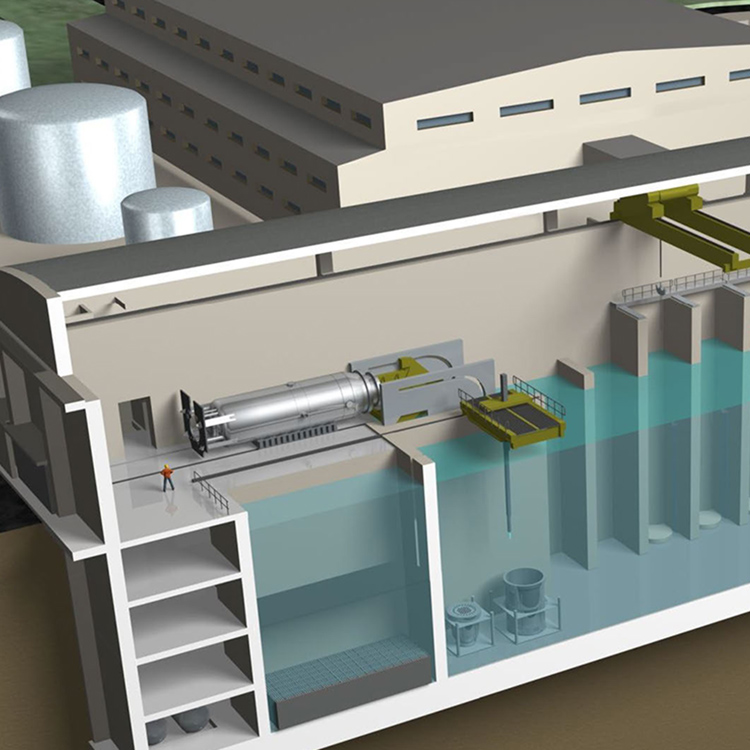
NuScale’s design is for a series of reactors, 60 megawatts of capacity each, about one-sixteenth the size of a large reactor. The design is a nested arrangement, like a matryoshka doll, with the reactor vessel inside a steel containment vessel, creating what NuScale calls its Power Module. The space between the reactor and the containment vessel is under vacuum, so the reactor stays hot, and the pool stays cool.
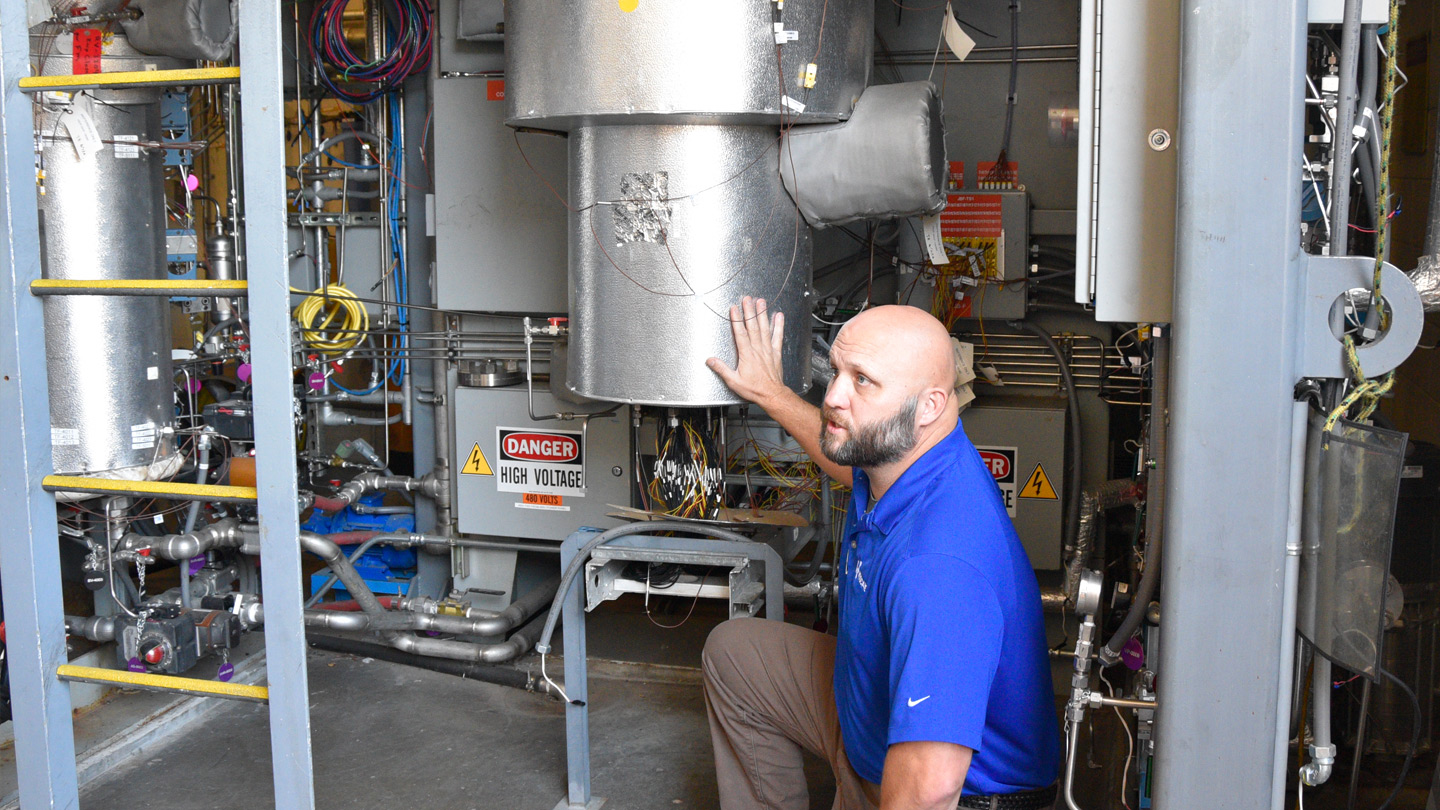
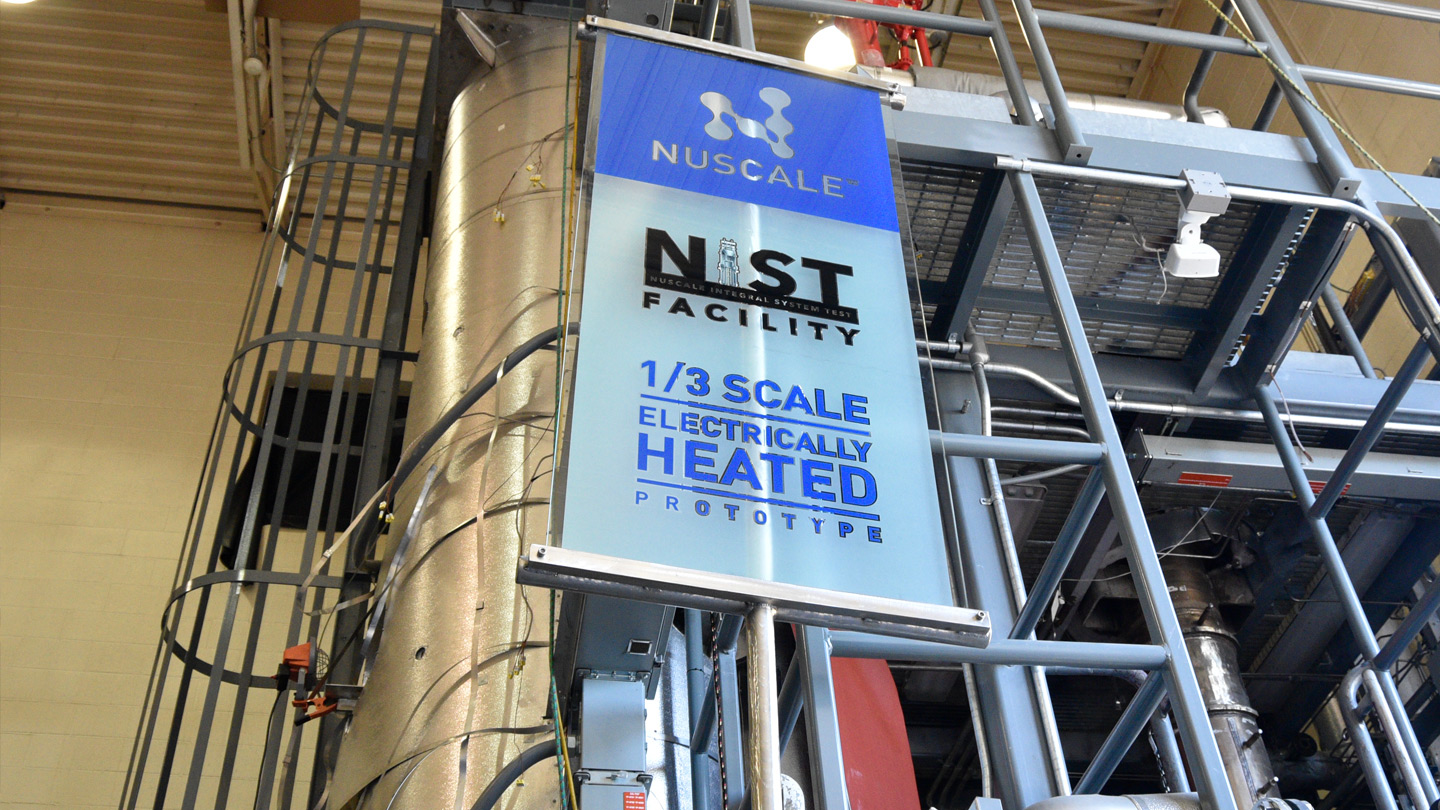
Dispense with many of the components of a large reactor, and what’s left is easier to build and maintain. So, in the words of Eric Young, the manager of a test facility that the company uses to validate its computer projections of heat flow, “What’s not here can’t break.’’
That has additional implications. The design relies on physical principles like natural heat circulation and dissipation, instead of engineered systems like pumps. If a NuScale plant were to lose all electrical power, the design will still safely cool the reactors for an indefinite period of time without the need to restore electric power, for a human operator or computer to intervene, or the addition of water into the pool. Such an approach is known as passive safety, meaning that natural forces cool the reactor without relying on human action or electricity.
The NRC staff is a little more than halfway through evaluating NuScale’s 12,000-page application seeking a design certification. The NRC’s design certification would pave the way for customers around the world to order the reactors, which would fit in well for varied electrical grid configurations, including small grids.
Jose Reyes, the company’s co-founder and chief technology officer, said that when he spoke to people from countries with limited electric grids, “That was kind of my ‘aha’ moment.”
Because the reactor does not require electricity to keep itself safe, it does not have to be on a grid at all. It could run a micro-grid supplying clean, reliable power. If needed, a NuScale plant could continue to produce a substantial amount of power without a fuel delivery for 12 years.
Building small also means that the modules can be manufactured in a factory and shipped to the site. That means that workers can build the pool and other structures at the same time that the factory is making the modules, potentially cutting years off construction time.
The combination of individual modules and an inherently safe design means that the modules could be “energy platforms,” providing heat for factories that process chemicals or oil, or make hydrogen or drinking water. This is important, because clean air globally will require more than replacing the fossil fuels in the electric system; industry and transportation will also have to switch to energy sources that don’t require burning fossil fuels.
Small size also means maneuverability. Just as a car speeds up or slows down faster than a train can, a NuScale module can change its electric output quickly. That didn’t used to matter, but on a low-emissions grid where solar and wind energy come and go on their own schedule, and sometimes arrive at hours when demand is low, the system needs a source of electricity that can balance supply and demand. NuScale can do this in the short term by rerouting the steam it makes. Ordinarily the steam spins a turbine, which turns a generator to make electricity, and the steam then goes to a condenser, a device that turns the steam back into water for another trip through the steam generator for re-heating by the nuclear reactor. But in NuScale’s design, the steam can be rapidly diverted directly to the condenser, changing the electrical output.
Over a period of hours, operators can also vary the electricity produced by adjusting the control rods to raise or lower reactor power, and hence electric generator output. In the longer term, the operators can simply shut down some of the modules.
NuScale has come a long way. The U.S. Nuclear Regulatory Commission issued a special “design-specific review standard,” or a plan for the review of NuScale’s technology. (The prior standard addressed equipment and systems that NuScale’s technology simply does not have.) NuScale’s certification application has passed the first phase of its review, which is the most challenging portion. NuScale has a prospective customer, the Utah Associated Municipal Power Systems (UAMPS), a municipal power company that provides wholesale electric-energy on a nonprofit basis to community-owned power systems throughout the Intermountain West. UAMPS has a potential site for its NuScale plant, on the grounds of one of the U.S. Department of Energy’s national laboratories in Idaho.
Building the first one of anything is hard, and NuScale is pioneering the way for additional innovative advanced nuclear technologies that will follow. And others are likely; a number of other companies are pursuing designs for small modular reactors. Thus far NuScale is the only one to apply for design approval.
But when the country’s first commercial small modular nuclear reactor is operational in the mid-2020s, in the words of NuScale’s motto, the company will already have changed the power that changes the world.