March 28 marks 40 years since the accident that damaged the core of the Three Mile Island (TMI) 2 nuclear reactor. The event was caused by a combination of equipment failure and the inability of plant operators to understand the reactor’s condition at certain times during the event.
The TMI accident was a cultural touchstone for the nation and a turning point for the industry. And while there were no reported injuries or adverse health effects from the accident, our industry learned crucial lessons from that day and has continued to enhance the safety of our plants year after year.
As a result, safety is in the DNA of every U.S. nuclear plant. By a variety of metrics—rate of human error, worker injury or equipment failure, number of unplanned shutdowns and level of occupational exposure—plant operations are smooth, stable and smart.
Nuclear Plants Pursue Excellence
All companies operating power reactors have adopted a shared safety model and formed an independent safety organization, the Institute of Nuclear Power Operations, to perform frequent in-depth audits of all the reactors including peer audits, in which operators of similar plants travel from site to site to critically examine each other’s practices, successes and challenges.
Additionally, plant executives brief each other on their malfunctions, personnel errors and other events and critique each other’s approach to operations. The plants still adhere to a strict code of regulations from the U.S. Nuclear Regulatory Commission, but the peer-to-peer interactions are more comprehensive and promote a level of safety and excellence in operations far beyond what the government requires.
In fact, the Electric Power Research Institute (EPRI) found that the risks posed to public health and safety from nuclear plants are much lower than previously understood. While studies in the 1980s and 1990s showed plants had operated at a relatively modest margin of safety, a recent EPRI study shows that U.S. plants are nearly 100 times more safe than the NRC’s own safety goals.
Nuclear Plants Are Well-Run
Highly trained experts run America’s 98 nuclear plants. With the NRC’s oversight and layers of safety precautions, a nuclear plant is one of the safest industrial environments in the United States. Plant workers are well-qualified: Reactor operators must hold federal licenses that require extensive training to obtain and they typically spend one week out of every five in training.
Following the accident at Three Mile Island 2, the industry formed the National Academy for Nuclear Training to promote the highest levels of training program excellence and consistency across the industry. Every four years nuclear power plants are required to demonstrate high standards in their training programs to maintain program accreditation by the academy.
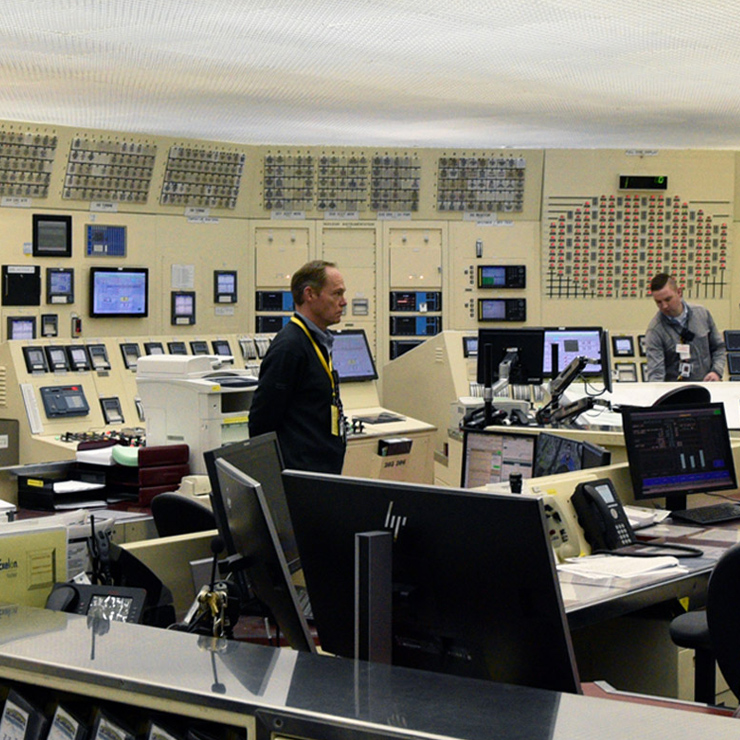
Plants also have training simulators, which are exact duplicates of control rooms, but connected to a computer, not a reactor. That allows the operators to practice responses to postulated accidents that cannot be run on a real reactor, similar to jet pilots who practice engine failures or instrument malfunctions on a simulated airliner.
Nuclear Plants Have Evolved Since 1979
Innovation drives the nuclear industry. These plants may look the same on the outside, but throughout their operation, they are continuously upgraded with the latest technology and monitored for optimal performance.
By the time a facility seeks to extend its operating license with the NRC beyond 40 years—because of improvements to turbines, pumps, instrumentation and other components—the plants are extensively updated.
Through equipment upgrades, many plants have been able to raise the amount of power they produce. These improvements, along with other efficiencies, have helped plants spend more time generating electricity. The average capacity factor for all nuclear plants in 2018 was 92.3 percent, which means that the plants were almost always up and making electricity. In contrast, in the 1970s, reactors on average operated less than 60 percent of the hours in a year.
The industry has not stopped improving either, as it continues to develop advanced technology like accident-tolerant fuels, which could further boost plant performance, increase safety and reduce costs.
Nuclear Plants Are Prepared for the Worst
The operators at every nuclear plant prepare detailed plans with one goal in mind: to protect their communities and employees.
These plans meet requirements set by the NRC and the Federal Emergency Management Agency. Plant workers conduct training and drills every month, and every two years they test their plans with state and local government agencies and the NRC.
Emergency plans are also updated based on emerging issues. After the terrorist attacks of Sept. 11, the industry re-evaluated its plans to cover a broader array of unforeseen events. Additionally, after the Fukushima accident in 2011, the industry stationed more backup safety equipment at plants and regional depots. The FLEX strategy made about 1,500 pieces of additional equipment, from nozzles to generators, available to every nuclear plant in case of an emergency.
Nuclear plants don’t just provide more than 55 percent of carbon-free electricity in the United States. They also are among the safest and most secure industrial facilities in the country. And 40 years after the accident at Three Mile Island, nuclear energy remains the safest and cleanest form of baseload power generation.

.jpg?language=en-US)