An important milestone for the nuclear industry is taking place in Georgia and it’s not the one you might think. When it comes to innovation, it’s easy to think of new plant construction or advanced reactor technology, but the industry also is on the path to beating its own timeline for developing accident tolerant fuel (ATF)—one of several new technologies that will help our current fleet achieve more efficiency. These advanced fuel designs will make plants even safer by allowing plant operators more time to respond to reactor conditions.
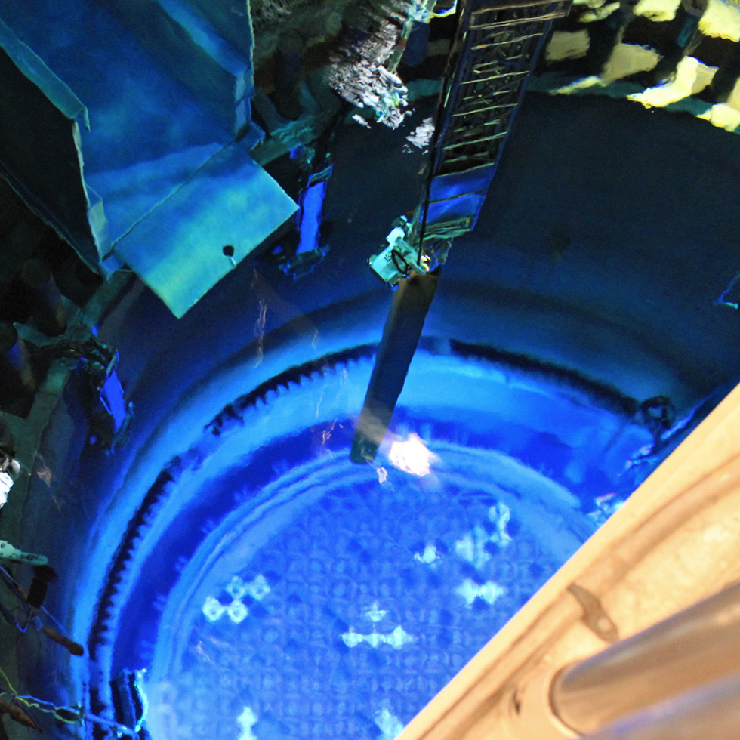
Testing is now underway on four lead test assemblies containing enhanced accident tolerant fuel at Vogtle 2. This is the second Southern Nuclear-operated plant to test variations of this advanced fuel. Last spring, ATF lead test assemblies were loaded at Hatch Nuclear Plant in collaboration with Global Nuclear Fuel. This time Southern Nuclear is partnering with Framatome to go one step further and test full-length fuel rods at Vogtle 2.
“The rods are fully fueled, and they have the ATF features both with the fuel pellet and with the cladding, so you get added layers of protection,” explained Peter Newby, vice president of sales and marketing for Framatome’s Fuel Business Unit in North America. “This is how the rod is supposed to be and how we intend to deliver it in the future.”
The fuel load at Vogtle 2 marks an important step toward commercial deployment of this technology.
That is good for the industry and that is really good for Southern because they are an industry leader. We are on the precipice of moving ahead.
Framatome’s fuel concept features several safety components that will enable plants to operate more economically and with greater efficiency. The fuel pellets are made of a flexible ceramic material that can withstand the conditions inside the reactor core for longer periods of time. The pellets are encased in metal rods with a chromium coating that further enhances safety.
“Framatome answered the call and delivered the product we were looking for in the timeframe that we needed it,” said Jennifer Baker, Southern Nuclear’s pressurized water reactor fuel engineering manager and the project lead for the Vogtle 2 fuel load.
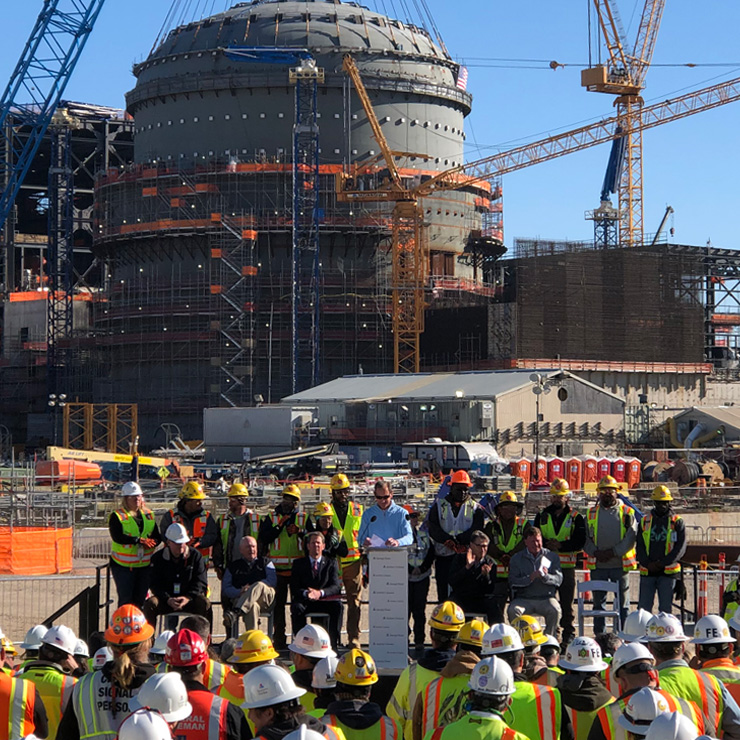
The accident tolerant fuel concept offers a potential solution to a challenge posed by Southern Nuclear’s Executive Vice President and Chief Nuclear Officer Danny Bost: to pursue an ATF concept that would increase safety, provide greater efficiency, reduce fuel costs and extend the fuel cycle at Vogtle from 18 to 24 months by the time Vogtle 3 and 4 come online. When all four Vogtle units are fully operational, they will generate enough electricity to power more than one million homes and businesses in Georgia.
“Longer fuel cycles would ultimately be a win for the communities that our fleet is proud to serve by potentially lowering plant operating costs,” said Baker.
Southern Nuclear and Framatome will monitor the test assemblies over the next year and a half and collect data about how they are performing. During each of Vogtle 2’s next two refueling outages, both parties will also conduct detailed visual inspections to ensure that the chromium coating performs as expected.
This culture of innovation—and willingness to take on new challenges—will allow the nuclear industry to lead the U.S. into a clean energy future.