This May, Fortune released their annual list of the top 500 companies, which contained more female-led companies than ever before. But even with an increase over last year, there are only 33 female chief executive officers on the list—just 6.6 percent of the total number.
With recent upticks in female leadership across sectors, more leaders are sharing their own background and experiences in an effort to inspire the next generation of diverse leaders.
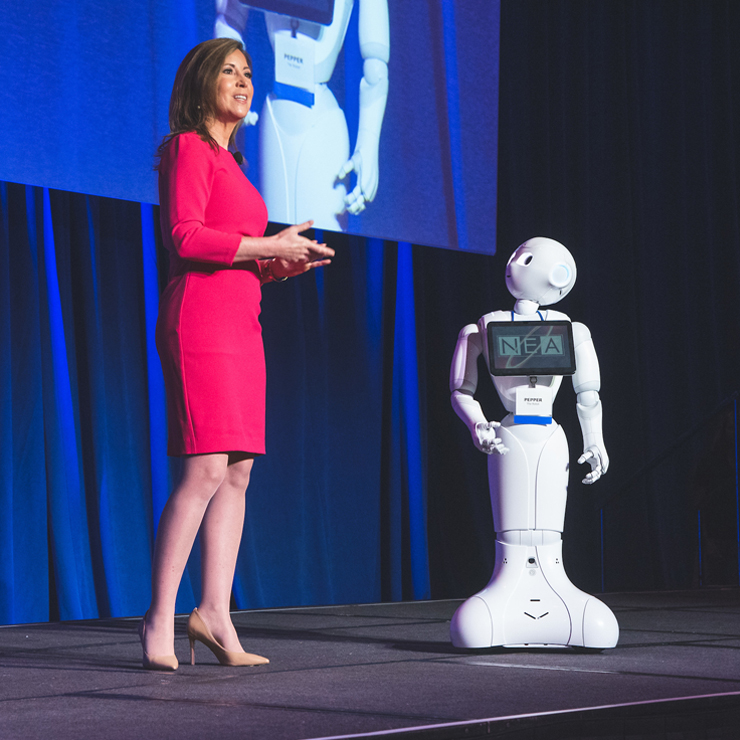
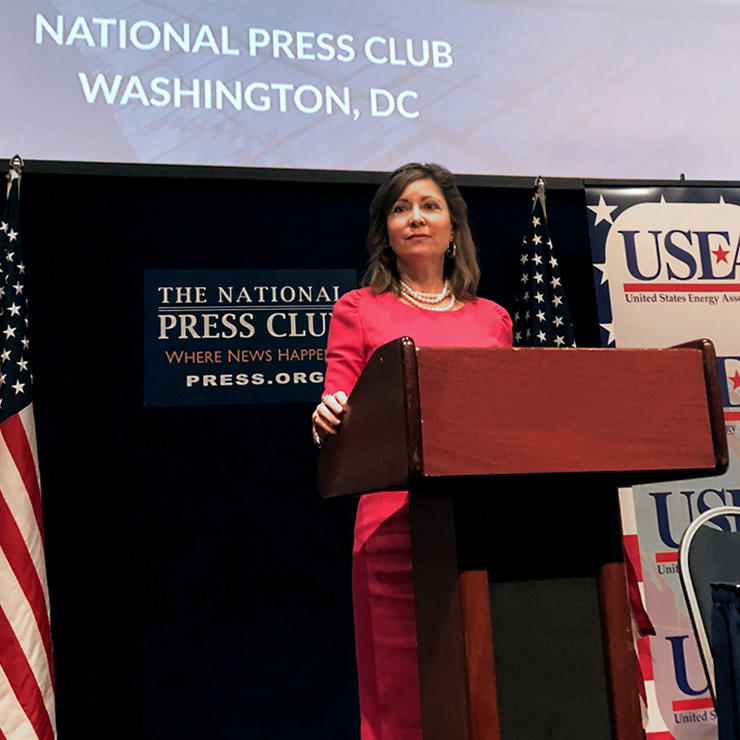
Over her more than 30 year career, Maria Korsnick has carved a path from engineer to senior reactor operator, to site vice president, to president and CEO in a male-dominated industry. I recently sat down with her to discuss how her experiences have influenced her leadership values and why being a mother has shaped her in more ways than she imagined.
What is a defining experience or lesson that you have learned that has shaped your role as a leader?
On the professional side, I would say it was becoming the first female operator working in the control room at a nuclear power plant and establishing myself as credible and knowledgeable and as a leader in the organization. As I progressed in my career, that is a job I referred back to most frequently. That, to me, was a bit of a defining moment on the career side.
I know when I went into operations training—this was back in the early ’90s—I was the first woman at my plant to pursue a license and I was one of very few in the industry. Now in the industry, if you look around, you'll see some female shift managers, you see female plant operators as well as licensed operators, so clearly there's more.
Are we done yet? I would say no, but we're on a journey that it's acceptable or maybe even expected that women might be interested in those positions.
Whereas, I know at the time I went through, you definitely stuck out because the reaction would be, "Well, what's she doing here?" and it doesn't feel like that anymore.
Can you describe the experience of becoming one of the first female operators? What was that like for you?
Well, I'm part of a very large family. I have five brothers and I actually think that was helpful to me. Oftentimes people look to me and say, "Oh, look, you're the first," but I don't feel different and I don't feel special because I'm used to being around several guys and having to stand my own in that environment. I feel very comfortable with it. And so, as I entered a field that they had more guys than gals, I didn't feel like I stuck out.
When I was in my class to become a senior reactor operator, there were probably 15 of us in class. Everybody else had been in the nuclear Navy. I hadn't. Everybody else was male. Obviously, I wasn't. But I felt very included and I felt very much a part of that team.
Fortunately, in my experience, I've always found that if you're willing to roll up your sleeves and really work with people to solve problems, they appreciate it. They don't care if you're purple, pink, have polka dots, you're a girl, you're a boy—if you're there to help, wow, that's what they care about.
When I was the first female site vice president up at Ginna Nuclear Power Plant in New York, I was also the first and only pregnant site vice president, which was really exciting.
I remember showing up to one of the first meetings that I had, an all-hands meeting. It's hard to be eight months pregnant and not be obvious, and you feel a little vulnerable when you're like that. My opening statement to them was, "Well, two heads are better than one, and so I brought an extra."
Because I was comfortable with it and joking, it put things at ease for everybody else.
"The real role of a leader is: how do you get two plus two to be five? How is it that you unleash that creativity and enthusiasm in the people that you work for?"
How has being a mother shaped how you view your work?
In so many ways. For one thing, with the lessons that you learn as you try to set good examples for your children and raise them well, it's amazing how much that translates from a leadership perspective. So you try to instill principles such as good communications, clear expectations, follow through when expectations aren't met, celebration when expectations are met.
There are so many of those parallels with children. And you have to accept that you thought they were going to do X, they went off and did Y. That's not something you were expecting, but then being open to say, "Well, wasn't that interesting and different and creative?" And, at the end of the day, you got to where we were trying to go, you just got there in a different way.
As a leader, you need to accept the new product or the direction that comes up, and not to be so micromanaging that you shut down creativity.
The real role of a leader is: how do you get two plus two to be five? How could two plus two be 10? How is it that you unleash that creativity and enthusiasm in the people that you work for? Because, if you're enthusiastic and excited about what you're doing, you're going to get more work than you ever imagined. You're going to get things farther than you would've on your own. If you look at leadership to say, "I have all the great ideas and all I need is puppets to go forth and do my bidding," you're minimizing what you could otherwise create.
How do you think your unique experiences have influenced your role at NEI and the path that the industry is on now?
I have 30 years of experience on the operational side of nuclear energy and I believe that that has so framed my personal drive and focus. I love this industry. It's in my blood. It's in my bones. It's a part of me.
Our plants are just beautiful, fantastic, carbon-free workhorses, and they're an unsung hero. They just don't get the recognition that they deserve, and I'm happy to be one voice—I try to be a very strong voice—but I’m happy to be a voice in that chorus that we need.
You spoke about how being a woman and mother has helped shape your leadership skills. What are you doing as a leader to help women at NEI?
Leading by example is the best approach to take in this case. I have eight high-level leaders within my organization, and four of them are female and four of them are male. And, given that I'm female, I would say, overall, we're five to four. In this organization, it's evident that we're looking for very strong performance and it just so happens that, as we look for that strong performance, it has demonstrated a pretty even split between female and male. And what I really like is that people were selected based on the strength that they bring to the team.
I'm very appreciative of diversity. I also am sensitive that you don't want to pick someone just because they're diverse. You want to pick someone because what they're bringing is that diversity of thought and experience to make you a stronger team. I think we demonstrate that by example here at NEI.
Whether it's your board room or your direct leadership team, diversity should be apparent, and if it's not, you should be thoughtful about ways to include it.
.jpg?language=en-US)