Nuclear plants produce waste—which is a debatable term—while generating electricity, but what it is exactly and how it’s handled are different than you might think.
What Is Nuclear Waste?
When most people talk about nuclear waste, they’re referring to fuel that’s been used in a reactor once.
Technically, items like gloves, tools or machine parts that have been exposed to radioactive material also need to be—and are—safely stored or disposed of, but most references to nuclear waste are about used nuclear fuel.
How Is Nuclear Waste Stored?
After nuclear fuel has been in a reactor for five years, operators remove the bundles of nuclear fuel, called fuel assemblies and begin transitioning them for permanent storage. The fuel assemblies are then transferred to a 40-foot-deep cooling pool, where they will stay for about five years.
The temperature-regulated water serves a dual purpose: to cool the assemblies and block all radiation from being released. Most of the radioactive decay occurs within the first month after removal from the reactor, with 87 percent of the original radiation decaying off. New nuclear technology, such as small modular reactors and accident tolerant fuels, will reduce time that these assemblies spend in the cooling pool.
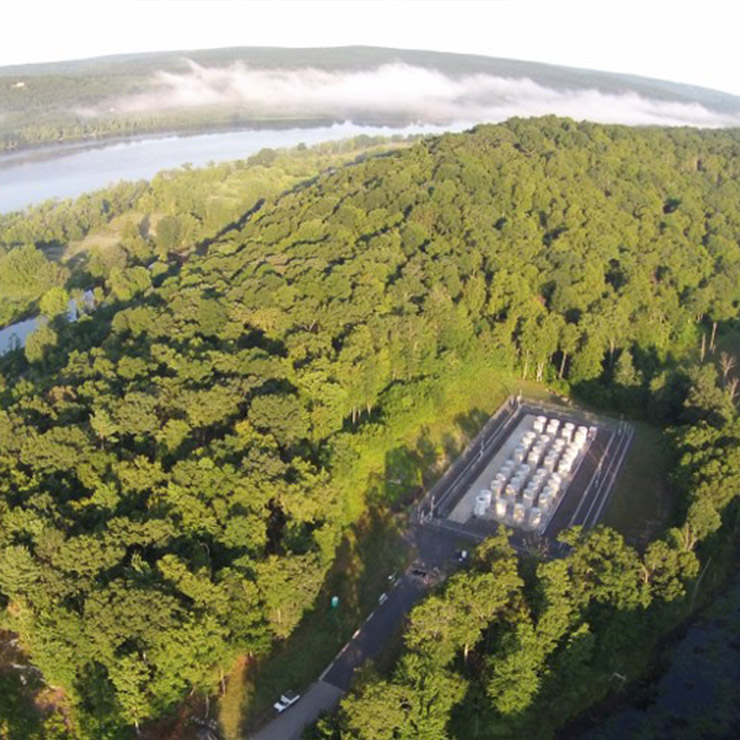
After the fuel has cooled in the pool, operators remove them and place them in a concrete-and-steel container called a dry cask. These have no moving parts, are filled with inert gas, and are built to survive natural disasters and all other unusual scenarios. They require little maintenance and for every one ton of used nuclear fuel, there are 10 tons of material to store it.

So how is nuclear waste stored? Safely.
Where Does Nuclear Waste End Up?
All of the used nuclear fuel produced from the U.S. industry is tracked and traceable. Right now, all of the nuclear waste that a power plant generates in its entire lifetime is stored on-site in dry casks.
A permanent disposal site for used nuclear fuel has been planned for Yucca Mountain, Nevada, since 1987, but political issues keep it from becoming a reality. The technology to permanently store nuclear waste is available, we just need to deploy it.
How Much Nuclear Waste Is There?
All of the waste that the U.S. nuclear industry has created since the 1950s takes up relatively little space, and it’s all safely contained. The energy density of nuclear fuel means that nuclear plants produce immense amounts of energy with little byproduct. In fact, the entire amount of waste created in the United States would fill one football field, 10 yards deep. By comparison, a single coal plant generates as much waste by volume in one hour as nuclear power has during its entire history.
Here’s another way to think about it. Imagine you are holding a hockey puck. In that puck is everything you need to power your home, feed you, transport you, power your vacations, produce your clothing and provide heat for your entire life. It also contains all the byproducts and waste you would generate by doing so. It may seem unbelievable, but that is the total amount of nuclear fuel you need to power your entire life.
Bottom Line: Nuclear Plants Handle Waste Well
Nuclear waste is handled in compliance with the stringent requirements of the U.S. Nuclear Regulatory Commission, the U.S. Department of Energy and the U.S. Environmental Protection Agency. It’s all part of being a responsible, clean energy source. From the time nuclear fuel leaves the reactor to when it waits in dry casks for permanent disposal, the U.S. nuclear industry sets an impressive standard.
Photo Credit: Dominion Generation