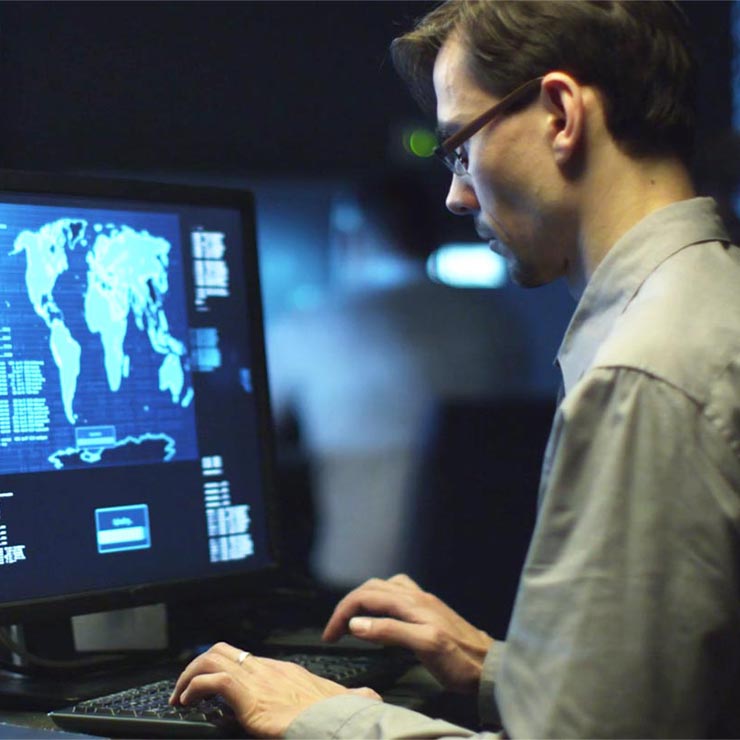
Seeing a hacker depicted in the movies clicking through windows, reading code at light speed and having multidimensional layouts of a given target is exciting to watch, but maybe not very realistic. However, having your network breached is real and can be done through phishing emails, clickbait websites, or by not doing something simple like using strong passwords or connecting to a secure Wi-Fi.
It’s troubling to think about this happening in our everyday lives and downright scary to think of it happening on a scale as large as our electric grid.
The good news, though, is that the U.S. nuclear industry’s cybersecurity program constantly keeps intruders out with layers of security and continuous monitoring of new threats. As technology and cyberthreats evolve, so do our protections. Nuclear power plants stand among the most secure facilities in the country.
Let’s take a look at three depictions of hacking or cybersecurity intrusions from popular culture, and talk about why nuclear energy is well-protected from its real-life counterpart.
Office Space: Protecting Yourself From the Inside
I know this movie is from 1999, but it actually depicts something pretty ingenious.
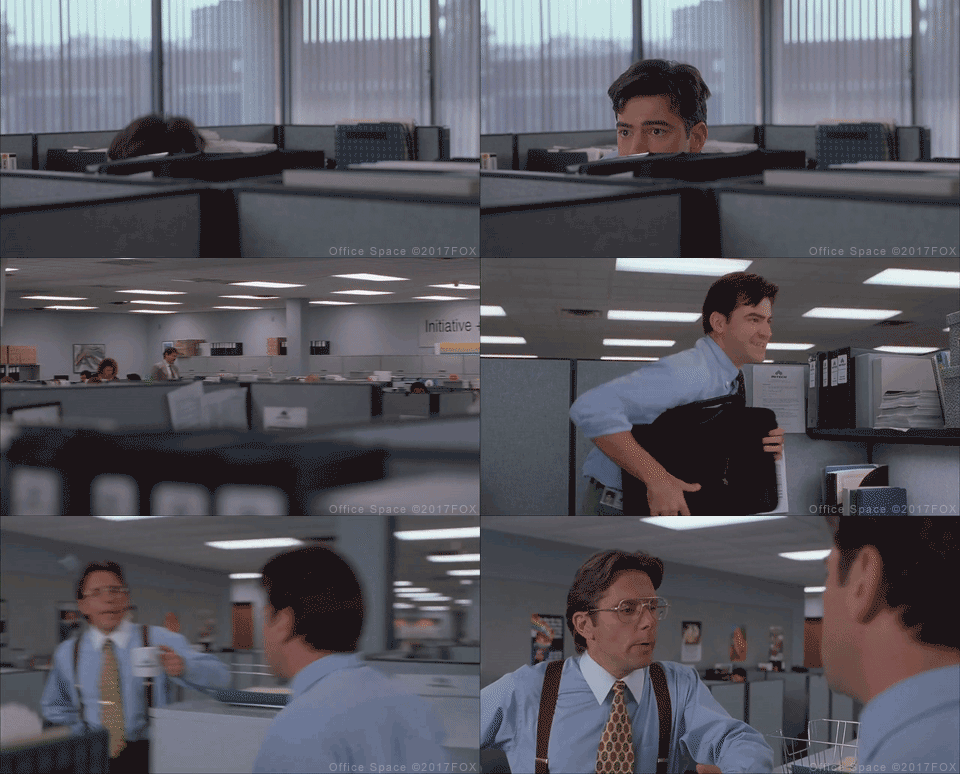
In “Office Space,” disgruntled employees decide to create a virus that takes fractions of pennies and automatically deposits the money into a bank account. Since the numbers are so small, the employees believe that no one will notice; however, the money accumulates very quickly. This is an inside job that can impact a system that leverages a completely segmented system for its security.
At nuclear plants, you will either be under constant escort or you will be processed for unescorted access. To be unescorted, you will be subject to extensive scrutiny—including undergoing personal, education and criminal history background checks; participating in initial and random drug and alcohol testing; undergoing a psychological evaluation; and being subject to a continuous behavioral observation program.
The 100: Making the Target Unattractive
In the TV series “The 100,” Raven Reyes hacks everything from spaceships to virtual worlds. In multiple scenes throughout the seasons, she is seen plugging in flash drives and either uploading or downloading data by breaking into secure locations.
Let’s explore this possibility at a nuclear plant.
Our U.S. commercial nuclear plants are widely acknowledged to be the best-protected facilities among the nation’s critical infrastructure. We work hard to make sure they’re not an attractive target for hackers.
Approximately 9,000 well-armed and highly qualified security officers protect the nation’s nuclear power plant sites. Plants have instituted enhanced protective measures to address the most prominent threats to their most important systems. These measures include more robust network isolation and strict controls over portable media such as thumb drives and portable equipment.
Brooklyn Nine-Nine: Keeping Important Things Off the Internet
In an episode of “Brooklyn Nine-Nine,” two detectives resort to getting help from a hacker after one of their cases has gone cold. Sitting in a restaurant armed only with a laptop and a full name, the hacker accesses the detective’s home computer and embarrassing music preferences.
Could nuclear plants have their safety compromised by bored hackers at a local Denny’s?
The short answer is no. The safety and control systems for the reactor and other vital plant components are not connected to business networks or the internet. Nuclear plants are designed as islands of operations and are fully disconnected from the internet and networks in a practice called “air gapping.” Even the computers that plant personnel use day-to-day have absolutely no connection to the plant networks.
Nuclear Is Protected Against Hackers, Fictional and Real
U.S. nuclear sites continue to lead from the front against cybersecurity threats. The industry has established and evolved its cybersecurity program into a more comprehensive protective strategy. Success is not only built on the strength of the program but through ongoing and regular engagement with our federal and private sector partners. As part of the industry’s pursuit of continuous improvement, NEI also hosts an annual cybersecurity workshop. (All nuclear cybersecurity practitioners are welcome this year in Las Vegas, Nevada.)
TV shows and movies don’t always depict the real threats. But rest assured, the industry’s seasoned cyber experts work constantly—with the U.S. intelligence community, the U.S. Nuclear Regulatory Commission and each other—to stay one step ahead of hackers.
GIF Credit: 20th Century Fox Home Entertainment