The people on our planet can be divided into energy “haves” and “have-nots.” One of the most important questions for the future of the climate is how the have-nots will get the energy they need—and nuclear energy is likely to be key to the solution.
Energy supply isn’t an issue in the United States. We have what we need to refrigerate food, stay warm in winter and cool in summer, and communicate globally. We have more than that, too: enough to run electric-powered air fresheners and leave the holiday lights burning until February.
But more than a billion people don’t have a reliable electricity supply. They badly want all the things that energy provides, and they are reaching for whatever fuel is most ready at hand, usually oil or coal. As a result, the skies of New Delhi and Beijing are thick with soot, adding to a global atmosphere that is already laden with climate-changing gases.
This presents a challenge, as electricity use grew in the developing world by about 5 percent annually between 2008 and 2018, according to the BP Statistical Review of World Energy. That means a doubling every 15 years or so. By midcentury, when many scientists say we should have cut our carbon dioxide emissions by 80 to 100 percent, electricity use will be approaching double what it is today.
On one hand, this is good news: it implies that billions will be lifted from poverty.
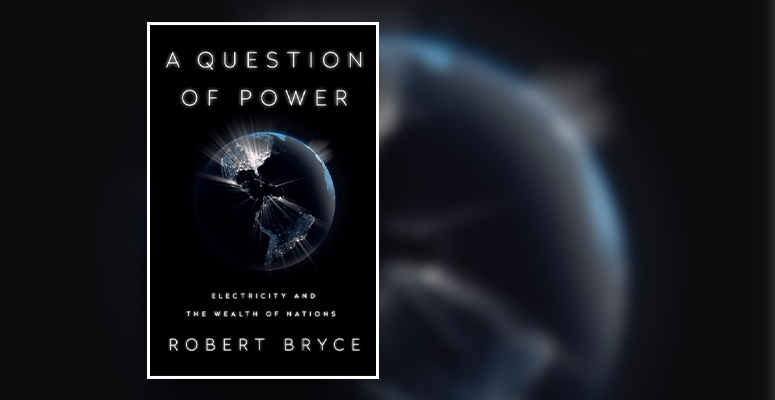
Robert Bryce, author and former energy journalist, put it well: he called electricity “the ultimate poverty killer.” In his book, A Question of Power: Electricity and the Wealth of Nations, Bryce points out that it provides lights that children can study by and it frees women and girls from the tyranny of gathering wood for fires and scrubbing clothes in a washtub, thus allowing them time for education and other high-value tasks.
When the United Nations adopted its sustainable development goals in 2015, it said that “energy is central to nearly every major challenge and opportunity the world faces today.” It also called for “affordable clean energy.”
What role does nuclear energy pose in this challenge? A big one, if we’re going to solve the twin problems of economic development and environmental sustainability.
Nuclear energy is the largest source of carbon-free electricity in the U.S. and is one of the most affordable sources of electricity worldwide, according to the International Atomic Energy Agency. It also promotes health and may already have saved 1.8 million lives worldwide, according to a study by NASA and Columbia University, compared to meeting the same energy needs with fossil fuels.
Solar and wind power will also make major contributions to protecting the climate because they share a key attribute with nuclear energy: they are zero-carbon.
But to make an electricity system work reliably requires a large portion of energy that is always available. The consensus of engineers is that as the percentage of energy provided by intermittent renewables gets higher and higher, costs rise rapidly and reliability suffers. A zero-carbon system has to include zero-carbon nuclear.
“If you are anti-carbon dioxide and anti-nuclear, you are pro-blackout,” Bryce writes.
Bryce doesn’t divide the world into developed and developing, the way many do. He classifies countries as either “low watt” or “high watt.” The challenge—for everyone’s benefit—is to help the low-watt countries develop as low-carbon countries. And that will take a substantial contribution from nuclear energy.