Young people possess an increasingly strong environmental awareness, as they have grown up experiencing the effects of climate change. In the last thirty years, climate disasters have tripled, and 2020 was the hottest year on record.
While concerns about carbon emissions and greenhouse gases have been around for decades, new attention has been drawn to these environmental issues through the lens of public health, conservation, and displacement. At the same time, the climate debate has expanded out of the board rooms of corporations, the halls of Congress, and environmental nonprofits to populate the walls of Twitter, Instagram, and TikTok, to name a few.
Younger Generations Engage with Climate on Social Media
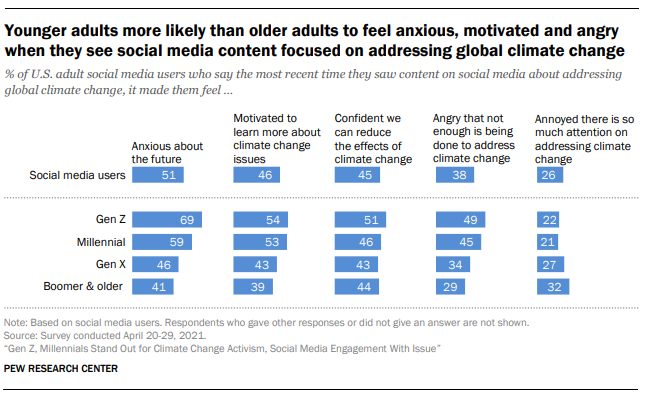
Gen Z and Millennials have lived much of their lives in the internet and social media era, acclimating to a new period of information sharing. A Pew Research Center survey found that younger generations are more likely to engage in climate content on social media, as well as have an emotional response.
According to the report, Gen Z and Millennials are talking more about the need for action on climate change; on social media, they are seeing more climate change content online; and they are doing more to get involved with the issue through direct action.
This social media conversation around climate increasingly capitalizes on pop culture references. As emotional engagement converges with the way that many young people express themselves on social platforms, climate messaging and visuals are shifting to play on popular images, memes and sayings.
As a prime example, #energytwitter erupted when Rep. Sean Casten (D-Illinois) introduced the start of “hot FERC summer,” a play on the popular Megan Thee Stallion song “Hot Girl Summer,” in an effort to raise awareness among younger generations of the important work of the Federal Energy Regulatory Commission (FERC).
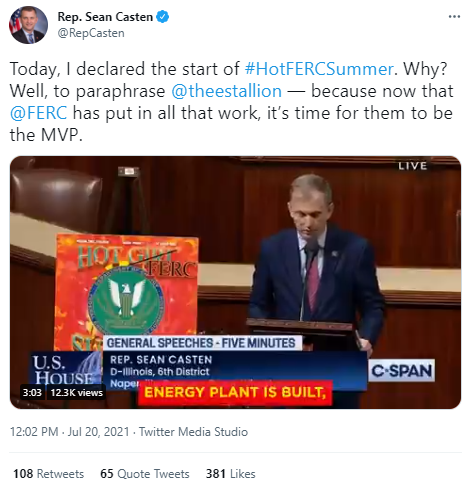
Rep. Casten utilized social media to explain more about the agency’s efforts to fight the climate crisis, posting explainers such as “7 questions about hot FERC summer you were too embarrassed to ask,” and even following up with a rendition of Fergie’s hit “Fergalicious”: “The FERCalicious definition is to make our planet cooler.”
The PEW survey also found that 31% of social media users are climate engaged, which means they have taken at least one of three actions to interact with climate change-focused content on social platforms: following an account, interacting with a post, or posting/sharing a post about the topic.
Climate change memes cover a large breadth of related topics, and many this year have focused on extreme weather, especially the current heat wave.
Nuclear Energy on the Scene
Nuclear energy is central to the social media climate conversation. Nuclear reactors produce carbon-free, always-on energy, which complements renewables such as wind and solar during times that the sun isn’t shining and the wind isn’t blowing. Memes like the two below highlight nuclear energy’s importance to our clean energy transition.
During the energy legislation battle in Springfield, #twill, otherwise known as Illinois Twitter, contributed its own memes to the conversation about the proposed energy bill.
Celebrity involvement also increases engagement. M.C. Hammer of “Hammertime” fame recently tweeted about nuclear energy and shared content from nuclear TikTokers and influencers.
According to the Pew survey, younger adults are more likely to feel anxious, motivated, and angry when seeing social media content focused on addressing global climate change, reflecting what is seen as the acceleration of one of the most important movements of our time—the global youth movement on climate.