Recent policy changes have dramatically changed the course for nuclear power in the United States and globally. This is clear in the results from NEI’s recent survey of nuclear utilities that found more than 50 percent of sites surveyed are exploring increasing power production levels from existing plants (i.e., power uprates) and more than 90 percent of the existing fleet is looking to operate for at least 80 years—taking the current fleet operations into the 2050s.
The cumulative total of these uprates could provide over 2GWe of carbon-free nuclear energy in the coming decade. The same survey found that achieving utility decarbonization goals would benefit from hundreds of new reactors in the U.S., with over 1/3 of nuclear utilities exploring either site permits or construction applications for new reactors.
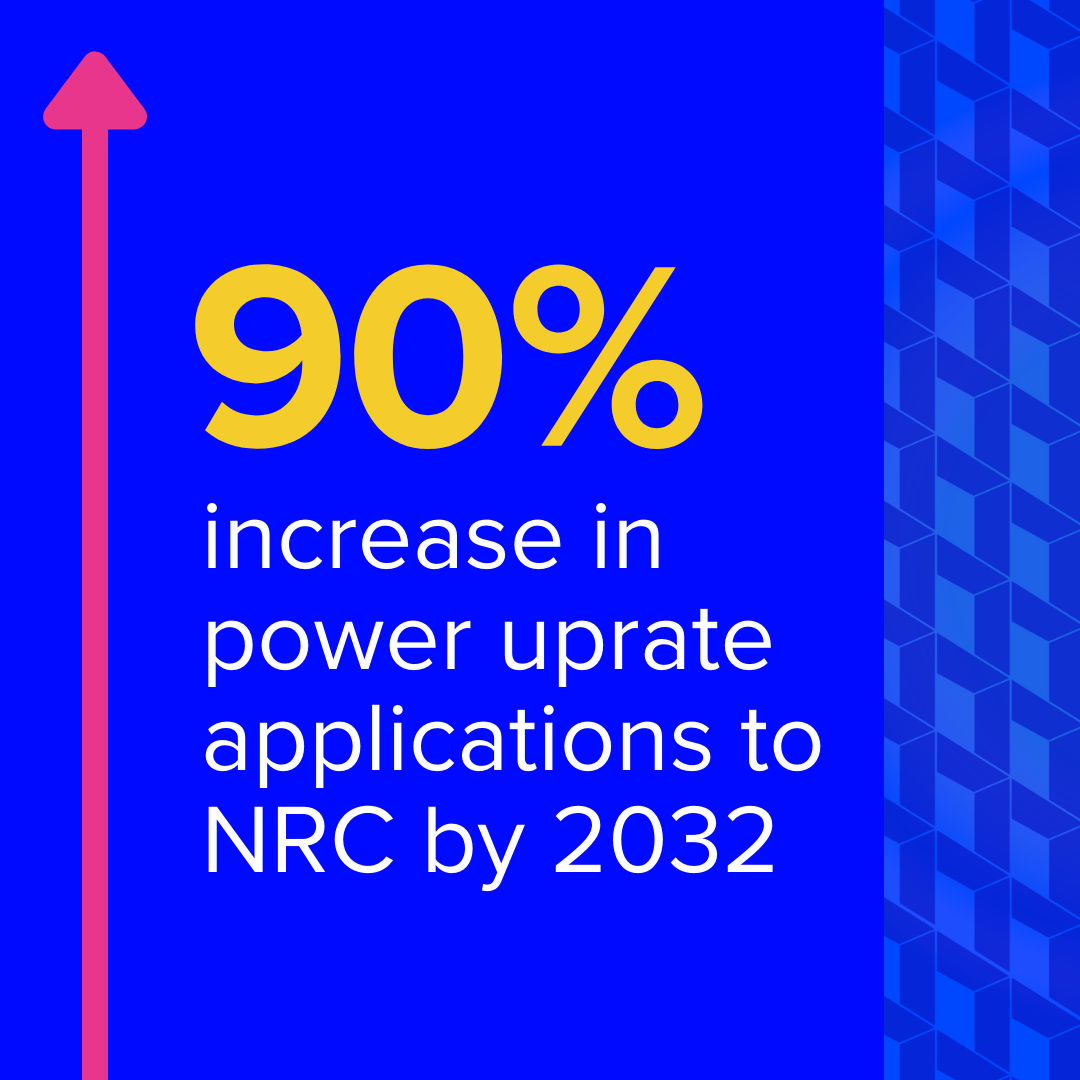
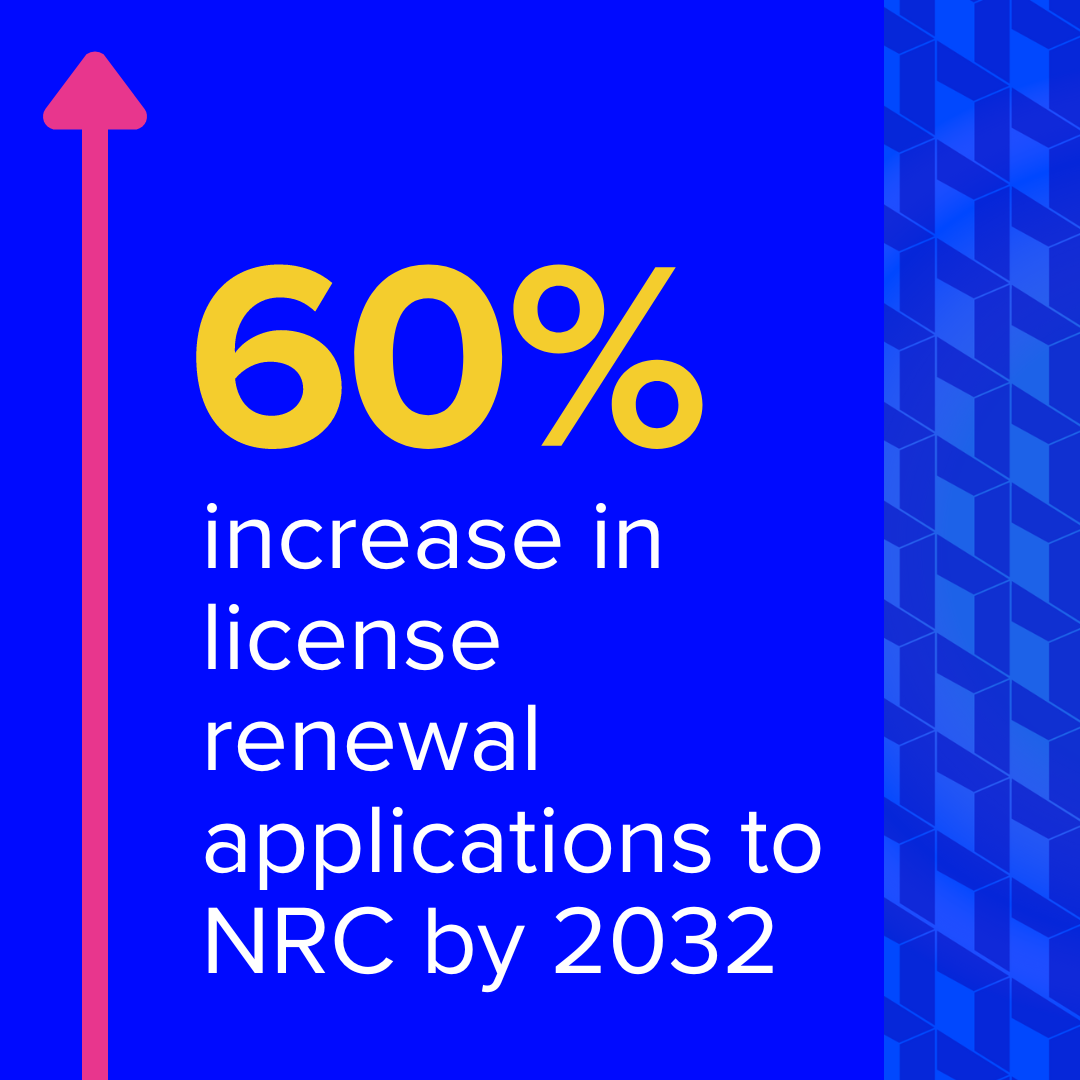
As the industry regulator, the Nuclear Regulatory Commission (NRC) lies directly on the path to a carbon-free future powered by nuclear. To meet this moment, there will likely be a dramatic increase in both power uprate and license renewal applications submitted to the NRC in the coming decade.
In order to understand the potential ramifications of this large increase in licensing activity, NEI recently investigated publicly available data on the NRC staff’s performance in reviewing past applications. The results are concerning. Instead of reviews getting faster and requiring fewer resources as the NRC and the industry gain experience with the regulatory processes, the data shows that the more the NRC performs reviews, the longer the review takes and the more resources are required. Unlike in commercial business where efficiency and productivity are enhanced over time, the data demonstrates the NRC is doing the opposite.
Two important insights come from this analysis:
- Nearly all NRC reviews have taken at least twice as long and required more resources as more reviews are done, almost independent of the type of review being performed.
- On average, the resources needed for the first 10 projects under review were less than what the next 10 used which were less than the following 10 and so on. And there's no evidence that the reviews have required more time and resources. There is a clear pattern that NRC processes are getting costlier and lengthier without warrant.
There is simply no other conclusion but that the NRC’s processes require more time as they undertake more reviews. Longer reviews even as experience grows is exactly the wrong direction to be headed.
It is fair to note that the publicly available data is somewhat dated, and it is possible that the NRC has improved since that time. Unfortunately, the NRC’s own estimates for the license renewal reviews currently in progress, for both initial license renewal (40-60 years) or subsequent license renewal (60-80 years), show no evidence of this trend being reversed. In fact, subsequent license renewals are taking 50 percent more resources than initial license renewals, despite the fact that the scope of the programs under review is only a fraction of the initial scope.
The nation and the world need the NRC to focus on implementation of efficient processes that enable safe nuclear power and fulfill its needed role in energy security, energy resiliency, and carbon reduction. The time is now for NRC leadership to take on this challenge and enable the agency to meet the moment.


.jpg?language=en-US)