
Live from the Nuclear Energy Assembly, NEI President and CEO Maria Korsnick presented the industry’s policy priorities and provided perspective on the future of nuclear energy. This is a once-in-a-generation moment defined by demand for carbon-free, reliable nuclear energy.
Remarks as Prepared
Good morning! Welcome to the 2023 Nuclear Energy Assembly. It is so good to have you all here.
My special thanks to all of our sponsors including our premier sponsors: Constellation, North America’s Building Trades Unions, Westinghouse. And our executive sponsors: Framatome, OPSWAT, and Duke Energy. Your support will make this event a success.
I am excited to speak with you today.
This is a once-in-a-generation moment — a moment defined by demand.
Communities across the country are demanding affordable, reliable, clean energy.
Utilities are demanding clean sources that can power those communities 24/7/365.
Businesses are demanding versatile technology that can fuel their operations while reducing their carbon footprint.
Our elected leaders are demanding reliable and affordable options for the clean energy future that create good-paying jobs.
When you add them up, these demands all point to one place: nuclear carbon-free energy.
This isn’t just a shift in the conversation about clean energy. For years, many have talked about the importance of nuclear as a solution to the climate crisis unfolding right before us.
What we’re seeing now is unprecedented action across the economy to meet this demand.
We’re seeing it in state capitals and small towns. In private investment portfolios and public utility partnerships. In places with retired coal plants and new hydrogen facilities. And in exciting, innovative technology developments like Westinghouse’s new AP300 SMR announcement earlier this month.
Demand for nuclear defines the current moment. And it’s just beginning to shape our future.
***
I want to thank Deputy Secretary Turk for joining us on behalf of the Biden Administration. The Department of Energy has been a champion of nuclear power in the U.S. and abroad.
I also want to welcome Governor Bill Lee, representing the great state of Tennessee, which is at the forefront of advanced nuclear development.
Congresswoman Cathy McMorris Rodgers, Chair of the House Energy and Commerce Committee, will be here to discuss the unprecedented bipartisan support in Congress.
We also will welcome our distinguished guest from the United Kingdom, the Right Honorable Grant Shapps, Secretary of State for the Department for Energy Security and Net Zero. The United Kingdom has announced a bold plan to increase nuclear capacity.
And we will welcome our distinguished guest from the Czech Republic, Tomáš Ehler, Deputy Minister of the Czech Ministry of Industry and Trade. The Czech Republic is a leader among nations harnessing nuclear to enhance their energy security and meet their climate goals.
Over the last year, the United States enacted historic climate and energy legislation. These laws will preserve our existing nuclear generation — nearly half of our carbon-free generation — and accelerate future deployment.
The support we are seeing in Washington is unprecedented. And it is being noticed by everyone. A recent Axios headline summed up the consensus in just four words: “CONGRESS LOVES NUCLEAR POWER.”
Across the map, states that have relied on fossil fuels are realizing that nuclear can satisfy their energy needs and invigorate their economies.
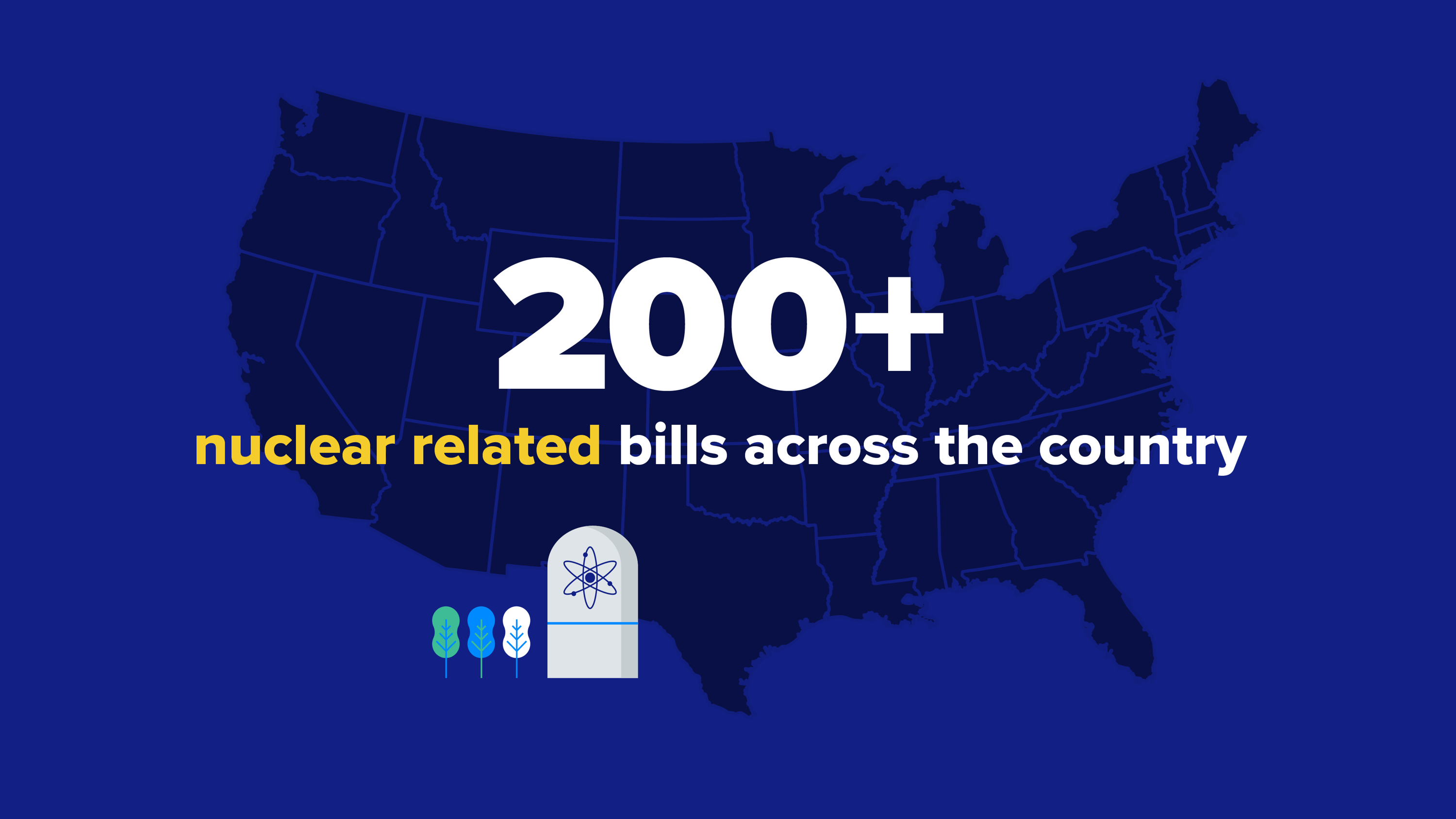
That’s why we’ve seen more than 200 nuclear-related bills under consideration this year. In years past, we would’ve been lucky to see even a dozen. [graphic 1]
Take Virginia, where the new energy funding plan will bolster their nuclear workforce and encourage competitive site selection for future projects.
Non-nuclear states, like North and South Dakota, have passed bills to study advanced nuclear.
In Alaska, the Department of Defense plans to deploy microreactors to meet their resilience and reliability needs for national security missions.
In Governor Lee’s state, the Tennessee Valley Authority announced a $200 million program to pursue a GE Hitachi SMR design, the BWRX 300.
Universities in both Pennsylvania and Illinois are exploring microreactor technology to decarbonize their own electricity usage.
And in Georgia, Vogtle 3 produced electricity for the first time and synchronized to the power grid last month. Georgia Power and Southern Company are continuing to make history with Vogtle 3 and 4 — the first advanced reactors built in the United States.
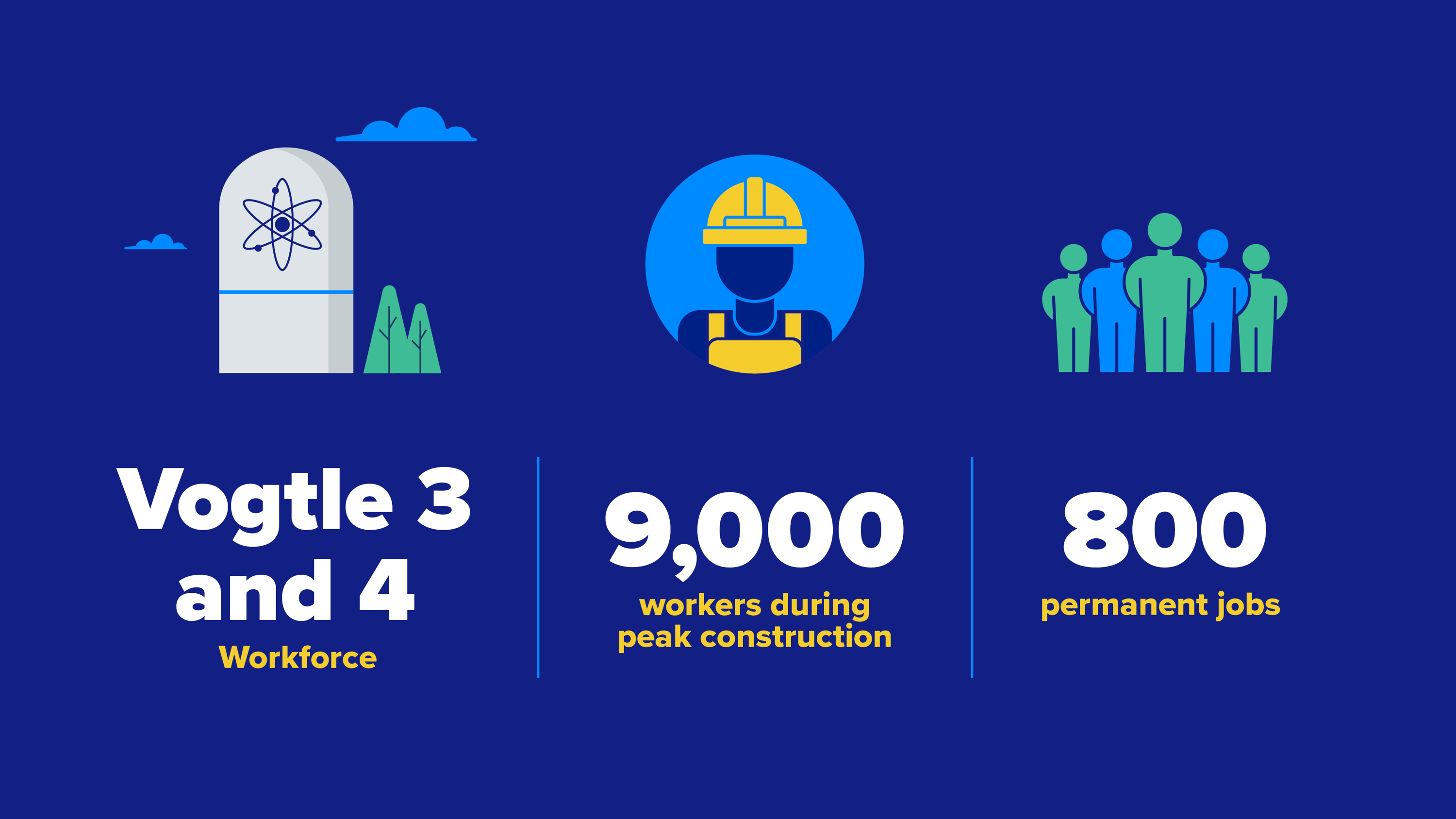
These AP1000 reactors are a testament to the nuclear workforce. At peak construction more than 9,000 workers were onsite, and the two reactors will create more than 800 permanent jobs once they are both online. [graphic 2]
This milestone achievement is thanks to them: the hardworking electricians, technicians, and engineers. The welders, plumbers, and pipefitters.
Many of them are proud union members. I want to congratulate the Building Trades, IBEW, UA, and all the union employees dedicated to this project.
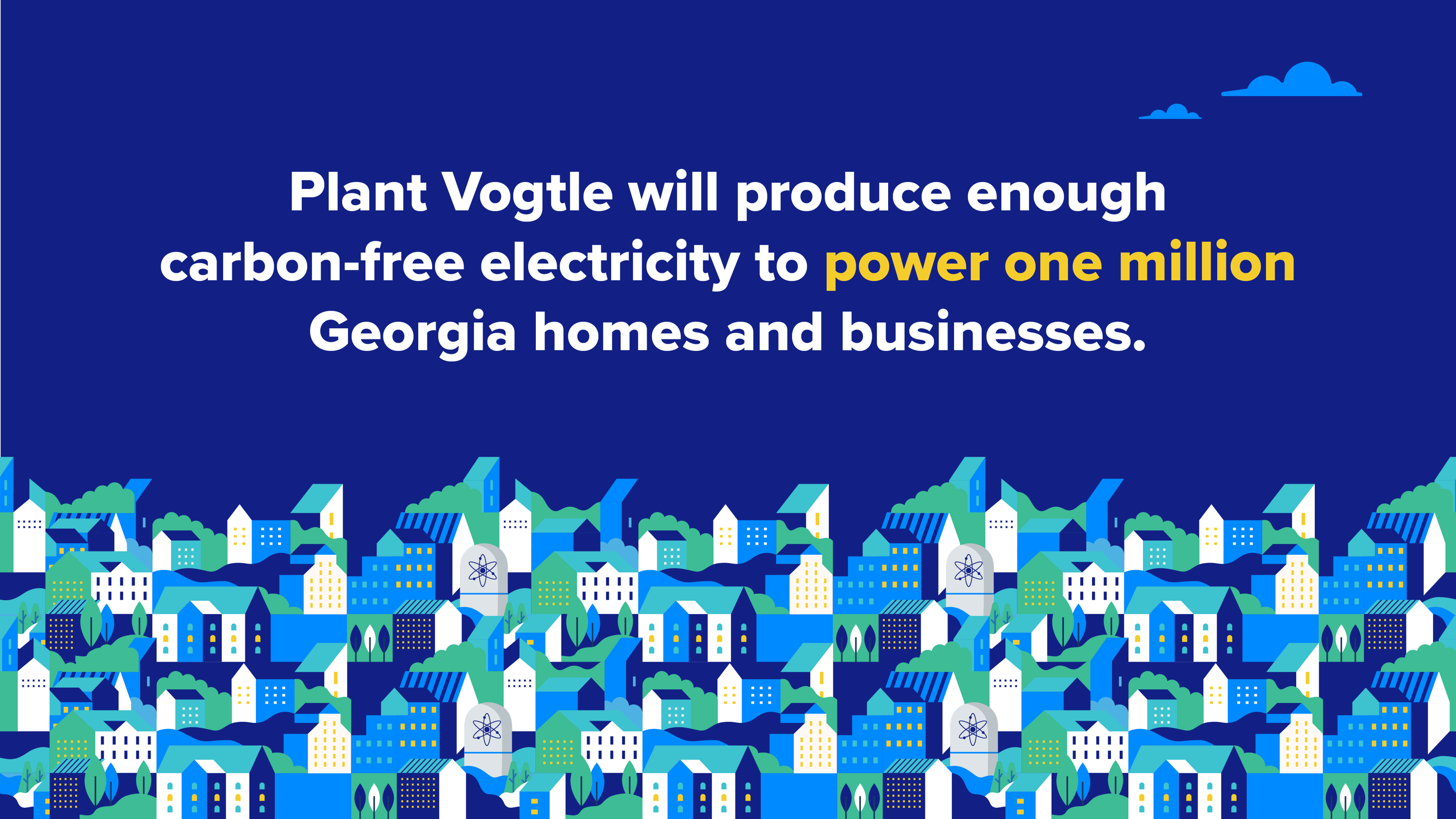
When the new units are online, the four reactors at Plant Vogtle will produce enough carbon-free electricity to power one million Georgia homes and businesses. [graphic 3]
Please join me in congratulating Southern Company, Georgia Power, Westinghouse, and Bechtel for the incredible accomplishment.
***
With all of the policy signals, demand, and milestones, it’s no surprise that capital is flocking to nuclear.
Pelican Energy Partners pivoted from its fossil fuel portfolio and announced a new fund strategy dedicated to the nuclear industry.
Morgan Stanley listed nuclear as an ESG trend to follow in 2023. Blackrock is considering a nuclear-themed investment security.
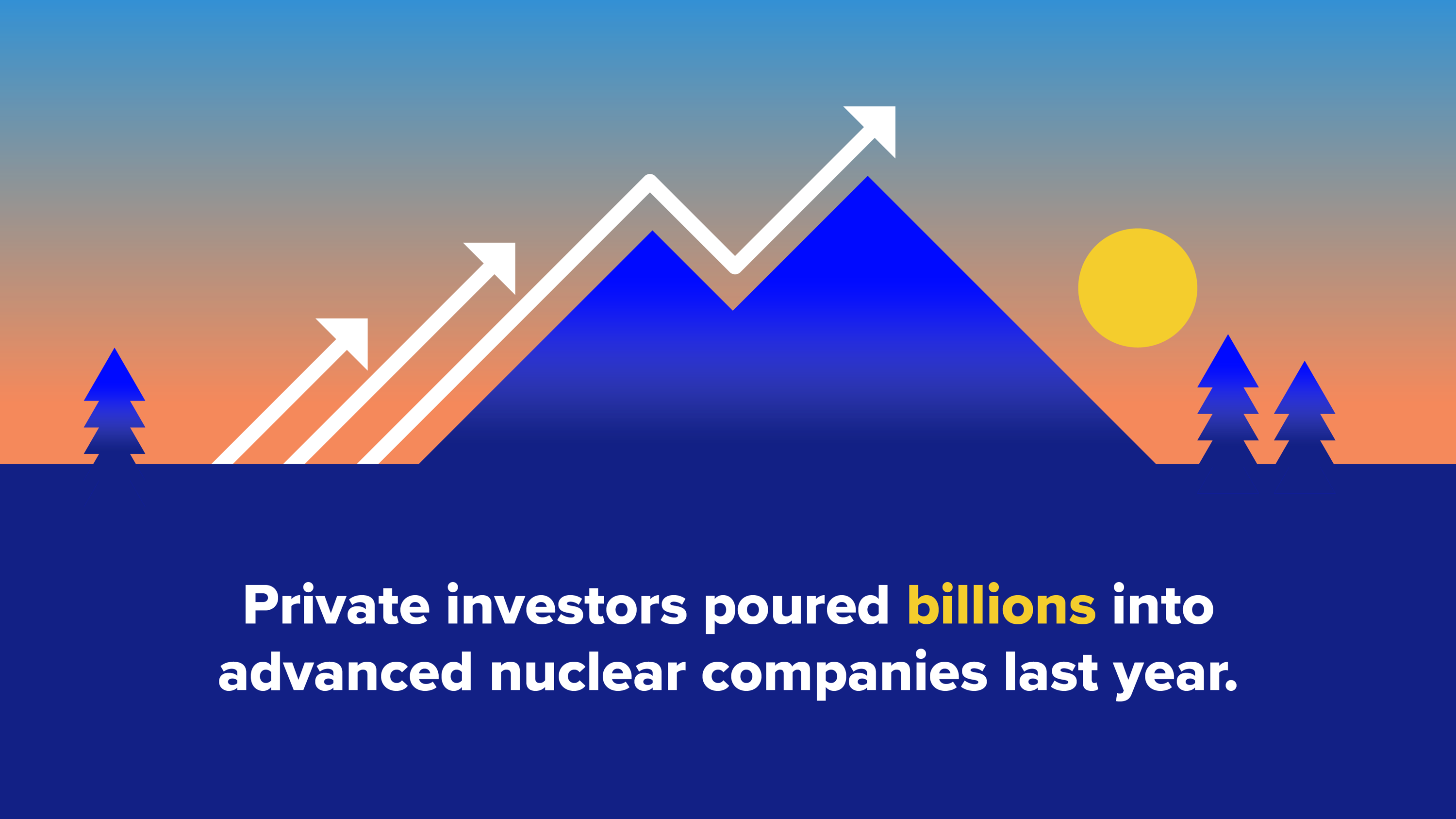
Altogether, we estimate that private investors poured more than $5 billion into advanced nuclear companies last year. [graphic 4]
This capital is shifting, in part, because nuclear technology promises to decarbonize entire economies.
For example, data centers are looking at nuclear to run their power-intensive servers, which are the hidden backbone of our internet.
X-Energy is partnering with Dow Chemical to power manufacturing and materials science facilities along the Gulf Coast.
Nucor, the nation’s oldest and largest steelmaker, is investing millions in NuScale’s efforts to build advanced nuclear.
Those projects don’t even touch on one of the biggest applications of nuclear energy: carbon-free hydrogen.
Constellation’s Nine Mile Point will become the first ever nuclear-powered hydrogen production facility in the nation. And Shell and NuScale are partnering to develop a hydrogen production concept.
I recognize that, from an investment perspective, first-of-a-kind projects can be scary. But when you look at the long-term, nuclear is one of the best bets there is because we’re not just talking about one or two projects. We’re talking about demand for hundreds of reactors.
Just look at the last year: TVA has said that they could use 20 or more SMRs and Duke’s integrated resource plan showed a need for a similar number. Last month, PacifiCorp updated their IRP to reflect two more Natrium reactors following their initial deployment in Wyoming. And just this month Dominion submitted their IRP in Virginia showing a role for between 6 and 18 SMRs.
Historic demand is here for a reason. We need to decarbonize. We have proven technology. And there’s no question that the more we build, the better we get.
To the financial analysts out there: This is an opportunity you can’t afford to miss.
***
This is just the beginning of our journey to a clean economy powered by nuclear.
Don’t just take it from me. NEI recently polled Chief Nuclear Officers at our member utilities. Together, they are expecting to add more than 100 gigawatts of nuclear power to the grid — the bulk of that coming online by 2050.
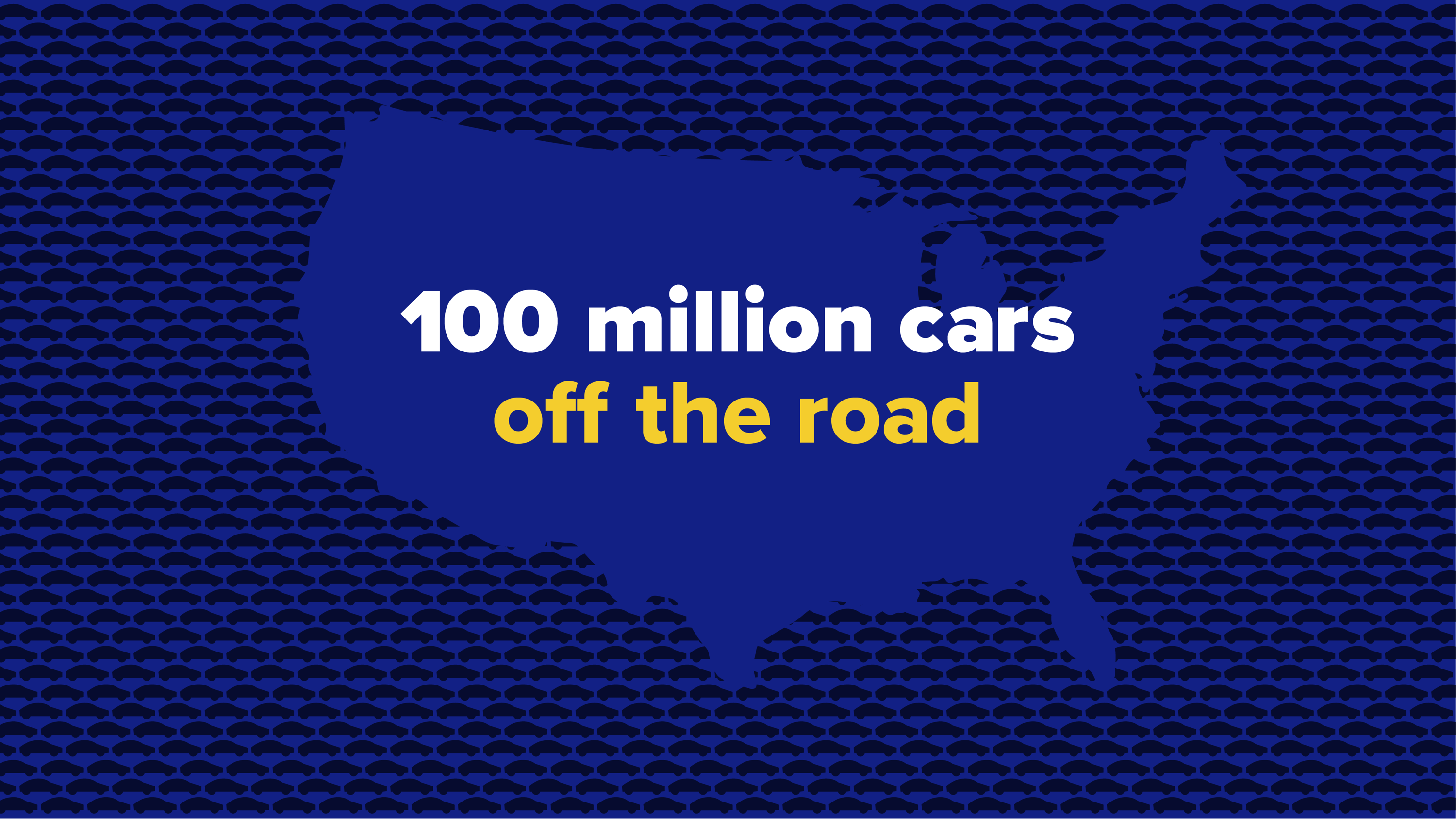
That demand adds up to hundreds of new reactors over the coming years, which would double U.S. nuclear output. That reduction in carbon emissions would be equivalent to taking 100 million cars off the road. [graphic 5]
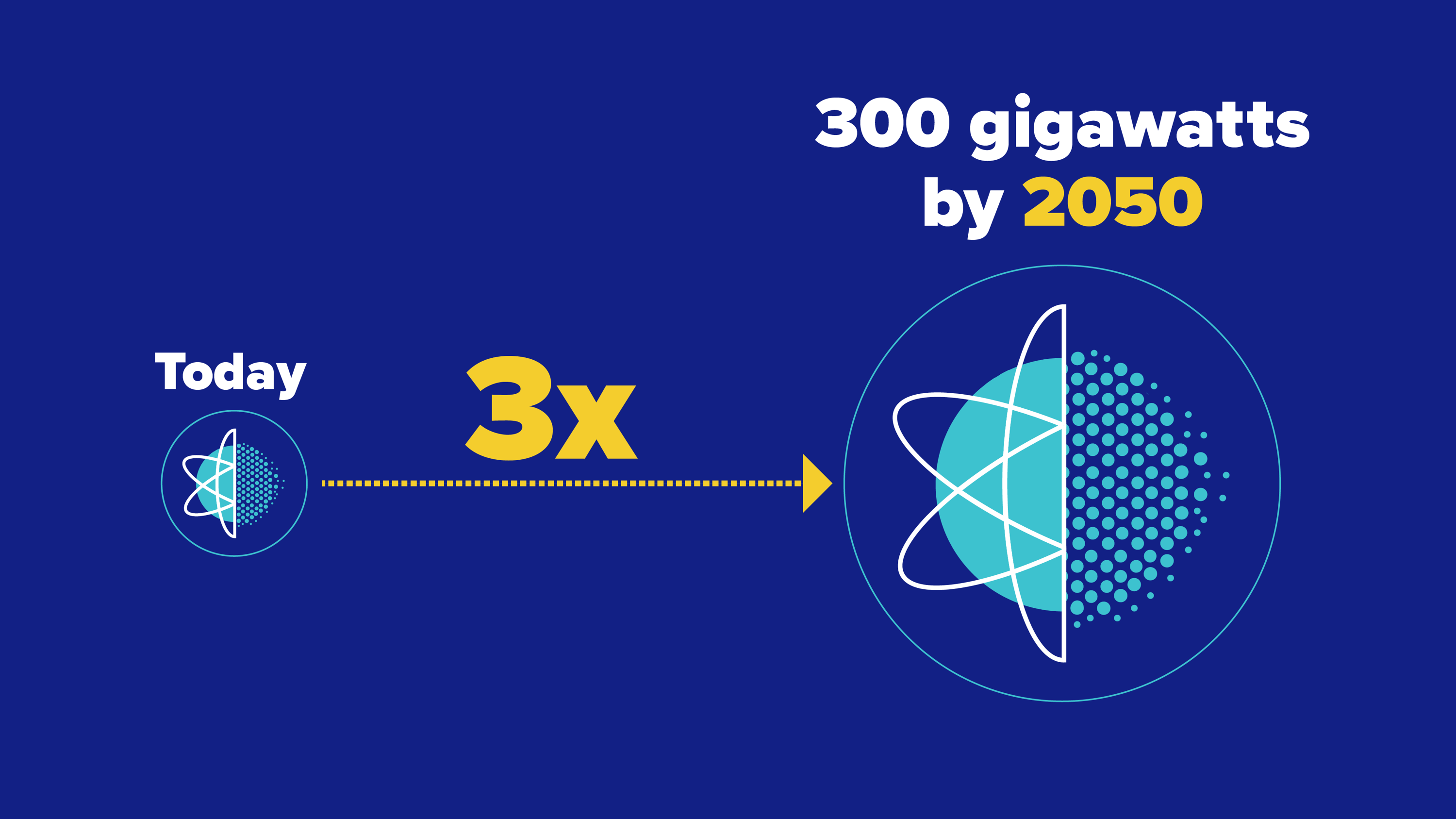
And the Department of Energy predicts even greater demand. According to their recent Pathways to Commercial Liftoff Report, U.S. nuclear capacity has the potential to TRIPLE to around 300 gigawatts by 2050 — all driven by advanced nuclear technologies. [graphic 6]
***
Reducing carbon emissions is a global imperative. Achieving our climate goals by expanding nuclear energy can bring nations together, making all of us better off.
Thankfully, our allies are deepening their commitments. [graphic 7]
Canada recently established tax credits similar to pro-nuclear incentives in the United States. And those tax credits are leading to demand for both large and small nuclear to keep up with their needs for reliable, carbon-free generation.
Poland selected Westinghouse as the technology supplier for three AP1000s in the first of a two-phase program.
Also in Poland, KGHM is working to deploy NuScale technology, while Orlen Synthos Green Energy is working to deploy GE Hitachi’s SMR design.
Countries across Africa, like Kenya and Ghana, are joining the charge and looking at new nuclear.
We are witnessing a sea change in public opinion in countries like Sweden, Finland, and the United Kingdom, which all have existing fleets. We’re also seeing it in Japan, which updated its policy to extend and replace existing reactors.
In fact, I just attended a G7 event where the United States, the UK, Canada, Japan, and France agreed to work together to strengthen the fuel supply chain and bolster nuclear energy.
The whole world is talking about nuclear because energy security IS national security. Countries cannot have one without the other.
Our global allies know that by making nuclear the centerpiece of their energy systems, they can decarbonize their electric grid and strengthen their energy independence.
There’s no question about whether this global demand will last. The only question now is how long it will take for us to meet it.
***
We need to be clear-eyed about what it will take to enable the conversion of demand into new nuclear deployment.
We need a strengthened supply chain.
We need a modern, streamlined regulatory process that maintains the gold standard of safety while paving the way for new builds, at scale.
We need to develop a workforce that can build, operate, and maintain the emerging fleet of advanced nuclear reactors.
Let’s start with supply.
It’s critical that companies throughout the nuclear supply chain see the opportunity in this growing market and believe in this opportunity. We need companies to prepare today for the manufacturing capabilities needed to meet this demand. We cannot wait for four or five years.
But the supply chain needs a signal. A sure way to signal confidence to them is by turning commitments for nuclear into orders for new projects. Utilities, petrochemical companies, data centers – everyone who needs clean, reliable energy – need to move from consideration to commitment to contracts.
And it’s not just the first few orders by the so-called first movers that are essential. It’s those fast followers, the following 10, 50 and 100 orders. Our surveys have identified interest from many utilities in being fast followers. Those fast followers cannot wait until the first-of-a-kind projects are fully deployed. You need to signal to the supply chain that you are serious about adding new nuclear to your portfolios. Begin submitting those early site permit and construction permit applications.
Because, unfortunately, it takes too much time today for those applications to be reviewed and approved. To meet demand, we’ll need a much faster regulatory process for advanced reactors — without sacrificing safety.
I’ll be blunt. If we’re serious about decarbonizing and meeting our climate goals, the NRC must get serious about modernizing its processes.
The road to a clean energy future runs directly through our regulator. It’s that simple. If nothing changes, the industry won’t be able to meet demand. The lack of efficiency leads to excessive cost, a lack of predictability, and will hinder deployment. This stands in the way of the commitments – and the private investment – that we need to meet demand.
The NRC is currently anticipating anywhere from 18 to 22 months for simply renewing licenses for existing reactors. Just to work through early site permits, it is taking the Commission up to 40,000 hours of review and counting.
Obviously, we were pleased to see the NRC’s final approval of NuScale’s design certification. But it took six years to move through the Commission’s processes. Six years.
DOE has projected that we will need to begin the ramp up of advanced nuclear deployments in the early 2030s toward a rate of 13 gigawatts per year. This means that the NRC will begin seeing large-scale site permits, construction permits, and licensing applications in the coming years.
Already, there are 15 designs from 13 SMR and microreactor developers that are in application or pre-application engagement with the NRC. Now is the time to modernize processes so that the regulatory approvals do not unduly slow progress.
Now let’s talk workforce. The most important part of the nuclear industry is our people — always has been. The people who sustain day-to-day operations, design, license and build new reactors, support research, and keep the entire supply chain functioning.
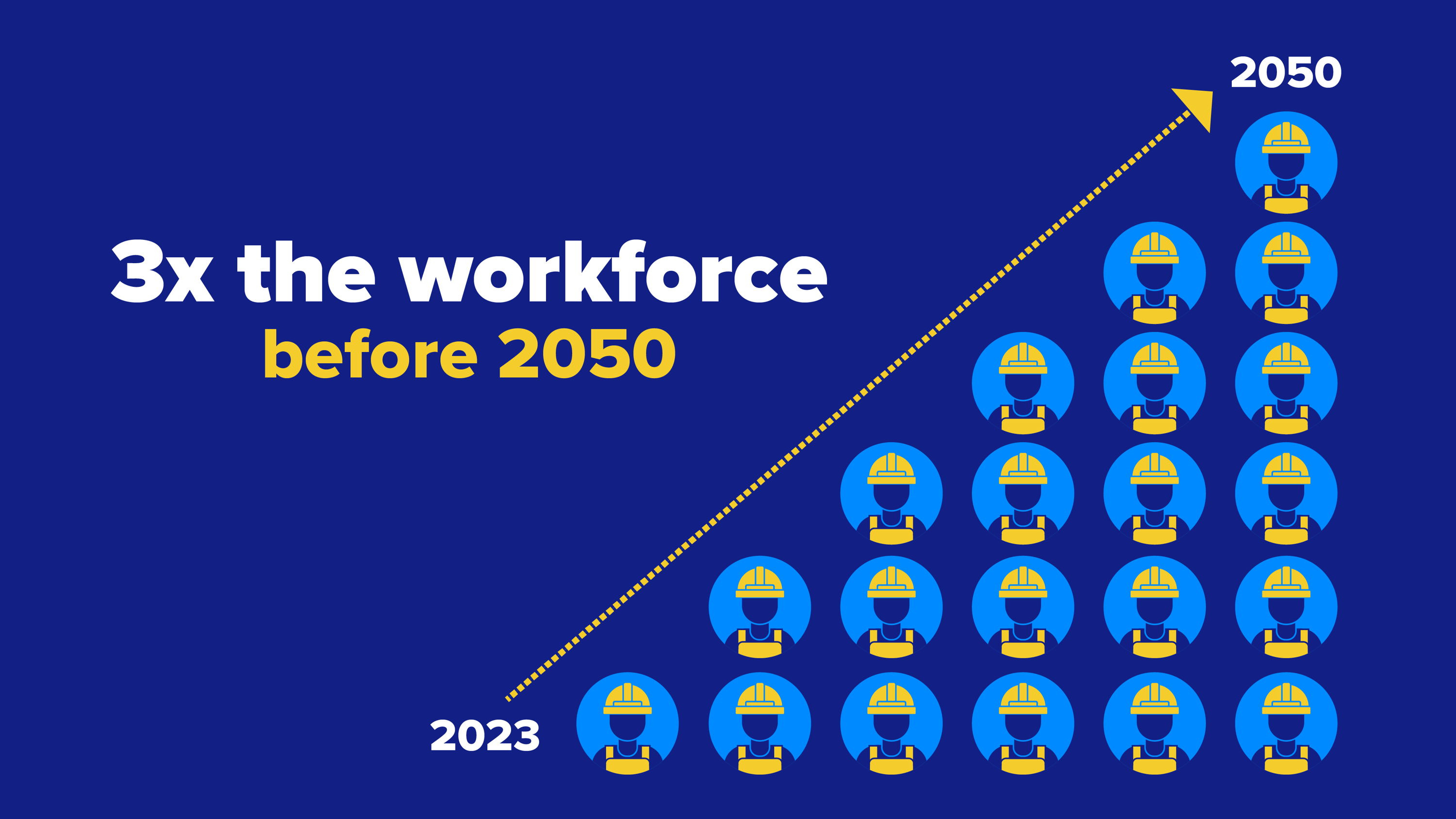
DOE’s recent Commercial Liftoff report estimates that to build and maintain the needed expansion of nuclear in the U.S. will require developing a workforce of approximately 375,000 people. Wow, 375,000!
Our industry directly employs around 100,000 people today. We will need more than three times as many people before 2050. [graphic 9]
Those are engineers, operators, electricians, welders and pipefitters. We need to start today to educate the next generation of this workforce. We need apprenticeship programs to expand the experience and expertise of those who will build and maintain the fleet.
Over the next decade, constructing and operating nuclear plants will support hundreds of thousands, if not millions, of good-paying jobs all over the country.
Nuclear can also revitalize communities by transforming abandoned industrial sites into valuable assets.
Take Albuquerque, New Mexico, home to Kairos Power’s KP Southwest campus.
Kairos Power saw an opportunity to step in and retrofit a former solar power plant site for advanced nuclear development. They built out testing and manufacturing infrastructure, creating close to 100 new high-paying, highly skilled jobs in the process.
As advanced nuclear is rapidly deployed across the world to meet historic demand, we will need a large and diverse workforce.
That’s why NEI is releasing a Strategic Workforce Development plan next month. It’s a long-term plan for our future clean energy workers. We must support STEM programs in K-12 and new entry points into the industry, from apprenticeships to tailored programs at major research universities.
We’re not just investing in advanced nuclear technology — we’re investing in the brilliant minds and skilled hands that will build it, and in the communities where they are to be built.
***
Building first-of-a-kind takes courage. Making a commitment as a “fast follower” without evidence of success takes courage. So, let’s be courageous — and let’s find creative solutions to our challenges.
Here’s a recent example of how courage and creativity can pay off.
Ontario Power Generation, the Tennessee Valley Authority, and Synthos Green Energy have announced a joint investment in the GE Hitachi SMR design. Their partnership ensures that the design can be licensed and deployed across Canada, the U.S., Poland, and beyond.
This level of collaboration can be a model for shared investment and risk management around the world.
We can also manage risk by making costs and timelines more predictable for first- and second-of-a-kind designs. The DOE’s Commercial Liftoff report I mentioned earlier gives us creative solutions like cost overrun insurance offered by the government or private insurers. The government can provide tiered grants that decrease after each successive deployment.
The government is also the largest electricity customer in the country – offtake contracts for a portion or all of the power generation from a new build could give utilities a sense of security to take that leap.
I am also pleased to announce that EPRI and NEI will shortly be releasing the first phase of an extensive Advanced Reactor Roadmap. It will add to the conversation several key strategies and actions that can enable deployment of new technologies.
The challenges to large scale deployment can be overcome. But it will take ingenuity. It will take action. To everyone in this room and everyone watching – I am asking for your ideas. Together we can optimize the solutions.
***
This is the biggest moment for nuclear energy since the dawn of the atomic age. Everywhere we look, we see demand surging.
We know the stakes are high.
This is not just about generating electricity. It’s not just about providing heat or hydrogen.
When we talk about demand for nuclear, we’re talking about the future of our planet — the future that our children will inherit.
Now, we really only have one choice:
We must rise to meet this demand. We must trust our ingenuity. We will build the hundreds of reactors that we desperately need. We will create opportunity all over the world.
For the sake of our future, let’s move forward with the urgency that this moment demands.
Thank you.