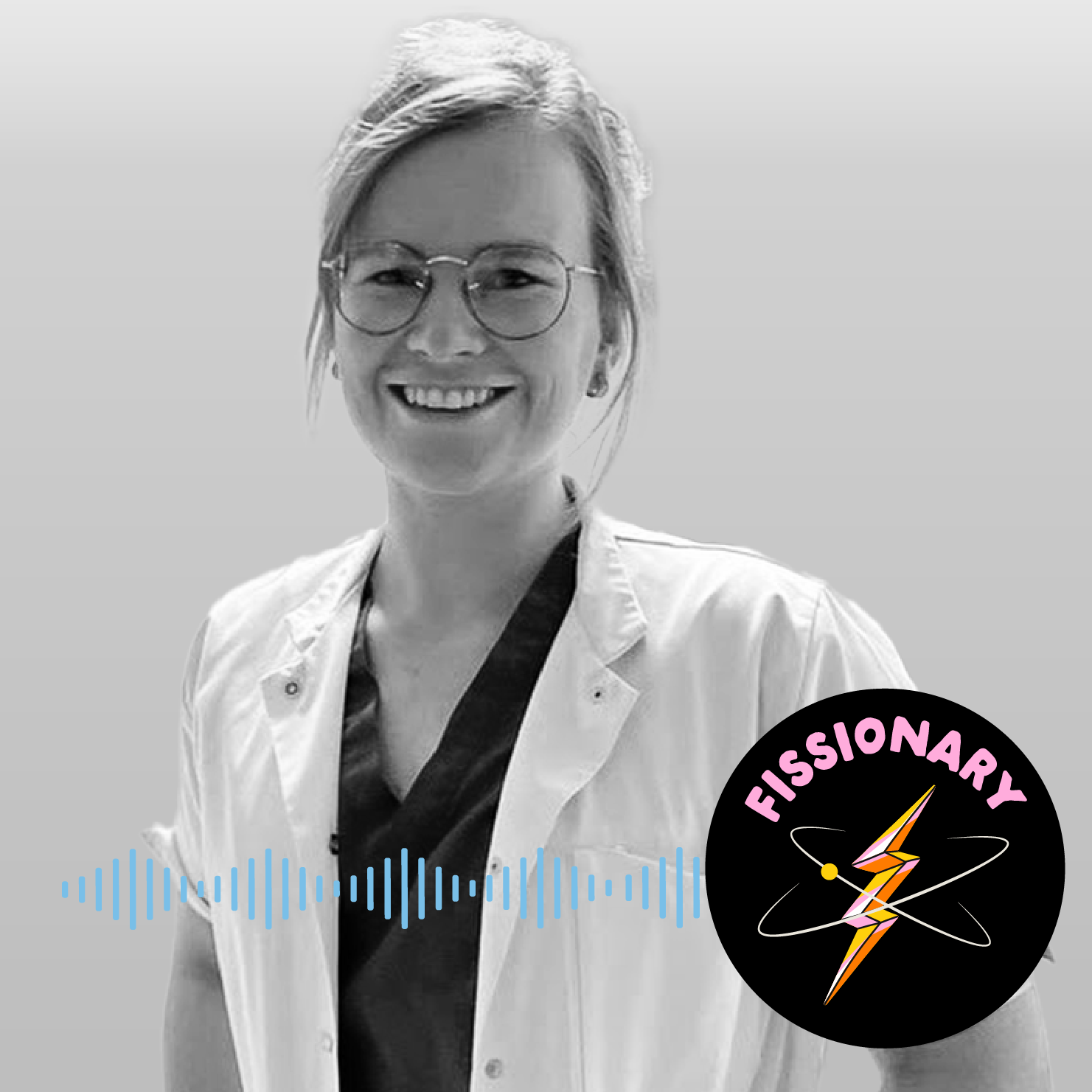
Have you ever been stranded on an island with a bunch of strangers and competed with them at various challenges with the goal of being the one true survivor? Are you a director of nuclear non-proliferation? If you answered yes to one of those questions, you are fun at parties. If you answered yes to both of those questions, you are almost certainly Dr. J’Tia Hart.
On this episode, J’Tia talks about how she is paving the way for the future of nuclear energy all while championing diversity and representation in STEM. She shares her unique journey with Mary and Jordan as they chat about energy security, the exciting future of the nuclear industry, STEM Queens, and Survivor.
STEM Queens is a passion project of mine. While I was at American Association for the Advancement of Science fellow, and they had a fellowship basically to get the word out to women about STEM. It was called If/Then Fellowship, and I was one of the fellows, and I got a grant to put together a YouTube show called STEM Queens. I got the idea because, you know, I feel like, yes, you can be a queen and you could be in STEM both.
Dr. Hart wants to get more young women involved in nuclear, and just in STEM in general. She says we need to continue giving young people role models (like NEI’s own Maria Korsnick!) who show young women that you can have a career in nuclear or STEM at large.
One piece of advice J’Tia said she’d give to young women interested in STEM is to not be afraid.
Don't be afraid to go for it. A lot of things in life are scary. Sometimes I do not want to roll out of bed and deal with my kids. You have to suck it up and go for what you want to get things in life. You have to conquer that fear, not be afraid, and figure it out. Everybody has to figure it out, and we all do. So don't act like getting into STEM, or even specifically nuclear energy and engineering, is some mystic thing. Clearly people can do it and so can you.
One thing we’re focused on in the nuclear energy industry is making sure we attract young people, particularly young women, to work in our field. Removing barriers and showing young people that they can make a difference in our clean energy future is incredibly important. J’Tia is a perfect role model for this – showing young women that they can do anything, whether it be starting a YouTube channel, getting a Ph.D. in Nuclear Engineering, or solving puzzles on an island.
Jordan Houghton And I'm Jordan Houghton. Let's jump in.
Mary Carpenter Hey, Jordan.
Jordan Houghton Hey, Mary. How are you?
Mary Carpenter I'm great. How are you?
Jordan Houghton I'm doing really well. I am really excited for our episode today. Our guest, Dr. J'Tia Hart with Idaho National Lab, I saw her speak at a used FILL conference a year ago, and she absolutely dazzled me. And it has been my goal ever since then to have her on this podcast. And I'm so excited that we finally made it happen.
Mary Carpenter I am a huge fan. I mean, if we want to get people interested in nuclear, and especially the next generation, we should just put Dr. Hart on TV all the time. I mean, she needs to be everywhere.
Jordan Houghton Yes, 100 percent. I want her to be my professional mentor, my best friend, I want all of her parenting advice. Yep. She—listeners, you'll see. You will fall in love with her too. But something about her that we talk about right up front is the fact that she was on a season of Survivor. And Mary, I know you are a reality TV lover and so I'm curious, would you ever do a show like that?
Mary Carpenter Oh my gosh, I've been waiting for this day where we can talk about Bravo on this podcast!
Jordan Houghton Would you be a Real Housewife?
Mary Carpenter So that is my favorite reality show. And I really don't discriminate between all of the different cities, I love all of them and I watch all of them, but I don't—you know, I don't think I would be a great housewife. It's too much drama. But, you know, Andy Cohen, if you want to call me, I will pick up the phone! You know, I, I will talk about it. If we want to bring Real Housewives of DC back, I mean, we could chat.
Jordan Houghton Andy Cohen, call us! You know, I watched a lot of the early seasons of Housewives. I haven't watched that lately. They kind of started to stress me out. I don't think I would want to be on one of those shows, but I do love a game show and was a contestant on Wheel of Fortune.
Mary Carpenter What? Have I never known this? I love Wheel of Fortune! Like, you were actually on TV!
Jordan Houghton I was on TV! I was 19 years old.
Mary Carpenter Oh my gosh. So, you spun the wheel? You guessed all the phrases and words, I mean, you were full in contestant on TV.
Jordan Houghton Yeah.
Mary Carpenter Oh, my god, that wheel is heavy.
Mary Carpenter Is it?
Jordan Houghton It is so heavy. Yes.
Mary Carpenter Oh! Because you, you do see people, kind of struggling, you know, like they put the whole body into spinning.
Jordan Houghton Yes, you do, like, I didn't—they had us—we were able to, like, spin the wheel a couple times before they, like, started rolling tape, but—and I think it's because of that, it was, like, way heavier than I thought it was going to be.
Mary Carpenter Did you win? I need all the details.
Jordan Houghton Okay. So, what's really cool about it is they filmed a week of shows in one day. So, you get there really early in the morning, they do the hair and makeup. Now, granted, this was 20 years ago at this point, so I don't know if they still do it this way. But you are with 15 people. Like, it's a group of 15 and you don't know who's actually going to play with you until later in the day. So, you end up building camaraderie with all of the other people. It’s such that, by the time you figure out who you're playing with, you've kind of want everybody to win because you've made good friends. So, I came in second and that was okay with me because I was like a just starry-eyed college student, and the woman who won my show had been trying to get on the show for like 20 years, and it was an absolute bucket list item for her. And she ended up getting to the bonus round and she won a Mazda Miata, and she was so happy and I was so happy for her. I did win 10,000 dollars—
Mary Carpenter Oh my god!
Jordan Houghton –from the wheel.
Mary Carpenter That's huge.
Jordan Houghton It was great. Again, I was 19, so I was like, this is, like, the coolest thing that's ever happened.
Mary Carpenter Yeah.
Jordan Houghton And then I also—you know, there's like the prizes on the wheel.
Mary Carpenter Yes.
Jordan Houghton And like, you could win a trip to the Bahamas or something wonderful. I won a $1,000 Hallmark gift certificate.
Mary Carpenter No!
Jordan Houghton Yeah!
Mary Carpenter You have you have greeting cards for life!
Jordan Houghton Yeah!
Mary Carpenter Wow! Okay, my mind is blown, I wish you guys could see my face right now! Oh my gosh. Okay, so actually, we have two reality stars on this episode. Our guest today was actually on Survivor. She’s amazing. She did Survivor, but she’s so much more than that. She is an influential woman in STEM, I mean, she has an amazing career at INL, which I'm so excited for you guys to hear her talk about. I mean, she's really, you know, pushing the next generation into nuclear. I mean, she does it all and she's a mom, I mean, she is so impressive.
Jordan Houghton Let's get into it with her.
Mary Carpenter Dr. J'Tia Hart is a nuclear engineering expert with over a decade of experience in the Department of Energy and in collaboration with National Laboratories. Currently serving as a nuclear nonproliferation division director at Idaho National Laboratory, she specializes in intelligence analysis, nonproliferation, and energy economies. Dr. Hart is also the creator of STEM Queens, a YouTube series highlighting Black women's achievements in STEM, and actively promotes diversity in STEM fields through mentorship and outreach activities. J'Tia thanks so much for joining us today.
J'Tia Hart Thank you for having me. I'm super excited to be here.
Mary Carpenter Well, we have yet to actually have a reality star on Fissionary.
J'Tia Hart And still don't! I'm not a reality star, I am a nuclear engineer, I am so sorry to disappoint you guys. But thank you! Hi guys!
Mary Carpenter Oh, well, in my eyes, it's very exciting! So, before we dive into your work, I know I have to ask you about your experience on Survivor. Did you enjoy doing it?
J'Tia Hart I would not use the word enjoy, wouldn’t be the first word that came to mind with my Survivor experience. I am glad I did it. But it is—it's tough, you know, I am not what you would call an outdoorsy person. You know, I do like my creature comforts, so it was definitely a challenge, and I'm glad I did it. I met some new friends, got exposed to some new experiences, and I have people who think that I'm a reality star. So, yeah, that's pretty cool.
Jordan Houghton Would you do it again?
J'Tia Hart Not right now, no, I was I was much younger then. Now I'm like, oh, if I fall and break a bone, how long will I have to be out of work? And, you know, adulting problems, so—but, you know, never say never!
Mary Carpenter What about a different show, like Traitors?
J'Tia Hart I like Traitors, I like Traitors a lot. Yeah, I do—so I like playing games, writ large. I like, you know, deck building games, Dominion, those sort of things. So that is why I was interested. I like the gaming aspect, I'm very competitive. So, yeah, the, you know, backstabbing, the trickery, all of that, all of that is great. And it's very interesting to see it played in person, it ups it a lot. So, I'm all about playing games.
Mary Carpenter Oh yeah, I bet, I bet it's so exciting in person.
Jordan Houghton I was just going to ask about the Soul Survivors organization that you formed with other Survivor alums, and I'm wondering if you'll share a little bit more about that and the importance of having diversity, not only shown on screen, but behind the scenes as well.
J'Tia Hart So, I think that is the best thing for me that came out of Survivor was this opportunity to join with other Survivor former players and create the Soul Survivor organization. And it really came about because a lot of us were—you know, we talk about our experience and our time on the show, and it was a time—it was the pandemic, people were home, and then after the murder of George Floyd, we really looked at it and it's like, this is our chance to change—to do things a little bit differently, to change the way that we are portrayed on TV or at large, but also on our specific show, Survivor. So, we banded together. We had people from season one all the way up to, you know, one of the more current seasons at the time, and we were able to make a change, talk to CBS and they put together, actually, an initiative to change how people from minority groups were viewed on the show and also to increase writers, production assistants, also behind the scenes, executive producers, to have a better and fuller portrayal of people of color, and people from marginalized groups on the show. So, very proud of that.
Jordan Houghton Beyond the Survivor organization you created, you do a lot of work to promote diversity in STEM as well, like developing STEM Queens. Can you tell us a little bit more about that?
J'Tia Hart Yeah, STEM Queens is a passion project of mine. While I was an American Association for the Advancement of Science fellow, and they had a fellowship basically to get the word out to women about STEM. It was called the If/Then Fellowship and I was one of the fellows, and I got a grant to put together a YouTube show called STEM Queens. I got the idea because, you know, I feel like, yes, you can be a queen and you could be in STEM both—you can serve while you’re in STEM—and I just wanted to show young women different examples, and I was just basically asking my friends to come on the show, and talking about, you know, what they like and current things—Real Housewives comes up a lot—and then how they got into STEM. And then for the last segment, we show off a special talent of theirs. So, I actually had Miss Universe Ireland, who was a friend of mine, on there, and she is an industrial engineering major and she came on, we talked about her journey and her career, and then she showed us how to do a nice smokey eye. So, that's always good, you know, when you can learn something about engineering and a smokey eye, you won the day. So, that's that STEM Queens in a nutshell. Fun, science, tech, engineering, math, all of that.
Mary Carpenter Yeah, and that's what we need to do, right? To get this next generation. We always talk about how we need so many more workers and we need to get the youth involved, I mean, that's a great way to do it and incorporate fun things, you know, that people are watching on TikTok and different other places into, you know, a possible future career. So, while we're talking about this, how can we continue to support more women, specifically more women of color, in STEM, first, but also, how do we get them interested in, you know, being in the nuclear industry? You know, whether they're an engineer, working in communications, or—there's so many different jobs in nuclear.
J'Tia Hart So, I think you really have to show them what's out there. Like, it's hard, but I mean, giving them role models so they—you can see that there are women in nuclear and you can also be a women in nuclear. And also tap into, you know, those adjacent kind of careers. Like you said, communications, you can do nuclear communication. Definitely need people who know how to talk about science and specifically about nuclear. And I think also your CEO, Maria—love Maria! Like, I remember when I was coming up through the industry, I’d always look at Maria and be like, that is the kind of nuclear engineer, you know, person I want to be. She's always very impeccably dressed, always has a great sense of style, and knows her stuff. I actually served with Maria on the Nuclear Energy Advisory Committee, and I'm always like, I want to sit next to Maria, we discuss fashion. She is a Veronica Beard fan, it's a clothing designer, and she—like, they need to give her some sort of endorsement deal because she's wearing the clothes! But it can start from something as simple as being somebody who, you know, piques your interest, and that's what I've done in a lot of my career. I'll see a person. I'm like, I like what that person is doing. I don't even know what their title is or what it is and then I'll like ask them a few questions, I'll stalk them on LinkedIn, you know, to see how their career grew. And I think we just need to have that, and also, if you do want to develop women and people of color, you need to take a specific interest in them. I say take an interest in them the way you would take an interest in your child if you were trying to get a child to develop a career. Because a lot of times women and people of color don't have those type of role models or those advocates to help them through the tough spots in their career. And everybody needs that.
Mary Carpenter Veronica Beard, if you hear this, call us. We are interested!
J'Tia Hart Yeah, hashtag give Maria an endorsement!
Mary Carpenter We are interested in that collaboration.
J'Tia Hart Yes. I have a feeling this is the first time there's been a discussion about Veronica Beard.
Jordan Houghton 100 percent.
Mary Carpenter It is, but I'm here for it. Not fashion, but definitely Veronica Beard.
Jordan Houghton It was also the first Fissionary reference of a smokey eye as well.
J'Tia Hart We are, like, breaking down doors and ceilings and everything.
Mary Carpenter That's what we're doing.
Jordan Houghton You just mentioned Maria being an inspiration to you, and I'm curious if you have any stories of people have reached out to you because you inspired them to get into the industry.
J'Tia Hart You know, it's funny because if they do, I just ignore it because it sounds like I can't—you know, like I'm just a regular person. Just like when people call me a reality star, I'm like, no, I'm just me going through my life and stuff happens. So I can't call out any questions, I hope—I mean, I think people inspire me every day. I think you, you know, you always find inspiration in the world. I can, like, most of the times I interact with people and I try to, you know, draw on something I like or find out something I like, like when I'm first looking at person and I notice that. And I'm like, how, you know, can I incorporate that? Can I pull that off? You know, whether it's a career or a Veronica Beard jacket or some heels, it's always like, you know, or—you know, are they charismatic? And I want to be more like that. So, I think, you know, you don't have to have, you know, a list of accolades to be inspiring to somebody. You know, you inspire people every day just by being you.
Mary Carpenter So this is a big question. What's the one piece of advice you would give women who are looking to get into STEM?
J'Tia Hart Don't be afraid to go for it. Can't be afraid. I think a lot of things in life are scary. Sometimes I do not want to roll out of the bed and deal with my kids. I have two of them. They're terrifying some day and you have to go for it. You have to suck it up and go for what you want to get things in life. So you have to conquer that fear and not be afraid and figure it out. Everybody has to figure it out, and we all do. So don't act like, you know, getting into STEM, or even specifically nuclear energy and engineering is some mystic thing. Clearly people can do it and so can you.
Jordan Houghton That's awesome.
Mary Carpenter Love it.
Jordan Houghton Yeah. You are an engineer at Idaho National Lab. Share a little bit about what you're working on there.
J'Tia Hart So, right now I am the division director for nuclear nonproliferation, so I’m the Nuclear Nonproliferation Director. I basically have scientists who work on a plethora of different things. Loosely, one part is international security safeguards and the other part is, like, radiation detection and measurement. So, we have a couple of really cool projects that we have ongoing. In my division, there is the nuclear cyber team. And basically, they look at cybersecurity, but specifically for nuclear energy and nuclear power. So, one of the interesting things that just came out with nuclear cybersecurity in the last year or so is Ukraine, right? So, there were a lot of attacks on their critical infrastructure and energy grids. And we heard over and over about, Zaporizhzhia nuclear power plant, and so, you know, we do things like train other foreign partners to identify cybersecurity attacks on nuclear facilities, how to be resilient against such attacks, and they are—my nuclear cyber team is always traveling, always doing engagements with different countries, we call those bilateral engagements, so across my desk, I have to approve all the foreign travel, so I'm like, this person is going to Ghana, and this person is going to Kazakhstan, and this person is going to Argentina, and I'm like, how can I be on the nuclear cybersecurity team? That's what I want to know, because they are booked and busy and flying all over the world to share their skills. Also, another pretty cool project that we actually just—one of my researchers got a Secretary of Energy award, which is basically like the Oscars for the Department of Energy, was helping out for the Ukraine response team. So, again, back to Ukraine. They had a lot of critical infrastructure trying to secure different materials and training them up on different things that they needed to go in to make sure we're secure in the time of war. Also, we have people who are converting research reactors. We had the German FRM II low enriched uranium conversion team, actually just won another one of these Secretary of Energy awards. And basically, what they did is they found out how to take this reactor that was using highly enriched uranium and reconfigure the whole thing so it works the same, but it uses less uranium. And that's a part of nonproliferation, because then that material isn't out there. It isn't available for misuse or diversion. So, those are the type of things we did we use technical know-how to reduce the nonproliferation risk. Whether it be in using less material, or securing material, or making sure that different cyber attackers or everybody—anybody else who wants to do harm to nuclear power or nuclear material, we stop them, that's what we do. With our brains! Yes, brainpower. So, I think that's pretty cool.
Mary Carpenter It is very cool. And it's obviously very important. And how did you get into this? How did you what led you to the nuclear industry?
J'Tia Hart By accident.
Mary Carpenter Really?
J’Tia Hart Oh, yeah, this is totally by accident. Oh, yeah. Yeah. No 17-year-old is, you know, thinking, well, you know what I want to do? Nuclear energy.
Mary Carpenter We have to change that, though.
J'Tia Hart That is true, I hope, you know, one of these ladies, up and coming, You know, this just way more knowledgeable than I was at 17. That is really my hope and my dream. So, I was going off to undergraduate and I was a business major, and I didn't know what I wanted to do. I was good at math and science, but engineering just wasn't on my radar. To be honest, I thought engineering was like, you know, hardhat and bridge construction. I was like, that doesn't sound like fun. I thought business, you know, was like, I think at the time there was this show out, Ally McBeal and Melrose Place and all the women were in business, and they wore, like, these power suits. And I was like, that's, you know, the type of power suit-wearing woman I want to be. So I went into business, and my mom basically was like, you know, you're really good in math and science. I heard engineering was a good field, and she basically just straight up bribed me, and it worked. So, I got into engineering. I wanted to do biomedical, but they, at the time where I was going, they didn't have a biomedical program. They were like, chemical, that's close enough. It was not. So, I changed from chemical. And at that time I was like, I just need a degree, so I got a degree in industrial. At the same exact time. I actually went underway on a nuclear submarine, I was in the Navy ROTC, and I was amazed that whole boat was like power by nuclear and there were nuclear missiles on the on board. And I was like, well, how do you get to do this? And they said, this is, you know, nuclear engineering. People who, you know, are in charge of this are nuclear engineers. And so, I decided that I was going to finish my industrial engineering degree and go to grad school in nuclear. And I thought it was just cool because there's like, good and evil. And so, I specifically wanted to do nuclear nonproliferation because there's this dichotomy, you know, like, who will be the shepherd between nuclear? It's good, it's evil, it's—you know, so, but in all honesty, I mean, that sounds cool, but anything that you have can be good or evil, you know, and I learned this along the way. You know, fire. It can be good, it can be bad. Right? So, you just have to think about technology. It's not the technology, it's the use of the technology. And that's what you really have to look at.
Jordan Houghton That's a great point. You've mentioned in the past that nuclear has had a historically challenging reputation. How do you feel about that now, do you think that's still the case? Are you seeing progress there?
J'Tia Hart I think yes, it does. You know, it does have a reputation from the nuclear weapon, and had it not been for that development, we wouldn't have had the advances in nuclear power that we have had. I think it is becoming less and less of an issue because the mechanisms that we've put in place to make sure that people are not using nuclear weapons, and, you know, we have different agreements and treaties for that, and also because climate change and our energy crisis is just that, it is a crisis. So, you can't, you know, pick and choose. They have—everything has to be in the conversation if we are going to reverse some of the climate issues that we've been having and continue to grow our energy source. The only other kind of option I see is, you know, everybody turn in your smartphone and, you know, nobody is up for that. We could reduce our electricity consumption, you know, but everybody wants to, you know, live the same standard and continue in that matter. So, you have to think about that.
Mary Carpenter Yeah. No one really thinks about where the power comes from to charge our phone until it's not there. And you make a good point, you know, people are we're in this climate crisis, energy needs are going up. Do you think because of all this, that we've kind of entered a new chapter for nuclear? You know, we see all these new technologies coming out? Do you think, you know, it's a new day for the nuclear industry?
J'Tia Hart The nuclear industry always has legs. It's not going anywhere. Whether we start new reactors or not, nuclear is here to stay. I think we should be starting new reactors, I am anticipating greatly some of these advanced reactor designs to come online. Being in Idaho, you know, we are the nuclear energy lab that we actually have for operating reactors here at INL, and we are hoping and we know that we will be involved in any deployment of advanced reactors. And so that is something that I think is on the agenda, it's just racing to see who will get it done first. And there's a lot of things that go into it, so it shouldn't be taken lightly. And it's not—you know, we have lots of great researchers out here who are working with private industry to make sure that a lot of the designs, or all of the designs, we hope, for advanced reactors actually, think about nonproliferation and security during the design phase, during the development phase, during the deployment phase. So, that's really a big thing here at INL, especially in National Homeland Security, is to think about the security before we deploy. You don’t you know, plop something down. It's like, you know, if I got diamonds, I'm not trying to put my diamonds down and be like, hmm, how am I going to guard that? You know, I'm buying the safe before I get the diamonds, right?
Mary Carpenter Yeah!
J’Tia Hart So, that's essentially what nuclear nonproliferation is, and we hope in the deployment of advanced reactors, they come and see us at Idaho and other institutions to develop that and put it into the recipe. You know, put the chocolate chip in before you bake the cookie.
Jordan Houghton How do you see that coming? Because we're seeing interest globally in U.S. technology, U.S. nuclear energy technology. How do you see that nonproliferation aspect coming into play as we're looking to partner with other countries, maybe countries that haven't had nuclear power before?
J'Tia Hart Well, I think that's really the thing that differentiates U.S. technology versus foreign technology, is that when you buy U.S. technology, you get the full support of U.S. industry and government. And in other countries, we see other big technology projects that, you know, does not have the safety record, doesn't have the security record. A lot of times, we see a lot of technology that comes with strings attached. So, you may buy, say, a Russian reactor, but the Russians may, you know, want to offer you financing at a, you know, like a lemon deal. And then you are stuck with the Russians and they may want to supply your fuel, and they are now in your country. So—and we see how they deal with some partners, you see what happened with Ukraine, is cutting off a lot of energy supply. So, you have to think about that. And countries have to think about that when they buy a reactor, they're not only buying a reactor, but they're buying a partnership with the country as well. And some people are not good partners.
Mary Carpenter Do you think policymakers understand, like, how important that is, that if a different country chooses Russia, they get a 100-year commitment with Russia, they get Russian workers, they get Russian technology. Do you think policymakers in the US understand how critical it is for the US to make these agreements before someone like Russia or China?
J'Tia Hart I think some policymakers understand. I say certainly at DOE, they are well aware of that. I work a lot with the National Nuclear Security Administration in NSA, which is an administration under DOE, and they certainly push that and the understanding of that. And so within DOE, I think the word is out. I think State Department understands that a lot of—sometimes the issues that we have is that we're a democracy, right? Other countries are not. And so, they can actually do things a lot faster because, you know, they don't have to get, like, approvals, or they can change whatever they need to without having regulations. So, I think it's understandable. I think we can definitely work through it. We've had lots of successes, and I expect to see more successes in the future. It's, you know, becoming dire, not only abroad, but domestically. We see here in the US, you know, the uranium supply and trying to stop relying on different foreign partners for uranium supply. I just saw an article about Secretary Granholm urging Congress to cut off Russian uranium supply. So, we are doing these things. I think what is really being understood in a in a wider circle is that energy security is national security, really and truly. So, that is starting to become very clear, I think, especially with the actions of Russia and Ukraine and the cutting off and the bombing of the Nord Stream gas line, and you're seeing that you really can't do anything, you know, as a country unless you have energy to supply your nation. One of the things that is an impediment, right, to have an electric vehicle. You have to have the hook ups, you have to have dedicated parking or, you know, around my neighborhood, people are lining up at the Target sometimes trying to get a charge and that sort of thing. So, we can see you can literally be handicapped from getting to your destination, getting to work, by energy security in some cases because you don't have, you know, a car, or a charging port or, yes, maybe you can't even afford an electric car, they are very expensive. But you know, these are the kind of things that nuclear can help to alleviate. It's baseline power. It’s gonna fission rain or shine, snow, tornado, it’s gonna do what it do. So, I think that's one thing about nuclear energy that you can say versus a lot of the other renewables—though I think renewables also have their place as well. Again, everybody needs to be in this conversation. Nuclear, solar, tidal, wind, all of that.
Mary Carpenter So I asked you about policymakers understanding the importance of nuclear. Do you think the general public understands the importance of needing nuclear energy? Like, when things like this happen, you know, you need a place to charge your car and you can't find one, you charge your cell phone, you have to charge—I mean, literally everything we do now, you go to the doctor's office, like, there's some sort of new technology that uses a lot of energy. You go to the airport and, you know, there's like AI when you're using Clear, or even when you're boarding now, a lot of flights, you don't even need your boarding pass anymore, they just scan your face. Do you think that this increased use of energy all around us makes the general public realize that, you know, nuclear is going to be—should be a big part of our energy future? Or do you think we're not there yet?
J'Tia Hart I think we're getting there. Very optimistic, especially I would say the Gen Z-ers, I think they're getting there. I think they totally understand climate change. They understand the need for energy. I think that more and more are starting to become aware of nuclear, but I think it's going to be up to this new generation, you know, to really push for that. And I think they are. You know, and it's—I think that is their shake-up is to realize that these things are going on and bring it up to, you know, their parents, the lawmakers, and things like that, so I'm very excited when I talk to them. So, I feel like the tide is changing and it's slow and steady and it's being led by this new generation.
Jordan Houghton I love Gen Z. What are you most excited about in nuclear that you see on the horizon?
J'Tia Hart I would have to say it's the advanced reactors. I know that we have quite a few projects here at INL. I'm ready to get them up and running. I am very excited about that also because advanced reactors mean more nuclear nonproliferation work and being able to work with the developers to make sure that there are safeguards in place, that the IEA is ready for new reactors and knows how to safeguard them, to—all the way to the cybersecurity. So, just the thought of having new technology out there on the grid that we've helped secure and to make resilient, and then also the energy generation, it's like—it's solving so many problems. So, that is what I'm excited, and I can't wait. I know that we're building at least one reactor in the next, I think two years here at INL, and we have, I think, in the pipeline about four or five in the next ten.
Mary Carpenter So, this is all really exciting, there's all these new things coming. Do you have any resources that you would want to share with women who are looking to get into the industry, or women who are already in the industry and are looking for kind of a community within nuclear?
J'Tia Hart So I am going to advocate for WIN. I love WIN, Women in Nuclear. My good friend Lisa Marshall is very active in WIN, she's the upcoming—she’s the ANS Vice President, so I also say ANS the American Nuclear Society, and also, INMM, the Institute for Nuclear Material Management. I think those are three really good places for women who are interested in learning more about nuclear.
Mary Carpenter Great.
Jordan Houghton So, we love food here at Fissionary, and we have been ending our episodes by asking what your favorite local restaurant is.
J'Tia Hart This could be a podcast on its own, me talking about what I like to eat! So, I live right now—I'm in Chicago right now, so I will tell you there is a Malaysian restaurant in Chicago and it is fantastic. Malaysian is like kind of Thai, and kind—yeah, it's like Thai-adjacent, and the name of it is Serai. S-E-R-A-I. It is delicious. I've never had anything bad from Serai. So—and my husband raves and rants about it, like, it's our favorite spot to get food from if we have the chance. I love anything that has rice in the dish, so I love Asian food, I love, you know, Latin food. I grew up in Miami, so, I'm always up for a good, picadillo with arroz con pollo, yeah, all that.
Jordan Houghton When you go back to Miami, what's your—what do you have to eat?
J'Tia Hart Picadillo, and arroz con pollo. And maduros, so plantains, all of those things I love Latin food. So—especially Cuban food, because that's a big part of Miami culture. So, black beans and rice, there's this fast casual restaurant called Pollo Tropical, and it's has, like, this chicken, roasted chicken, it is delicious. So, yes, if you see a Pollo Tropical get it! It will not disappoint. So, those are two places. So, that's the Florida one and a Chicago one, both of those.
Jordan Houghton When my husband hears this, he's going to be cheering because he grew up in Miami as well, and he was—we just went down there and he was like, we should go to Pollo Tropical! And I was like, what is that? He's like, I promise you, it's really good! It's worth the stop.
J'Tia Hart And wasn't it good? It's the chicken. Oh, he's good to get it.
Jordan Houghton He’s gonna cheer! We didn't go! We didn’t—we couldn't fit it in, so we're going back next month and I’m going to put it on the list. When he hears this, he's going to say, see, I told you that we should have made that a priority.
Mary Carpenter You have to go next time, now.
Jordan Houghton Yeah, I and I will report back.
J'Tia Hart Like, and there's always one by the airport, which, let me tell you, like that is our first stop. We're like, Pollo Tropical, check! So do that. I agree with him. Tell him, see? He's right.
Jordan Houghton He’s always right, and he will love hearing that broadcast live on Fissionary for the whole world to hear.
Mary Carpenter It's bold, Jordan. Bold move.
Jordan Houghton One other question though. We got the Miami, we got the Chicago when you when you are in Idaho…
J'Tia Hart Okay so, yes, I have—there is a ramen spot that I really like in Idaho Falls. It's called Hokkaido. Hokkaido Ramen House, and it is really good, they have a ramen with a big beef short rib in it. Hokkaido Ramen House. And it is delicious. I always go there, it's great on a cold day, lots of cold days in Idaho Falls. And you can get, like, this huge—they make it nice and spicy, it is delish.
Mary Carpenter I that sounds so good.
Jordan Houghton It does sound good. I'm wanting ramen now, I think.
Mary Carpenter All right, J'Tia, this has been such a good conversation! Is there anything else that we missed? Anything exciting coming up, any big travels for you or your team that you want to share?
J'Tia Hart I mean, really, again, I'm excited about nuclear. I, you know—I know a lot of people in nuclear, I’m in nuclear, I think we're a winning team. I’m just ready for people to hear this and get on board and really to push and talk about nuclear! That's the challenge I have to the to the listeners, talk about something you heard on this podcast with somebody else so we can get the word out about nuclear energy and get this going. Climate change, erased! Let's go nuclear.
Mary Carpenter You heard it here, folks! Let's get on it.
Jordan Houghton Thank you so much, J'Tia, this has been so much fun.
Mary Carpenter Yeah, really.
J'Tia Hart Thank you I appreciate it, thanks for having me!
Jordan Houghton Amazing conversation with J'Tia! So much great insight, especially a lot of really good food recommendations.
Mary Carpenter A lot of insight from J'Tia and also from Jordan, our resident Wheel of Fortune contestant!
Jordan Houghton Mary, you’ve got to go on, you got to do a game show next.
Mary Carpenter Oh, twist my arm, I love game shows! Maybe we should—I think it's going to be, it’s got to be Price is Right.
Jordan Houghton We should do, like, a group trip to Price is Right.
Mary Carpenter We should.
Jordan Houghton Where we can all go—and actually, J'Tia, will you come with us?
Mary Carpenter Yeah. Yeah, we need J'Tia. I feel like she would—she would definitely dominate at Price is Right. I could see it. She would have, like, a whole strategy for it, I'm sure.
Jordan Houghton You're right, you're right. I—yes. All right J'Tia, we're going to follow up with you on that. Thank you again for joining us. We've linked J'Tia's social media in the show notes if you want to stay updated on her work, though, I hope we can have her back sometime, too.
Mary Carpenter I know. Yeah, I would love to keep talking with J'Tia, but thanks everyone for joining us today. Please share, rate, and subscribe to the podcast on Apple or your favorite listening platform. And we'll see you soon for another episode of Fissionary. Bye!