Fissionary is back for a sixth season—and we’ve gone global! This season, Mary and Jordan are exploring the role of nuclear energy in countries all around the world.
For the season six premiere, our cohosts sat down with Justin Friedman, founder of Friedman Global Strategies and formerly of the U.S. State Department, to take the global nuclear pulse. As a former diplomat, Justin was able to provide insight into how countries around the world are approaching nuclear energy in different ways and for different reasons.
In the U.S. right now, it seems like a lot of nuclear energy conversations lead back to AI and data centers. But Justin argues that the most significant aspect of nuclear that we should focus on when we tell the nuclear story is energy security.
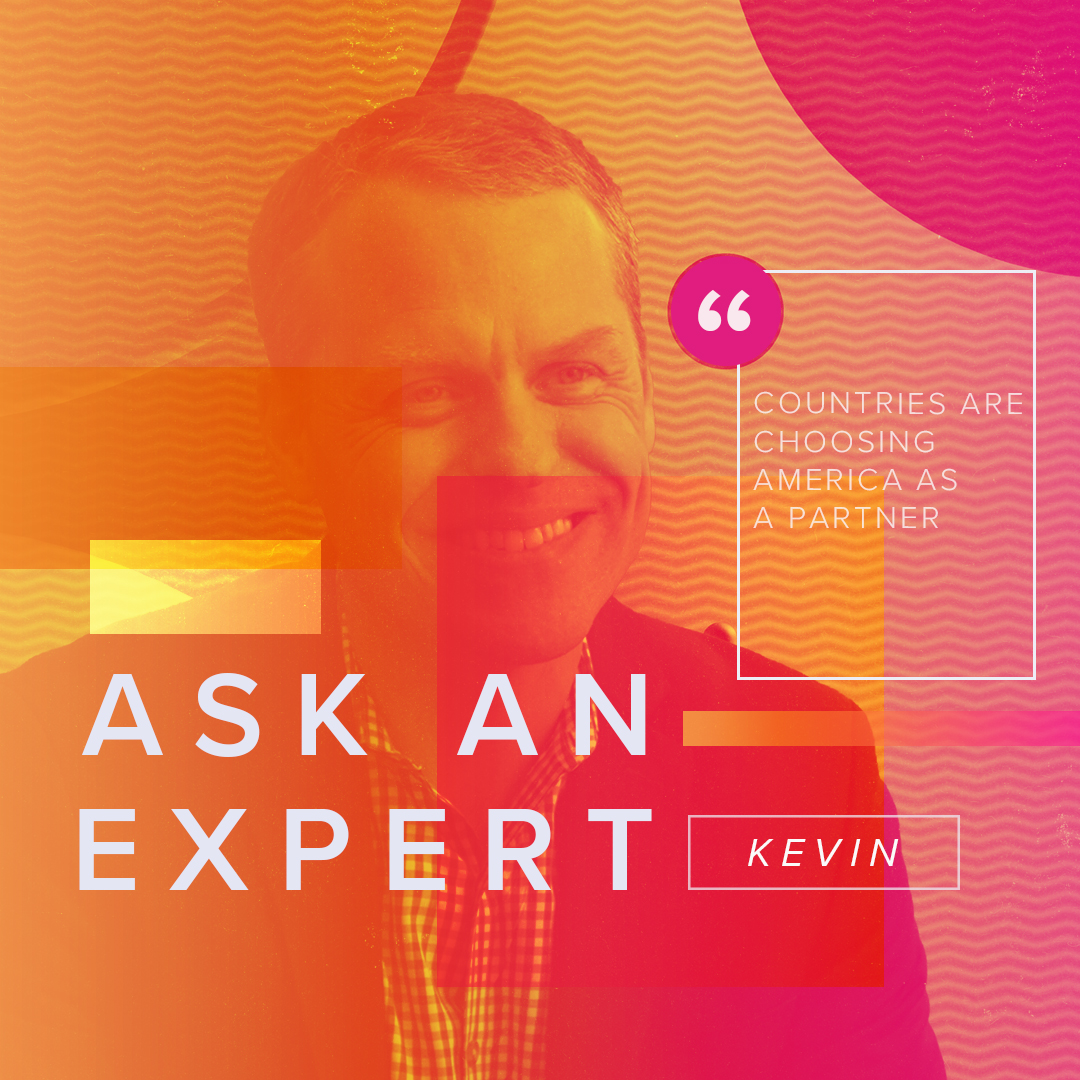
Now the story is back to the most important story in my mind, which is about energy security, and recent events in the Persian Gulf and around the world about hydrocarbon supply vulnerabilities have only reemphasized the importance of nuclear as the piece of the puzzle that provides secure, clean baseload power, and that energy security is the driver for nuclear. And I think that's what's going to drive us going forward.
As more and more countries are changing their minds about nuclear energy or making plans to build their first reactors, it’s important that they team up with a reliable international partner. Justin makes the case for the U.S.:
When you're ready to do nuclear, you need a good, reliable partner. And when you look at the partners that are available from the U.S., you've got a competitive market, so you're getting a good price, and you've got a reliable supplier and a multiplicity of vendors, so that you know that you're gonna get the best possible deal for your country.
One crucial area where the U.S. stands out as a partner is regulation. Justin describes the U.S. Nuclear Regulatory Commission (NRC) as the “gold standard” regulator—and when we team up with other strong regulators in partner countries, we create a “platinum standard.”
Maintaining the gold standard but improving efficiency is central to what NRC is all about. When we take that overseas, what customers say—especially if they're newcomers—look, we don't know how to regulate a power reactor. We may have a test reactor or a research reactor in our country, but we don't know what to do with a power reactor. And so, they will look to mentorship from an institution like the NRC to help them move through the process of review.
Don’t miss the season six premiere for a primer on international nuclear before we set off to our first destination!
The next episode airs on Thursday, July 23. Make sure to tune in, Fissionaries!
Justin Friedman The world is a changing place and we have different challenges facing us, but the common factor is energy drives prosperity, and the risk of energy vulnerability, energy supply, and stability threatens our prosperity. So, nuclear is a really nice piece of the puzzle in order to secure prosperity, secure energy supplies, and keep our economies growing.
Mary Carpenter This is Fissionary, a show exploring how nuclear powers your world. I'm Mary Carpenter.
Jordan Houghton And I'm Jordan Houghton. Let's jump in.
Mary Carpenter Hey, Jordan!
Jordan Houghton Hey, Mary! Hello, Fissionaries! We’re back.
Mary Carpenter I'm very excited because we have an awesome season coming up for you guys.
Jordan Houghton We are going on a world tour.
Mary Carpenter We're going around the world!
Jordan Houghton This season, for season six, we'll be looking at how different countries around the globe are thinking about nuclear—who's investing, who is building, who are rethinking old assumptions, and who is shaping what comes next.
Mary Carpenter This is such an important time to talk about this because there's so many reasons that people around the world need nuclear, so we'll dive into that. We'll be talking about which countries are really interested, because it seems like every day there's a new country that becomes more interested in nuclear, takes the next step on nuclear. There's so many different phases of people of interest to actually signing agreements, to starting to build. There's just a lot going on, and we thought that now was the right time to take it international.
Jordan Houghton Yep, and we're kicking off the season with a former diplomat, not Keri Russell, though I do love that show.
Mary Carpenter I actually ran into Keri Russell once internationally.
Jordan Houghton You did?
Mary Carpenter I did. Yeah, in Paris. In Paris, we were out to dinner, and she was celebrating her daughter's birthday at the table right next to us.
Jordan Houghton Did you talk to her?
Mary Carpenter No, I wish, but I thought it was important to mention because it was internationally that I saw her.
Jordan Houghton Wait, that's—there's like multiple tie-ins, it's, like, all coming together here. Was the whole family there?
Mary Carpenter Oh, yeah, yeah. The whole family was there.
Jordan Houghton Wow, that that's, like, taking my breath away, Mary. I don't even know where to go from here.
Mary Carpenter It was pretty cool.
Jordan Houghton Well, we are gonna jump in with a former diplomat and help set the stage for the season. Justin Friedman is gonna give us an overview of sort of the global landscape, and then, as we go through the season, we'll do some deep dives, and I'm just sort of excited to virtually travel the world via this season.
Mary Carpenter Let's go!
Jordan Houghton Today, we're joined by Justin Friedman, founder of Friedman Global Strategies and former senior advisor for commercial competitiveness in nuclear energy at the U.S. Department of State. Justin has a wealth of experience working at the intersection of diplomacy, energy security, and international nuclear development, so we're excited to be kicking off the season with him. Justin, welcome to Fissionary. I got to see your diplomacy in action when we were on the UK trade mission together last year, so I'm really excited to have you here to talk to us today.
Justin Friedman I'm really delighted to be here, and thank you for this opportunity.
Jordan Houghton So, tell our listeners how you got to where you are today. What got you interested in diplomacy and what got you interested in nuclear?
Justin Friedman Well, my diplomacy and nuclear story probably starts, actually in, I think it was 1975, 76, 77, somewhere in that timeframe. I was a young man in middle school or maybe just started high school. And my father was a participant in the U.S.-Soviet exchange program. And as part of that program—my father was a doctor, but Russian doctors, Soviet doctors came to the U.S. and came to our house. And so, I got to see international diplomacy as a young man, not knowing what diplomacy was. And I think it was that moment when I saw that there are other people out there and other worlds out there that stimulated my interest in the world and in doing something global. Flash forward to about 10 years later, and I started applying for the Foreign Service and finally did get in in the mid-90s. What drove me into nuclear was purely happenstance. And it was started with energy, not nuclear. I was working on the Russia desk at the State Department having done two overseas assignments. And I was asked to move off the desk and move into something called Caspian Basin energy diplomacy, which was about building an oil pipeline from Azerbaijan through Georgia to Turkey to provide an outlet for hydrocarbons—first oil, but then later gas—from the Caspian Basin to world markets in a way that didn't give Russia a veto over how exports would happen. And it was a fascinating project, it was a lot of fun, and that got me started on my energy journey. But then it was when I was assigned to Bulgaria where I really got serious about nuclear. Bulgaria has a nuclear program, a well-operating reactor program, but they were 100 percent dependent on Russia for fuel for their nuclear program, but also 100 percent dependent on Russia for hydrocarbons. So, part of our strategy for Bulgaria was to help them overcome that dependence on Russia. And they were finally able to procure Westinghouse nuclear fuel for their reactors, their Soviet-designed reactors, and that helped them break that monopoly. When I came back to Washington after that assignment and my colleagues in the State Department said, hey, we've got this nuclear equation, and we've been saying, don't do Russia, don't do China nuclear for a long time. Why don't we have someone like you go around the world saying, yes, do nuclear with America. That was the start of my true nuclear deep dive of what I've been doing the last four and a half years, four years at State and now half a year as an independent consultant. To wrap it up, it's all about sovereignty, national security, and energy security.
Jordan Houghton So, let's start by setting the stage for the audience. When you look around the world right now, what feels most significant to you about this moment for nuclear?
Justin Friedman I have to take a half step back from your question and talk about the nuclear story. And like you said, I've been saying that—telling the nuclear story for the last four years as a diplomat, and now telling it from the private sector, but there were three basic stories that we had for nuclear. And when I started, it was all about decarbonization and alternatives, conventional sources of power generation, hydrocarbons in particular. Then we moved on to the, oh my gosh, data centers need all this power. We have to have good, clean, firm power for data centers. And now the story is back to the most important story in my mind, which is about energy security, and recent events in the Persian Gulf and around the world about hydrocarbon supply vulnerabilities have only reemphasized the importance of nuclear as the piece of the puzzle that provides secure, clean baseload power. And that energy security is the driver for nuclear. And I think that's what's going to drive us going forward.
Mary Carpenter So a lot of countries have been interested in nuclear for a while now, but now we're actually seeing projects move from feasibility studies into designs or licensing, even construction in some places.
Justin Friedman I think it shows that nuclear and SMRs in particular are moving out of the hype phase and moving into the practical reality phase. And I think that's really important. It was a challenge for the last four years going around the world saying, please take a look at American SMR technology, we'd love to have you consider that as part of your energy mix. And the first question out of customers or the potential customer's mind was, okay, show me a working reactor so I can kick the tires. And I would say, well, give us a year or two. Now today, there are tires to kick, if you will, forgive the metaphor. We've got projects under construction, under nuclear construction in across North America, and I think that's a great sign for the industry that we're moving beyond hype and into the practical realities of the program.
Mary Carpenter That's super interesting. It seems like those same themes that were important then are still important now.
Justin Friedman Absolutely. It's all about energy security. The world is a changing place and we have different challenges facing us, but the common factor is, energy drives prosperity. And the risk of energy vulnerability, energy supply and stability threatens our prosperity. So, nuclear is a really nice piece of the puzzle in order to secure prosperity, secure energy supplies, and keep our economies growing.
Jordan Houghton For our listeners who don't follow this as closely as we do, what is your elevator pitch for partnering with U.S. nuclear versus Russia or China? If you're going out to sell another country on who should be their nuclear partner, what do you tell them to make the case for U.S. technology?
Justin Friedman What I do say is that when you make a decision to do nuclear—and you should think about it and take your time—but when you're ready to do nuclear, you need a good, reliable partner. And when you look at the partners that are available from the U.S., you've got a competitive market, so you're getting a good price, and you've got a reliable supplier and a multiplicity of vendors, so that you know that you're gonna get the best possible deal for your country.
Mary Carpenter So where are you seeing momentum globally right now? Are there countries or regions that really stand out to you?
Justin Friedman I think the obvious place to look first is Europe, the EU member states in particular. We've seen a whole bunch of announcements by U.S. technology companies that are building their first reactors or building their first SMRs in Europe. Poland, Romania, the State Department has just announced feasibility study work completed in Slovakia and new feasibility study in Croatia. So, across Europe, you're seeing that—the real driver. And I think that's what I've been saying for a long time, but I think where the first movers are happening. What's more interesting to me is how that first movers have now spread beyond Europe. And so, we're seeing markets in Southeast Asia, from Indonesia, Malaysia, Singapore, Vietnam, to Latin America, countries like Colombia, Brazil, Argentina—Brazil and Argentina obviously have nuclear programs. But other countries across Latin America are looking at expanding or starting programs. And then, interestingly enough, Africa. Africa is a really interesting case because it goes back to basic economic theory where you take advantage of your relative lower level of development to jump over a technology phase and move directly into something more reliable. And African countries are very seriously looking at nuclear now in fact, and very soon I'll be back in Africa, speaking at a summit there in Rwanda, to talk about how they can take advantage of this opportunity to build out their grids in a more reliable way.
Jordan Houghton So, over the course of this season, we're gonna do deep dives into several different countries, and you're helping us set the stage for that by giving us sort of the thousand foot view. In practice, what does a thoughtful nuclear rollout look like, and how is that important in building public buy-in and confidence around this energy source in places that haven't had it before?
Justin Friedman Fortunately, a lot of the hard work has already been done for us by the IAEA. And so, there is a model for countries to follow that is 19 points and three milestones, and it talks about how to move through the decision making process to decide if you want nuclear, and then if you make that ‘if’ decision, then that—the how and when. And so, I think that is the best starting point for most countries. And as a consultant, that's exactly what I say, and I try to provide support. But the most important thing in the process is something you hinted at in your question, which is public buy-in. Nuclear can only happen if the public supports it. And for obvious reasons, the technology is much better than it was in the past, but the public mindset still remembers Chernobyl. People remember Fukushima. And so, you need to have open public engagement with nuclear, about nuclear, so that people can understand what is today's technology, but also understand the opportunity it creates for communities for development. And the interesting fact is—this is something I cite all the time—is that when you do public surveys of support for nuclear, the communities that support nuclear most are the communities that already have a nuclear reactor or a nuclear program nearby. So, nuclear can tell a good story, but we have to be aware of the fact that there are some bad stories out there and we have to tell that good story for development, for communities, for good jobs, and for economic security.
Mary Carpenter So, you told us a lot about different countries that want nuclear, and I'm sure they all want them for different reasons. And we know large reactors, SMRs, micro-reactors, new advanced designs all play different roles. How should listeners think technology fits in the international landscape?
Justin Friedman The international landscape is probably less important, to answer your question, than the country-specific landscape. Every country has its own built grid and it has its' own demand projections and growth projections. And the most important thing for nuclear and the selection of large, SMR, micro, what have you, is how does nuclear fit into their geology and into their grid, geography, and topography and what the demand projections are? I think there's really good cases for large reactors in some markets for some purposes. I think that there's a fantastic case for SMRs around the world for multiple uses, but there's also great case for micros in very interesting applications, be it remote communities, mining opportunities, or even data centers that need good backup systems.
Jordan Houghton As these technologies scale, regulation becomes just as important as the innovation of the technologies themselves. How does the U.S. Regulatory system fit into that and help set a global standard? And how does that fit in with countries looking to deploy American nuclear technologies?
Justin Friedman I've always believed that one of the strongest sales points of U.S. nuclear technology is U.S. regulation. And that is the U.S. NRC has always been perceived in—because it truly is—the gold standard for regulating nuclear reactors. Now, of course, some in the industry will say, well, they were too slow, they were too cumbersome, too many layers of bureaucracy. And there's some validity to those complaints, and I have some very close friends who've been up and down the various positions in the NRC, and they will be the first to tell you that yes, the NRC can be more efficient. But I think what's happened in the last three years is that the NRC has said, we need to do better for our customers, for our stakeholders, and they've gotten much more efficient. And you've seen results of license reviews like the review for TerraPower went faster than expected. So, the maintaining the gold standard but improving efficiency is central to what NRC is all about. When we take that overseas, what customers say, especially if they're newcomers, they'll say, look, we don't know how to regulate a power reactor. We may have a test reactor or a research reactor in our country, but we don't know what to do with a power reactor. And so, they will look to mentorship from an institution like the NRC to help them move through the process of review. And frankly, the SMR revolution, which is happening now, is going to be built on the basis of leading regulator reviews like NRC, like the UK's regulator, like the Canadian regulator, all working together to create a template and a design certification that allows other countries' regulators to focus on local factors like environment, like geology, and so that they can focus their energies on making sure the design fits their conditions, not so much is the design good. And that's why keeping the NRC as the world's gold standard regulator is in the national interest of the United States and in the economic interest of U.S. Companies.
Mary Carpenter So, beyond regulations and the regulators, have you seen any good examples of international partnerships that have or are currently working well?
Justin Friedman I just hinted at the one, which is the partnership for review of the GE Vernova technology. The Canadian regulator is the lead, but the U.S. regulator and the UK regulator and also the Polish regulator are working together, and they're not just checking each other's work, they're dividing the work. They're doing parts that they do well and sharing that it results with the other so that there's cross-pollination, cross-fertilization. And the result is, if the U.S. NRC is the gold standard, then maybe the three or the four regulators together are the platinum standard—I've just invented that! But the result is multiple markets now will have approval for a technology design that can be deployed at fleet scale. And that's exactly what we're driving for with nuclear, is that we want technologies to be deployable at the fleet level and that requires repetition than it requires consistency across the regulatory space.
Jordan Houghton So, I'm curious then—you talked a little bit about how community buy-in is really important, and because there have been incidents like Chernobyl and Fukushima. But in some of the conversations we've had on the show previously, international guests have talked about how there's less skepticism and more support where they are than there is in the U.S. Most of our listeners are here in the U.S. so they have that sort of U.S.-Centric view. Especially because you have countries coming together to make the platinum standard, as you say. I like that phrase! Do you find that there is just generally more support for nuclear outside of the U.S. in certain pockets because they just have approached it differently and come at it a different way and they don't have the stigma that maybe has come up in the U.S.?
Justin Friedman I haven't done deep public opinion survey research to answer in a very informed way, but I'll be anecdotal. I think industry, when we talk to ourselves, we all say the technology is great. And so, industry professionals, no matter where they come from, know the value and the safety and the security of the technology. When you go outside of industry circles, then you get differing opinions. I'm blessed to be married to a wonderful woman who came from Turkey originally. So, I have family in Turkey, and I have friends around the world. And so, when I talk to people who aren't in the industry, they're the ones who say, nuclear? Oh my gosh. And it's those folks we have to learn how to talk to better, and talk with better. Because yes, there is the sense the industry knows it's safe. And when engineers and the industrial community understand the safety, but it's not us we have to convince. It's the folks who are going to be voting for politicians, voting for laws. Those are the folks we have to engage more effectively, and share with them what's really happening, and then move forward. [JR4]
Mary Carpenter In that same vein of the question Jordan just asked, we need a lot more workers in nuclear in the U.S. but also around the world, and I know that's a big focus for U.S. companies. Have you seen any good examples of workforce recruitment internationally?
Justin Friedman Some of the best work is being done by the U.S. State Department. This is my bias, so I put it on the table. But the work like the U.S. first program has done in Ghana to create a welding training school, to get welders up to nuclear skillset, I mean, that's, that's the kind of thing that needs to happen more broadly. When I go around the world and we talk about nuclear technology, and of course, the first thing is, is it safe? Is it secure? Yes, yes. And then what's it going to cost? And then, then they start thinking about what's it gonna take to build it. Well, there are lots of companies around the world with fantastic mega project construction skills. But it's getting those craft skills certified at the level they need to be. That's gonna be the biggest challenge.
Mary Carpenter The project in Ghana is very interesting.
Jordan Houghton So, for countries that are new to nuclear or going to grow their fleet over the next several years, what are the most important conditions that need to be in place before they can move from interest to construction?
Justin Friedman We've talked a little bit about this already. The first and most important condition is public acceptance. And that's something that has to be, start from day one. And so, when I've encountered countries that say, well, we're thinking about nuclear, but we don't want to talk about it publicly, I always say, don't hide from it, because the further you get down the path, if a decision to get into peaceful nuclear energy is perceived as something that's done in secret in government, you'll build in an opposition for it from day one and that's the worst thing you can do. So, public engagement has to be from day one. The second thing is you need to take a look at your market space. How are you going to fund this kind of build? Nuclear isn't cheap. We all know that. And to make it happen, you need a steady revenue stream against which you can finance a nuclear build. And there's a lot of strange market-driven, strange economics right now. Someone has to take a look at this market, and come up with more stable pricing mechanisms so that the financing flows through. So, people first, financing, and then the third piece is regulatory. You have to take look at your regulations, and making sure that you're harmonized fully with gold standard regulators like the United States. It's if you have micro adjustments that seem small and less important in your regulations to meet some kind of specific local concern that can get in the way of fleet-built reactors and drive your construction costs off, drive your operating costs up, and create a condition that the nuclear can't succeed the way it should. So, of the three things, public engagement, market structure and regulation, I think those all have to happen early on in the process to make sure that you have a successful nuclear program.
Jordan Houghton So, in the near term, what are you most excited about?
Justin Friedman I'm most excited because now that we're moving into the real construction phase, we're no longer in the mythology phase where you get crazy valuations from stock markets that are trying to catch the next wave, buy the next Apple computer, and we're seeing real, practical construction happening. And that really makes me excited, because now when I go to countries and say—and I think this is me being better at it too—I say, no, you're not gonna build one SMR. We're gonna start with the idea of building a fleet. Because we know the first one is gonna be a little bit pricey, but it's the sixth one that's gonna show you how well your country can do and how well you're market will do with this technology.
Mary Carpenter All right, we've got one more question for you. [00:25:53]It's gonna be. [0.4s] We're asking everyone this season. What's your favorite place you've traveled to and why?
Justin Friedman I'm going to bore you, I'm gonna say Türkiye again, because I mean it is family and I love to swim in the ocean, it's got great beaches and great water to swim in. But seriously, it's also a great market, and it's a dynamic growing economy. It's had its challenges, and the fiscal house is not in great shape, but the need for power and the need for stable complement to the investments they've made in renewables makes nuclear a great market, and I'm looking forward to building something there.
Mary Carpenter Awesome. Thanks so much for joining us!
Jordan Houghton Thank you.
Justin Friedman Thank you for having me!
Mary Carpenter Well, that was a great conversation. So interesting to really set up just the global landscape that we're in right now. And Jordan, I know that you've traveled with Justin before, so tell us a little bit about that, we didn't dive into that a lot.
Jordan Houghton Yeah. I mentioned at the beginning that he was on an NEI-sponsored trade mission to the UK, and it was really interesting. It was my first time traveling internationally with NEI, and basically what we did is we traveled with CEOs and other high-ranking officials of countries who are interested in doing business, in this case in the UK, but we do these all over the world, so it depends on the country who's going and who's interested in business there, and do meetings with government officials, energy ministers, elected officials in the country that we're in. And it was fascinating, Justin was there at the time, He was still with the U.S. Department of State, and we had meetings at. The U.S. Embassy, and we got to do a reception at the Ambassador's Residence, which was my favorite part because it was just fun to see it. But it's really interesting to see that the conversations about the commerce between the countries and the partnerships forming in real time via that sort of work and super important, didn't understand how it worked till I went on it, and it was really cool to see all the dialogue happening and seeing progress being made right there.
Mary Carpenter That's so interesting that you got to go and experience that, because we, our organization does a lot of these, and all over the world, I mean, all over. And it really just shows how interested foreign nations are in U.S. technologies, and working with the U.S. government, and just how much demand there is for nuclear around the world right now, just the sheer amount of these trips that happen every year.
Jordan Houghton Yeah. The enthusiasm was palpable, and it was just really neat to see tangible movement while we were there, you just see the progress being made and so incredibly worthwhile. And I'm excited for what's to come.
Mary Carpenter Yeah, and we'll dive into some of these countries that NEI has been on trade missions to throughout the season, so make sure you guys tune in.
Jordan Houghton So, if you enjoyed this episode, make sure to follow Fissionary on Apple, Spotify, or wherever you listen. And while you're at it, leave us a rating or review, it helps others discover the show.
Mary Carpenter Thanks for listening! And we'll see you on the next episode and our first stop internationally.
.png?language=en-US)