

FAQ: How is Used Fuel Managed?
DownloadResponsible Stewardship in Nuclear Energy
All energy sources have waste streams, and all energy producers must do three things to address them: 1) manage them safely, 2) have a place to put them, and 3) be able to pay for managing and disposing of them. The nuclear industry, as good stewards of public safety and the environment, works proactively to achieve all of these. Most of the radioactivity associated with nuclear power remains contained in the fuel in which it was produced. Given that used nuclear fuel is radioactive, it must be safely stored for long periods of time until the radioactivity naturally fades.
Nuclear energy has been used to produce nearly 20 percent of U.S. electricity for decades, yet the volume of all used fuel produced by the U.S. commercial nuclear industry since the late 1950s is so small that it would fit in a single commercial distribution warehouse. If all the power you ever used came from nuclear energy, your lifetime used fuel would fit in a 12-ounce soda can.
The nuclear energy industry safely manages all of its byproducts and factors those responsibilities into its production costs. To ensure responsible long-term management of used nuclear fuel, an integrated program—combining today’s safe temporary storage of used fuel with the development of consolidated storage facilities and a permanent disposal facility—will best support long-term public safety and environmental protection.
What & Where is Used Nuclear Fuel?
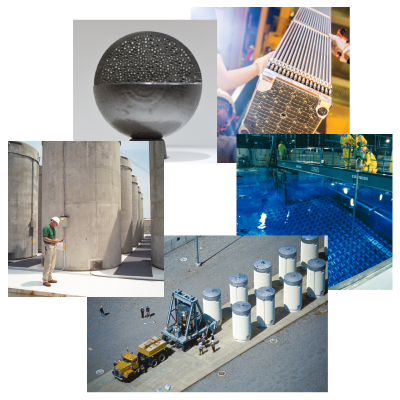
Used nuclear fuel is what comes out of the reactor after producing energy for several years. Used nuclear fuel is extremely compact and is stored safely at plant sites in cooling pools or robust dry casks. The U.S. Nuclear Regulatory Commission (NRC) has concluded that used nuclear fuel can be stored at plant sites or in consolidated interim storage facilities for at least 100 years.
- Nuclear fuel is solid when it goes in a reactor and solid when it comes out.
.png "Untitled-design-(2).png")
- In water-cooled or liquid metal-cooled reactors, fuel assemblies are sets of metal tubes that hold uranium pellets.
- In high temperature gas-cooled reactors, uranium particles—the size of poppy seeds—are coated in ceramic and graphite to form pellets or pebbles.
- Molten salt-cooled reactors may use fuel forms similar to those described above, or fuel that is liquid when operating, but hardens when removed.
- On-site storage of used nuclear fuel is protected and secured to the same high standards as the plants themselves.
Who Ensures Long-Term Used Fuel Management?
Under federal law, the U.S. Department of Energy (DOE) is responsible for permanently storing and disposing of the nation's used nuclear fuel.
- Electricity consumers have set aside more than $50 billion to pay for used fuel disposal from the moment operations begin.
- This savings fund to pay for a permanent disposal facility earns more than $1.5 billion per year in interest.
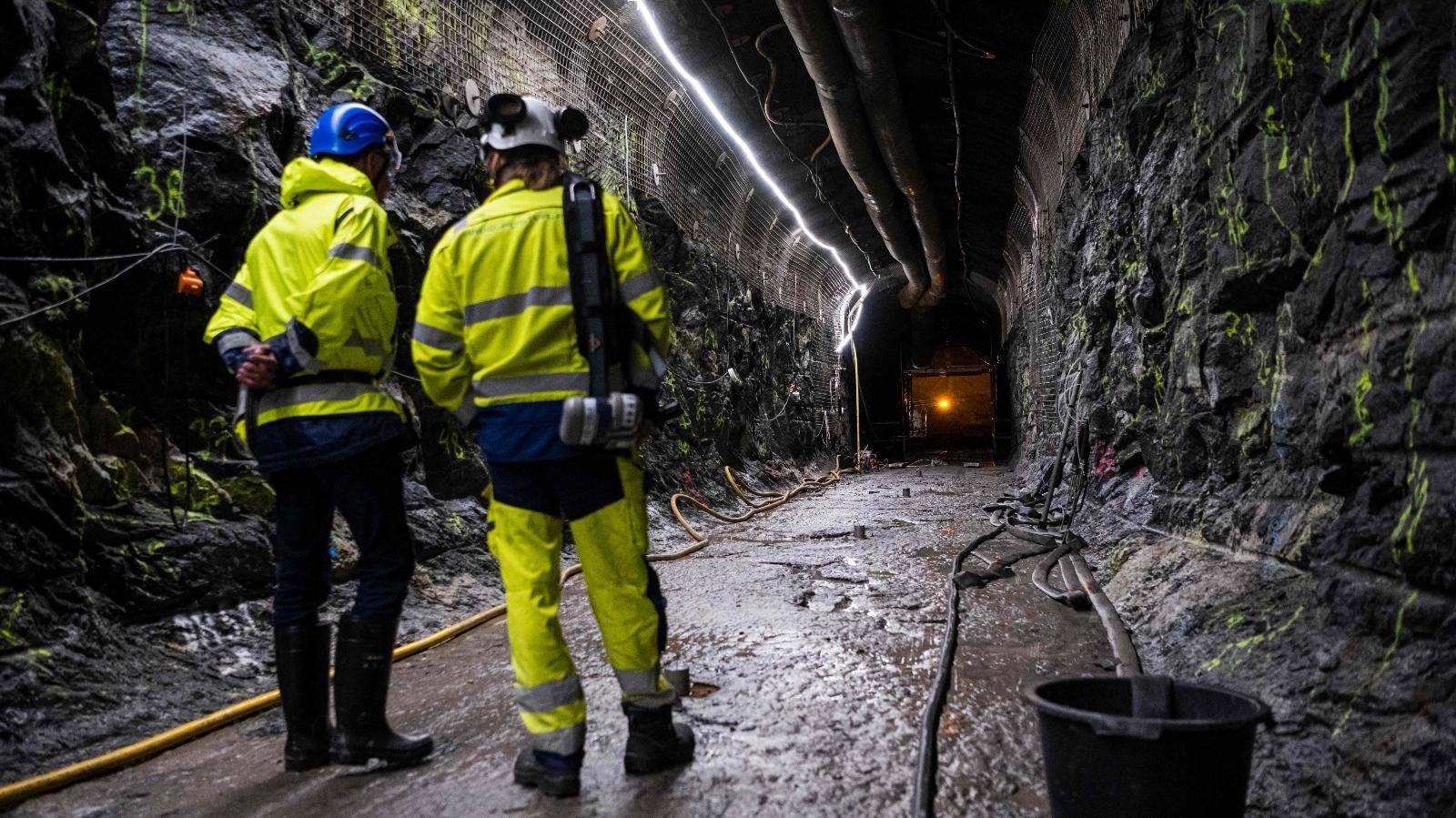
- Scientific consensus worldwide confirms that disposal in a specialized facility deep underground is the best approach to permanent disposal.
- Global progress on deep geologic repositories: Finland, Sweden, France, Canada, and Switzerland
A SNAPSHOT IN TIME
Inclusive Community Engagement
- A proposed permanent disposal site for high-level waste at Yucca Mountain, Nevada has been found to meet the stringent safety and environmental regulations of the NRC and U.S. Environmental Protection Agency. However, the project was opposed in Nevada and subsequently defunded by Congress.

- DOE is pursuing efforts to facilitate inclusive community engagement and request public feedback on collaborative-based siting, management of used nuclear fuel, and federal consolidated interim storage.
- Until an interim or permanent solution is provided, the NRC has determined the industry is safely managing used fuel at plant sites.
How Will Used Fuel Go From Sites to Storage?
- Once removed from a reactor, used fuel assemblies initially cool in a storage pool. The concrete and steel pool and the water shield workers from radioactivity.
- When cool enough that it no longer needs to be stored underwater, typically for 2-5 years after removal from the reactor, used fuel is transferred and stored in large steel-reinforced concrete containers, which are
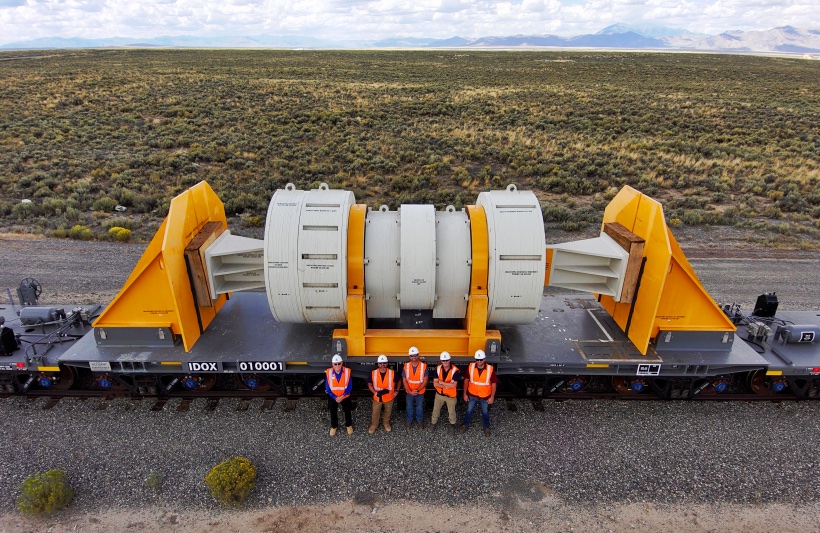 designed for long-term storage until a site is available for permanent disposal. They are safe enough to walk up to and touch.
 - DOE is required by law to transport and dispose of all U.S. commercial used fuel.
- Over 1,300 used fuel shipments have been safely completed in the U.S. by truck, barge, and rail.
- Some new business models for micro-reactors will have the reactor and used fuel shipped to a central facility shortly after the reactor is taken out of service.
Can We Recycle Used Fuel?
Yes—Used fuel has only exhausted part of the potential energy in the uranium pellets after five years in a water-cooled reactor.
- The U.S. does not currently recycle fuel, and while there is no prohibition, it was historically not the most economic method for used fuel management or obtaining new fuel.
- Some countries, like France, reprocess and recycle nuclear fuel, extracting some elements still capable of generating energy for use in new fuel and encasing the radioactive byproducts in solid glass logs for permanent disposal.
- Some advanced nuclear designs are pursuing recycling as an option for a more affordable source of their fuel, or to recover isotopes that can be used for medical or other applications.
- Recycling would not replace the need for disposal in a geologic repository, but can further sustainability and energy security goals.