Do you understand how nuclear energy works?
Don’t feel too bad if not, because up until a few months ago, I admittedly didn’t have a good grasp on the topic.
Sure, I knew nuclear energy had something to do with atoms and chain reactions, but other than that, I had little sense of what nuclear energy really was until I started working at NEI.
Nuclear doesn’t often make the front page. It’s not seen as exciting as renewables, and unfortunately can’t seem to shake some misconceptions. Nuclear energy has a bit of a PR problem. I know that because if it didn’t, we would be paying more attention to the plant closures that are chipping away at our nation’s number one source of clean energy.
Which makes me even more eager to share the things I’ve learned:
- Nuclear energy is the largest source of clean energy in the United States. Did you think it was solar energy or hydropower? Me too. If we need 24/7 electricity to power our homes so we can stay up late scrolling through Instagram while watching Netflix with all the lights on (guilty), then we need an energy source that’s also on 24/7 no matter the weather. I was shocked to find out that nuclear generates 20 percent of this country’s electricity and provides more than 56 percent of our emission-free electricity – more than all other low-carbon sources combined!
- Nuclear plants are cornerstones of communities all over the country. Each nuclear plant employs 400 to 700 workers. There are 98 nuclear plants across the United States and many of these plants are in rural areas where high-paying jobs are sorely needed. The ripple effect of large plants like FitzPatrick in upstate New York extends to the surrounding communities, where schools and community services benefit from the taxes that plants pay. If the clean energy argument wasn’t enough, this point really hit it home for me.
- No other source of energy generates electricity as efficiently or as abundantly as nuclear. Nuclear plants operate 24/7 at more than 92 percent average capacity. Capacity is essentially the maximum amount of energy you can potentially generate. Take my new kitten, Tuna, for example. When she is running all over my apartment and takes a bounding leap to sink her claws into my curtains, she is most certainly operating at 100 percent capacity, her full exertion potential. Like Tuna, nuclear plants are almost always generating the most energy possible. Compared to renewables, which generate electricity intermittently, this is extremely impressive.
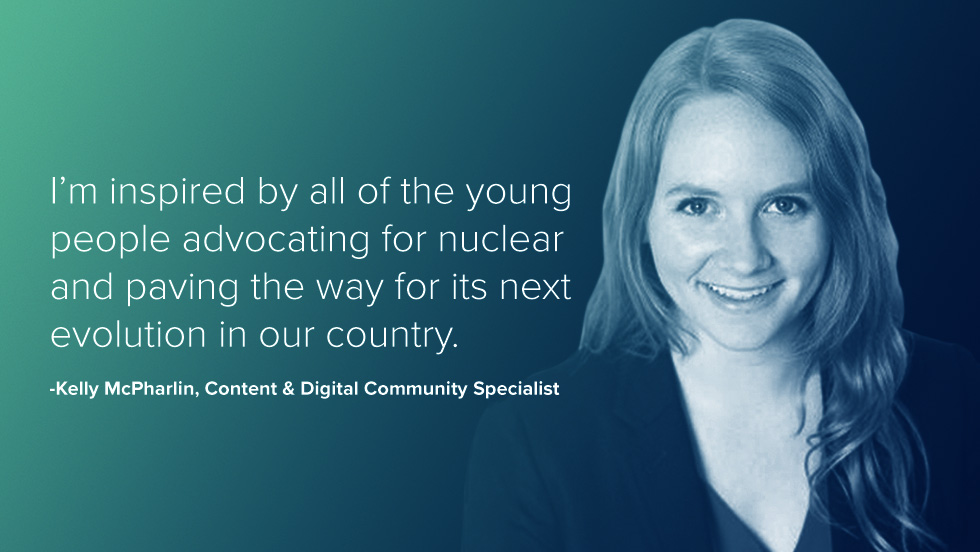
- Young people are the future of nuclear. I attended my first Millennial Nuclear Caucus in Seattle last month and was energized by all of the passionate young people there are in the nuclear field. With so many baby boomer nuclear employees reaching retirement age, and with exciting new technologies now being worked on by so many brilliant people in the industry, there’s never been a better time to work towards our clean energy future. I’m inspired by all of the young people advocating for nuclear and paving the way for its next evolution in our country.
- Nuclear isn’t scary. Nuclear energy isn’t the same as nuclear bombs or weapons. This point may be obvious, but I think bears repeating. More nuclear energy does not mean a proliferation of nuclear weapons, and nuclear plants are actually among the safest and most secure industrial facilities in the country. With incredibly high safety standards and advancing technology, nuclear offers a sustainable and inexhaustible power source for energy-hungry developing nations.
As for the last (half) thing I’ve learned here? Admittedly, I’m still learning the ins and outs of how this awesome technology provides all these benefits to me. Thankfully I work with incredibly smart and dedicated people who can help me figure out the rest.