It seems each week we see more and more climate advocates speaking out for all zero-emission technology to be part of a clean energy grid. Part of this recognition is that America’s nuclear plants—which currently provide more than 56 percent of all carbon-free electricity in the United States—need to keep running if we are to reach a timely climate solution.
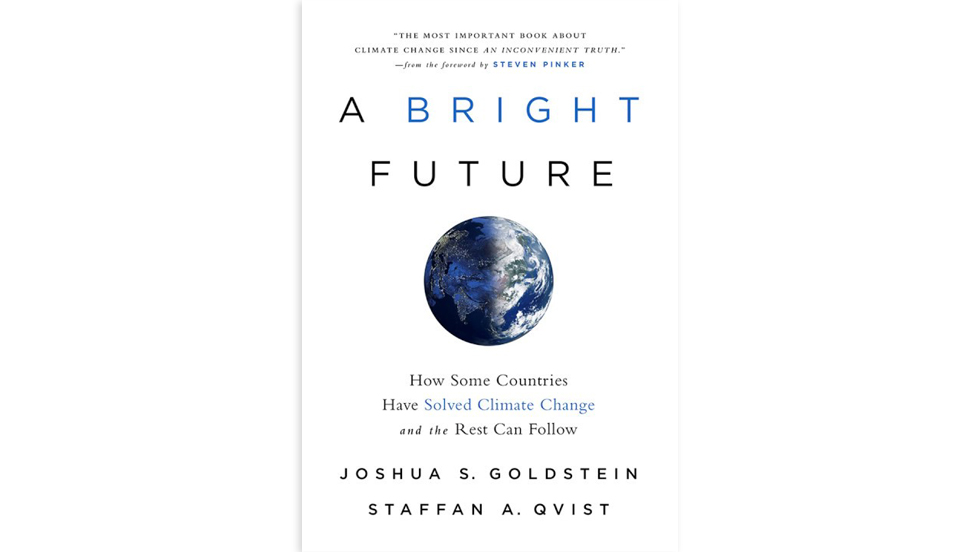
Joshua Goldstein, a professor emeritus of international relations at American University, and Staffan Qvist, a nuclear engineer and clean energy consultant, think that “only nuclear energy can save the planet” and lay out their argument in a new book, “A Bright Future: How Some Countries Have Solved Climate Change and the Rest Can Follow.”
Goldstein recently spoke with NEI’s Matt Wald about his work and views on how we can achieve a clean energy future.
Q: Joshua, you write that we need to stabilize the climate fast. Can we afford a zero-carbon economy?
A: Yes. You just need to make vast amounts of cheap, clean electricity, and then you can switch off fossil fuels, really quickly. We can’t afford not to do that.
Nuclear can do that quickly. The speed is because nuclear power is so concentrated. A pound of coal, if you turn it to electricity, will power an American-style house for about an hour; nuclear fuel will power it for about two years.
Even the Finnish nuclear plant that’s been so delayed, when it finally comes online it will add clean energy faster than all of the wind turbines in Denmark.
China is emitting more than the United States and the European Union combined. And right behind China are big countries like Indonesia and India that want more electricity and deserve more electricity, and have a moral right to more energy. But right now the cheapest way to get it is coal or some other fossil fuel.
You can’t tell them, “Sorry, we used up the carbon budget for the world, and you have to stay poor.” You have to have something better than fossil fuel. If that’s nuclear power, they’ll use it. If not, they’ll use something else.
Right now, renewables are not going to be able to displace fossil fuel in the poorer countries. They can’t do it fast enough, although they will have some role to play.
Q: How can we get more nuclear power on the grid?
A: We just have to be smarter about how we do it. Right now nuclear power in South Korea is the cheapest there is. Pick a standardized design and build a lot of them, the way we do with any other industrial product. The first one’s really expensive and then they get really cheap.
China could get coal off the grid fast. They just built four AP1000s. Pick a design, replicate it, roll it out really large scale. That would take about 12 percent of the world’s carbon emissions down, just like that. It would be the biggest step that has ever been taken in climate change.
Q: You are an emeritus professor of international relations. How did you get interested in energy and environment?
A: I started probably the first curbside recycling program in the country, in California in the early ‘70s. I didn’t like nuclear power. I wasn’t a big anti-nuclear activist, but I said “Small is beautiful,” and we didn’t trust technology.
My son became a climate activist. He said, “Dad, you folks are really messing up, leaving us this planet.” About five years ago, he said everybody should drop what they’re doing and work on climate change.
Well, I’m a global trends person. This is a big international trend. It has big international relations components. So I said, “You’re right, I’m going to learn about climate change.”
I started digging into it, reading everything I could get my hands on. And I thought, “Had anybody done this, decarbonized really fast?” And Sweden and France had done that. And the guy who was writing about this was this young Swede, Staffan Qvist. So I said, “Do you want to write a book?”
Q: What will the grid look like in 2050 or 2075?
A: It can’t have fossil fuel in any significant amount. It’s going to have some hydroelectric, but that’s limited in how it scales up. It can have some renewables, but that’s not the majority of the grid.
I see the electrical grid in 2050 as probably eight times larger than now, and the lion’s share has to be nuclear power.
That’s the way you can actually decarbonize that fast.
We know it can happen that fast, because Sweden and France did it that fast relative to their gross domestic product.