I love living in Washington, D.C.—a wonderful place envisioned by the Founding Fathers and the only city to be written about in our Constitution. But, I definitely do not love D.C.’s muggy summers.
Over the last couple of weeks, I saw some of the worst summer weather, from flash floods submerging parts of the National Mall and monuments to waterfalls dropping from ceilings of Metro, and even some flooding in the White House basement. It was immediately followed by a very hot weekend, where the temperature reached 96 degrees making it the hottest day of the year. When you factor in humidity, it felt as hot as 106! It made me glad that carbon-free nuclear provides more than a third of D.C.’s electricity.
These wild fluctuations in the weather got me thinking: are we experiencing these types of extreme summer weather events more frequently? I’ve always heard the discussions around increases in the average annual temperatures, but what about the impacts?
The National Oceanic and Atmospheric Administration (NOAA) keeps track of how various types of billion-dollar disasters have changed over time. We are experiencing more of them and they are getting expensive. The trend is only likely to continue.
So what does this have to do with nuclear power?
If we look at the map of billion-dollar summer weather events—including droughts, flooding, severe storms, tropical cyclones, hurricanes and wildfires—we can see that the Southeast, Midwest, southern Plains and Mid-Atlantic regions have suffered through a significant number of them.
Luckily, these states are home to many of the nuclear power plants in the nation.
These power plants are essential to helping disaster recovery efforts by providing massive amounts of carbon-free electricity around-the-clock, when it matters the most. They provide the necessary reliability and resiliency on the electricity grid during these vulnerable times.
Nuclear Plants Stand Ready During Billion-Dollar Weather and Climate Events
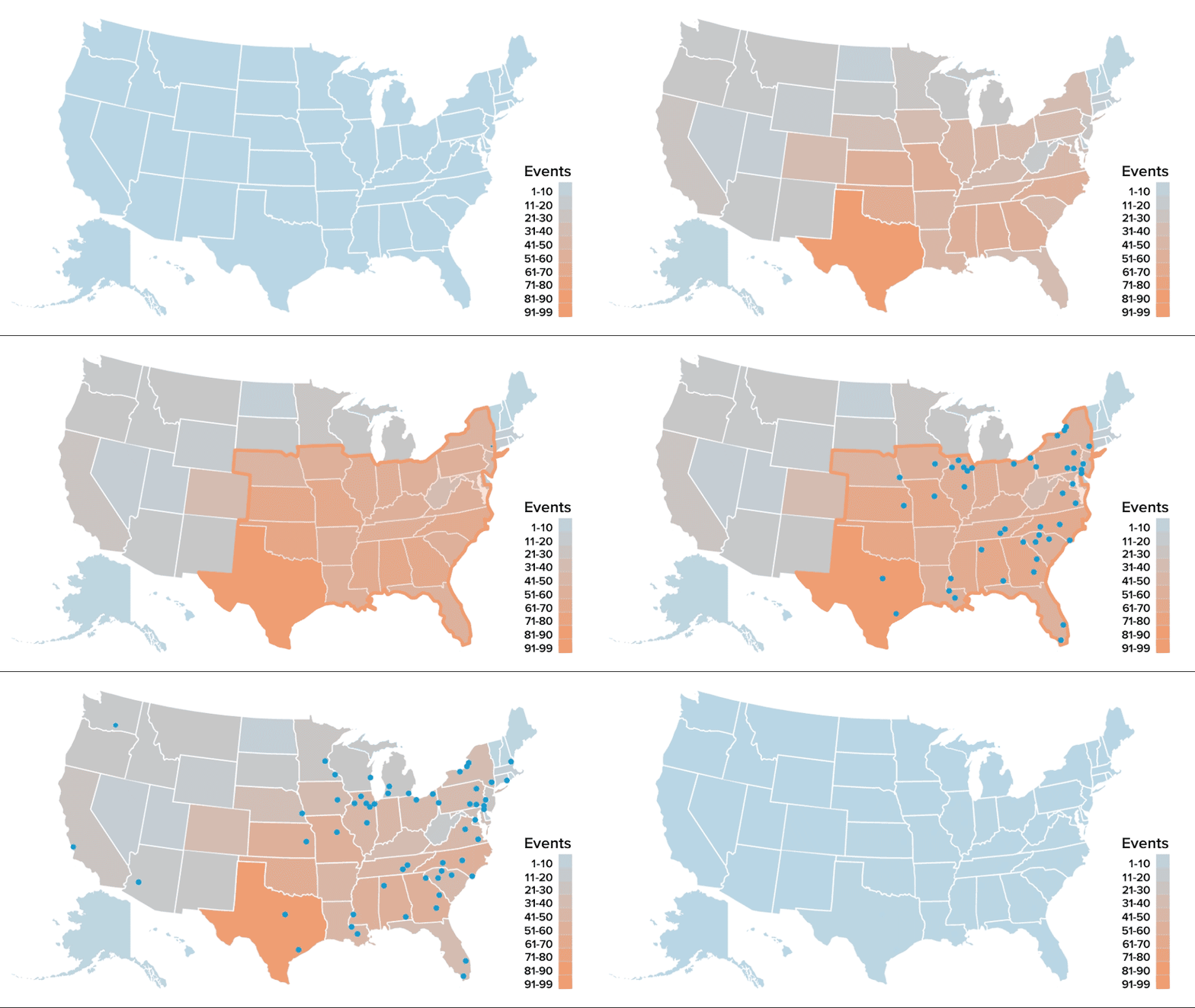 Nonwinter billion-dollar events, 1980-2019 (Source: NOAA) and U.S. plant locations
For example, take Hurricane Harvey, the Category 4 storm that devastated Houston, Texas, and surrounding areas in the summer of 2017, causing over $120 billion damage. During the storm, the U.S. Energy Information Administration noted that there were wild fluctuations in electricity generation, but nuclear energy kept generating when other sources didn’t.
The reliable and resilient nuclear generation came from the two nuclear reactors each at the South Texas Project (STP) Electric Generating Station, located 90 miles from Houston, and Comanche Peak Nuclear Power Plant in northeast part of the state. STP operated at full capacity while Harvey slammed the region with winds and record floods and continued to operate as disaster recovery efforts were underway.
During extreme weather events, nuclear plants stand ready to provide power and help with recovery—and like we saw in the map above, they are well-situated to do so. Without them, the costs of disaster recovery and rebuild would simply be higher.
Wait, nuclear power plants and disasters? Sounds like a movie with Dwayne “The Rock” Johnson or Jason Statham in it. But, the reality is far from it. These plants are designed to safely withstand extreme weather, and have a decadeslong history of doing just that.
Aside from being among the most hardened and secure critical infrastructure in the United States, plants prepare detailed emergency response plans that meet requirements set by the U.S. Nuclear Regulatory Commission and the Federal Emergency Management Agency. They also store backup equipment on-site and have access to additional backup through the industry’s FLEX program.
Next time we have a significant heat wave or hurricane, say in Washington D.C., imagine not having a reliable and emissions-free energy source. The last thing you want to be worrying about during these times is whether your local power plant can weather the storm.
With nuclear, you don’t have to worry. Reliable, resilient nuclear energy is there when you need it most.
Top Image: Shutterstock/Alexandru Chiriac