As the Midwest, Mid-Atlantic, and Northeast cope with another polar vortex this week, the record-breaking temperatures will strain the electricity grid. Particularly, grid operators in those regions, ISO New England (ISO-NE) and PJM Interconnection (PJM), will be stressed in meeting the significant rise in power demand.
My first winter in upstate New York was brutal. Growing up in India, I never experienced severe cold weather, so I was quite surprised when the nor’easter in late 2011 brought blizzard-like conditions and negative temperatures. We were always prepared with food and water during the winter months, but completely powerless (pun intended) to deal with power outages or having our power bill increase three- or fourfold.
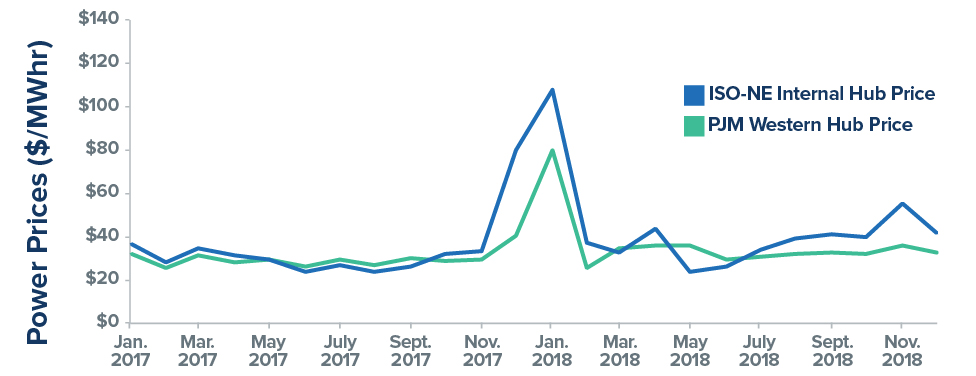
Wholesale Power Generation Prices
 Source: S&P Global Platts
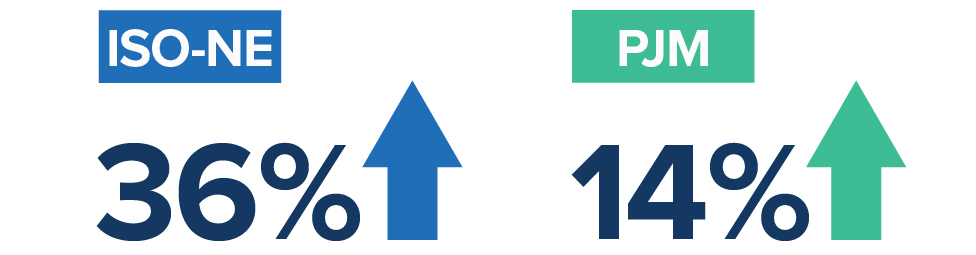
This graph shows the monthly averages for the wholesale electricity prices ISO-NE and PJM paid over the last two years. The electricity prices during winter months in ISO-NE and PJM increased by 36 and 14 percent, respectively, compared to the two-year average. On Jan. 5, 2018, the power prices rose as high as $247 per megawatt-hour (MWhr), a 540 percent increase for ISO-NE customers.
This experience reminded me of my childhood in Vadodara, India, when summer heat would result in semiweekly rolling blackouts. While our electricity grid in the U.S. is not that dire, the peaks during the winter months clearly show the stress on the grid, where demand increases significantly while electricity generation is in short supply.
In layman’s terms, the grid operator, such as ISO-NE or PJM, purchases electricity from power plants through wholesale electricity market. Think of it as a flea market with many vendors—power plants—supplying one product—electricity—which is then distributed to our homes and offices.
During the winter, electricity demand increases, compounding the problem further: we use more electricity at higher prices. No wonder my power bill increased so much during winters in upstate New York.
Wholesale Electricity Prices Higher Than Average in Winter
 Source: S&P Global Platts
But what is keeping the grid steady when it’s stressed? The U.S. Energy Information Administration (EIA) provided a breakdown of electricity generation by sources during the 2018 peaks seen in the chart, showing wild fluctuations in all sources except nuclear energy.
In New England, the natural gas infrastructure was built to enable home heating, which means that electricity generation is the second priority when temperatures drop. Particularly EIA concluded that “a constrained natural gas pipeline network led to a significant increase in oil-fired and dual-fuel generation.” These oil-fired and dual-fuel generation technologies are inefficient, costly and generate carbon emissions.
What is impressive in EIA’s breakdown is the consistent electricity generation from nuclear energy. Nuclear power plants in the Northeast and Mid-Atlantic provided resiliency and reliability to both ISO-NE and PJM grids dealing with wild swings from other energy sources.
Nuclear power plants typically run at 100 percent of their capacity for 18 to 24 months—and only plan to come down in power for refueling outages—providing round-the-clock, emissions-free electricity. These plants provide predictability and stability to the grid operators.
EIA also recently concluded that “monthly wholesale electricity prices were also more volatile in 2018 than in 2017, seeing spikes during the winter and summer months.”
The nuclear power plants in Northeast and Mid-Atlantic are economically struggling, due to high reliance on natural gas. Connecticut and New Jersey recently acted to preserve three nuclear power plants and recognized the valuable attributes and providing some price stability to the grid.
However, news is not so good for some of the other nuclear power plants in the ISO-NE and PJM territories of Ohio and Pennsylvania. There are five nuclear plants slated to prematurely close between 2019 and 2021. Pennsylvania state lawmakers recently released a report highlighting the benefits of nuclear power plants and make a compelling case for preserving them.
Imagine the impact to your wallet during these winter months if our increased electricity use relies solely on constrained natural gas supply or oil-fired power plants. Or think about the impacts of replacing an emissions-free clean energy source with fossil fuel sources on the environment and the air we breathe.
We must take action to preserve nuclear plants in danger of shutting down or risk higher bills and a less reliable grid.
Winter is here, but are we ready?