When we think about the coronavirus pandemic, we’re not likely to think of carbon emissions. We rightly focus on the millions of health care workers and emergency responders serving those affected and on groups like the World Health Organization that are leading important research and relief efforts. However, as this week marks the 50th anniversary of Earth Day, it’s worth looking at the effect COVID-19 has had on the environment.
Social distancing, stay-at-home orders and lockdowns have caused a sudden, steep drop in carbon emissions across the world due to decreased travel, electricity demand and industrial activity. With fewer cars on the road and fewer factories operating, air quality has improved in places notorious for smog, like New Delhi and Los Angeles.
LA just had its the longest stretch of clean air since 1980. https://t.co/SsfdOnKNoc
— Curbed LA (@CurbedLA) April 3, 2020
Obviously, these emission reductions are not sustainable as they come from drastic lockdowns, which are a solution to a public health crisis not to climate change. Whenever the situation improves and the orders are lifted, scientists predict carbon emissions will rise again as they did after a similar drop caused by the 2008 global financial crisis.
But a world without carbon emissions can be an enduring reality—and one that doesn’t cost lives and livelihoods—instead of an unintended consequence of a pandemic.
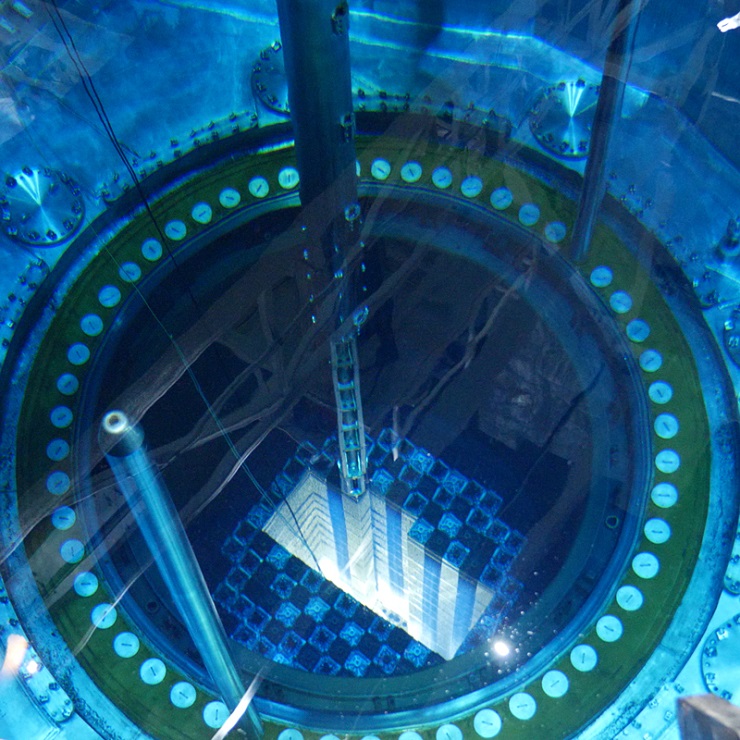
Nuclear energy is key to reaching a carbon-free future. Wind, solar and energy storage will all play important roles, but a cost-effective, carbon-free future can only exist if these are balanced with reliable sources like nuclear.
America’s 96 nuclear plants generate nearly 55 percent of the country’s carbon-free electricity, enough to power 75 million homes. Moreover, they’re always on 24/7 and they protect our air quality by generating electricity without other harmful pollutants like nitrogen oxide, sulfur dioxide, particulate matter or mercury.
The best path to a world without carbon emissions and smog is one that correctly values—and takes steps to preserve—these carbon-free champions. To reduce carbon emissions, we should support initiatives that embrace all sources of carbon-free electricity, especially nuclear plants. And it’s not just about the reactors that are currently operating. The next generation of nuclear plants—including advanced reactors, small modular reactors and micro-reactors—is upon us and will also be an important part of protecting the climate.
This was the view from our rooftop at home in Punjab India. For the first time in almost 30 years could clearly see the Himalayas due to India’s lockdown clearing air pollution. Just amazing! 🙏🏽 pic.twitter.com/WmWZYQ68lC
— Manjit K Kang #StayHomeSaveLives (@KangManjit) April 3, 2020
The blue skies over Los Angeles and parts of India do not need to be relegated to an asterisk in the statistical record. They will most likely go away when life approaches something like we’re used to, but they don’t need to be gone forever. With nuclear energy, we can see them again under much better and more sustainable circumstances.