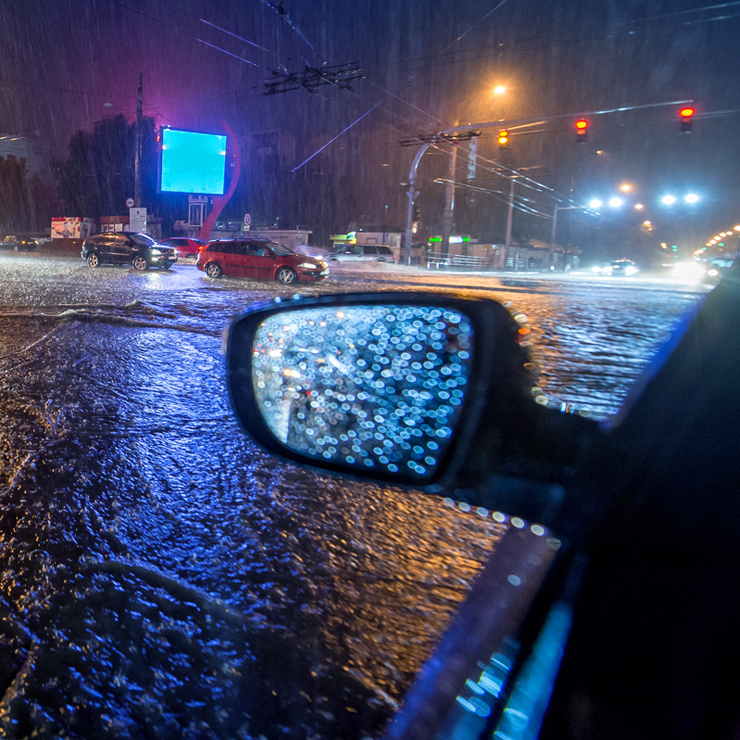
This year’s hurricane season is expected to bring “more, stronger, and longer-lived storms than average,” leading to “an extremely active season,” according to the National Oceanic and Atmospheric Association’s Climate Prediction Center.
For years, nuclear plants have safely operated during hurricanes and other extreme weather events, but how will the next generation of reactors reliably power areas through natural disasters?
New Reactors Will Be Ready for Extreme Weather
As recent storms like hurricanes Hanna and Isaias have demonstrated, nuclear plants have emergency response procedures in place in the event of an extreme weather event. If one thing has proven consistent over time, it is that the U.S. nuclear fleet is prepared.
In the near future, new nuclear innovations—like small modular reactors (SMRs)—will aid in keeping the power on in cities and towns across the country throughout hurricane season. SMRs will produce 300 megawatts or less of electricity, but despite their smaller output, they will still feature robust designs that protect against extreme weather, like the reactors currently operating today. SMRs will be able to supply power reliably to more remote areas regardless of weather conditions and are expected to be deployed for commercial use over the next 10 years.
This spring, the Department of Defense announced its project to fund and build the first micro-reactors in the U.S. Since micro-reactors will be small in size (generating one to 10 megawatts of electricity), they will make for a resilient source of energy that can be deployed for diverse applications in remote areas, such as island communities. These innovative reactors will be cost-effective and easily deployed to disaster-stricken areas to generate electricity for emergency response efforts.
New Reactors Can Help Island Communities During Hurricanes
Island communities are often some of the hardest hit when it comes to hurricanes, and territories like Puerto Rico have demonstrated how extreme weather events can cause impactful disruptions to a location’s electricity grid.
After Hurricane Maria hit in 2017, the Nuclear Alternative Project (NAP)—a nonprofit organization comprised of Puerto Rican engineers—began focusing their work on studying the prospect of using advanced reactors to help Puerto Rico.
In their feasibility report published this year, NAP found that “the need for enhancing the overall resiliency of the energy generating system [in Puerto Rico] is urgent” and that “the design of nuclear reactors against extreme natural events is stricter than any other power generation asset being considered for the Island.”
Islands like Puerto Rico often rely on diesel generators for electricity, requiring costly refills of imported fuel which are susceptible to supply chain disruptions during and after a hurricane. NAP reported that “In 2017, oil and gas imports to Puerto Rico were disrupted after Hurricane Maria’s landfall. The need to maintain a high frequency of fuel imports to the Island would leave Puerto Rico vulnerable to future supply disruptions in case of natural events.”
Small or micro-reactors deployed in these areas would be resilient to extreme weather and could reduce disruptions of supply chains, allowing for a more reliable electricity supply.
Innovation Will Give Nuclear Energy More Ways to Help People Hit by Extreme Weather
Devastation from extreme weather events like in Puerto Rico can happen again, and as we continue into this year’s hurricane season—and the ones to come—it’s important to be prepared.
The U.S. nuclear fleet has not only been prepared but is finding new, innovative ways to keep the lights on when it is most important. Nuclear energy is a reliable, carbon-free energy source that has proven itself to weather any storm. New, advanced reactors have the ability to continue that legacy for more people.