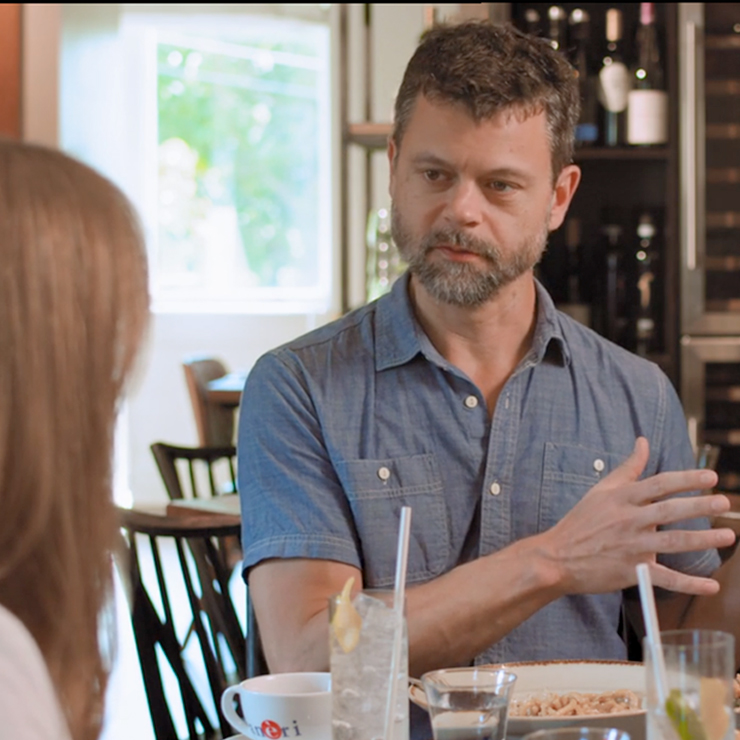
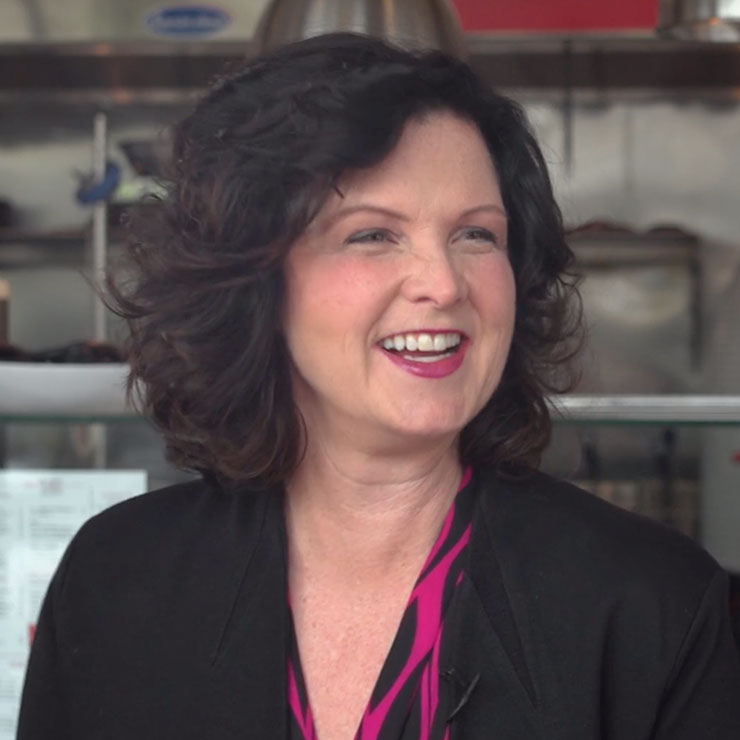
Melanie Nakagawa, head of climate initiative at investment firm Princeville Capital, joins Monica Trauzzi at Shilling Canning Company in D.C.’s Navy Yard neighborhood in this episode of “Off the Menu.” Melanie and Monica discuss how climate-conscious investors are proving that you don’t need to choose between reducing carbon emissions and growing your portfolio.
[Investing in higher carbon assets] already is a risk. I think you're seeing governments and banks … say we want to know what you're holding when it comes to carbon-exposed industries because we see that as a risk and shareholders are going to want to take action to get you out of those risky investments.
While every investor wants to make money, there’s been an increasing number of people who also want their investments to make a positive change in the world, especially for issues like climate change. Melanie and Monica talk about this “impact investing” and how people—including leaders like Bill Gates—are thinking beyond traditional “environmental, social and corporate governance” (ESG) factors to consider carbon reduction, climate resilience and clean energy when choosing where to put their money.
Monica also spoke with Shilling Canning Company’s chef and owner, Reid Shilling, on how his restaurant’s fresh herb garden complements his love for serving local, mid-Atlantic cuisine.
Get an inside view of the energy issues of the moment with “Off the Menu” at locations across D.C.’s nationally recognized food scene.
Transcript
Monica Trauzzi
How far do you think we are from impact investing becoming just investing?
Melanie Nakagawa
We are still seeing some friction in actually getting traditional investment houses to dedicate their funds into the impact space.
Monica Trauzzi
So you're talking like the Goldman Sachs of the world?
Melanie Nakagawa
I mean, and some of those larger [investment firms.] Apollo is coming out with an impact fund, KKR and Bain have impact funds. But in terms of all asset owners making impact, one thing that we keep on seeing is there's an impression by some that impact investing somehow or other means it's concessionary returns or there's concessional returns and that's just not the case anymore. I'm happy to say there's now more and more funds like ours that are for returns, market rate returns first and impact and that we're basically showing the world that you don't have to choose.
It's not my quote, but somebody had said it's: people, planet, profit. And I love the just sort of the alliteration of it, and if I could have stolen that as our firm's tagline I would have, but it's already out there. But those who are doing that, there is an opportunity here to invest for people, the planet and make profit from it, and you could do all three.
Monica Trauzzi
What are the policy trends or signals that get you excited?
Melanie Nakagawa
The 100% clean energy targets that states are passing, California and New Jersey. Then you've got energy storage mandates. That's a great success story where setting these energy storage mandates are driving more investment and innovation in energy storage opportunities, smart grid technologies as well. Another exciting area of net zero targets by 2050 is akin to the Paris agreement where it's sending this global trajectory where we all need to get to.
And those policy signals are truly driving young entrepreneurs coming out of schools, business schools and engineering schools to try to deliver into this economy. But it's also driving investment into those solutions because they see a real policy signal pulling those solutions into the marketplace.
Monica Trauzzi
So we see high net worth individuals like Bill Gates moving their money to more climate positive technology. For example, Bill Gates has a company focused on nuclear, TerraPower. How do signals from people like him impact the work that you are doing and the willingness of people to invest more on these things?
Melanie Nakagawa
Well, Bill Gates is one of the sort of masterminds and super brains when it comes to technology, right? And so to have him put his claim behind a large fund called the Breakthrough Energy Venture Fund, where it's really focused on technology breakthroughs and they're a much longer-term fund. I think they're a 20-year horizon fund.
So seeing Bill Gates and Breakthrough put their money and their investment behind some of these longer strategic plays are really important signals that investments into growth stage companies, rapidly growing companies like what we do has both investors in that space, but then also the longer-term investments are also in the environment. Bill Gates' investments and other ultra-high net worth individuals like that, they're part of what I consider the capital stack. They're actually investors that are contributing to both early stage investments, later stage and growth stage investments and we need all of those players participating in delivering climate positive solutions.
Monica Trauzzi
ESG criteria was, for the most part, created a while ago and hasn't necessarily been updated along with new technologies that have come on board and certain things are excluded from it. Right? Nuclear being one of those. Does that criteria need to be revamped?
Melanie Nakagawa
One of the ones that we factored into our score card and our metrics was climate risk and resilience. That's one we really want to double down on it and really think through how do the investments sustain environmental changes going forward and more and more there's actually new studies out there talking about how they're going to update ESG metrics and there's a lot of more kind of conversation around how to update them going forward, which I think is important to do because ESG can't just... I think at this point it's a bit the floor and not the ceiling and I think we need to make sure we don't see it as ESG just being the ceiling of opportunity. But there's people can go above and beyond just standard ESG and we hope to see that happen when it comes to climate investing.
Monica Trauzzi
Yeah. Eventually will investing in higher carbon assets become a risk?
Melanie Nakagawa
I wouldn't say eventually, I'd say it already is a risk. I think you're seeing governments and banks and others, the whole movement on disclosure by banks is part of that to say, we want to know what you're holding when it comes to carbon exposed industries, because we see that as a risk and shareholders are going to want to take action to get you out of those risky investments.
I love how everything is locally sourced, which is great.
Monica Trauzzi
And they have a little garden outside where the chef has planted lots of different herbs.
Melanie Nakagawa
It has its own farm to table, but in the middle of D.C.
Monica Trauzzi
Yeah, they're literally going out there and picking herbs for the drinks and for the food.
Melanie Nakagawa
Nothing like fresh herbs.