In a step forward for carbon-free energy innovation, the U.S. Nuclear Regulatory Commission moved closer to licensing a small modular reactor (SMR) on Friday, by issuing a final safety evaluation report (FSER).
What does that mean, exactly?
New Nuclear Technology Moves Closer to Becoming a Reality
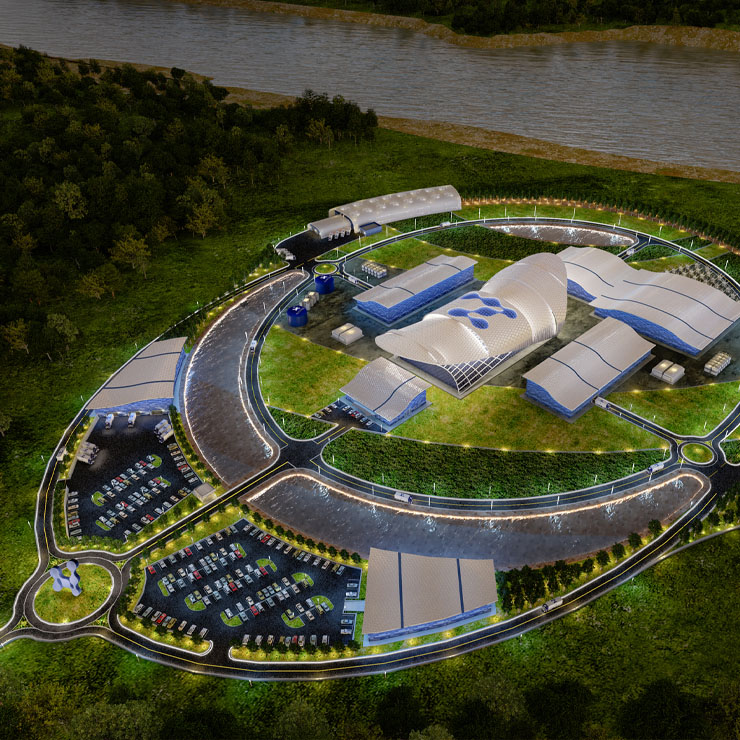
With this announcement, NuScale Power LLC—which submitted its SMR design for approval in 2017—is on the verge of getting NRC endorsement for a fundamentally new concept in reactor design and a plant that is radically simpler.
At a time when reducing carbon emissions has never been more urgent, the announcement moves an important new carbon-free technology towards commercialization, so it can provide electricity around the world.
In practical terms, the FSER makes it easier for a U.S. utility to develop the NuScale power plant. It also functions as an American seal of approval for countries around the world that are looking for a flexible, appropriately sized carbon-free power producer that can be installed with relatively little on-site construction and little local regulatory experience.
NuScale is planning to supply its first SMR plant in eastern Idaho, for Utah Associated Municipal Power Systems (UAMPS) and has exploratory agreements with companies in Canada, Romania, the Czech Republic and Jordan.
“This is a significant milestone not only for NuScale, but also for the entire U.S. nuclear sector and the other advanced nuclear technologies that will follow,” said NuScale Chairman and Chief Executive Officer John Hopkins.
NRC Meets Innovation in Design with Innovation in Regulation
With this announcement, NRC staff is independently verifying the company’s own safety analysis, which says that the design meets all applicable standards. “Applicable” is an important detail here, because the staff is agreeing that some of the requirements that the agency imposes on existing reactors simply don’t apply here.
For example, the SMR design doesn’t need any emergency water supplies for safety—instead relying on natural forces for cooling—so there is a whole complex of tanks, pumps, valves and piping that don’t need to be built, inspected, tested and evaluated.
Furthermore, there is no need for an extensive system of emergency diesel generators that are carefully maintained at current plants in order to operate those pumps and valves; and finally, the inherent safety features of the design will keep the reactor safe in case of mechanical malfunction, without action by control room operators. Operators will be trained and available, as at all reactors, but the system is passively safe.
There are several steps remaining in the regulatory process, including public comment; however, the FSER demonstrates that the NRC can successfully evaluate an innovative design that breaks with many of the old assumptions about nuclear energy. A regulator that can facilitate innovation is essential to the future of nuclear technology.
NuScale’s Progress Is a Major Win for Advanced Nuclear and the Climate
There are a lot of good ideas emerging from new reactor developers, and NuScale’s SMR is poised to be the first radical rethinking of reactor design approved by the Commission in many years. It is a positive sign for NuScale, for UAMPS and the advanced reactor industry as a whole.
As this innovative design moves from concept to reality, it signals a new era of advanced nuclear technology that will be essential in meeting carbon-free energy goals across the country and making electricity more accessible for all.