The Intergovernmental Panel on Climate Change (IPCC) released part of its Sixth Assessment Report earlier this month. It warns that unless there are immediate, rapid, and large-scale reductions in greenhouse gas emissions, we will not be able to limit global warming to where it needs to be.
Emissions of greenhouse gases from human activities are responsible for approximately 1.1°C of warming since the industrial revolution, the report says. Averaged over the next 20 years, global temperature is expected to reach or exceed 1.5°C of warming much quicker than what was previously thought. It is unequivocal that human influence has warmed the atmosphere, causing rapid changes to the climate.
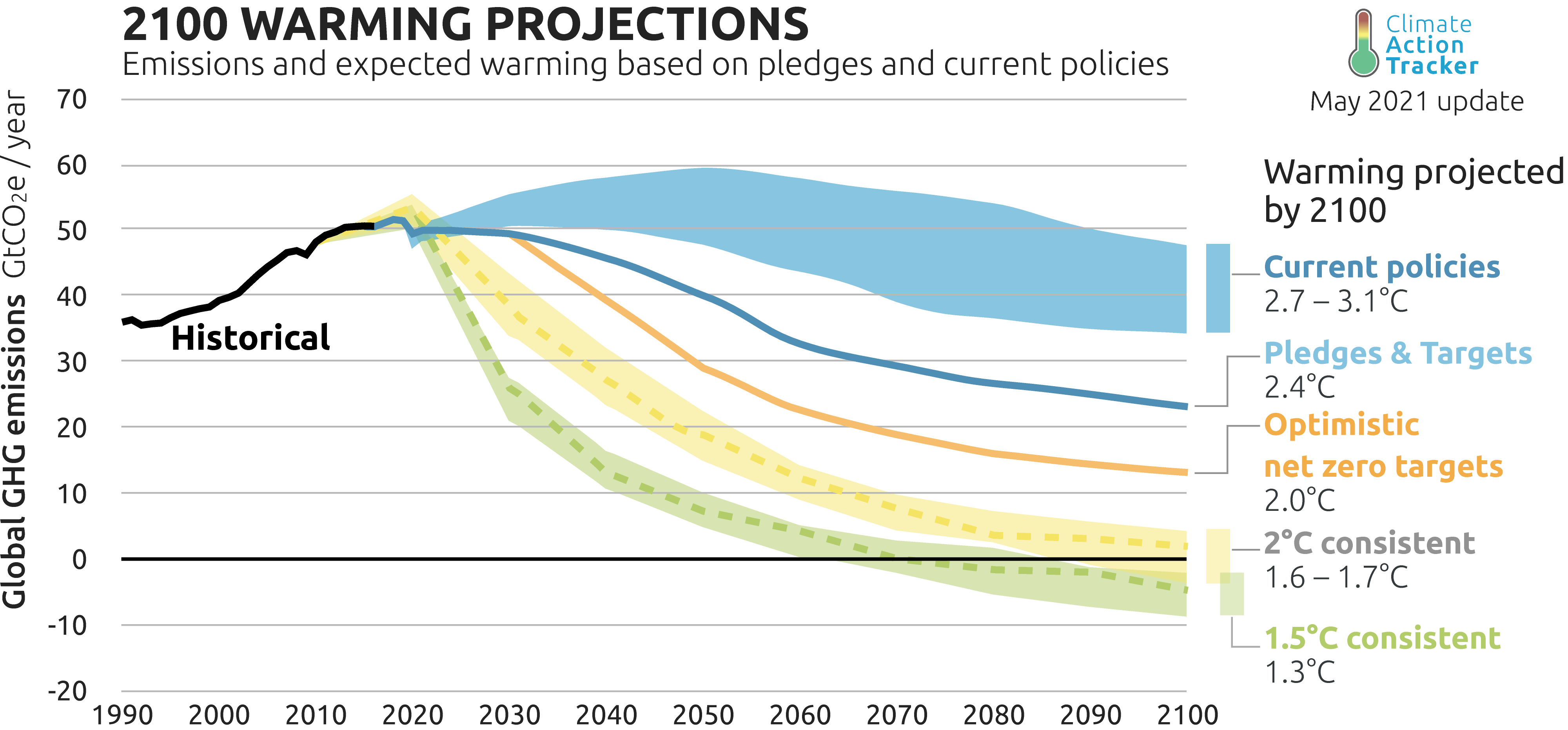
Much of what the report states is already known, but it underscores the urgency of the climate crisis. UN Secretary-General António Guterres said the report is “a code red for humanity. The alarm bells are deafening, and the evidence is irrefutable". Whether we continue on our current trend or change course to meet our climate targets will mean the difference between 2.7-3.1°C and 2.0°C.
The Changing Conversation
Since the IPCC’s Fifth Assessment Report was released in 2014, the climate conversation has shifted. The Biden administration has set out to decarbonize the U.S. power sector by 2035. In the financial sector, the momentum around Environmental, Social, and Governance (ESG) commitments continues to accelerate and utility companies are racing to set net-zero emissions targets.
Bloomberg reported that “sustainable investment assets grew to $35.3 trillion globally last year amid mounting concerns about societal inequities and climate change. That’s about $1 of every $3 managed globally seeking out a profit from environmental, social and governance concerns, according to Global Sustainable Investment Alliance’s report.”
While we are seeing behaviors changing, this alarming report raises the serious question: is it enough?
Chris Meyer, manager of stewardship investing research and advocacy at Praxis Mutual Funds said the IPCC report “changes the calculus… we will need to have a sharper focus. This report shows that investors aren’t moving quickly enough.” Many others agree that the report is an obvious warning that the time for greater action from everyone in both the private and public sectors is now.
How Nuclear is Helping to Meet the Moment
A critical component of meeting this urgent moment is increasing commitments to decarbonization to meet climate goals. To do this, we must utilize all of our carbon-free options, including nuclear energy. “Nuclear energy is a vital part of America’s energy system, producing more carbon-free electricity than all of our wind, solar, and hydropower combined,” said NEI’s John Kotek. “Retaining our nuclear plants is essential to reach our carbon targets faster and is the least-expensive way to keep carbon off the grid.”
The UN Economic Commission for Europe agrees. The Commission recently released a technology brief on nuclear power stating “analyses indicate that the world’s climate objectives will not be met if nuclear technologies are excluded.”
The IPCC report makes it clear that the frequency of extreme weather events will continue to increase. The level of resilience and reliability nuclear energy offers will be needed in a climate that is quickly becoming more hostile much sooner than we originally believed.
Time is running out, but there are still actions we can take to prevent a worst-case scenario. The most important short-term action we can take is to keep existing nuclear plants from shutting down. When plants are shutdown they are almost always replaced by fossil fuels. We must also increase our support for the development and deployment of new advanced reactor technologies, such as TerraPower’s Natrium reactor. The time to act is now.