The United Nation’s IPCC reports and other sources that have studied Earth’s climate are sounding the alarm. We know that in order to address global warming, the world needs to go carbon-free. But our carbon-free future must work for people, as well as the climate. Keeping the lights on, providing job opportunities, ensuring affordable monthly bills, and reaching remote communities—these are all goals that our climate solutions need to achieve.
The good news? We have a deployable source of energy that checks all these boxes: nuclear.
-
Zero Carbon Emissions
No other energy source contributes as much to meeting U.S. energy demand without emissions as nuclear. In fact, it is our largest source of carbon-free energy. Every year, nuclear-generated electricity saves our atmosphere from more than 470 million metric tons of carbon dioxide emissions that would otherwise come from fossil fuels. That’s the same as taking nearly 100 million passenger vehicles off the road.
-
Reliability
Nuclear energy creates power 24/7/365—so there’s no question about keeping the lights on. The possibility of blackouts this winter is causing states in the U.S. and countries across the world to rethink shutting down nuclear plants, demonstrating that the reliability of nuclear plants is unmatched. Nuclear energy works tirelessly to power our communities, and advanced nuclear will bring this same reliability—but to more places.
-
Versatility
Advanced reactors have the capability to provide power at any scale, retrofitted for any community, anywhere in the world. These reactors will come in all shapes and sizes, ranging from microreactors that provide 1-10 megawatts of power and small modular reactors (SMRs) that produce up to 300 megawatts to bigger, more traditional reactors. They open new possibilities for carbon-free energy service at any scale—be it in the world’s largest cities or in remote, rural communities. They can free communities from diesel and fossil fuels without massive new investment in transmission and distribution. Some new reactors can even be built on retired fossil fuel sites.
-
Job Opportunities
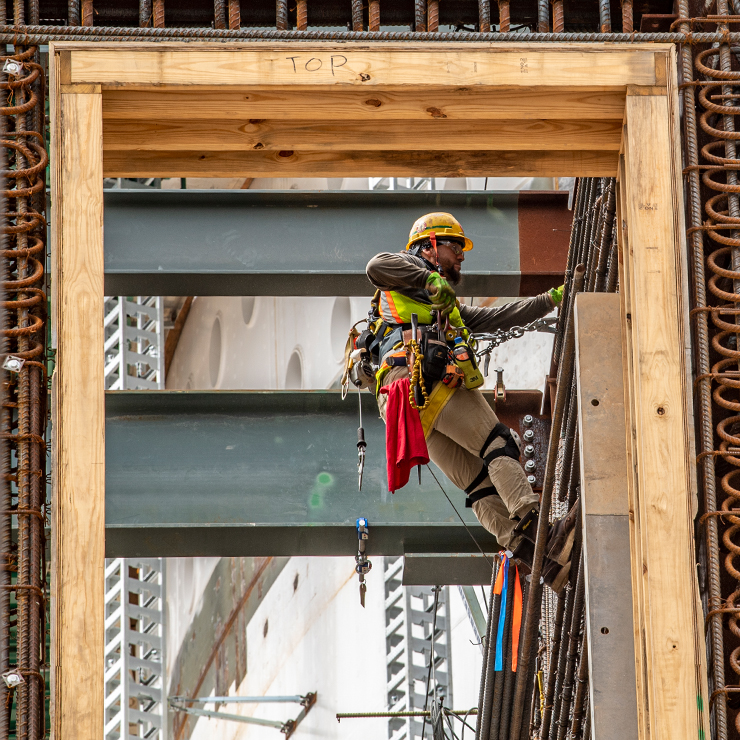
As fossil fuel sites are shut down, the coal-to-nuclear transition gives communities the chance at a second, carbon-free life. A recent report estimated that each small modular reactor sited to replace a retiring coal plant would provide hundreds of on-site jobs and up to 75 percent of the current workforce could transition to work at a nuclear plant.
Nuclear energy jobs exist throughout the entire life of the plant—60-plus years—and pay high wages. Right now, the U.S. nuclear energy sector directly employs nearly 100,000 people in high-quality, secure jobs. This number climbs to 475,000 when you include secondary jobs. Constructing the next generation of nuclear will support hundreds of thousands, if not millions, of good-paying jobs. -
Affordability
Our future energy system must be both reliable and affordable, and nuclear is proven to lower overall system costs for the consumer. A recent Vibrant Clean Energy report examined two modeling scenarios—one where nuclear provided over 40 percent of U.S. electricity by 2050 and one with a smaller role for nuclear. The latter scenario resulted in more than $400 billion in additional costs to consumers.
According to research from Stanford University, the Clean Air Task Force, Environmental Defense Fund and other groups, if we rely on wind and solar to do the heavy lifting, the system costs would be truly prohibitive, and ultimately, system costs determine what customers see on their monthly utility bills.
Nuclear checks all the boxes and, alongside other clean energy sources, is essential to powering a carbon-free future that works for everyone.