Faced with the ongoing climate crisis, Environmental, Social and Governance (ESG) investing is proving to be smart not only for people and the planet—but also for profit.
ESG commitments and investments are becoming increasingly important as customers demand climate-positive decision making. In many cases, markets are favoring companies that embrace impact investing and address ESG issues.
Large corporations across all sectors of the economy are taking notice and making ESG commitments.
ESG encompasses environmental, social and governance factors used to assess sustainability. These aspects are multifaceted but center on contributions to addressing climate change, social justice, and corporate governance issues.
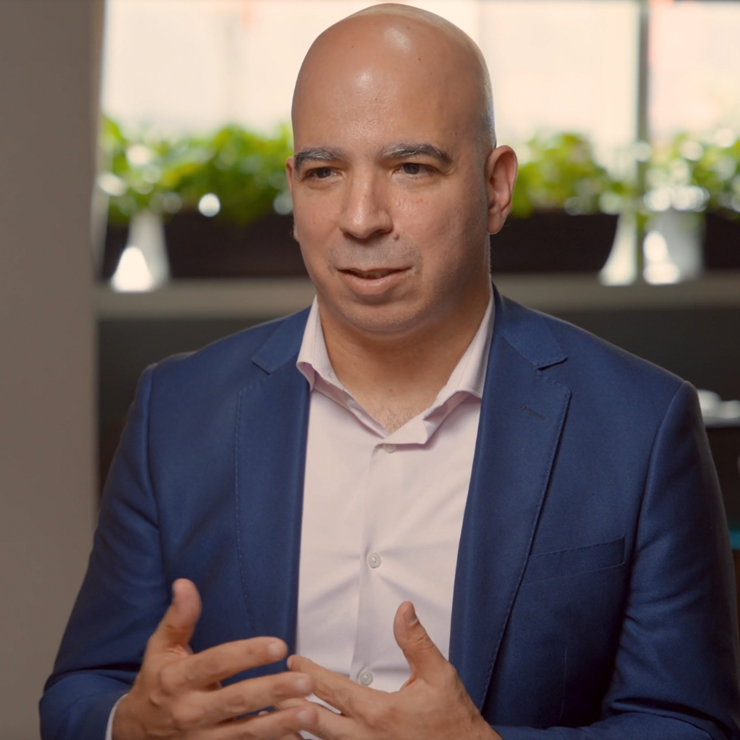
“When I think of ESG, I think this is the impacts part of what we do,” said Roger Martella, chief sustainability officer at GE, on an episode of Off the Menu with Monica Trauzzi.
Corporations are facing rising pressure to move the needle on ESG commitments amid calls for more accountability from companies and their boards.
Last year, President Biden issued an executive order directing federal agencies to identify climate risks, setting the stage for ESG issues to be incorporated into financial disclosure and regulations.
“Part of what ESG is all about is doing an internal look at your policies, your practices,” said Off the Menu guest Emilie Mazzacurati, global head of Moody's Climate Solutions at Moody's Corporation.
This pressure has prompted companies to look at internal policies and release sustainability reports on their progress. Increasingly, companies are also looking to make transitions from the top down by adding chief sustainability officers to their teams.
 |
| “I think of sustainability and making sure everyone has equal access to a good environment, healthcare, good opportunities, gender equality.” – Roger Martella, chief sustainability officer, GE |
At the same time, more needs to be done to measure and quantify progress.
These initiatives matter environmentally and socially, but what other drivers are propelling the growth of ESG funds? Turns out, ESG is good for business.
 |
| “Another exciting area of net zero targets by 2050 is akin to the Paris agreement where it's sending this global trajectory where we all need to get to.” – Melanie Nakagawa, former head of climate initiative at Princeville Capital and current special assistant to the President and National Security Council senior director for climate and energy |
According to Todd Cort, codirector of the Yale Initiative on Sustainable Finance, investors are often prompted to invest based on ESG due to positive financial performance. The vast majority of ESG funds outperform traditional funds and over time have demonstrated lower volatility and good return on equity.
$120 billion was funneled into sustainable investments last year, and ESG is expected to be a market driver in 2022.
Sustainable energy is a critical piece of the ESG conversation, as it is a central focus of global markets and financial growth.
Last year we saw net zero commitments from a variety of sectors from across the world—public and private entities alike. It is clear that decarbonization is critical to meeting our climate goals, and we need all our carbon-free energy sources—wind, solar, hydro, and nuclear—to protect our planet.
.png?language=en-US "emilie-250px-(2).png") |
| “We are seeing changes from the large bank managers that may not be visible to the human eye.” – Emilie Mazzacurati, global head of Moody's Climate Solutions at Moody's Corporation |
More than 450 firms now belong to the Glasgow Financial Alliance for Net Zero (GFANZ), led by Mark Carney, the United Nations’ special envoy on climate action and finance. These banks and asset managers, which represent 40% of the world’s finances, have committed to reaching net zero carbon emissions by 2050 and dedicated $130 trillion to climate finance commitments. This alliance, which is just one aspect of the climate finance movement, demonstrates the increased investment in climate targets.
Amid these historic commitments and a growing market, it is clear that ESG is shaping how we do business, what we value, and how we evaluate success.
As Off the Menu guest Melanie Nakagawa said last year, “there is an opportunity here to invest for people, the planet, and make a profit from it.”
Watch Off the Menu with Monica to get an insider’s look at climate finance and ESG conversations. Click here to watch.