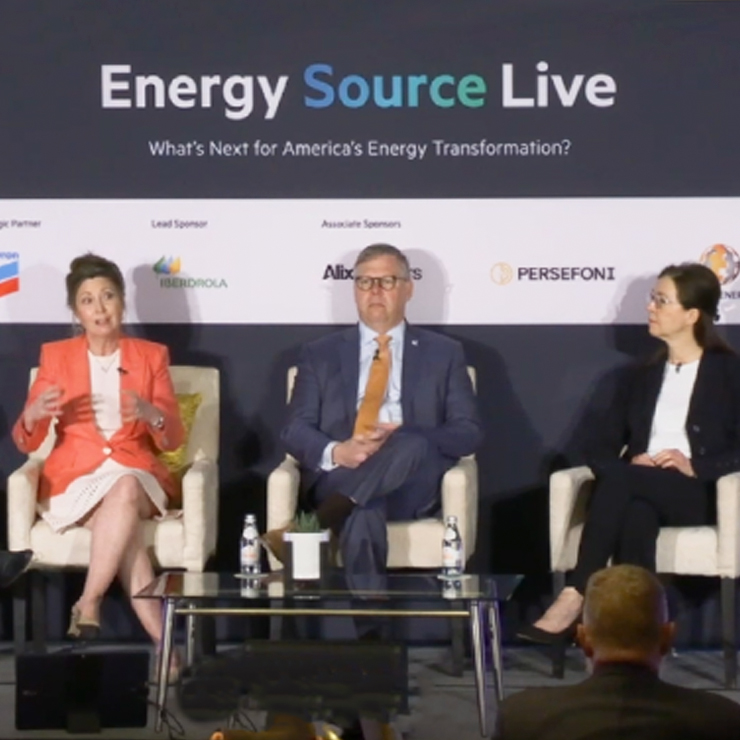
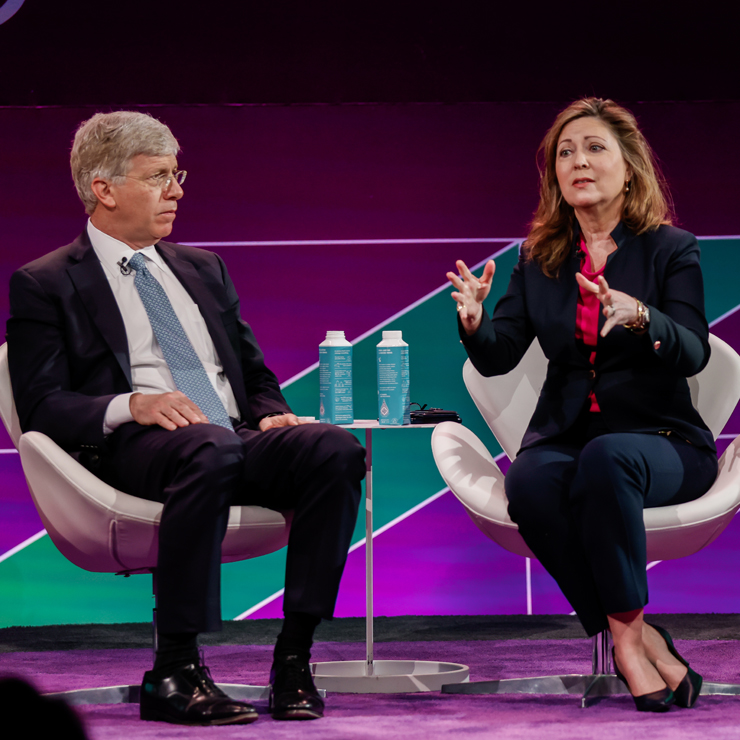
Reuters held an SMR & Advanced Reactor conference in Atlanta this week where industry leaders gathered to discuss how advanced nuclear will lead the wave of next-gen clean energy technologies—with financing playing a critical role. Maria Korsnick, president and chief executive officer of the Nuclear Energy Institute, spoke on a panel about getting stakeholders to the table and creating public and private partnerships to invest in new designs.
“In nuclear, we’ve seen great investments in tech. We encourage policies that bring those investments from demonstration to deployment like tax credits, loan guarantees, clean energy standards,” said Korsnick.
Nuclear energy today is our largest source of carbon-free energy, and interest from the investment community continues to grow as next-gen nuclear is poised to provide more efficient, versatile, and affordable power. Carbon-free small modular and advanced reactors will be critical in our energy transition and can provide the always-on power needed for the clean electricity grid of the future.
A recent IPCC report clearly states that more progress needs to be made to decarbonize beyond electricity. The transportation and manufacturing sectors alone make up 45% of our greenhouse gas emissions, and advanced reactors can provide the high-temperature heat and carbon-free hydrogen production needed to decarbonize heavy industrial processes.
Caroline Cochran, chief operating officer and co-founder of Oklo, spoke about new, innovative designs for microreactors that could power industrial sites, large companies, remote locations, and more.
Market opportunities are present and ever-expanding as the industry gears up to build advanced reactors, and public-private cost-sharing partnerships such as the Advanced Reactor Demonstration Program (ARDP) are an important catalyst for innovation. The ARDP invests in rapidly developing designs to expand access to clean energy and take advantage of market opportunities.
At the conference, Chief Executive Officer of TerraPower Chris Levesque spoke about his company’s coal to nuclear project, which has received Department of Energy funding through the ARDP. When selecting a retiring coal plant in Wyoming to site its Natrium reactor, there was a competition between communities to be the location of the first reactor in the state, demonstrating where public perception is for nuclear energy even in states who do not enjoy its current benefits.
"It's not so much, not in my back yard—but please in my back yard!” said Korsnick.
This next-gen nuclear revolution isn’t only happening in the United States. Three weeks after Russia launched its invasion of Ukraine, Citi Research found a 25% increase in support of a new nuclear policy among European residents, and there are similar shifts in support in South Korea.
Countries across the world will be looking to America as a diplomatic partner to supply these cutting-edge nuclear technologies. According to market research firm UxC, U.S. nuclear exports could be worth $1.9 trillion over the next 30 years, and this report was done prior to the recent rise in pro-nuclear sentiment.
“The U.S. industry is the absolute gold standard. That’s why we need to build alongside our allies across the world and lead the way for new development,” said Korsnick.
Successfully remaining a leader in nuclear technologies will increase our allies’ energy security, bring business to the United States, and help the world reach its climate goals. Public-private partnerships and financial investment in new designs and U.S. supply chain capabilities will get us there.