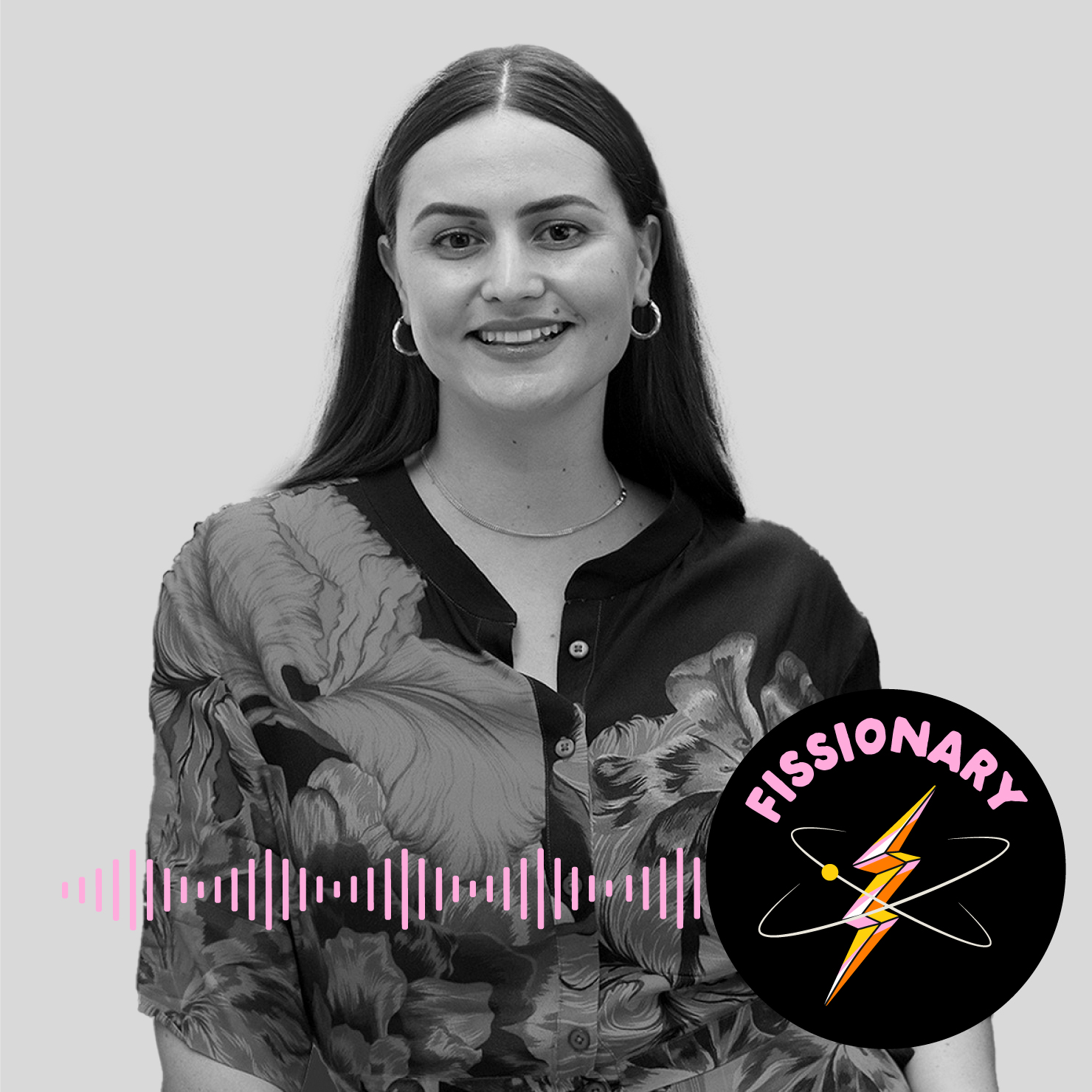
Zion Lights, science communicator and author, wants you to know that The Simpsons is not real life. Well, they may have made some relatively accurate predictions, but they’re not real life.
Zion Lights is the founder of the evidence-based climate activism group ‘Emergency Reactor’ and the author of The Ultimate Guide to Green Parenting. On this episode, she joins Mary and Jordan to talk about how television shows and movies have altered the public perception of nuclear energy. Whether it be The Simpsons with their three-eyed fish or Star Trek with their intergalactic travel, these shows and films are (at times unintentionally) changing the way folks think about nuclear power. However, pop culture’s influence isn’t necessarily universal.
The Simpsons, that's cultural, they don't watch it in all parts of the world. And if you look at the UAE, United Emirates, they've just built, you know, four reactors in under ten years. No opposition. Alright, yeah, you could say the society is different and whatever, but, you know, the people I spoke to about it over there, and the journalists as well, they report it very fairly.
Zion wasn’t immune to this cultural influence, though. For most of her life, she was actually opposed to nuclear power and actively campaigned against it through protests and her writing. However, through conversations and research, she started to change her mind.
It took at least a year, over about a year. I started thinking, okay, well, there's definitely some things I was wrong about.
There is still a long way to go, though, in getting folks from other parts of the climate fight to get involved with nuclear. Zion mentions that she thinks some organizations may never change their minds, but that doesn’t mean others won’t.
To get to a place where we are carbon-free, we need energy sources like solar and wind to work in tandem with nuclear. This means we need renewable energy advocates to become advocates for nuclear as well.
As you will hear in this episode, a big part of this hesitancy to get on board with nuclear could stem from movies, television shows, and even disinformation from the news. But we can fix that. We just need to do a better job of telling stories.
No matter what it is, ultimately putting a human face on it creates a good story already. And this has been done across time, you know, Carl Sagan, Bill Nye, Neil deGrasse Tyson, there are many, many amazing science communicators out there who've done it in their fields. There just aren't very many of them.
And we have great stories to tell—you heard Miss America share (on this very podcast!!) how nuclear saved her father's life. We need to do a better job of communicating and sharing the nuclear story to fix all the years of misinformation and misconceptions spread by fictitious television shows and movies.
Mary Carpenter
This is Fissionary, a show exploring how nuclear powers your world. I'm Mary Carpenter.
Jordan Houghton
And I'm Jordan Houghton. Let's jump in. Hey, Mary. How are you?
Mary Carpenter
Good. How are you? I'm doing great. I'm really excited for today's episode.
Mary Carpenter
I'm really excited because we're taking some time today to talk about how pop culture has influenced the perception of nuclear energy. And there's a ton of examples that we're gonna dive into, but I think the biggest one that we have to hit right off the bat is The Simpsons. Are you a Simpsons fan? Did you watch The Simpsons?
Jordan Houghton
I've watched a little bit of The Simpsons over the years. It's funny, I was never super into it but despite that, I was well aware of the three-eyed fish and Homer working at the nuclear power plant. So even though I wasn't a devotee of the show, I knew about that because that was such a strong theme through the whole series.
Mary Carpenter
Yeah, I was never a Simpsons fan, I never watched it. I did know about the three-eyed fish, though. So, I mean, that just shows how powerful this show is and the perception that it gives off about nuclear when neither one of us really watched the show, but we know that there's a three-eyed fish involved. So, yeah, I mean, I think it's gonna be exciting today to dive in, you know, beyond The Simpsons, all these different shows—The Hulk, Star Trek, you know, shows that show nuclear in different ways, and it seems to have had a big impact on how people perceive nuclear.
Jordan Houghton
Yes, and I think it's really interesting. Our guest today, Zion Lights, is a science communicator, and she's actually based in the UK, so she has a global perspective on how pop culture portrays nuclear and I think it's interesting to know that it impacts people in different parts of the world in different ways. It's not all negative, as we've seen a lot of here in the United States.
Mary Carpenter
So, she does have this international perspective, and she also has an interesting perspective because she was deep in the environmental movement. She has strong ties to environmental groups and she has changed her mind about nuclear as she learned more about the technology, and she herself says that pop culture impacted her. And it was part of the reason she originally was against nuclear energy in the first place.
Jordan Houghton
I think it's fascinating how a show like The Simpsons isn't necessarily about nuclear energy, it's just sort of a theme that comes up because of where Homer works, and the Mr. Burns character, and it shapes people's view. I mean, there are actually movies and shows that have highlighted nuclear accidents, few and far between as they've been, that intentionally portray it negatively versus a show like The Simpsons where you're just kind of getting it in the background, and it can shape your view even though that's not the point of the series.
Mary Carpenter
Yeah, it almost seems like that's a bit more powerful because you kind of have to be interested in nuclear energy to watch a nuclear-specific show, but, you know, anybody will watch Simpsons. And all of these different audiences—you know, that, to me, probably seems more powerful and reaches more audiences than a nuclear-specific show like Chernobyl, or a show on Three Mile Island.
Jordan Houghton
It's fascinating to me that, decades ago, nuclear was portrayed more positively in pop culture. Zion mentioned Star Trek as an example of that, where nuclear is a part of everyone's everyday lives, and is not something to be scared of, and is not even highlighted. It's just sort of taken for granted as an integral part of society. And then we went to a place where there was a lot of negative stuff around nuclear, and I'm wondering if we're coming back around to more positive portrayal as we're learning more about the benefits of nuclear power. Oliver Stone, famous director, had his Nuclear Now documentary come out that shows that nuclear energy is imperative for fighting climate change.
Mary Carpenter
And I think we're seeing that climate change message a lot more in Hollywood. And, you know, if we're talking about that in pop culture and we're talking about that in movies, I think that that brings up the conversation about solutions, and Nuclear Now does a really good job of showing how nuclear is such a good solution and is a needed solution for climate change. And hopefully, as the climate change conversation continues in Hollywood and on our screens, the conversation around nuclear will continue as well.
Jordan Houghton
It is something to note that climate disasters have become a focus of pop culture in and of itself. I mean, we had The Day After Tomorrow, which came out—that actually came out quite a while ago now, but that was, I think, the first one to sort of bring that to the forefront that was a blockbuster movie. And then within the last couple of years, Don't Look Up came out with Leonardo DiCaprio, that was a metaphor for climate change. So I do think people are seeing climate change as the disaster in pop culture now more than previously.
Mary Carpenter
I think that that brings up an important part that, you know, you don't always have to talk about the benefits of nuclear, but it is important in these pop culture TV shows and movies that they're providing the facts, and that doesn't always happen, as we saw with the three-eyed fish in The Simpsons. So, don't believe everything you see on TV!
Jordan Houghton
We are not aware of three-eyed fish. Though I totally understand how some of this is scary for people to see. I mean, certainly there's pop culture—plenty of pop culture—around nuclear weapons disasters, which is a totally separate thing than nuclear energy, but I think a lot of it gets conflated, and I totally—I get how it's scary for people.
Mary Carpenter
Yeah. I mean, people think nuclear and—you know, I think one of the most important things that a nuclear communicator can do is ensure that people understand that distinction, especially with movies like Oppenheimer coming out, which I heard was great, I have not seen it yet. What did you think about Oppenheimer? I know you saw it.
Jordan Houghton
It was an excellent movie. I loved it. I'm a bit of a Manhattan project geek, so, it was fun to see it—the story on the big screen. There was a lot included, a lot left out, but I think that the tone was right. It wasn't—I know there was some concern initially that, was it gonna seem like it was too pro-nuclear weapons, but I think that it took a more critical view of what happened historically, and I thought it was a really well-done film. Our interview today with Zion was actually recorded before Oppenheimer was released, but we are now having this conversation after so I was able to see the movie.
Mary Carpenter
Well, I am looking forward to seeing Oppenheimer, and I am looking forward to today's conversation. So, let’s jump in with Zion Lights.
Jordan Houghton
Our guest today is Zion Lights, a science communicator who is known for her environmental advocacy work. She is the founder of the evidence-based climate activist group Emergency Reactor and author of The Ultimate Guide to Green Parenting. We are so happy and excited to have you on the podcast today. I would love if you’d start off by giving us a little bit of your background in your own words.
Zion Lights
So, I work as a science communicator now, but my, kind of, historical background is in environmental advocacy. So, I've been involved in many different environmental groups, or climate activist groups, over the years beginning since university, although before university, I was still very active doing my own individual-based environmental actions. And now I work mostly—still speaking about climate change in my work, but mostly advocating for solutions, which is a big change from going from someone that was focusing on the problems, and what was wrong, and telling people to reduce their carbon footprint. Now I talk more about how we can meet our energy needs and that there's not necessarily anything wrong with envisioning a high-energy future, and this this work takes me around the world speaking at different events, and I also do quite a lot of my own reporting, so I'm a writer as well.
Mary Carpenter
With your background in environmentalism, have you always been supportive of nuclear?
Zion Lights
No, I have not always been supportive of nuclear. I was heavily against nuclear for—probably most of my life, actually. And I campaigned against it, and I wrote articles about how it's bad, and, yep, I attended protests, anti-nuclear protests. It wasn't the main thing that I was against, I was more focused on fossil fuels, but nuclear was definitely in there. It was not an overnight change, it shifted over time. And then a few years ago, I decided that I should maybe start being vocal about that instead of having quietly changed my mind, but obviously doing so publicly came with its own consequences and, you know, lost some friends, lost some colleagues through that, so it's been—it's been a journey.
Jordan Houghton
What changed your mind?
Zion Lights
Well, it wasn't one thing, but it happened because of my friend John, who's an engineer. He would see that I was attending protests and things like that and he would just gently prod me and ask questions. He kind of made me think about it, like, he's—he's very pro-nuclear, and he understands all the reasons why we should support it, so he didn't—he didn't go in heavy, he just sort of gently started prodding me, and I would say, well, you know, what about Chernobyl? And he'd send me a link and say, well, read up on it, you know, maybe you've been misinformed. It took at least a year, over about a year. I started thinking, okay, well, there's definitely some things I was wrong about. But I was still generally kind of saying, well, I'm against—I'm still against it, I'm against nuclear energy. And then the IPCC, the Intergovernmental Panel on Climate Change report came out in 2018. And it very clearly says in the mitigation section that we need nuclear to decarbonize, and, you know, then it was like a penny drop that the scientific consensus is saying this. Yeah, I changed my mind, but I found that quite a few of the people around me weren't receptive to it at all. They were not, you know, in the way that I had been receptive kind of at least willing to think about things, they were not. And so, I had to step away from quite a few of the groups that I was a member of because it became clear to me that I—you know, I couldn't hold this belief.
Jordan Houghton
Have you seen any of those groups, in the time that you've left them, alter their opinions on nuclear? Are you seeing any progression there?
Zion Lights
Definitely. It's come a long way from where it was, you know, when I was at university. And even just in the last few years, I think there's been a lot of shifts. I think some groups are doing that classic thing of hunkering down even more. So, you know, Greenpeace is doing that, Friends of the Earth is doing that. A lot of people that I knew reached out to me after I, you know, publicly wrote that as pro-nuclear, and they kind of privately said, well, you know, we agree. A lot of them were young people, so I think there's something to that. Some of the old groups, you know, CND, Greenpeace, I'm not sure they'll ever back down. I'm not sure they'll ever change their minds. And although the Finnish Greenpeace group, I believe, has said that it will stop protesting nuclear energy—it hasn't said that it supports it, but that it would stop protesting, which is a substantial change, so maybe there is hope there, but, definitely, it's become more acceptable to be in to be an environmentalist and to be for nuclear, whereas I'd say ten years ago, you know, you'd be thrown out the room for saying that you were, which is kind of what I experienced.
Mary Carpenter
So, as we talked about, a little earlier, you're the founder of Emergency Reactor—I love your website, by the way, love the colors—which is a group of ordinary citizens from different backgrounds, including environmentalists, scientists, parents, artists, and teachers who care about the future of our planet and are concerned about climate change. So, you've brought all of these different groups of people together to help educate others about solutions to climate change with a focus on clean energy. Does the work that you're doing in Emergency Reactor include nuclear?
Zion Lights
So, we’re campaigning for evidence-based solutions, and I'd say the main issue is nuclear, just because it's one of the most important solutions. It's not the only solution, but it's one of the biggest, kind of, things where we can make a difference to bringing down global greenhouse gas emissions.
Mary Carpenter
And I know your organization has three demands on your really great website, and the first is ‘stop telling lies’, which I think is really interesting, and you're basically advocating for stopping the spread of misinformation and fear. What are some of the more common examples of misinformation you've seen about nuclear energy?
Zion Lights
Oh, I mean, we all have heard the same things. It's not safe, it's too expensive, people aren't responsible enough to have this technology, to manage this technology, it takes too long to build, they're all the same lies, but you know—radiation isn't safe in any amount, all of these are obviously untrue, but the things that I believed when I was in these environmental groups. But what I would say about, you know, the people in those groups is that they themselves have been misinformed by people who are also misinformed, and this just has always become—I say to people, it's not anything to do with science—these myths have become like legends, really powerful storytelling that's passed down from person to person, and even people that you don't know. You know, when I've been at events in in parks, handing out bananas, talking to people about nuclear energy, people who know nothing at all and do not have any opinion about nuclear energy will still come up with these same things. Well, radiation kills lots of people. Doesn't it take a long time to build?
Jordan Houghton
I'm so interested in your comment that people come forward who don't know anything about nuclear, and they present things like radiation is bad, safety, and so, clearly they are getting these ideas from somewhere. And I'm wondering because of your experience as a nuclear communicator, a science communicator, how do you think pop culture has played into, or, do you think it has played into the way people view nuclear energy?
Zion Lights
Oh, absolutely. And this is interesting because, you know, when I was—it's not that I believed what I saw in cartoons, but I saw the same myths presented so many times in so many different places—I mean, this is how, you know, stereotypes of anything can become harmful. If you always see the same stereotype, if the criminal is always from a certain group, you start to associate that group—when you're a child, especially, you start to associate that group with crime, or whatever. So, there was a lot of that when I was growing up. One thing that we loved watching at home was The Simpsons. Who was the most evil person in The Simpsons? It was the person who owned the nuclear power plant. Who was the stupidest character that couldn’t be trusted to do anything? Homer Simpson, he's a nuclear worker, he's lazy, there's always waste, and it's green, neon green and in the city there's always waste being thrown around, it's literally in the intro of the show. And I think this is interesting because I think it shows the divide between ordinary people like me who did not come from a background with high science literacy. Working class background, working class parents who worked in factories, who came over from rural India, so they came over from poverty and migrated here, and, yeah, I saw these myths, like, perpetually. So, it's not just that I watched The Simpsons, I knew Simpsons was a comedy, but then I'd watch a documentary and it would have, you know, something scary about Chernobyl. It wouldn't really explain, you know, why it happened or how it could be mitigated in the future or anything like that. And then I'd see, you know, some scary apocalyptic film—we know there are many of them, you know, going right back to China Syndrome, you know, the reactor that gets so hot and melts through—obviously, it's impossible, but these are very enrapturing stories, especially when you're a child and you have a wild imagination and you just see the same messaging again and again. And I was at a conference recently where I said this in one of my talks and, there was a professor in the audience who actually disagreed with me, and he said, people aren't stupid, they don't just believe what they see on The Simpsons, and I said that actually, I disagree, and it's not about stupidity. We mustn't make that mistake and make out that it's about stupidity either. Pop culture, you know, influences everything, influences many of the decisions that we make in daily life, how we live, what we eat, who we hang out with, what our political beliefs are. And we know that when we talk about, you know, politics, we know there've been nefarious things happening where, you know, people have been able to advertise or use algorithms on Facebook to reach people and, you know, use statistics to influence people in certain groups—we know all that has really happened. I think that's happened with nuclear, but I don't think it was a conspiracy. I don't think anybody did it deliberately, but it was very powerful because it was the same messaging again and again from multiple different platforms. And then you also had the good guys—which is the environmental groups, the supposed good guys—you had them pushing the messaging as well, and all of this is very powerful when you take it together. And I think, again, now you're getting a little bit more pushback and you're getting some really good documentaries, putting nuclear in a—I wouldn't even say positive light, just a decent light, just a fair light, and that's helping for the first time, I think, to help people to form their opinions in a better way because, as I say when I when I've been giving out bananas to people, most people just have a very low knowledge base. And, you know, that's fine. Why would they be experts in this field? It doesn't necessarily impact them.
Mary Carpenter
So, you mentioned The Simpsons, you know, there's several other examples, X-Men, Godzilla—other examples of nuclear causing harm in pop culture. And you also mentioned you don't think it's a deliberate attack on nuclear. So, why do you think that nuclear is kinda singled out, in a sense, in some of these TV shows and movies?
Zion Lights
Also, Spider-Man was quite scary when he gets bitten by the radioactive spider, even though, you know, it gives him superpowers. It's not seen as a good thing when it happens. And again, yeah, I don't think that anybody universally sat down and said, how do we scare people? I think what they did was say, this is really captivating as a story, there are lots of stereotypes in there which makes it a story that's easy to build on, and we're just going to use it. You know, we get this a lot with climate—apocalypse films, there's a lot of those about it. Again, there's kind of a foundation there. Now, at least in that case, yes, climate change is happening, so, you know, they can make the films, but if you look at things like Day After Tomorrow, some of them are so over the top, aren't they? And that has an impact on people's perceptions of what climate change is. And I think it's the same with nuclear energy, that all the perceptions were coming from this constant storytelling, and also confusing energy with weapons, and I don't think—I really don't think that was deliberate either. I think, actually, a lot of people just genuinely don't understand the difference, and both are equally scary. And that that's where I came from. That's how I became anti-nuclear. I can't you know, count the number of films and things I saw growing up where the story begins with a nuclear disaster, but they don't say what kind of disaster it is, but it almost doesn't matter to the reader whether it was a power plant meltdown or an atomic bomb, but actually, these are very, very vastly different things. And, yeah, atomic bombs—you know, we should all be afraid of that, that's a good setting for an apocalyptic film. I think The Road opens with that, Cormac McCarthy's book and film, which is a very apocalyptic, depressing piece of fiction, but it's not expressed as that, it's just the resulting radiation. And that radiophobia has always been something that humans are susceptible to. We all have these fears, I found, you know, and if you go back in our history, you can see it in people being afraid of radios, which is where it came from. People were afraid of the wireless radio, thinking it was gonna, you know, harm their health and their the health of their children. I used to be radiophobic because it was an irrational fear. And so, yeah, what I think's happened is the storytellers have picked up on this really powerful story that plays into a really deep fear that people have of, kind of, new technologies, and apocalypse, and not being able to protect your body from something that’s out of your control, and that's played out for so long and there's been so little to counter it because, you know, logic and facts and maths are not going to counter that. What you need is better stories, essentially, and also to put it in context of, like, well, okay. What are the stories we should actually be afraid of? For me, you know, that’s fossil fuels. And also when I say this to people, you can see that storytelling is also very powerful. In fact, the data supports heavily that that's fossil fuels. If you look at the millions of deaths just from fossil fuel-related air pollution, it wipes nuclear off the map because nothing, you know, there's not a danger to us, even with all the accidents that have happened. And often when I say this to people, that you can see that, you know, that storytelling is also very powerful.
Jordan Houghton
Where do you think the fear of nuclear is rooted? Where does it come from? Because I like—I’m interested in this idea that, perhaps pop culture is playing off of something that's already existing within people to convey a story. So where does it come from?
Zion Lights
Well, it exists in people, but I wouldn't say it's universal. I think it's when I say ‘pop culture’, that's cultural, right? The Simpsons, that's cultural, they don't watch it in all parts of the world. And if you look at the UAE, United Emirates, they've just built, you know, four reactors in under ten years. No opposition. Alright, yeah, you could say the society is different and whatever, but, you know, the people I spoke to about it over there, and the journalists as well, they report it very fairly. They don't have this legacy of environmental activists propelling the narrative forward, so what they did was they saw that it was a scary story, and then they made it into real life. They really think that, even now, you know, that the wastewater from Fukushima is gonna cause three-eyed fish. That's where that three-eyed fish comes from, it’s from The Simpsons, Blinky the fish. So, I think that it's a combination of influencers of culture and our storytelling—our storytellers grabbing hold of our radiophobia, resistance to new technologies, and always fearing the worst. And I think then what happened—other cultures could have had that, other countries could have had that, but people would just dismiss it as stories. I think what's different here, in many Western countries, is that the environmentalists took hold of that, and they brought that to your daily life as a real threat and not just a story that you saw on the screen that you could forget about.
Mary Carpenter
This is so interesting coming from you, given your background in environmentalism. And so, can you speak firsthand—did you get the sense that others, you know, in your circles had also grown up with, kind of, this negative perception directly due to the things that they watched or listened to?
Zion Lights
So, me and my siblings, we all grew up watching the same television programs essentially. But I went on to become a protester, and they, you know, had reservations about nuclear, but weren't necessarily anti. But the difference was that I cared about climate change, I wanted to do something about climate change, so I stepped into, initially Greenpeace, and then over the years, many different groups. And when each group confirms this belief that, yes, nuclear’s bad, they just confirm it, like, every time, it just it means you're even less likely to question it. It's actually quite hard to question it. So, I know that's why people get impressed by the fact that I changed my mind because it's so hard to do when it's—the belief is in your communities, and when you've grown up with that belief, and you have strong feelings about it. But I think telling better stories can overcome—helping to tell better stories can overcome those fears that people have because there are actually two stories, as well. You know, for example, the stories of what will happen to our planet and the life on it if we don't take action on climate change is a much more powerful story than anything about nuclear. I think that's one of the reasons that a lot of younger groups, younger individuals, even in the climate movement are not so reticent about nuclear energy because for them, the big fear, the thing they're growing up with and the thing they're seeing in all the films and the books is that climate change is the big scary thing.
Jordan Houghton
I'm chuckling over here at the thought that we're gonna create even greater disdain for Mr. Burns. If we pin all this back on him, it all comes back to Mr. Burns and his three-eyed fish!
Zion Lights
Yeah, and I think also, you know, it's so easy to overcome things like that. If I had ever been to a power plant, I wouldn't—those things that I saw on TV would have been much more separate to my reality. The problem was I just didn't. And it wasn't just The Simpsons, but, you know, that kind of portrayal, and what things look like, and what the waste is like are used across media, even if only in small mentions in other cartoons. I'd be watching and, you know, there'd be something small in the background that would just repeat the stereotype. And, yeah, I think exposure can really help to unpick some of that, but if you don't have it, and a lot of people don't, unless you live near a nuclear plant and they offer tours, you know, to local people, and sometimes they'll have schoolchildren come in, they're very fortunate, I think, and they're much more likely to go into those vocations because it's not a scary thing to them. But for the rest of us, we're very far removed from what it actually is.
Jordan Houghton
We are recording this just about a week before another huge nuclear pop culture release, and that is the new movie Oppenheimer coming out, and I'm wondering, what are your thoughts? We haven't seen the movie yet, I presume you haven't seen the movie yet—are you expecting to have to do any damage control on nuclear as a result of this film, or, what are you thinking? Do you think it could be positive to inspire new conversation?
Zion Lights
I'm looking forward to seeing it, I think Cillian Murphy's a brilliant actor, loved him in Peaky Blinders, and I think if it's kind of scientifically accurate, it could actually be, yeah, helpful for having that conversation about, well, this is the atom bomb, and this is a different technology. But also, I never start—doing this work, I never start any day thinking there's not going to be some challenge. You know, there's always something. One minute people are freaking out about Zaporizhzhia, I mean, they've been doing this for, you know, over a year now. Every few months, there's a new thing, Zaporizhzhia, something's happening at Zaporizhzhia, nothing happens! Nothing happens there. But there's, you know, journalists getting excited and people on social media starting to decide there's a meltdown going on when there isn't, and catastrophizing really awful scenarios, so I'm always—I'm actually always doing this damage control, going in and saying, well, actually, you know, that's not gonna happen, actually, that reactor isn't capable of exploding, and that yeah, fine, they’re using an atom bomb, but that would be a problem anywhere, anyway. You know, that the power plant is not what we need to worry about, the IEAA is monitoring it, I'd been more worried about, you know, Ukrainians losing access to electricity. At this point, every other week there's something—I would say new but it's not even new, it's like a new spin on something that could be a big disaster. But sometimes during this too, there were articles and they could be really irresponsible, and I'm usually quite quick to go in and try and correct things, and sometimes they'll, you know, they'll hear that, and other times they'll just buckle down and not want to correct what they've said, when it's—even though it's very wrong. And sometimes that's because the journalists are anti-nuclear, so they know what they're doing, and they don't want to hear your perspective, and sometimes it's just because their knowledge base is so low, and that can be quite good for having a conversation and getting them to report more accurately the next time, even if they don't correct what they've written this time. And I've seen—I've had this conversation with scientists, you know, who are not from these fields.
Jordan Houghton
Have you seen any really good examples of nuclear in pop culture where you feel it's been represented accurately and good?
Zion Lights
There is, but I'd say it's probably, like, quite niche. So, Star Trek, you know, the fusion reactors, nuclear is very normal in that, normalized—it’s not a huge part of the story, but it's just something that's there that is used as a good source of energy.
Jordan Houghton
I love that, because, yes, it is just commonplace, it's not singled out, it's just part of life.
Zion Lights
They recognize that, you know, in the future, that would probably be, you know, what would fuel a lot of space travel because it's so energy dense, and there's always something happening with, you know, we've been hit by something, do we need to dump the reactor, of course in the world that they've created, but that’s a utopian world. And we don't have a lot of examples of utopia, so there aren't a lot of examples I can give you, because they just don't exist. I can give you far more Black Mirror scenarios, negative scenarios of any kind of technology, right? Whether it's drones, artificial intelligence, or anything. There are so many negative portrayals in written fiction and on the screen, and very few utopian. Another one is the Expanse series. This is a TV adaptation based on, I think it's nine books, which I've read. It's quite dystopian, but it's all a spacefaring adventure. But nuclear is very well-represented in that, but as I say, it's very niche. I like the way it's just, yeah, again, just part of the way they function, and that also just mining is quite normal because they're looking at, well, how would people settle on other planets in the future? They would have to mine asteroids, and there’s this whole kind of—I mean, again, it's quite dystopian, but there's this whole narrative going on of, well, nuclear’s just part of the mix. And that's how it should be. It doesn’t need to have its own standalone, here's a show about nuclear, it just needs to be normalized, and that it's easier for them to scare you about something than to excite you and to think about good applications.
Mary Carpenter
So, what do we do? How do we change this misinformation in what we're consuming?
Zion Lights
So, I think it's about telling better stories. I had an altercation with the scientists about this recently on Twitter because she disagreed with me, which I thought was interesting because, you know, she's a scientist in her field, that's great. I'm a science communicator in my field, I have a master’s in science communication. And I think there's a problem there, of people not listening to social science, and I think that's an issue within the scientific community, that it’s not taken seriously enough. You know, she was basically saying, science isn't stories. Like, you can't—she just completely denied the business, the entire area of masses of research of how to talk to people to reduce polarization, to combat misinformation, like, just a whole massive area. And, you know, I couldn't convince her, but that's partly—Twitter is very polarizing and it's difficult to find common ground on there, though I did try, and then I've been in other situations where I've, you know, been commissioned to write an article, and I've gone to interview scientists, and they've told me, oh, laypeople don't need to know this, you know? So, there's also that kind of gatekeeping that still goes on within science. So, I do think some of these issues, you know—scientists are very quick to blame everybody else, blame the laypeople, as they call them, for not understanding. But actually, I think, you know, if things like this happen, you have a society that's turned against a technology that can save lives, that's a problem for everybody. And that responsibility falls a little bit on the shoulders of the people that do have that knowledge. You know, how are they communicating that? Are they bothering to communicate that? Or are they just saying it doesn't matter? I understand a lot of scientists are really, you know, focused in their fields and they're not all necessarily good communicators, a lot of them don't want to be communicators, and that's fine. But then we have to have institutions bringing in the communicators to do that work, and the nuclear industry hasn't done this, right? I think, you know, now they're starting to take on board more. I think especially advanced technology, you're getting a lot of good communications, good marketing because they're bringing those people in, but historically, we haven't had that. You know, you think, like, big tobacco? They had that. They're very convincing and very powerful. Really, we needed that for nuclear, and it wouldn't be lying, and it wouldn't be harming people, so it would be fine. Fossil fuels have done it too, you know, natural gas, clean coal, very clever messaging, very clever marketing, for many years. So, I think, you know, it's not rocket science for here, where I live, in Devon in the UK. We had protests against 5G masts going up. Because people—and again, it was radiophobia. People were so afraid that they were gonna get high amounts of radiation. And this actually did come down to a letter that was signed by a bunch of scientists saying they didn't—because, you know, I had spoke to some of these groups, and I asked them, what are your fears? And they would say, look at this letter, it's online, you can have a look. A bunch of scientists signed a letter saying they don't—they're not sure that 5G is safe for human health. It's complete nonsense, but again, for someone who doesn't, you know, isn't trained in science, they see that. That's a reason for them to make a fictional fear, and it's exactly the same as what I'm saying about, you know, in in the Middle East, in the UAE, and in other countries, India, China, they're building a lot of nuclear reactors, and we've—what have we done? We've had Germany shut them down, we’ve had Belgium phase them out, we've had Italy ban nuclear, you know, we've had the opposite because of all the misinformation. And I think, you know, there's a lot going on there, but essentially, we need—people need to really start recognizing the value of the storytelling. And if you can't tell good stories about the science, then maybe you just don't understand it well enough, because you should be able to explain it to people. No matter what it is, ultimately putting a human face on it creates a good story already. And this has been done across time, you know, Carl Sagan, Bill Nye, Neil deGrasse Tyson, there are many, many amazing science communicators out there who've done it in their fields. There just aren't very many of them.
Mary Carpenter
So, this kind of reminds me of something I read on your website, actually, that Emergency Reactor’s second demand is ‘don't be climate confused’. Can you tell us a little about what that is?
Zion Lights
Yeah, so, I mean, it goes back to the consensus of the IPCC report. So, this is a report that has 99 percent consensus. Anybody in—you know, trained in any science, that's a really high number. Scientists are really good at picking out and debating nuances and this is good, this is part of the part of the scientific method. But to reach 99 percent consensus is a really high consensus. So, I read that report when it came out in 2018, the 1.5 warming report. And it just very clearly says in there that we need nuclear to decarbonize. And there are different scenarios, you know, in some there's less and in some there's more. But there are no scenarios without a combination of nuclear, renewables, and carbon capture storage. What I find is a lot of people don't know this, like, they don't realize it. It's not being communicated, anyways. It's actually quite powerful to communicate it because they don't hear it otherwise. Journalists aren't saying it. In fact, I wrote an article for a paper, which I won't name, a little while ago, and the editor, when he sent back the edits, underlined the bit where I said scientific consensus, and he said you need to show evidence of this, and I said, I have. I've linked it to the IPCC. And he didn't believe me. He wanted me to take it out, and then he went and looked at the report. He went to the mitigation section by working group three that I'd linked to, that I pointed him to, and he changed his mind. He said, alright, yeah, you're right. You know, I didn't know. And that was an editor of a of a big newspaper. Let me give you another example. So, some people have said to me, oh, no, the reason—and this is, again, this is coming from scientists, right? This is not—these are people that know about nuclear, they're pro-nuclear, and they can be very snobby about people that don't have high science literacy, which is stupid because, honestly, it's most people. So, let's just let them be. That's how they are. That's okay. And we have to find ways of communicating with them and not just thinking that throwing facts and numbers at them will change their minds. It doesn't work, it's called the deficit model in science communication, but let me give you an example. So, a lot of the time, yeah, what they'll say to me is, oh, wow—they fear nuclear because it's inherently scary. Look how powerful it is, you know, and they'll give all these different reasons. And I'll say, no. You could say that about space. You could say that about any kind of space travel. Do you know what's happening when a rocket goes off? People don't protest those, they flock to see the rocket launches, because they have been told and they believe and they love this story of human exploration and what we are achieving when we reach space. Right? But we know that this is very, very dangerous. If it goes wrong, this is very, very dangerous technology. And it has gone wrong. Challenger went wrong, right? Children were watching that, it was like the most watched thing on television at the time, children were watching it at school, and it blew up midair, and all those people died live on television. But did we stop going to space? No. This is, you know, this is horrendous, this is horrific. In fact, NASA was brilliant, coming out and doing the communication as soon as it happened, you know, and putting into perspective—there was a famous speech that was given afterwards where they basically, you know, said, yeah. Sometimes this will happen, but this is part of the process.
Audio clip from Challenger speech:
And I want to say something to the schoolchildren of America who were watching the live coverage of the shuttles take off. I know it's hard to understand, but sometimes painful things like this happen. It's all part of the process of exploration and discovery. It's all part of taking a chance in expanding man's horizons. The future doesn't belong to the faint-hearted. It belongs to the brave. The Challenger crew was pulling us into the future, and we'll continue to follow it.
Zion Lights
And it had, kind of, that very powerful message. It went down as one of the one of the greatest speeches in history, actually. My point is many things could be perceived as extremely dangerous and risky, and you could write many novels about them. You could write—you know, make lots of films about Challenger and you could make lots of films about problems in space, you can make lots of films about flying, right? You could scare people about all of these things, but it hasn't been done in the way that it's been done with nuclear where it's then been capitalized by activist groups. That's the difference. It's not necessarily an inherent fear, which is why there are plenty of cultures that aren't experiencing what we are in the West. It's kind of, yeah, legacy opposition to nuclear. But we can overwrite it and we need—but we need to be clever about the way we write it and still honest, but also put it into context because, you know, a lot of people support space exploration. And, actually, they do that in the same way that they'll take medication from their doctor without even reading what's in the packaging. That is about the story that is coming from the relationship between them and the trust they have for their doctor. And I think NASA had that trust around Challenger after what happened, and they dealt with that really well, and politicians came out and spoke and that was done really well, and that's never historically been done after nuclear incidents. In fact, I think there's too much, sort of, oh, we won't talk about it, and that's never gone well because, you know who talks about it? The groups that are capitalizing on people's fear, who are making it into a much bigger catastrophe than it is.
Jordan Houghton
That's a great point. This has been an amazing conversation. We always love to ask our guests at the end to describe the future of nuclear in one word.
Zion Lights
Abundant.
Mary Carpenter
I love that.
Zion Lights
I went for something optimistic.
Jordan Houghton
I love it! Yes. That's great.
Mary Carpenter
That's such a great answer. And thank you so much for joining us today, it's been so interesting to hear all this coming from you, from your perspective, given your background, you know, what you've seen, what you've done. So, thank you so much.
Zion Lights
Thank you for having me!
Mary Carpenter
What a great conversation! That was such an interesting look at the ways pop culture influences us, especially when it comes to some of the misconceptions of nuclear technologies.
Jordan Houghton
It really was. I feel like we could have talked to Zion for hours. We'll have to have her back at some point for another conversation. I'm pretty sure most of us have consumed some sort of media that had a nuclear theme to it, and it's just really fascinating how that perhaps impacts us in ways we didn't even realize. Thanks again to Zion Lights for joining us today. You can find her on social media. And if you want to learn more about the work Emergency Reactor is doing, visit emergencyreactor.org.
Mary Carpenter
And don't forget to follow us and leave feedback wherever you get your podcasts. Thanks for listening, and don't worry about the three-eyed fish!
The next episode airs on Thursday, November 2nd—make sure you tune in, Fissionaries!
Sign up for updates and new episodes:

.png?language=en-US)