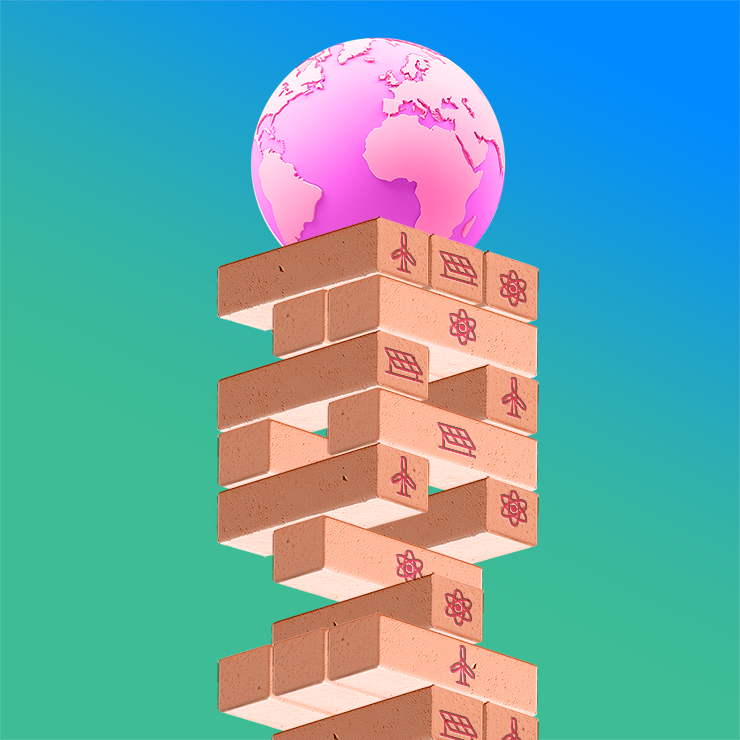
Recent climate and energy reporting have emphasized the need to roll out new technologies on a large scale to reduce greenhouse gas emissions. But what exactly needs to happen to make this a reality?
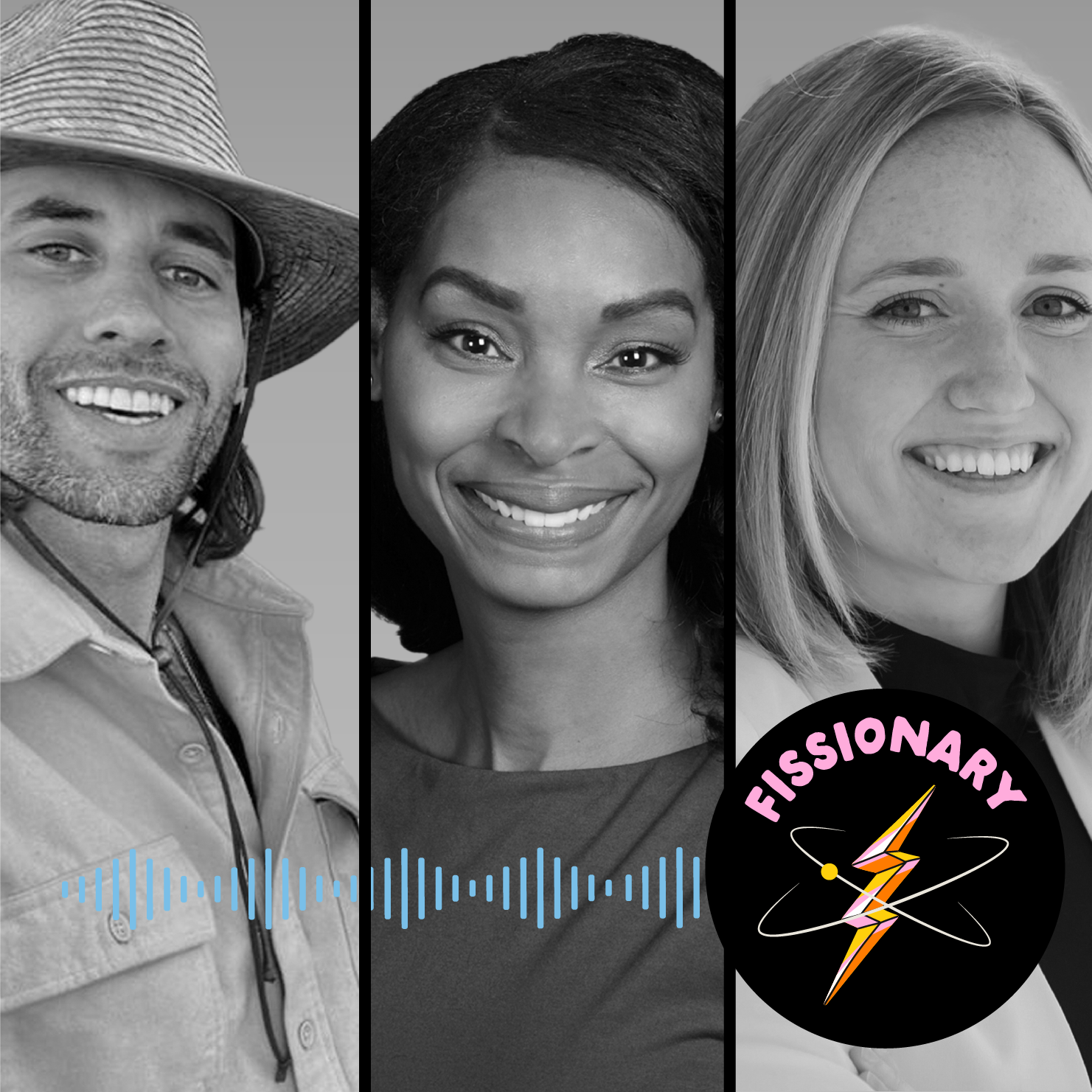
In the Season 3 premiere, Jordan and Mary sit down with Cat Clifford, senior science and economics correspondent at Cipher. With her extensive experience in climate reporting, Cat delves into the challenges of deploying nuclear technologies, provides valuable insights on the barriers to scaling and commercializing climate technology across various sectors, and recaps her career in reporting.
From small business news, I evolved a bit and went into entrepreneurship and startup reporting. I started to realize that there was this subset of startups that work on creating solutions for clean energy. And I started realizing there was such a thing as an ecosystem of climate and startup entrepreneurs and innovators and scientists. Once I learned that this was a thing, I became really singularly obsessed.
While Cat started her journalism career covering general news and business news, she ended up covering energy and climate when those fields started becoming more prominent in the mainstream media. While she’s glad that things like climate tech became more prominent in the media in the 2010s, she says it is unfortunate that it didn’t happen sooner. Much of why it became more prominent is because we were seeing the consequences of climate control in real-time.
Right now, Cat is covering the nuclear industry. One thing that interests her the most is where we will see nuclear being deployed.
I think what I'm most interested in seeing is what sectors and what technologies are actually going to get deployed. Right? So, I think there's a lot that I've been covering and a lot that I have covered on the innovation on the lab scale, you know, going from the lab to a pilot, then from the pilot to a demonstration plant, then from there.
With that, we’re seeing a rise in AI-driven data centers and an increased demand for energy, in part due to those data centers. That’s something Cat has thoughts on.
I think because you have a lot of these hyperscalers that are going to be using a lot of AI and be investing in a lot of data centers, also being companies that have a lot of money and have a high priority of a premium on their energy sources being no carbon, you know, decarbonize, clean energy sources. I do think that there is that sort of a natural synergy. And also, by the way, with data centers, a really acute demand for 24/7 power.
Listen to the season premier to learn more about the world of climate tech and the reporting around it!
Mary Carpenter This is Fissionary, a show exploring how nuclear powers your world. I'm Mary Carpenter.
Jordan Houghton And I'm Jordan Houghton. Let's jump in.
Mary Carpenter Hey Jordan, and hey, Fissionaries. Welcome back for season three. Can you believe it?
Jordan Houghton I can't believe it's season three already.
Mary Carpenter I know. Season one and two were really fun, but I think listeners are going to love season three. We've got some great guests coming up, starting with our first guest, who, if you guys have been following nuclear for a while, you're probably already familiar with her. But it's Cat Clifford from Cipher.
Jordan Houghton Cat has been such a great reporter. We've worked with her on a number of stories over the last several years, and I just really appreciate the sourcing and research and background that goes into her articles to one find really cool stories to tell and then to pull out all of the important threads and them, so it's fun to sort of flip the script and get to ask her questions today instead of having her ask us questions!
Mary Carpenter It's a nice change, for once! Jordan Houghton and I have been doing comms forever, so we're usually on the other side of the reporter but today we were asking the questions and Cat's really cool. She's, I think, like people calling him a trailblazer, talking about nuclear, talking about climate, you know, when other people weren't doing that. And now it's a lot more common and you're seeing a lot more of those threads and stories and different issues, but Cat was doing it while other people weren't. So it's really interesting to hear her perspective, why she started writing about it, how she got interested and how she sees it being covered in the future.
Jordan Houghton Yeah, absolutely. I think her history in the space gives her a really interesting perspective too, because to your point, she's been covering it longer than most people have, and especially the technology side that she's interested in brings a really cool angle. And anyway, if you if you have not read Cat's work, you definitely will want to after you hear this interview.
Mary Carpenter Yeah, check out Cat. And welcome back, season three, let's dive in.
Jordan Houghton Joining us today is Cat Clifford, senior science and economics correspondent at Cipher. With nearly 20 years of reporting under her belt, Cat has dedicated more than half of her career to reporting on startups, entrepreneurship and innovation, especially in the realm of climate technology. She helped launch the climate desk at CNBC.com and is known for her clear and precise explanations of complex scientific developments and their economic impacts. Cat's expertise has earned her numerous accolades, including the Darlene Schmidt Science News Award from the American Nuclear Society, for her exceptional coverage of the nuclear industry. And I'm very excited, Cat, I was there in the room when you got that award. Very excited for you, so well-deserved. Cat, we're thrilled to have you today. I'm personally looking forward to getting the chance to ask you the questions. Usually when we work together, you're asking us the questions, so this is a fun turning of the tables. And I would love to start by just asking you to tell us a little bit about what drew you to pursue journalism. How did you get into reporting?
Cat Clifford Well, thank you so much for having me. I really appreciate it, and cool to know you were in the room when when I got that award! I came to journalism through a pretty nontraditional route. I for the first couple decades of my life, I was really aggressively and passionately pursuing a ballet career. I got to a point in my career I was about 20 and not signed and it wasn't looking like I was going to get signed to a professional company. So, at that point, when you're 20 and a ballet dancer without a professional prospect, it’s kind of time to figure out what to do next. And I really didn't have any idea. So I went to college counselor career center, and they sort of walked me through, what am I going to do with my life? Which I really had no idea. I did clarify with the counselor’s help that I'm really passionate and have always been really passionate about writing. So, journalism became an option on the table, you know, through those conversations. My first job in journalism was news—more general news. From there, I went from general news, I started covering business news. From business news, I covered small business news. From small business news, I evolved a bit and went into entrepreneurship and startup reporting. I started to realize that there was this subset of startups that work on creating solutions for clean energy. And I started realizing there was such a thing as an ecosystem of climate and startup entrepreneurs and innovators and scientists. Once I learned that this was a thing, I became really singularly obsessed. And there was sort of no looking back for me, for me, after that, I just felt like anything else I was working on, I was less interested in. So, it sort of quickly became an area of focus and I and I work proactively to make that my full time focus.
Mary Carpenter So it sounds like you were there when climate really kind of became a big thing in mainstream media. What do you think sparked that development in news?
Cat Clifford Yeah, I do think that there have been periods when conversations about energy and climate have broken through a little bit more than other times, I think, like 2010, I think there was some effort, there was a little bit of rumbling, right, maybe around clean tech one point around climate and energy reporting. But I do think that you're right, it was a little bit later, towards the end of the next decade, 2017, 2018, 2019, where climate and energy reporting became more part of the mainstream media. And my sense of that, well, I have two reactions. One, I think it's too bad that it didn't happen earlier. Right? I think one of the themes is that we all should have been paying more attention to this earlier. So, but I do think that part of what happened is is a growing awareness. Right. And how exactly that happens? That's sort of a question maybe for a sociologist or something. But I think there was a growing awareness maybe after the 2015 Paris Climate Accord. I think one of the things that unfortunately raises awareness about climate change and energy issues is when we have climate fueled natural disasters. And so I think that one of the things that increased the attention and awareness of climate change is more broadly is as the number of sort of climate fueled disasters hits people's homes and hits people's communities. I think those kinds of personal experiences really elevate the awareness that people have of climate change as an issue. So some of that I think was, you know, the zeitgeist, people now starting to pay attention after the 2015 Paris Climate Accord was signed. But also this sort of incremental changes that and an increase in awareness that happens when climate change starts to actually impact your local community. And I think that is a big driver for awareness for media coverage. But I do think it's worth repeating that. I wish—I wish if I could go back and recreate my career, I wish I had started obsessing about this much earlier in my career. And I wish that the media writ large had been focused on this as an issue much earlier. So that's sort of my plug for I wish this had started earlier!
Mary Carpenter What are some of the major trends and developments in climate and energy reporting that you're most excited to follow?
Cat Clifford Well, this is a podcast about fission, right? So, it's no secret that I am covering the nuclear industry. And I also should say that I cover—I've been covering fusion also. So, my reporting on the nuclear space includes fission and fusion, and that's a fascinating story and one that I will continue to cover. I also—I think this is a question—I'm usually the one asking the questions, right? And so, I know that my answer is going to be slightly unsatisfying because I know that if I were asking the question that I would want a clear answer. But I think, you know, in terms of what industries and what areas I'm most excited to cover, you know, obviously nuclear fission and fusion is an area I've been covering for a long time and I will continue to do so. It's a fascinating story, both of them are fascinating stories. But I think what I'm most interested in seeing is what sectors and what technologies are actually going to get deployed. Right? So, I think there's a lot that I've been covering and a lot that I have covered on the innovation on the lab scale, you know, going from the lab to a pilot, then from the pilot to a demonstration plant, then from there. So, what I'm really interested in seeing going forward, more than any one specific industry, right, this is why I said I know I'm sort of not giving one or two specific industries that I'm most encouraged by. Because I think what matters most is I'm really interested to see what's going to get deployed and what's going to get deployed at scale. Because I think one of the things if you come to climate and energy, but energy is a subset of the climate story. But covering climate, covering energy, what matters is what gets deployed and what is going to reduce greenhouse gases, reduce emissions at scale. So, I think in terms of technologies that I'm interested in writ large, you know, I cover all climate tech and innovation. And what I will be most interested to see and what I what I'm interested more than more than a particular industry is seeing how things get deployed. And that's really what matters when you talk about climate tech.
Jordan Houghton Cat, that's such a great point. We talk about that, obviously, yes, we are here in the nuclear industry and it's a conversation all the time about deployment. But I'm curious, since you are not just in nuclear, when you look across the different energy sources, deployment is a real conversation. Do you find that the that the barriers or the challenges that are being faced are similar between different sources, or is there something different in each of them?
Cat Clifford Yes and yes, there are similarities and there are differences. I think, you know, nuclear fission and fusion have different—have their own different sets of issues, right? I think fusion still needs to become a commercial reality. So that's an exciting, amazing technology that still needs to become a commercial reality. Nuclear fission, we know that it works. There's a lot of innovation in the kinds of reactors being built. But I think the primary barrier, and I don't think this would be a surprise, anyone in the in the nuclear fission space is going to—is this is not going to be a surprise, they're going to echo it, is it's expensive. And it's so far been expensive and slow to get steel in the ground. And I think that is a big challenge for the nuclear fission industry is getting these innovations, getting these new kinds of reactors, getting smaller reactors, more modular, all of them getting them actually built and getting costs down and having them constructed at scale. And for other kinds of industries—no, okay, so for renewables, there's—those technologies, the cost has been coming down a lot recently. So, you have the cost of solar has come down exponentially. So, I think some of the issues that face renewables are going to be different than the issues that face nuclear. There are some issues, though, that are universal. And one of the ones that comes to my mind, I've done quite a bit of reporting about the issues in transmission. You know, transmission is sort of one of those issues that cuts across all energy sectors. You need to have the capacity to take the energy from where it's generated to where it's going to be used. And I think our transmission system in the United States and this is, I think, something that's increasingly—there's an increasing amount of awareness that transmission is an issue for getting new generation online, but that is an issue that that affects any kind of generation. We need more transmission. We need more reliable transmission. So, there are certain issues that affect all kinds of generation and then I think there are issues that are sector specific, right?
Mary Carpenter So, say you have a crystal ball, what are some technologies that you see making it to the finish line and having the most impact?
Cat Clifford The same idea that I was mentioning earlier about sort of, what is actually going to get commercialized at scale? I don't know. And I don't think anybody knows. And I think that if anyone says that they do know, they have sort of a vested interest. Right? As an unbiased watcher of the space, that's what I am as a journalist, I watch all the different sectors, I watch all the different kinds of energy generation and all of the different innovations in decarbonization. What's going to have the biggest impact is what's going to get built and deployed in the near term. I mean, we can—there's definitely going to be a huge amount of energy demand going far into the future. So, we will definitely always need energy. But in terms of addressing climate change and in terms of having an impact on climate, what we need is to bring down emissions in the very near term, in the next— yesterday, really in the next decade, certainly, but yesterday is really when we need to bring emissions down. But you know, still, I think in terms of what's going to have impact, what's going to get built, what's going to get connected to the grid, what's going to get used, and what's actually going to bring greenhouse gas emissions down more than anything else. With climate, impact is scale, right? When you're talking about what is going to have a climate impact, it's what's going to actually get built and what's going to get built at scale to really bring greenhouse gas emissions down. So I think there's a lot of that story that I don't know the answer to. If I had that crystal ball, I might be making financial bets instead of being a journalist.
Mary Carpenter We're gonna see Cat with, like, a private island and like—what are those memes, like, you won't know I won the lottery, but, like, there'll be signs. You won't know Cat get a crystal ball, but they'll be signs.
Jordan Houghton On the beach. We won't hear from you for a while. Cat, when you started covering innovation and climate, I'm curious if nuclear was there when you started, when you dove into the space, or was it something that you started hearing about after a little bit of time there? How did you get familiar with it?
Cat Clifford Yeah. Well, so when I was still covering entrepreneurship and innovation more broadly, and I started in sort of 2017, 2018 timeframe to become aware that this idea of sustainability and climate innovation. So, one of my first features, one of my first profiles in the space was of the chief scientist at Commonwealth Fusion Systems, Brandon Sorbom, and so I learned about fusion and I learned that fusion was a thing in doing that reporting. When I officially started that helped launch the climate desk in the summer of 2021 at CNBC, that same month in August 2021, I took a course, the MIT extended education class on nuclear energy. So, at the same time that I was getting started in launching the climate desk, I had this really great foundational it's—continuing education course. I think maybe that's—continuing education course and it was taught by professors at MIT, it was really fabulous. So, that gave me some foundational knowledge of the sector that, at a time when I was just building up my repertoire, my clips, my focus on the space. But I think also more broadly as a reporter, you know, I'm obsessed with and drawn to story lines. And nuclear is a fascinating story. And it's a fascinating story right now. And so, I think, you know, I had had some sprinkling with earlier reporting, learning about fusion, learning what this means. I had this course that I—extended education course that I took at the same time that I was getting really deep in, full-time into climate coverage that probably impacted my sense of confidence in understanding some of the basic and foundational science. But then also I think that around that time, there started to be sort of a second look at nuclear energy because of the same thing that we were talking about earlier, this growing awareness of the need to respond to climate change. So, at the same time that you had this growing awareness that you need to respond to climate change. And then another factor that I think has also really put nuclear on the main stage of this conversation is growing demand for energy. So, you have growing awareness of climate change becoming an issue, you have growing demand for energy, electricity, especially as one of the primary decarbonization pathways is electrify everything, right? So, you have great demand for energy and electricity. You have climate change—and it's the urgency of responding to climate change becoming ever more front and center. And so nuclear solves both, it’s a solution, right? It is an energy generating solution that doesn't have greenhouse gas emissions. And so just from the foundation, from the perspective of, like, really interesting stories, what happened in the nuclear industry, why it became a bit staid, you could say, for a while, and then why it was now getting sort of this potential second look, right? I think from the perspective of someone who's interested in stories and someone who's covering that sector, there's just a real confluence of factors that make the nuclear industry an interesting one to cover. It's also, I think, you know, I feel like for better or worse, I'm really drawn to these really complicated and, you know, potentially charged, I guess, as a way you could say it—charged, I guess that's a pun if you're talking about electricity and energy! But, you know, some of these conversations that are complicated and require nuance and that a lot of other reporters might stay away from for that reason drew me in. So, I think I came to nuclear because I came to climate and innovation coverage at a time when the sector was getting a second look. And I came to this to this to the beat at a time when it continues to be a fascinating story, a nuanced story, a complicated story, as with, you know, with some other topics that I cover.
Mary Carpenter So, we know you've traveled quite a bit to different energy sites and plants during your reporting. What has been one thing you've seen yourself that blew you away or made you think that like you wish your readers could see it? Like, what's like the most exciting thing you've seen?
Cat Clifford As a reporter, first of all, I think it's—being on the ground and meeting people and seeing the technology is the best way to cover the story. So, I do love to go on site visits and go to labs and talk to scientists and go to plants and see things being constructed. I think it's so helpful and critical to doing really good reporting. I have been to a couple of fusion labs and commercialization company—I guess labs. There are manufacturing facilities. I went to Helion in Everett, Washington. I went to their—I went there and wrote about that, and I went to the Commonwealth Fusion Systems Campus in Devon, Massachusetts. And the reason I highlight those is just because I think fusion is one of those things that feels kind of like something that The Jetsons would talk about in the future or, you know, it's this—the idea of star power, it feels so futuristic, and being in the manufacturing facilities for both of those companies. I had a distinct experience of, this is how and where the future for this big idea becomes something that's made and becomes, like, not to say that building a fusion reactor is like building a car, but it's like, you see the pieces being put together, right? And so, I think my experience going to those to fusion construction—commercialization, construction facilities was particularly poignant. You know, it's one of those experiences that I think brings the intangible into reality.
Jordan Houghton Cat, in the context of global energy demand, we're seeing—and you’re reporting on it, so I know you're seeing the rise of AI-driven data centers and the energy demand that they require. And I'm wondering if you see or how you see nuclear power fitting into the broader energy ecosystem in the coming years where—when you've got things like data center demand coming and just any other thoughts you have about where you see it fitting in?
Cat Clifford Yeah. I do think there is a sort of a synergy with data center, energy demand for data centers and some of the developments and innovation that's been happening and in the nuclear fission space. A lot of the hyperscalers, right? So, companies that are really investing heavily in artificial intelligence are also companies that are—have very deep—they are large companies with a lot of money, and they also tend to be companies who have a very clear—and I think it's important to their corporate sense and corporate strategies to use clean energy to use—to power their operations with carbon free energy. And so, I think because you have a lot of these hyperscalers that are going to be using a lot of AI and be investing in a lot of data centers, also being companies that have a lot of money and have a high priority of a premium on their energy sources being no carbon, you know, decarbonize, clean energy sources. I do think that there is that sort of a natural synergy. And also, by the way, with data centers, a really acute demand for 24/7 power. Right? So, all of that leads to this natural synergy where I think, you know, customers—there are customers that are flush with cash and looking for clean decarbonized energy and 24/7, all the time energy. So, I think that's a really natural place for nuclear companies to try to fit into the to the landscape there. There's a number of reasons why I think that there's sort of natural synergies with nuclear and AI and data center demand. Now, again, this is a theme I brought up earlier too. Who's going to actually get these things built, right? So AI data center hyperscalers, they want clean energy and they want their data centers to be powered by clean energy. And that is an important part of their corporate story. And they have deep pockets, but they also need—they're in a race, right? These hyperscalers are in a race to compete with each other on getting this AI out. So, that's another instance where who's going to win is what's going to get built and what's actually going to get steel on the ground. And I think that is an issue that the nuclear energy knows it is up against is, okay, we have to actually build these things. We've got these plans, we've got these innovations, we've got these customers that need the energy.
Jordan Houghton I'm going to add a plug for our listeners. Cat is absolutely one of those people that you should follow if you're following energy, if you're following climate, if you're following nuclear. Even though I am in this industry, I always learn something, Cat, when I read your stories, which to me is just a sign of really great reporting. So, definitely read Cipher. Read Cat's work. I do have to ask you, we know you travel every year for your birthday, which we love because we love to travel, too. Do you have a favorite, most awe-inspiring place you've visited today?
Cat Clifford For me, actually, the tradition is less about the specific location and more about the process of removing myself from my normal routines in every way. The process of taking myself out of my regular life, the process of figuring out how to buy things at a grocery store, deciphering what is this? You know, if I can't read the language and going places and taking—all of that is my favorite part. That process of being in a new place, of being in a new mindset, of being physically in a new place, of having to re-investigate all of those things that when you're in a place that you know, when you're in a familiar zone, when you're in a familiar routine, you don't think about those things. And so, when you have to change your mindset to be able to go to the grocery store, figure out how to operate in a different country by yourself. I think there's also just this sort of fundamental re-examination or reformatting of how I think about everything, including my own life and sort of my own perspective.
Mary Carpenter So, we have one question every season that we ask our guests to close out the show. This season, we're asking what's the last show you binge watched and would you recommend it?
Cat Clifford Well, so I watched Game of Thrones, and I think of that often. And part of the reason is actually—I mean, I connect everything to climate change in a way which I think those around me might sometimes find a bit tiresome because I'm always thinking about how things apply and connect to climate change. But Game of Thrones did—you know how all of these warring factions and warring families and groups had to come together and overcome their anger towards each other, you know, their biases, their generations-long rivalries, if you will, they had to come together to fight the white walkers. And I think of this as something similar to climate change, that if we are going to, as a society, reduce our emissions enough and fast enough to make a meaningful difference in our world, we are going to have to come together despite differences and come together, so I often think about Game of Thrones and how the little warring factions had to come together to fight a greater enemy, and I do actually connect that to climate change. And one other just to be super nerdy about shows that I watch during the pandemic, this is actually a kind of an older documentary series called How the Earth was Made, it was on the History Channel back in, like, 2010, and it is a nerd's paradise, like it is—like, maybe a dozen episodes, all about how the Earth was made, told from the perspective of geologists. And, you know, digging into the geology of so many different parts of the world, not only did it make me obsessed with volcanoes, but also another climate change theme is, you know, I think one of the things that watching that show really made me realize is that the Earth is going to still be here whether we reduce greenhouse gas emissions fast enough to, you know, slow down global warming or not. And so, the earth has been through so many evolutions. And so I think watching how the earth went through so many evolutions and the geology of the earth that so many has gone through so many evolutions also made me realize climate change is really a human story. So, those are some shows I binged and I brought everything back to climate change because I'm such a nerd.
Mary Carpenter I'm so impressed.
Jordan Houghton Same. Perfect note to end this conversation.
Mary Carpenter Perfect. Yeah. All right. First episode of season three and we've already got a Game of Thrones reference? I'm happy.
Jordan Houghton I have to admit, I watched, years ago, a couple of the first episodes of Game of Thrones. Never watched more than that, was not into it.
Mary Carpenter What?
Jordan Houghton So, but now, Cat has brought up the climate change aspects and I’m like, do I need to go back and try watching it again?
Mary Carpenter That actually really surprises me. And I'm actually also surprised that I'd never really thought about climate change aspect of the white walkers coming back. I mean, it makes sense. I get what she's saying. So, you should probably go back and watch Game of Thrones, and then get into House of Dragon, once you're done.
Jordan Houghton I know the House of Dragon—I feel like I'm so far behind. There's no hope for me now that there's a whole second series.
Mary Carpenter No, you've got time. There aren't that many episodes in the new show either. They're pretty short seasons, so.
Jordan Houghton Okay. Adding it to the list, adding—there's so many shows coming back now, finally, in the fall. Okay. Adding it to the list.
Mary Carpenter I know. And we're going to help listeners add to their lists this season with our wrap-up question.
Jordan Houghton Yes. Yes, exactly, I'm excited to hear what everybody has to say, though—I have to say I do still kind of want to know where people are eating as well, so.
Mary Carpenter I know.
Jordan Houghton If you enjoyed the show, we'd love to hear from you. Leave us comments, let us know your thoughts on the episode. Tell us what you're watching, where you're eating, and don't forget to support us by subscribing on Apple, Spotify or wherever you listen. See you soon.
Mary Carpenter Thanks for listening. See you next time.
The next episode airs on Thursday, October 24—make sure you tune in, Fissionaries!
Sign up for updates and new episodes: