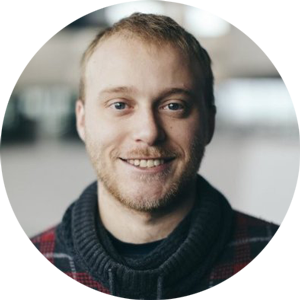
If I want to be a baseball player or golfer or astronaut, I might use a virtual reality kit to immerse myself in that world and see what it’s like. I might not actually be able to do those things as a career, but what if I wanted to work in nuclear energy? Could I try that out using a VR kit? Derek Kultgen of Argonne National Lab’s Mechanisms Engineering Test Loop (METL) says yes.
In this episode, Derek talks about how METL is using video games and virtual reality to revolutionize how we work in the nuclear industry, making operations safer, more efficient, and more accessible.
We started researching different ways that a human could actually interact with the plant to control the plant, ensure that it's operating safely and effectively. Where the real motivation for using the video games was actually reduce costs, as there's a lot of articles out there and a lot of research done that there’s a shortage of labor, there's slow construction times, existing plants are struggling to compete. So there's a lot of motivation of how we reduce operating maintenance costs.
Derek says the technology they use can be like a mixed-reality game on your phone that shows Pokemon in the room with you, or like using a Meta Quest or Apple Vision Pro headset that fully immerses you in a different reality.
He says this could be an important technology for everyday life, for construction or even for IKEA furniture.
Imagine your hand in a set of a bunch of drawings, a binder full of papers with a bunch of drawings that aim to direct you on how to assemble a complex piping network. It can actually be very difficult to interpret. Now, I want you to imagine getting rid of that binder and then just holding up a tablet or a phone or wearing a headset, and the entire layout of this piping system is just projected out into your reality, showing you how the different components go together.
If you’re wondering whether you need to be a video gamer to understand or enjoy this technology, the answer is a firm no. Derek is by no means a gamer—in his words, he only cares about motorcycles. But, when Derek saw use cases for this kind of technology in other industries, he knew it could be used for nuclear energy. This technology is not only easy to use, but it is effective and friendly to remote workers. A major issue that the nuclear industry has faced historically is an inability to attract workers from all over as well as effectively train them. Derek thinks this technology can do just that.
Jordan Houghton And I'm Jordan Houghton. Let's jump in. Hey Fissionaries, welcome to our podcast today. We're thrilled to have you tuning in and listening with us.
Mary Carpenter Hey, Fissionaries! Thanks for joining us. I think you guys are going to love this episode, especially if you like video games. You know, I was never a big gamer, but I still found this episode really interesting. I do love a good game of Mario Kart, though.
Jordan Houghton Mario Kart, the best. I have this, like, struggle with do I let the kids win? Or do I just, like, full throttle and leave them in the dust? And, of course, I've done both. It's hard to back off.
Mary Carpenter I mean, that's—I think Mario Kart is how we built character as kids. You can’t let them win.
Jordan Houghton They need to be destroyed!
Mary Carpenter Yes!
Jordan Houghton So that they can go on to have strong character as adults.
Mary Carpenter Exactly. Leave them in the dust. I mean, they can figure out how to get the shells to shoot—the shooting shells. I mean, it's just, you know, teaches you strategy, teaches you endurance, I mean, it's all of it.
Jordan Houghton I was not expecting a gaming and nuclear crossover episode, and I'm wondering—the gaming that we're talking about in this episode is more along the lines of VR or AR. And I’m wondering if you've tried any of the headsets, like the Meta?
Mary Carpenter I actually have.
Jordan Houghton Okay.
Mary Carpenter Back in when I worked on Capitol Hill, they had—I can't remember which had said it was, but they brought them like around to show off the new technology. And I did try one of the headsets, and it was a game where you're basically walking on the side of a building, like across, like, a tightrope. I mean, it felt—like, I mean, it didn't feel like I was actually up there, but I mean, it was intimidating. Like, it was very realistic. So, I can see how this technology would be helpful for our guest today because it's realistic. It's really cool. Have you tried it?
Jordan Houghton I haven't. My kids use the Meta Quest, I think it's called.
Mary Carpenter Yeah, you should try it.
Jordan Houghton So our guest today is Derek Kultgen, who works at Argonne National Laboratory and runs one of their experimental facilities where they have brought some of this tech into their work. And one thing that I think is really interesting, Mary, is the way that he talks about how it might help a future workforce generation.
Mary Carpenter Yeah, he talked about how, you know, this is a great way to recruit new talent, you know, younger generations that are kind of looking for that intersection between tech and energy. This is an exciting project for them. For listeners, so, you've all seen the new Apple headsets, you guys probably know what they look like, but basically—our guest will get into this a little bit more—but you can use this technology to fix or address or, you know, work on something in a plant that's super technical. You can bring up on the screen in front of you, like, what it should look like, the plans are, what, like how to fix things. It's really interesting, we talk about how this can also help, you know, remote workers, too. You can help fix a plant across the country or even across the world with this technology, because you have it on the screen right in front of you. So, it really is a way to build that future workforce that we're trying to do.
Jordan Houghton I thought the bit about being able to support remotely was interesting because I think when you think about a plant, you think about having to live in that community and be—so that you can be on site every day, and I like the idea that it could help build a knowledge network around the country and even the world where you can support the plant through this technology, even if you're not right there where the plant is, is interesting.
Mary Carpenter Yeah, there's so many benefits to that for, you know, recruitment, but also for maintaining the plant. And, you know, having experts that may not be right there, but they can still help. So, it really is a win-win. And it's exciting, it's cool, it's something different. And it's such a great idea. I love when our guest brings up that, you know, this is helpful technology outside of the nuclear industry as well. He mentioned that, you know, we need technology like this, even for when you're putting together a dresser from IKEA. And that's something that I certainly could use when I purchase things from IKEA, it’s like a three-day process, put together a shelf. So yeah, it's really exciting technology for our industry, but other places as well.
Jordan Houghton Awesome. Well, let's jump into the interview. We are thrilled to welcome Derek Kultgen to the show today. He serves as group leader for the Mechanisms Engineering Test Loop Facility, or METL Lab at Argonne National Laboratory. It's an experimental facility dedicated to developing small to intermediate scale components for sodium fast reactors. We'll get into that in more detail when we start talking. His team conceptualizes, fabricates, and demonstrates equipment and instrumentation and assists scientists and engineers who conduct experiments in the METL. Derek, thank you so much for taking the time to talk to Mary and I today! I would love if you could start with telling us a little bit more about your background, in your own words.
Derek Kultgen I was born and raised in Racine, Wisconsin, so I'm the stereotypical Wisconsinite. You know, brats, Packers, cheese. I recently moved from Logan Square, Chicago to the north suburbs with my wife and two daughters. I live and breathe motorcycles and really enjoy building, repairing, doing anything with my hands in my spare time. I really never saw myself in the position I'm in. Early on in life, I actually become—I’d planned on becoming a mechanic. That's what my dad does, he's a diesel mechanic. It was my mother who pushed me to pursue higher education. So, I actually enjoyed my time a lot attending Purdue University and continued straight from my bachelor's to my master's. The master's research was on a cold climate heat pump, which is a different heating system. I wanted to move closer to home and my girlfriend, now wife, was in Chicago, so I just started looking for job postings in the area. I stumbled upon one for at Argonne National Laboratory for an engineer to work on a sodium test loop to develop equipment for advanced reactors. And so that's kind of how I, you know, got into Argonne and, you know, was the start of my nuclear energy career. So, after a year of working at Argonne on the mechanisms engineering testing for METL facility, I was fortunate enough to work it out with Argonne and Purdue as well, so that I could pursue a PhD in nuclear engineering part time. So, I hope to actually graduate soon. After that year of working at Argonne and in the nuclear energy and science space, I, you know, really became passionate about it and decided to pursue even further education in it.
Mary Carpenter Great. Tell us a little bit about what you're working on at METL.
Derek Kultgen We work on a lot of different things. Again, we try to be a—so, I guess I'll give a quick background on the METL facility. It is a sodium test loop. So, current nuclear power plants are cooled with water. There are a lot of benefits to actually using sodium to cool the reactor, one being you don't have to be at a high pressure. Two, it's great at transferring heat from the reactor core so you can use it to do a useful process. And then another great thing is it enables you to have a different type of reactor or a fast spectrum reactor. So, sodium really is an enabler of nuclear energy and allows you to have these sodium fast reactors. So, there are a lot of nuances with handling sodium, which is why this facility was conceptualized. So, there's really not a, you know, dedicated sole purpose of this facility. It's open to be used by academia, industry, our own internal experiments, and there's just a very diverse range that we can host there at the facility.
Jordan Houghton I'd love to learn more about what you're doing with video game technology at METL.
Derek Kultgen Yeah, that was something that stemmed from improving human-to-machine interface. So, how does an operator actually interact with a plant? That was the origins of it, and really, the motivation came later. So, we started researching different ways that a human could actually interact with the plant to control the plant, ensure that it's operating safely and effectively. Where the real motivation came in for using the video games was actually to then reduce costs, as there's a lot of articles out there and a lot of research done that there is a shortage of labor, there's slow construction times, existing plants are struggling to compete. So, there's a lot of motivation of how do we reduce operating maintenance costs? And thought, well, maybe we can look into using this kind of video game technology to address some of these issues. The technologies really are encompassed by something called extended reality. Extended reality is a spectrum of environments. On one end of the spectrum, you have reality, and then on the other opposite end, you have virtual reality, where a user wears a headset and is completely immersed in a virtual environment. However, there's a bunch of different technologies in between that. Closer to the reality side, you have assisted reality, which is basically a hands-free device. So, imagine being able to use your phone or your tablet. Being able to see the screen in the periphery of your eyes. I kind of like to think of it as if you're driving down the road, your focus is on the road, but you can kind of glance down at your dash and see what your speed is oil, temperature, pressure, etc. So, that's what this device really enables, is that you could have all the information that you can get from a phone or tablet, but not have to use your hands. You could still be using wrenches or holding pieces of equipment. And that's really where the power comes in with the assisted reality. And we've—the examples we've demonstrated with that have been predominantly for a maintenance personnel role, where if you're trying to troubleshoot a valve, you could have live pressure data and live flow rate values being streamed just in your peripheral vision. So you could be, you know, adjusting a valve, adjusting a piece or component, and then just look down and you would see the live data stream to you. Or, you could also see what that valve or components manufacturer is, the serial number, etc.
Jordan Houghton I was just going to say, my daughter has an app on her iPad that projects, like, dinosaurs into my living room, so it looks like there's like t-rexes walking around the house. This sounds like a much more useful version of that!
Mary Carpenter Is it kind of like those new Apple Vision headsets? Like, I want people to understand kind of like what they're like. Is that a good comparison?
Derek Kultgen So, the technology we've demonstrated is exactly what you both mentioned. That's getting closer to the other end of the spectrum. So, for instance, Jordan, the technology your daughter was using would be kind of classified under this augmented or mixed reality where you're almost projecting, or kind of have a holographic look to it, and actually projecting it into your real environment. So, it's a digital image or 3D object projected into your virtual environment. And so, we've also done that. The beauty of that, as you mentioned, you can use a phone, you can use a tablet, or you can use a headset that's not quite like the Vision Pro or, like, a Meta Quest. It's really the big player and it would be Microsoft HoloLens, and that enables what's called mixed reality, that allows you to now interact with these projected 3D objects. And so, the use cases for that would be, which we've demonstrated, would be more along the lines of construction. So, imagine your handed a set of a bunch of drawings, a binder full of papers with a bunch of drawings, that aim to direct you on how to assemble a complex piping network. It can actually be very difficult to interpret. A lot of times there's a back and forth of how things should be assembled. Now, I want you to imagine getting rid of that binder and then just holding up a tablet or a phone or wearing a headset, and the entire layout of this piping system is just projected out into your reality, showing you to scale how the different components go together. I actually think, you know, like an IKEA could use this technology of actually showing you how to assemble furniture and things like that, of how it's going to be in your living room, so the constructions are as clear as day, you can't screw it up!
Mary Carpenter I could definitely use that. IKEA's furniture is impossible to put together!
Jordan Houghton Yeah, if anyone from IKEA's listening, please look into this, I'm a big fan of this idea too. How did you think about bringing this to life? Did you see it in another industry? Are you a gamer? What gave you this idea to try this?
Derek Kultgen So, I am not a gamer. As I mentioned, I'm pretty much live and breath motorcycles, so if it didn't have two wheels and an engine on it, I really didn’t pay attention to it. My wife would probably tell you I didn't pay attention to her until she bought a motorcycle during our dating life. So, definitely not a gamer. There were use cases in other industries. I wouldn't say so much on the virtual reality side, but on that kind of mixed reality or augmented reality of projecting those 3D objects. There was a lot of examples out there of showing basically how you could take, like, an engine, and make it transparent. So, you could help people on the assembly line of these engine manufacturing plants assure they have the right quality assurance by using this technology, this hardware. So, it was mostly aimed at manufacturing, both for the assisted and augmented reality, and then, you know, that kind of provided a foundation of, hey, I bet this could also be used in the nuclear energy industry throughout its lifecycle, whether it's design, fabrication and construction or operating maintenance.
Mary Carpenter So is this something that can be used remotely? Say, we're sitting here in DC and someone needs to fix a plant across the country. Could someone in DC help the team in California, by—or wherever they are, by putting this technology to use?
Derek Kultgen Another great enabler of it is, with the growth of remote work and the desire to have either a hybrid or remote role, you can have a subject matter expert working remotely or in a different facility and actually assisting a technician out in the field on the actual plant. And what's great about that is because they have this technology and are able to basically see a tablet or a phone screen in their peripherals, not only can they see live data and help themselves, but a subject matter expert can actually project, say, a schematic or an engineering drawing to their screen and actually walk them through the steps. So, if it's a big, large schematic, that could be confusing to look at, a subject matter expert can actually remote in and remotely kind of circle and highlight areas of the schematic that they can see in the peripherals while still having their hands available. So, it is very much a remote technology.
Jordan Houghton Do you think that could open a talent pipeline to places where there aren't existing nuclear plants?
Derek Kultgen Yes. At the end of the day, people are more and more— especially the younger generations—want a balance of the work-life and also want to live where they want to live. A lot of times, nuclear power plants aren't in heavily populated areas, they're actually in very remote areas, so that's going to bring a larger talent pool in because they'll be able to do their jobs effectively and safely, basically wherever they live. And it also is very attractive to a younger generation that grew up using electronic devices since they were in grade school. Submitting homework through grade school. You know, if they go to an existing plant now and they have to submit paperwork to their boss, that's legit paperwork. It's not that they can't comprehend it, it's paper, I think we can all, you know, understand that, but it's not as intuitive, it's not as streamlined, it's not as familiar of what they grew up using. And so, I think it not only increases the labor pool size from location, but also from generational as well, and getting them excited about the work.
Mary Carpenter Yeah, that's a really good point, and that's something we've talked about a lot on this podcast, is kind of figuring out workforce challenges and trying to attract the next generation. Do you think that this tool could be helpful as a recruitment tool to attract kind of that new, younger talent that we're looking for?
Derek Kultgen At the end of the day, people really get excited when they get to see something in practice, and taking a field trip to a nuclear power plant is very difficult to do. One, for access, but also two, we have under 100 in the United States now, so you may not be in your backyard. Fortunate for Illinois, we have the most nuclear power plants, so it's a little bit more feasible. But still, there's the security aspect, there's, you know, a lot of concerns with actually bringing someone to the plant. What this technology allows you to do is bring the plant to the classroom or bring the plant to the recruitment booth. So, you could either use your tablet or phone to kind of project the plant out into wherever you're at or you could put on a virtual reality headset and navigate through a plant. So, I think bringing the plant to the people really puts into perspective the scope of how large these plants are, and maybe also open up the conversation to the different roles. Well, I don't really want to be a reactor operator. I more, like, enjoy working with people or the health aspects of it. Well, we have health physics roles. Yeah, as you know, you have communication roles, promotional roles, there's a lot of different careers. I think that would be more visible as you bring the plant to the people as opposed to the other way around, and this technology helps assist in that.
Mary Carpenter That's such a good idea. It seems like—that it's pretty straightforward, right? Are there people working on this, or is this something that's unique to your work?
Derek Kultgen As far as extended reality as a whole, it's a very busy space. Focusing on plants, and specifically nuclear power plants, I would say we’re pretty unique. So as an example that we recently completed now, is a demonstration for the METL facility. We completely recreated it in a virtual reality environment, which someone could go, okay, big deal. But what we've also done is incorporated the live data of how the facility is behaving into the virtual reality model, and the model will actually change colors, morph around, depending on what those sensor readings are. So, if a certain area is getting really hot, it turns red. If it's getting cold, it turns a different color. So, you're able to really visualize an entire facility, the status of it, with virtual reality, as opposed to the traditional method of sitting at a computer, looking through multiple monitors, and trying to get all these different values. So, I would say we're unique in that aspect, that we've married all these different technologies into one environment.
Jordan Houghton How do you see that impacting the larger industry, even beyond jobs? Have you gotten any feedback from people and plants that indicate how they see this fitting in or changing the industry?
Derek Kultgen So some of the feedback we've received—I have a counterpart in Korea. They have a large sodium test facility. He visited at Argonne while I was giving a presentation on the capabilities we had, and after seeing the presentation, you know, he came up to myself and some of the division leadership and was just kind of awestruck that—and was just like, this is what we need to do at our plant in Korea. It's essential. You know, some people get it right away, some people need some more convincing, some more examples. We are part of a working group with the plants. The challenge with the existing plants is their focus on keeping their operations running smoothly. And as you can imagine, a large organization like that can't just do a culture shift into a full digitalization overnight. And so, they're interested in it. They're working towards it. As far as doing a full adaptation yet, you know, they're going to be a little bit slower process because they have to focus on, you know, keeping power on the grid. But it is something they're working on and working towards.
Mary Carpenter So how do you get this to become a widely used tool in the industry? What's the plan for that?
Derek Kultgen Demonstrating the advantages and quantifying basically an ROI. At the end of the day, we have to make sure that what you're doing isn't just a gimmick. And I think when people hear about using virtual reality or extended reality technologies out in industry, they think of it more as like a gimmick. Oh yeah, this is cool. You did this. But what's the real value? What's the utility? I think as you can showcase the utility of this technology and the real payback of it, I think the adaptation will follow. And so that's something we've been working on here is coming up with these different use cases, these different demonstrations that span the entire lifecycle of the reactor from design to construction, operating and even decommissioning.
Jordan Houghton Do you see—I don't know the demographics of the people that you've interacted with on this—but I'm curious if you have found younger generations, younger professionals, to be more receptive to it than older generation? Like, do you think it will take a younger workforce to bring it to fruition?
Derek Kultgen Yes and no. I don't want to say—because it's really been mixed across the generations. As I kind of mentioned before, people either get it right away or they take some more convincing. I'll say the younger ones are more inclined to actually use it, where the older generations will support the use of it, if that kind of makes sense. So, I don't see the older generations really using it because they're—they want to support advanced reactors, they want to support more efficient operations, of course, and they want to ensure the bottom line is met. But at the end of the day, if you're on your way close to retirement, it's more of a yeah, I'll let the younger generation actually utilize it. So, I see the older generation supporting the use of it and the younger ones actually being that culture change of actually putting it to work.
Jordan Houghton That's how I feel about TikTok. I'm supportive of a younger generation using it, but I myself am not using it.
Mary Carpenter That's a great analogy. All right, so are you working with private industry at all in this, or is this—are you working with video game developers to kind of get this technology going? Are there any partnerships happening?
Derek Kultgen Yeah, that was actually a really cool part of this project on the—I have two examples, one being in the assisted reality and the other one being the virtual reality. With the virtual reality, we worked very closely with developers who use Unreal Engine 5, which if you have people who play Fortnite—again, I'm not a gamer, I don't even really know what Fortnite is, but I know it's popular. It uses this—a graphics engine called Unreal Engine 5, and we've worked with the developer of it as well as the manufacturer of it to create basically a toolkit that allowed us to change the virtual reality environment based off of our instrumentation, or our sensors in the plant, at real time. So, their toolkit that they have out now that other people can use was actually heavily influenced by being used at our facility, so it was kind of a two-way street. We provided feedback and what we kind of wanted to see in the toolkit and how we would use it and the benefits of using it and they basically answered all of it, worked very closely with us, and were able to provide us with this toolkit that enabled this adapting virtual environment. Then the second case would be with the assisted reality, where I mentioned you're able to see a tablet screen in your peripherals. We provided feedback with them and worked with them on not only hardware limitations, but also software limitations of what we would like to see, because a lot of this work wasn't plug and play. It required changing things around, trying to fit a square peg in a round hole, for a lack of a better term, to get it to work, and for it to really change the culture and for a full adaptation of this technology, I think the whole process from the content creation needs to be streamlined, and so we provided feedback and, again, had a two-way street communication, where we see that this technology is, A, already really helpful, but B, where we think it needs to go for it to reach a wider audience.
Mary Carpenter You know, I am not a gamer and I don't know much about Fortnite, but I'm actually really excited now that nuclear energy has a connection to Fortnite. I feel like that is helpful in recruiting the next generation of workers.
Jordan Houghton You know, we have to figure out a way to get that out there, widely known.
Mary Carpenter So what's next for AR and nuclear technology? Where can we go from here?
Derek Kultgen I think keep building upon it. So, as I mentioned, we already demonstrated the use of putting live data into basically a facility that mimics an advanced reactor’s intermediate heat transport systems. So, the METL facility is, you know, very representative of a portion of an advanced reactor plant. We've done the live data. Now, what we'd like to do is couple it with physics. And so, what that would enable you to do is if you had the physics of your facility incorporated, you can predict how it's going to behave in the future. And we would like to not only do predict what we're going to do in the future based off of different temperature changes or flow rate changes or demand on the grid, we'd like to then distribute that data into the virtual reality environment so you can see how your plant is operating, and then you can see how it's going to be operating if you change these certain parameters. And I think that will be the next step, is actually incorporating more of the physics coupled with the real time data, married with all of the asset information of pumps and valves and the historical work orders on it, what was repaired, I think you're going to have a fully digitized facility that really is going to showcase optimal efficiency from every aspect of operating maintenance.
Jordan Houghton I love that that's. It sounds like there's a lot of really cool things on the horizon by bringing technology into planned operation. I have an unrelated question, it's coming close to our final question, but I'm curious, how is it being a Packers fan living in Bears country?
Derek Kultgen You know, you get a razzing every now and then, but it's all in good fun being in Bears country. There's actually a lot of Packer fans down here being so close to the border anyway, so it's not like I'm by myself. A colleague of mine is also from Wisconsin. I'm at least not alone.
Jordan Houghton I am a long-suffering Bears fan. I'm from Chicago originally. I don't even view it as a rivalry anymore.
Derek Kultgen Yeah. My condolences.
Jordan Houghton Yeah. Thank you. We would love to wrap up by asking you, what is your favorite restaurant in the Chicago area? Plus travel guide?
Mary Carpenter Points if it has something to do with pizza in the Chicago area.
Derek Kultgen With pizza, I'd have to, I'm going to have to go back to my old neighborhood of Logan Square, if we're talking pizza. It's called Dante's Inferno. It's a little hole in the wall pizza joint, but I love it. Everyone I've introduced to it loves it, they have two locations, but one was just a block away at my old house in Logan Square, so that's my shout out to Dante's.
Mary Carpenter All right. Coming from a local, check out Dante's Inferno. It's now on my list.
Jordan Houghton We're going to come visit, Derek, and you're going to show us the virtual reality, and then we'll go get pizza.
Derek Kultgen Yeah, absolutely, our doors always open at Argonne's campus, so, yeah. The invitation is open.
Jordan Houghton Thanks again so much to Derek for joining us and for all of you tuning in with us today. I'm definitely in the mood to have pizza now. Unfortunately, I'm not in Chicago, so I can't have Chicago pizza, but I wish I was.
Mary Carpenter I know. I would love pizza. Now I'm just thinking about how we can combine this technology with pizza. What if we could get, like, goggles that showed you, like, the best way to make, like, the perfect pizza and just tell me exactly what to do. Like what flour to use, what ingredients use, give me the exact directions, like that.
Jordan Houghton I think we're into visualizing it just in 3D as you bring it to life. Oh my gosh. I would be in deep trouble because as soon as I saw it, I would want to eat it. Just well, I mean just talking about is making me want pizza. Forget about, like, having a 3D version of it in front of my face!
Mary Carpenter Yeah. Same. What if they get into, like, smells? What if they can release smells from these goggles one day?
Jordan Houghton I'm done. I am done for, if that's the case.
Mary Carpenter Same. Well, thanks for joining us, Fissionaries. I hope you get some good pizza after listening to this.
Jordan Houghton If you have a favorite pizza place, wherever you're from, please share with us because we do get to travel sometimes. And personally, pizza is always at the top of my list whenever I go somewhere, so if you have a favorite wherever you're from, share it with us, we'd love to know. And if you want to learn more about Derek and the work his team is doing at METL and Argonne's Lab, you can visit anl.gov. We've got their website linked in the show notes, along with their report on the video game study that he mentioned.
Mary Carpenter And don't forget to follow us and leave us a rating on Apple Podcasts or wherever you're listening today. Always appreciate the help, and thanks for listening, we'll see you next time.
The next episode airs on Thursday, June 6—make sure you tune in, Fissionaries!
Sign up for updates and new episodes: