The internet is all-consuming. It consumes our time, our data, and our energy. This list goes on and on. But what happens when a generation raised online realizes that data centers, social media, and streaming all depend on a strained power grid? As climate pressure mounts and digital consumption surges, Gen Z is stepping into the energy conversation—with nuclear power on their radar.
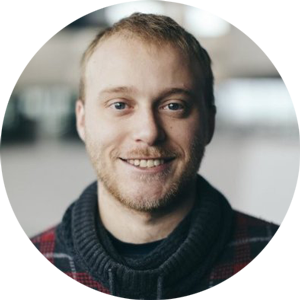
In this episode of Fissionary, hosts Mary and Jordan sit down with José Gaona, founder and CEO of ZETA, a fast-growing Gen Z-led organization focused on emerging tech and energy policy. From his first role as a voting school board trustee at age 16 to organizing advocacy campaigns that reached all 535 congressional offices, José offers insight into how nuclear energy is gaining traction with the newest generation of advocates.
Before I moved to D.C., I was the first Hispanic and youngest elected official in my hometown of—very small town, Fort Bragg, California. So, I was a trustee on my school board at just 16 years old, a voting trustee with authority over budgets for our school district. And that was really my first exposure to federal engagement because we were getting federal funds.
Being an elected official at any age is no joke, but at 16? Insane (complimentary). It’s clear that José has always cared about the youth voice and improving the world around him. So, how’s he doing that now that he’s no longer a 16-year-old elected official?
So, ZETA stands for Gen Z Emerging Technology Action, and we're a nonprofit organization founded off of years of experience working at so many different kind of campaign areas or different community issues. I have spent a long time on LGBTQ work at a federal level, organizing education, civil rights work, education, most recently, I managed … a regional portfolio within the National Wildlife Federation, looking at public lands, energy, water … in all of that experience I kept going back to tech.
Not to sound like a cliche, but Gen Z and Gen Alpha are the future. We need to be listening to their voices and working with them on tech and energy policies that will allow them to succeed in the future, as opposed to keeping the youth at arm's length and preventing them from having the tools they need to succeed. That’s why José’s work is so important.
Jordan Houghton And I'm Jordan Houghton. Let's jump in.
Mary Carpenter Hi everyone, welcome back to Fissionary. Hey, Jordan.
Jordan Houghton Hey, Mary, how's it going today?
Mary Carpenter Good, it's hot.
Jordan Houghton It's really hot. We're in the middle of a heat wave here in D.C., so this is an apt time to be having this conversation about energy and technology usage, because the grid is stressed!
Mary Carpenter Yeah, it's actually perfect timing. And it's also interesting to see our guest today is leading Gen Z action on technology and energy, and our producers tell us that Gen Z spends an average of four to six hours online a day, and they drive over 50 percent of all online purchases, with many under the age of 18. Jordan, that's kind of wild that they drive 50 percent of all online purchases because I think that Millennials shop online quite a bit. So, that feels high.
Jordan Houghton I was surprised by that, too. I also think my husband would say that I alone drive 50 percent of all online purchases.
Mary Carpenter Same!
Jordan Houghton So, that was a very surprising stat, yeah. Today we have José Gaona, who is the founder and CEO of ZETA, which is a Gen Z org focused on emerging tech policy. And yeah, that stat's crazy, and he has come in with ZETA and his team at exactly the right time, because, not just Gen Z, but I can tell you my kids who are going to be Gen Alpha, I guess, are also spending really a lot of time online. So, that is only—it's, like, it's just going to go up, it's not going down.
Mary Carpenter Yeah, it just keeps getting—growing and growing. I'm curious how much time Gen Alpha spends online. That's something that I want to look into, because I'm guessing it's more than Gen Z.
Jordan Houghton I mean, in this house, it is. And I don't know if that's putting poor parenting on display, but there is a lot of digital consumption happening under this roof.
Mary Carpenter Hey, there's a lot of educational tools that can be used!
Jordan Houghton Let's pretend that's what they're accessing.
Mary Carpenter But it's a perfect time to have this conversation, because José is really at that intersection of tech and energy, and we know from guests that we've had on this season how many big tech announcements we're seeing, and that kind of stuff just continues to grow, and it's really exciting, and a hot topic right now.
Jordan Houghton And I'm—I continue to be so impressed by the young guests that we have as Fissionaries here on Fissionary, and just how much they are not—like, they are not holding back. They are diving in, rolling up their sleeves, doing policy work, and it really is encouraging to me as this younger generation comes up into the workforce and into leadership roles what sort of impact we're going to see them have.
Mary Carpenter Yeah. And I love hearing, like, José, you'll hear in the episode talking about how they're taking action. I mean, they're hitting Capitol Hill. They hit every single office on the Hill recently. I mean, it's so impressive and they have these concerns with climate change and energy usage and they're actually doing something about it.
Jordan Houghton Yeah, and if you have not visited Capitol Hill personally, that is a lot of walking that they did!
Mary Carpenter I hope they wear comfortable shoes! It actually is a hill, if you don't know.
Jordan Houghton All right, let's get into today's episode.
Mary Carpenter José Gaona is the founder and CEO of ZETA, the Gen Z emerging tech action group. Before launching ZETA, José worked in civil rights, LGBTQ+ advocacy, and conservation, holding national policy roles at just 21. Today he's building one of the fastest growing youth-led policy organizations in the country. Thanks, José, for joining us. How's it going today?
José Gaona It's going super well, avoiding the heat in Washington, D.C. outside, but staying super optimistic and excited to be a part of the conversation with you all.
Jordan Houghton Yeah, the weather in D.C. right now is a good reminder of why the power grid is so important for our health and well-being.
Mary Carpenter Yeah.
José Gaona It totally is. That's actually a conversation I was having with my team, because we're seeing that strain in some of the major cities.
Jordan Houghton A hundred percent. So, you've had a really fast rise into advocacy from civil rights and conservation work to becoming the youngest national policy leader at just 21 years of age, which is absolutely incredible. Take us back to your early years in D.C. What motivated you to get into policy in the first place?
José Gaona Yeah. The answer to that, it really starts even younger, and before I moved to D.C., I was the first Hispanic and youngest elected official in my hometown of—very small town, Fort Bragg, California. So, I was a trustee on my school board at just 16 years old, a voting trustee with authority over budgets for our school district. And that was really my first exposure to federal engagement because we were getting federal funds. Managing that for a school district of less than a thousand kids and in that advocacy role, because I was an elected official at a local level at 16 trying to figure out what the heck am I doing and, like, how am I supposed to make an impact? But that was definitely an inspiration behind coming to D.C. and wanting to pursue that professionally and boy did I get started as soon as I got here, almost 10 years ago now, in 2015. So came here for school initially, so, lucky enough to go to American University, came out here in 2015, and as a working-class kid, needed to find a job my first semester. And it just so happened, as luck would have it, as fate would have it, that my very first job was doing research, nonprofit work, and some policy. And that really set the tone for the last 10 years, almost, of kind of jumping into that really profound policy, federal advocacy space, starting with first volunteering, and then being able to land my first national policy leadership role at, yeah, 21 years old.
Mary Carpenter Very cool. I love that you were on the school board as a student. I mean, that’s—it's so cool to have that voice. It seems really important. Very cool that you did that.
Jordan Houghton How did you decide to do that? When I was 15, I was like, I'm going to go to concerts and go to the mall, I was not thinking about school boards.
José Gaona So I'm going to paint a picture. I come from a town where the population is, last time I checked, like a little less than 10,000. And it's up in the Northwest coast of California. And so, number one, there wasn't a whole lot to do. We didn't even have a mall. So, you couldn't do much. But there was this beautiful community that was seeing all these changes and shifts as like tourism started to grow in our area. And as, like, a young kid, I just kind of saw the opportunity to be a part of some of these community discussions, and I've always been very vocal. And I at some point heard of an opportunity for a student to be on the school board as a voting trustee, which I think is kind of like the value there. Not to just be, like, a student representative or a student voice, but actually be a voting trustee. Like, I got to make decisions about budgets, I got to make decisions about school transfers that really were impacting people's lives, and at one point had a very personal experience as we were looking at like the efficiency of our English as a second language program, which I was a part of, and I was like, wow, like these are, these are things that have impact, right? But I learned about it through school, and I was like, I really want to do this. And I still remember the speech I gave because the folks that vote for that trustee, voting trustee position, is the students. Kudos to the school board for having a system that allows the student body to pick a voting trustee representative. But, like, in my speech I was like, look, we all have something we care about, you probably don't care about this, but I do. And I do because, like, I think there's value in having a student voice that's putting in the effort to show up and engage with this school board. And so, I was actually on that board for three years until I had to leave for college. Totally did not beat that I got a letter of recommendation from our superintendent who I worked with for a few years, but it was a really cool experience that taught me the value of just being present in decision-making spaces.
Mary Carpenter Yeah. That's great. So now you're the founder and CEO of ZETA, for our listeners who might not be familiar, can you share what ZETA is and what it's working to do?
José Gaona Yeah, of course. So, ZETA stands for Gen Z Emerging Technology Action, and we're a nonprofit organization, and we were founded off of really what is years of experience working at so many different kind of campaign areas or different community issues. I have spent a long time on LGBTQ work at a federal level, organizing education, civil rights work, education, most recently, I managed—I was the youngest person managing, kind of a regional portfolio within the National Wildlife Federation, looking at, like, public lands, energy, water, and all of that—in all of that experience, I kept going back to tech. Because I was like, everyone is talking about how tech is impacting their work across the board. And it got to a point where I started to have conversations with folks all over. Other young leaders working at these intersections, industry leaders that were a part of kind of a growing network, policy voices. And we realized there is a huge gap of some sort of organizing young voice in the tech space that is looking out for the interests of a generation that's going to be around for a really long time but is not really being presented with a seat at the table. And that's the core vision behind ZETA, is elevating those voices and giving them channels to have seats at the table around tech policy. You can't do that without energy.
Jordan Houghton So who is involved with ZETA and how do you bring in new members? What is—what does the mix of people and companies look like?
José Gaona So originally, ZETA was started with just Gen Z organizing voices. Folks who really have led campaigns all over the country on a range of issues, who also saw the value in organizing around tech and tech policy. And so, we were a small group of young leaders that came together to build up kind of the leadership community of the organization. But very, very early on, we caught the attention of some really wonderful leaders in industry who were like, yeah, we need this voice, right? So, I've been really fortunate enough to work with multiple Fortune 100 companies around kind of their desire to integrate young voices in tech as well. So, we've been working really closely with a lot of our larger telecoms companies, with a lot of our larger tech companies, like Google, to name, I think, one of the larger ones, but also our policy makers. We've been really well received as stakeholders in conversation with folks both on the staff side of policy, with, like, the congressional staff, state leaders, and also the member side, because I think everyone's kind of desiring that perspective, that youth perspective. And that's kind our growing coalition. As of right now, we stand about 200 direct members, but we're engaging about 50 thousand folks every month. Digitally, mostly.
Mary Carpenter Very cool. Before ZETA, did you have any relationship to energy, specifically nuclear, or was it something you started exploring through this tech lens that ZETA has?
José Gaona This started actually in my conservation work. So, you know, managing a portfolio as a conservationist, looking at how communities on the ground are balancing a desire to preserve public lands, to preserve water, to think about climate change while also addressing needs that mostly rural communities have. That started to spark something inside of me. Specifically, we were working with, like, rural electrical cooperatives. And in that, I learned about these overlapping efforts that folks that work on energy have to, like, also bring digital connectivity to rural communities. As someone who grew up with very spotty internet in rural California, that really piqued my interest because there are so many folks all over the country that still struggle with just even access, right? To get online, to have stable electricity, all over the country, and there's a conversation there with folks that care about our land and water to figure out, how do we build infrastructure well? So, my piqued interest started there. And as we pivoted and started building out ZETA and then I was able to step into ZETA full time, I carried that kind of piqued interest in the back of my head, and I was like, we're going to figure out how to address this in our conversation, in our work, right? It did not take very long for us in building our tech platforms to really understand an earlier point, which is, you can't talk about tech if you're not talking about energy. As someone who saw the lack of conversation, particularly agency, that local communities or young folks were having in some of these conversations, I felt really compelled with our ZETA team to integrate energy and that forward-looking energy vision that the digital world calls us to meet into our platforms.
Mary Carpenter So what's the response been like? I know you've been at summits, you were at our Policy Forum early this year, which is actually where we first saw you speak. And when we saw you, we were like, we have to have him on the show! So, what the response like? And are you seeing Gen Z really rally around the issue the way you expected?
José Gaona We are. And what's been interesting about that is, you know, we've been operating for about five months now with our digital education programming and a lot of our advocacy and policy work. And the interest has been phenomenal. There's been a wave of desire for engagement. And I think that's because of who we are as a generation. When you think about Gen Z, you know, it's a generation defined by proactiveness, by kind of like a really critical understanding that, like, we need to do things now, right? We need to build infrastructure now. We need address climate now. We need think about like the economy now. And so, like it's interesting, some folks are kind of surprised by how positive the response and engagement has been. But to me, it's just kind of, like, that validation that this is exactly who our generation is. They're ready to engage and they were just looking for an opportunity to channel themselves.
Jordan Houghton You've spent time on Capitol Hill advocating with your team, and as a youth-led organization, I imagine that that's come with both opportunities and challenges. What's the experience been like, overall?
José Gaona Yeah. So, I think there's actually some interesting context in what my advocacy experience has been thus far. I've brought folks to D.C. to advocate who are local elected officials, state elected officials, academics, young adults, college students, community, business owners. I have brought almost every profile of person that you can think of to Washington D.C. to engage with federal policy makers. In the largest campaign that I've ever organized, over the course of just six weeks, we literally had people touch all 535 offices in Congress and 12 different federal agency entities, all within the span of like three days.
Mary Carpenter That's amazing. Lots of walking!
José Gaona That was a lot of work. And thankfully, we had over 100 folks who were coming, a wave of folks who were coming to execute all of that. But I've been a part of some of these really massive campaigns. I'm really proud to say that, like, as a result of some of those campaigns, we've seen billions of dollars in investments, either for disaster relief funding or just for some really strong policies that we needed. What I take from all of that as we look at the way that ZETA is building out our policy and advocacy work is, we're in a unique position because as young folks that are organizing around a young community, you have to find your value and you have to find your legitimacy in conversation through your lived experience. We've walked into conversations with folks from all walks of life where we've been very well received because we're standing on the reality of our lived experience and what we know is going to be true as we inherit the digital world. We are the first generation that has grown up with a digitally connected world, right? If you're kind of on the older side of Gen Z—I like to call myself like a geriatric Gen Z because I'm a '97, baby—if you're on the older side, like you have some recollection of like a pre-Facebook, pre-MySpace world. I kind of struggle to remember a pre-MySpace world, but I remember building a MySpace and then that kind of shifting away, and then getting onto Facebook. But for the most part, Gen Z just grew up with this. Like, this is their reality. And so, we have that unique perspective where—I was just having a conversation the other day with somebody—it calls us to, like, be more conscious of when we unplug. It calls us be more conscious of where there's these intersections. And when you bring that to Capitol Hill and you bring that to policy stakeholders, there's a lot of receptiveness in speaking from that lived experience. I will say, we have had some unfortunate interactions with some folks where there is just kind of this call—this, like, calling into question. Who are you as a young person to tell us how we should be thinking about these issues? Which is, I think, really detrimental to the conversation when you think about that generation as stakeholders in our future.
Mary Carpenter So, what are you doing to overcome some of those short-sighted assumptions about what young people can bring to policymaking?
José Gaona The primary thing is always approaching skepticism and approaching any not very polite responses with respect. I think this speaks to kind of frictions between generations, which is something that I love talking about because I've had so many mentors that were a part of kind of like the 1960s, like, Civil Rights movements. I have one mentor of mine, now passed, who was a part of, like, walkouts that, like, changed the course of education history in the U.S. I have another mentor who, like, marched with Dr. Martin Luther King Jr. And we talk about ageism from both sides all the time. It's like, how are we always, like, dismissing our older Americans in a way that's really detrimental, and how are we dismissing young people in a way that is really detrimental? And one of my favorite things is to work inter-generationally between those two communities, because I think that's—that’s kind of how we solve this. That's our approach. We have to make sure that folks are seeing the value in those lived experiences, but we're not trying to put Gen Z perspectives above anybody else's. We just want them to be incorporated, right?
Mary Carpenter Seems fair.
Jordan Houghton Yeah, absolutely. And I think bringing up ageism in both ways is really great, because to imply that one age group is more important than another at this point, a younger generation are the future leaders, and in many cases, stepping into leadership roles now. So, it is really important to make sure that that voice is heard and reflected in policy. So, kudos to you and ZETA for pushing to make that happen.
José Gaona There's also kind of an interesting experience that I've had as I've kind of shifted from being a representative of other organizations, many legacy organizations, that have been around for a very long time, right? 60 years, 80 years, some 100 years, and being now a part of a new organization that's youth-focused. When I was in some of these spaces with legacy folks, I think, you know, our conversations were very productive, very organized. Now, as a part of a newer organization that's looking to bring this perspective, I find that we're actually able to bring really unique perspective that is very well-accepted. And I'll use an example. So, everywhere I go with industry that's engaging in tech—and this has been happening very, very much with our folks working on nuclear energy—we run into this question of workforce, right? And that to me is so fascinating because Gen Z is unique in that they're smaller than every generation before them. We just literally have less Gen Z to integrate into the workforce than past generations, right? And so, that kind of calls us to be more intentional about the way that we're channeling them into the workforce needs of the digital world, of the digital economy. That's interesting because in all of these industries that we know will be powering—quite literally, powering—our digital world, we have constant conversation amongst stakeholders about our workforce shortages, and the needs that we have to make sure that these workforces are actually, you know, maintainable going into the next, you know, couple of decades. That to me is very, very ironic because Gen Z is over here on one side saying, you know, we're a little concerned about AI automation. We're concerned about shifting economies. We're concern about having well-paying, stable middle-class jobs. And on the other hand, we have the reality that like our workforce is getting smaller. We have 10,000 baby boomers retiring every day now. And there's all these openings. There's, like, seven million plus openings in the job market right now. And we're not channeling Gen Z into them, and it's like a super missed opportunity for us to really say, let's engage them as stakeholders so that they're a part of the conversation to actually make sure that we're meeting these needs in the workforce. Energy is a great component there in the conversation, nuclear energy specifically, because we know that we have to continue to channel, intentionally, our youth into these industries, right? So, that's my example of like, where us existing and us being a part of these conversations around tech and tech policy just makes sense because we're the ones that are saying, let's create better channels of communication across social media where our generation is consuming ideas and forming vision of what they want to do with their lives to make sure they're being channeled the way they need to be.
Mary Carpenter Let's talk about nuclear. So, how do you think Gen Z views nuclear from your perspective?
José Gaona I think that's one of my favorite questions because there is a lot of pop culture reference when we talk about nuclear energy. And what I have found with our generation is that we don't hold these misconceptions around nuclear energy in the way that I do think older generations have as a result of their lived experience with some of the disasters that we've seen in the past, or, like, the pop culture references, like the green slime, right, radioactive slime, kind of these, like, Simpsons, like, style, like, visions of what nuclear energy is. Gen Z doesn't have that. They're young, they're coming in with, like, a fresh perspective, and they're also coming in with a very unique take on climate and how climate intersects with energy. Gen Z is the first generation where, across the political spectrum, regardless of who you ask, a majority of them want something done about climate. They just want climate solutions. And also, they use technology very disproportionately. So, when you combine those two things, you get, like, what I described as like that perfect, like, X marks the spot on nuclear energy. Because for a very pragmatic, very well-connected, very educated generation, they're very prime to understand the value and think critically about these misconceptions around nuclear energy.
Jordan Houghton What do you think resonates the most with Gen Z? Is it climate? Is it the tech? Is it workforce career paths?
José Gaona I would say that it's a mix of all of that. Because when you poll Gen Z about what their primary concerns are, right, politically, what are their hot button issues, climate is always one or two across, again, the political spectrum. So, climate is a priority. And we know that when we look at all of our options, we put all of our clean energy options on the table, nuclear energy is the only well-understood energy form that we have that can serve as a baseload energy infrastructure build to move away from fossil fuels. And I think that is what resonates with Gen Z, is that narrative. I think we need more of that narrative, but I think that's a huge resonating point. At ZETA, we're hoping to continue to build our education work so that the workforce development opportunities are also a primary point of support in Gen Z. But I think there, we have a lot of work to do still because there is this misunderstanding around the very few—right?—few opportunities to work around nuclear energy, when the reality is, the industry presents a plethora of worker opportunities that we should know about.
Mary Carpenter So, I know you mentioned Google earlier in our conversation. Do you think that the interest from big tech companies in nuclear is changing how Gen Z is looking at jobs in the industry? Do you that these tech companies are starting to help recruit people into the industry in Gen Z.
José Gaona I think that's true. I think as we have some of these very large companies that Gen Z understands really build the digital infrastructure of their lived experience on the digital world, and as they start to build out conversation and priority around nuclear energy as a means of meeting some of their targets for carbon emissions reductions, Gen Z is starting to be educated through that on the value of nuclear energy, as well. Because if you talk to any Gen Z, right? They know that to get online every single day, scroll through their reels, spend this, like, four to six hours a day that they do on social media, these companies need to power themselves, right? To use ChatGPT, these companies need to power themselves. And so, I think they are being educated through these investments that tech is making in industry, and that's a good thing, because then they're able to kind of broaden their understanding to see the value for both the development of the digital world—that they are leading, by the way, right?—as Gen Z and also the solutions that then that presents to their concerns around climate and work opportunities.
Jordan Houghton What does nuclear advocacy look like through Gen Z's lens?
José Gaona This is super interesting because we've had a range of conversations with stakeholders, and I'll use our engagement with some congressional offices as an example. We've gone, again, as that voice at Gen Z representative organization, to Capitol Hill to talk about some of these policies that will create additional buildout for industry right? In a way that kind of levels the playing field more so that we can look at nuclear as a scalable source of energy for all of this massive need that that our generation is pushing, and when we bring those conversations forward to folks on the Hill, what we hear is, oh! Young people actually want this? Like, that's so interesting, we didn't think you all had an opinion, right? Like—and are you all of, like, the sense of, like, this is great, but don't put it in my backyard. And that to me is really fascinating because what we—what we bring is like that pragmatic understanding of, like, yeah, we want this. Like, we understand that, like, not only does the industry—does, like, the energy industry bring in opportunities, the adjacent buildout of AI data centers, right? The adjacent buildout of some of these industries in tech will also bring opportunity, and so there's a lot more openness. And I'm always super excited and super pleased when we're able to educate our folks on the Hill around what we've gathered as that excitement on Gen Z's part for these energies.
Mary Carpenter So ZETA is still new, but it's growing fast. What's your vision for where the organization could go in the next few years, especially in the energy space?
José Gaona I have been surprised, pleasantly surprised, every single day by the growth and the development of the network around ZETA. Every single day I see us less and less as this small, ragtag team of young folks trying to organize around tech policy, and more as a movement of young people who recognize that the time to lead is now. And so, even though over the last five months of building out our educational programming and our policy work, we have grown to now engage about 50 thousand folks digitally every month. My hope for the broader movement around the work is that we have young folks that are really pushing themselves to be educated across all of our campaign areas, including energy, and then mobilizing to engage with local stakeholders and decision makers, because we all know all politics is local. I say that through lived experience at the state level and at the federal level. We just need more active young folks, and in an era where some of these young folks are entering their kind of adult lives after the pandemic, we need to kind of kickstart that up again, that kind of advocacy mindset. And so, that's our vision, and my vision, for ZETA, that we just continue to grow our network and that we motivate young people all over the country to learn and then lead in tech policy spaces.
Jordan Houghton What does success look like for you in this world? Is it policy change, cultural shift, a network of leaders? What do you hope to see?
José Gaona I'm going to answer this in a personal way. I was looking back to my personal essay that you submit when you apply to college, as I was hoping to come to Washington, D.C. And in that personal essay, I wrote, kind o,f three things. I said, you know, I really want to move to D.C., and I want to be a part of this community here because I want to, one, I want to give back to the Hispanic community. A lot of the work that I've done has been with the Hispanic community. I want to find an advocacy voice in the LGBTQ community. And then two, I want to impact change in a policy way. I want to be a part of some federal policy impacting. I think it's safe to say over the last 10 years, I've successfully started to integrate myself into those spaces and without, kind of, veering off too much. Like, I've organized LGBTQ cultural programming at the Kennedy Center. Which is, like, the home of, like, American culture. I was a curator there, a community curator, kind of like a guest curator. I have been a part of some of the largest policy wins supporting communities that are new to the country, migrant communities that giving back and then becoming a part of the American infrastructure. And I've been a of a lot of other policy work. So, I would say that success is a mindset, and I'm definitely in that mindset, but I have hopes for ZETA and for the work that we're doing that we just continue to impact people. Every time I'm able to do something, even if it's the smallest thing for another young person to feel empowered to act on any of these issues, I feel like we're succeeding. Even if it's just one person.
Mary Carpenter That's great. So, for young people listening who want to start something or advocate for change, but feel like they don't have the credentials, what advice would you give them?
José Gaona Credentials are something that you can find through hard work and education. I think there's obviously a very important role that our academics play in being engaged around policy and advocacy, and I love doing that. I was actually talking to some folks this morning about some co-authored articles around our work in nuclear energy. And so, definitely incorporate the academics. But the reality is, everyone has a contributing voice, right? A narrative, a lived experience that is valuable. So, I would, one, absolutely encourage folks to visit our educational resources on YouTube at connectZETA, visit our website, and two, join our network. We have some network building opportunities that folks can look into on our website and we're about to launch a campus affiliate structure all over the country where we hope to continue to engage specifically our college-age students who want to learn about tech as a career opportunity, as a policy area to look at, or through that, some of our more specific campaigns like energy work.
Jordan Houghton Last question, what book are you reading or just finished reading that you would recommend to our listeners?
José Gaona Yeah. This is such a great question, and I'm, like, a huge fan of audio books. So, like that's how I usually will digest my content. One of the most recent books that I read that I think was really fascinating, particularly as a founder who's constantly reminding himself to be patient, is called The Compound Effect. And it really looks at how we are making intentional small steps in our day-to-day to get where we want to go but focus less on the speed and more on the intention and the building of healthy habits. I think that's really valuable.
Mary Carpenter That's awesome.
Jordan Houghton Going on the list!
Mary Carpenter Yeah, I have to read that. That sounds great.
José Gaona It's really good.
Mary Carpenter Like a perfect summer reset book.
José Gaona Yeah.
Mary Carpenter Good perspective.
José Gaona Like, I constantly struggle with the desire to move quickly, right? It's like, we need to build this, we need to do it now. And it's sometimes, I think, really valuable to think about, how do we actually slow down to go far, right, to build sustainably.
Mary Carpenter It's a good book for folks in D.C. to read.
José Gaona Yeah, for sure! For sure. One hundred percent.
Mary Carpenter I feel like we should all dive in. This was so interesting. So easy to chat with you too! I loved it.
José Gaona Oh, I'm so glad. I'm so glad. I'm excited to be a part of the program.
Jordan Houghton Thank you so much to José for joining us today. What incredible work he and ZETA are doing. And thanks so much for listening and hanging out with Mary and I, too.
Mary Carpenter Too. And we have more episodes coming at you soon. So, make sure to subscribe on Apple, Spotify, or wherever you listen to stay updated on all things Fissionary. Thanks for listening and we'll see you soon!
The next episode airs on Thursday, July 31—make sure you tune in, Fissionaries!