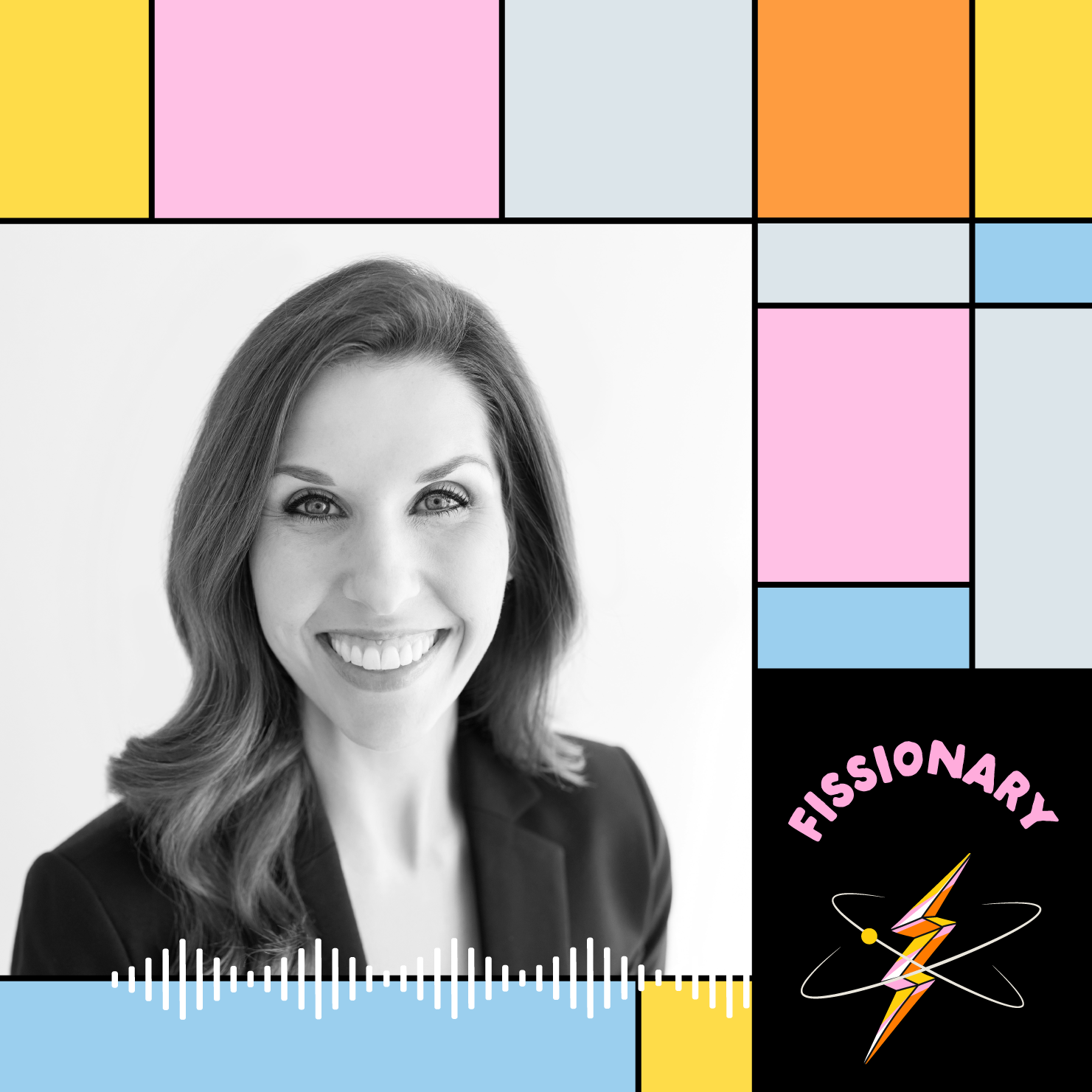
When you woke up this morning and switched on the lights, turned on the coffee maker, and unplugged your phone, you probably didn’t think twice about where all that power was coming from—or whether or not you’d have it at all. If you lived in a remote community like this week’s Fissionary guest, your source of everyday electricity would be a much bigger deal. Gwen Holdmann is an engineer and host of the Closing the Gap podcast who has lived off grid in Alaska and even raced sled dogs. She sat down with Mary and Jordan to discuss what it’s like to live without reliable power and how nuclear could be the solution to powering remote communities without sacrificing their way of life.
Many remote communities in Alaska rely on imported diesel and other fossil fuels, but are looking for better options that aren’t harmful to the environment—this is where nuclear can come in. However, some communities unfamiliar with nuclear energy may be skeptical or even opposed at first. Gwen explains that more education is needed to show communities how nuclear can work for them, and that partnering with universities, local Indigenous tribes, and other industry partners can be an effective way to tell the nuclear story.
One thing that is so important as community, as vendors are interested in engaging with communities, especially those where there's been legacy challenges associated with technologies like nuclear, finding trusted local partners like universities or tribal entities to be sort of an intermediary for engagement with the public, I think it's just so important and powerful, because you're able to just make so much more progress, especially if those entities are not seen as necessarily biased, but looking out for the best interest of the community.
Looking into the future, Gwen hopes to see nuclear replace diesel as the primary source of energy in remote Alaskan communities like her own so that these communities and their traditional lifestyles can continue to thrive.
If you've got affordable, reliable energy, both heat and power in these remote places, people can live there in ways that they can still participate in a global economy while being able to maintain their traditional practices in terms of, like, hunting and gathering on the land. I love being out in rural places, and so the ability to live affordably in a rural area in rural Alaska and maintain those traditional lifestyles, that's exciting. And it's going to take an energy paradigm shift in order to really be able to do that long term. And that's where I think that nuclear could play a role.
If you’re wondering what the off-grid life is like (or if you want to feel extra grateful for your reliable electricity), don’t miss this episode!
Gwen Holdmann I love being out in rural places and so the ability to live affordably in a rural area in rural Alaska and maintain those traditional lifestyles, that's exciting, and it's going to take an energy paradigm shift in order to really be able to do that long term, and that's where I think that nuclear could play a role.
Mary Carpenter This is Fissionary, a show exploring how nuclear powers your world. I'm Mary Carpenter.
Jordan Houghton And I'm Jordan Houghton. Let's jump in.
Mary Carpenter Hey, Jordan!
Jordan Houghton Hey, Mary! Hello, Fissionaries! Welcome back.
Mary Carpenter Hey Fissionaries, we've got an awesome episode for you today. We've talked about this several times throughout the different seasons, but a lot of us just don't think about where our energy comes from. We wake up, we unplug our cell phones, we turn on the lights, we use our electric toothbrushes, we turn on the coffee machine. But, you know, there's people around the world who don't have that luxury. And it's something that we take for granted. And today we really dive into that and how we can solve it.
Jordan Houghton What's wild about today, our guest, Gwen Holdmann, she's in Alaska. We're not even talking about, like, what we consider developing nations. We're talking about here in the United States, not being able to just flip a switch on, carefree, and not have to worry about the lights coming on, the refrigerator being cooled, the heat coming on, especially when you live someplace that is as consistently cold as Alaska is. Mary, I—throughout this episode, I was thinking about how listeners, you will hear Gwen talk about how she lived off grid for so long. I don't even know what would be the hardest part about that for me. I mean, I think our listeners know we are first world ladies.
Mary Carpenter Yeah, if you don't, we're telling you that we are!
Jordan Houghton I feel like we have stressed this, I am an air conditioning person, I don't really go camping, like—
Mary Carpenter No, I don't camp.
Jordan Houghton So I don't know, like, I'm like, is it that I wouldn't have just a hot shower that I would have to not think about? Or is it, like, reading and writing by candlelight? I really don't know what would be the biggest struggle for me.
Mary Carpenter I mean, blow drying my hair would be a big issue, just turning on the microwave or a stove just to easily cook food, I mean, I don't know, but there's a lot of things that would be a problem for me for sure.
Jordan Houghton It's just, it's really interesting. Again, we take this for granted, so this is not something we think about, but I did enjoy that this episode sort of forced us into that headspace because this is still a challenge for so many people around the world, but also even here in the United States today.
Mary Carpenter Yeah, and Gwen's such an interesting person to talk about this with because she has lived off the grid. She understands what it's like to not be able to just wake up and turn on your lights, and she also understands that nuclear could be such a good solution for this. You know, once we have these micro and small reactors ready to go, it could be the perfect solution to power these remote communities that desperately need energy. So, she's an awesome person to talk to about this. Let's dive in, and you guys can hear straight from her. Today's guest has lived off-grid, led cutting edge energy research, and raced sled dogs through the Alaskan wilderness. Gwen Holdmann is an engineer, a podcast host, and a self-described energy nerd who spent decades working on power systems in some of the most remote places on earth. She's a founding director of the Alaska Center for Energy and Power, and she leads the state's nuclear innovation working group. Thanks for joining us, Gwen.
Gwen Holdmann Thanks for having me.
Mary Carpenter So, this season, we're asking all of our guests what powers wonder. So, in your work, especially as someone who works and lives in such remote communities, what sparks that sense of wonder for you?
Gwen Holdmann You know, I think for me at least, it's really working with people every day that are like dealing with amazing challenges, living in a really challenging environment. For me, I just really get a lot of energy from that. And I just love the opportunity to work with people all over the North really, because I get to travel and work all over the Arctic, working on energy issues and seeing the challenges that they're dealing with and the amazing ability to, like, live and thrive in these, like, sometimes pretty harsh environments is something that I just really get a lot of excitement about trying to solve energy problems to help support people's lifestyles.
Jordan Houghton You've had one of the most unique paths into energy. You've lived off the grid, built your own systems. Can you share what that early part of your life looked like and how it shaped how you think about energy today?
Gwen Holdmann I actually started out my career thinking I wanted to be a space physicist. I got my degree in physics and moved up to Alaska, because I always wanted to move to Alaska, and had a sled dog team. I lived off the electric grid because I was a graduate student. I just wound up living in a little cabin out in the woods, and I didn't have any power at all. Like I would use a oil lamp and, you know, I'd cook with like propane. And then as a space physicist, I would go out to the University of Alaska, Fairbanks has a rocket range, and so I'd go out there and I'd run this lidar system that had this giant laser that we would shoot up into the upper atmosphere and bounce off of like small meteorite particles in the upper atmosphere to kind of use as a tracer to see how the upper atmosphere reacted to various phenomena. And that laser took, like, two megawatts of power or something, you know, to operate. And so here I am, I'm at home, I'm reading these, like, technical papers by like—just basically candlelight, right, an oil lamp. And then I'm going and using all this power like on the other half of my job. And it felt like really just this crazy, crazy experience with energy. [JR1] I'd have to haul water from a hole I'd chop in a creek, and like haul that water. I'd cut my own wood, firewood. Dealing with it myself just made me realize like when you don't have access to those sorts of services that we, it takes so much of your energy and your time to deal with these sorts of things. And so, I switched careers, and dropped out of graduate school at the time, at least in space physics and switched over to work more as an engineer, which, I double majored, so I also had an engineering background, and just really started working on energy systems. And I've just been very, you know, I've had the opportunity to go in a lot of different directions with that.
Jordan Houghton How long did you live like this?
Gwen Holdmann Well, that original really primitive, like where I had absolutely no electric power at all, that was like just for a couple of years. And then I moved to a cabin I built myself, and lived off grid in this house that I built. And then later I got married, and had children, and we lived off-grid, my kids grew up off- grid for about 20 years. So, pretty long time, but we did over time, start to build up our own power system. So, we had, like, an old diesel lister generator and solar panels that we would sort of turn by hand ourselves. And then we just had them on a rack on an array and then a small wind turbine, like a little one-kilowatt wind turbine. We had this little power system with batteries in the basement. And it took a lot of time to run all that. You're sort of energy independent in a way, everyone always had a flashlight on hand because you never knew whether we'd have power when we woke up. We just really, I think in modern society, just take for granted that when you flip on a light switch, the power is going to come on, you know, the lights are going to come on. And the day that I moved to a house where I was able to run a power cable to the bottom of my driveway and install sort of like a system where we were hooked up to the grid, and I paid my first power bill, that was, like, the best day. I was so happy to pay that power bill and have somebody else that was dealing with, you know, providing power to my house. It was just great. And I just think—people, we talk about how expensive our energy bills are. But, boy, if you've spent a significant amount of time trying to do all that yourself, you really value getting that service from your local utility. These generation sources that we take for granted and don't think about, it's really magic. It's just amazing, right? And it makes so much possible beyond just having the light switches turn on.
Mary Carpenter I'm impressed. I couldn't do that, but I am super impressed. And you're so right, most of us just take for granted that we can turn on our lights and charge our cell phones and turn on the coffee maker in the morning. But you know what it's like not to be able to do that, so you're the perfect person to ask, what are some things people don't realize about what it takes to power an entire remote community, like beyond just one home? There's entire communities in places like Alaska that need more power.
Gwen Holdmann In Alaska, for those of your listeners that don't realize it, we don't have a continuous electric grid. So, none of Alaska is connected electrically to the lower 48 or to Canada, and so we have sort of a series of either individual microgrids that just serve an individual community or some interconnected systems that interconnect, you know, a bunch of different communities. Like where I live in Fairbanks, we are on what we call the rail belt electric grid, which connects us to Anchorage and into places a little bit further south. But these are still, really, pretty small and fragile electric grid systems compared to what people are used to in the continental US.
Mary Carpenter So what does energy enable in these places beyond just light and heat? How does access unlock possibility, whether that's economic opportunity, food, education, public health, how does it work in these remote, smaller communities?
Gwen Holdmann I think in general, having access to reliable energy is the bedrock, is the foundation of our modern way of life, of like modern society. And these communities in rural Alaska are part of the US, right? They're part of a developed world and, you know, they want access to all of those same services. But having reliable electricity and heat is not as much of a given in these remote locations as it would be even here in Fairbanks, where I am today in my office at the University of Alaska. And so, you know, I think the big thing for us, you sort of ask what other services does it enable, but heating in the Arctic is so critical. It's so important. It's not really just a—it's at times a matter of life and death, right? If you don't have heat, we can't survive in the Arctic. And so, what we've been doing a lot of in the Arctic is, is really combining power and dispatchable thermal loads. When you have a small grid, you know, you need to manage the ups and downs of the local power that's available. So, if you have wind, you know, sometimes you have lots of wind and not that much load. And then other times you have no wind and high load, high demand. And so, what we've been doing is using things like wind to dispatch thermal electric devices in individual homes and really managing that in a pretty intricate fashion. That's one of the things that I think is so cool is, like, displacing as much imported fossil fuels as possible in order to enable these modern ways of life that we've come to rely on and expect.
Jordan Houghton So, let's dive a bit more into how nuclear fits in here. What makes it such a strong option for powering remote communities, especially when compared to other energy solutions?
Gwen Holdmann Well, I mean, a big part is it can be a source of heat, right? And so that's one reason why I think it's particularly compelling for the Arctic, is that really, in a lot of ways, we need heat as much or more than we need reliable electric power. That is one thing that, of course, you know, nuclear has the potential to offer. But a big thing, you know, as we've been talking about this reliance on diesel generation, there's a lot of issues that come with that. You know, number one, you have insecurity around supply lines sometimes, especially as we're seeing the climate change, there's differences in terms of like when you can actually get barges into these communities because the water level isn't necessarily the same as it has always been historically at different times. So, just in terms of, like, security of bringing the fuel in, then you have a lot of potential for small fuel spills, right? As you're transferring fuel, this is old equipment from a barge to a fuel tank. There's just a lot of opportunity for things to go wrong. And we're very cognizant of contamination of the environment in Alaska. We do a lot of subsistence harvest, especially our Indigenous population out in rural communities are heavily reliant on, you know, local food sources. And so, contamination of the environment and diesel spills is like one of the primary vectors for environmental contamination. And so, the idea of, like, having more secure energy available where you're not having to necessarily rely on getting that into communities and in kind of a recurring timeline and the idea of actually reducing the potential vectors for environmental contamination, both in my mind make this like something that's quite compelling for remote places in the Arctic.
Jordan Houghton You've worked with communities like Nome to introduce nuclear as a potential energy solution. Tell our audience what that experience was like.
Gwen Holdmann Alaska does have some experience related to nuclear technologies, not even necessarily nuclear energy, and, you know, some of those experiences are not necessarily very positive. Up in northwest Alaska, which is where Nome and another hub community, Kotzebue, is a little bit further north, that region was at one point in time proposed as one of the plowshares projects, like to excavate a deep harbor using a series of like six, I think, bombs or something like that. And the project obviously never happened, but there was actually some testing, there was some contaminated material that was brought in to look at the transport of radionucleotides in the tundra environment there. And that was never really disclosed to the local population. And so, when this information came out about this proposed project and the testing that had been done, there was a lot of concern from people that really created a lot of distrust in government, distrust in nuclear. And so, one of the things that we've been spending a lot time doing is, first of all, trying to correct some of those historic wrongs or inaccuracies, like making sure people have accurate information about what actually happened, what was actually done, rather than, like, what sort of, you know, local legend sort of has it. And then secondly, making sure that people understand get these new technologies and these new advanced reactors are very different. It's a very different technology. When we've done polling in that region, there's a high concern about the potential for any kind of nuclear incident that could create environmental contamination. And so, we're really trying to make sure people understand how these new reactors work, they've been deployed other places, and so, just, like, making sure people understand and can have someone that they can ask questions to that's a trusted local partner, is just really important, we believe, right now, in making sure people have the information they need to make smart decisions for the future.
Mary Carpenter So clearly education is super important. How do you even start these conversations in some of these communities where it could be completely new or unfamiliar to them?
Gwen Holdmann I mean, one thing for sure is that every community and every place is a little bit different because they have a different history and a different background. One example I mentioned—you mentioned Nome and I mentioned the community of Kotzebue. They're sort of relatively nearby, like maybe a 20-minute air flight between the two of them. The community of Nome was quite interested in the concept of potentially deploying a microreactor. They have a lot of industrial activity going on. They're going to be the home of the US Deepwater Arctic Port. There's also a graphite mine that's under consideration for development in that same region right outside of Nome. And so, the community recognizes that there's a high probability that they'll be needing additional power in the next decade or so. And to power this additional infrastructure, we worked with that community for 20 years. I talked about geothermal earlier in my background in that, and there's actually a hot springs about 40 miles outside of that community. And so, I'd worked with them even 20 years ago on exploring the potential for geothermal, looking at that in relation to other potential energy sources that they might have available. And so, just having, like, a really long-standing relationship based on, I hope, trust, you know, with the community there. They invited us to come in and work with them on exploring this concept of the potential for a nuclear microreactor. And so, we worked closely with them. We brought a cohort from the community to Idaho National Lab to kind of learn a little bit more, like really spend a lot of time with sort of community learning over a period of about three or four years. In contrast, the community north of there, Kotzebue, there was also folks, like, in leadership positions, like the electric utility, that were quite interested in learning what the potential for microreactors were. But the tribe there, the Native village of Kotzebue, had real concerns based on this sort of legacy of mistrust around this project, which was called Project Chariot. And so, they said, we're not ready. We're not ready to have conversations around nuclear energy in this community, in this region. We don't feel comfortable. There are elders in some of our villages who won't eat caribou because they're still concerned they could be contaminated from this testing that was done decades ago. And there's just, like, a lack of like understanding or real awareness about both what was done historically, which is really important for us as a region to get our brains wrapped around before we can even think about moving forward. And so, what we did instead there is we worked with the schools and through an existing program called Teaching Through Technology. And we were able to work with collaborators at MIT and in the university system here to give students in communities all across that region kits for testing for contaminants in the local environment. That included the ability to test for radionucleotides, but also other kinds of contamination, like fuel contamination. There's also mining in the region that's going on, so, heavy metals, right? And so, what we really wanted to do is give people the ability to kind of take control in their own hands of, like, their ability to figure out, like, is there contamination. So, not trusting an outside entity but having the kids go out, and, oh, grandma says that this plot of land is contaminated, let's go get some samples, let's test it. Is it contaminated? What does this look like? And so, the kids are really empowered to like go out there and solve some of these, like, long-standing mysteries about the and self-contaminated ground and really support their communities, but kind of learn through that process about all these different factors that for contamination and at the same time, what nuclear looks like in the context of all of those different energy sources. And so, that's been like a really successful program.
Jordan Houghton That's so fascinating to me. What a great idea to engage the kids in the local community. Are you seeing this work pay off and trust being built?
Gwen Holdmann I mean, it's just been so fun and so rewarding to see that. And so, we've actually expanded it, so we've got kids from all over the state that have been participating in some of these programs. Going back to Nome, I was actually able, with one of the young ladies that had participated in this program—she had taken, like a Geiger counter, basically and gone all over the community in Nome to look for, like, hot spots, and then, you know, on a plane ride, I'm flying to the community because we'd flown there, she was able to present on her experience in terms of, like, tracking what radioactivity in the environment looks like and being able to explain in her own world, in her words, you know, how radioactivity is really a natural occurrence, and it is all around us, and so it isn't necessarily something that we need to be afraid of per se. That was just so fun, like, just working with these students and they're just so smart. You know, they're our future, right? And so having that kind of opportunity is pretty cool. And like I said, again, one thing that is so important as community, as vendors are interested in engaging with communities, especially those where there's been legacy, you know, challenges associated with technologies like nuclear, finding trusted local partners, right, like universities or tribal entities to be sort of an intermediary for engagement with the public, I think it's just so important and powerful, because you're able to just make so much more progress, especially, you know, if those entities are not seen as necessarily biased, but looking out for the best interest of the community.[JR3]
Mary Carpenter So, you've talked before about the need for better storytelling and energy, and it seems like some of this stuff you're doing could help with that. So, what does storytelling unlock that data alone can't?
Gwen Holdmann I mean, I think people remember stuff through stories, right? That's how we think, that's how our brains work. I remember one elder from the Northwest Arctic that actually participated in this Project Chariot. I said, you know, what advice do you give me in talking to communities and talking to people about nuclear? And he was really thoughtful and, you know, kind of quiet, and then he said, you know Gwen, like the first thing you have to do is you have to figure out how the fear got into people. Now, how did the fear get into those people? The way you said it was almost like this visceral thing, right, and I always remember that, like, how did the fear get in to people? And that's where you need to start, right, is really like talking to people at the level that they're at and addressing the concerns that they have at the time that you're talking to them, right, not just about the things you necessarily want to talk about or the things that you are excited about. For me, a lot of that is through telling stories.
Mary Carpenter So, you kind of mentioned this looking ahead, when people think about the energy future in a remote setting, to you, what does your ideal energy system look like in the next five to 10-ish years?
Gwen Holdmann I mean, five to 10 years, that's still just right around the corner in a lot of ways. I would like to look out a little bit further than five to ten years and say, you know, I could see a world in the future where small nuclear and probably not stuff that were necessarily, like, got, like, right on the development trajectory today, but moving into the future where nuclear could replace diesel generation in many of these remote areas. I don't think that's gonna happen in five or 10 years, but I do think that that could be a long-term trajectory that we could be looking at, and that could unlock so much potential. If you've got affordable, reliable energy, both heat and power in these remote places, people can live there in ways that they can still participate in a global economy while being able to maintain their traditional practices in terms of, like, hunting and gathering on the land. I love being out in rural places, and so the ability to live affordably in a rural area in rural Alaska and maintain those traditional lifestyles, that's exciting. And it's going to take an energy paradigm shift in order to really be able to do that long term. And that's where I think that nuclear could play a role. [JR4]
Jordan Houghton Okay. When you went from being off grid to being able to plug in a little bit, what was, like, the most exciting thing that you suddenly had access to or didn't have to do anymore?
Gwen Holdmann Oh my gosh!
Jordan Houghton I'm really curious what you felt like. You're like, yes, finally.
Gwen Holdmann I know a really big one was—this is kind of maybe an Alaska thing, so, is plugging in my car. Now this is not plugging in car because it's an electric car, this is because it is so darn cold. You have to plug in your car to, like, heat the oil. But that's a pretty Alaskan thing. I don't know how many people know about plugging in their cars in the winter. Maybe in Minnesota.
Jordan Houghton I absolutely did not. That's wild!
Gwen Holdmann It's a normal thing. Everywhere here, there's head bolts. So, you come to the university, the first thing you do is, you plug this morning, you just plug your car in to keep it heated because it won't start at minus 50 if you don't have it preheated. So, you go to the store, you can plug in your car, you go the airport, you plug it in. So, that's just a normal thing here, but it's, I think, a pretty northern experience.
Mary Carpenter Wow. Well, speaking of northern experiences, I want to hear a little bit more about the dog sledding that you mentioned a couple times.
Gwen Holdmann Actually, I just went and ran a team last night. We still have a dog team. I always love being outdoors and I love dogs growing up. It's just such a beautiful way to see the country. Well, I still have dogs. So, I've had them for like 30 years or whatever, you know, and done everything from race in the Iditarod Sled Dog Race. And my kids now have run in the Junior Iditarod Race. Just getting a chance to travel with the dogs all over northern Canada and in the lower 48 and in Alaska, and run dog sled races, and just travel. It's just been a really cool way of life that I've really appreciated and enjoyed. But that's part of why I wound up off grid, because I couldn't really have my dog team like in the middle of downtown Fairbanks, even. So, I've always been living on the outskirts of town because of the dogs.
Mary Carpenter That is so cool. I think dog sledding is so cool.
Jordan Houghton Okay, last question. Is there a person, place, or thing that has left you in awe recently?
Gwen Holdmann I recently had a chance to go to Svalbard. It is the furthest north settlement anywhere—real settlement anywhere in the world. So, if you think about, like, geographically, it's about the same latitude as, like, the northern tip of Greenland, but it's, like, an island north of Norway, and it's actually a Norwegian island. So, they have traditionally been dependent on a coal—coal-fired power generation. And this is a place where the sun definitely does not go above the—like, the whole time I was there, I was teaching this course on microgrids there, and integration of renewable energy on micro grids, and it never got light. You know, it was like dark 24 hours a day. And this was just such a challenging place. And the people there were just so inspiring to me about the way they're just living in this very extreme place that of, like, human experience, really anywhere in the world. And they're trying to figure out how to transition from coal and fossil fuels to renewables up in this really extreme climate, which is why I was there, because they were interested in learning about the Alaska experience with renewables and things like that. I just was really inspired by—just that humans, you know, are able to just want to and can live in these really extreme places, even by Alaskan standards, and are thinking about their energy future there.
Mary Carpenter Well, I'm glad you're a messenger going to these communities, and you're doing a great job, clearly, of explaining how nuclear could be a good solution one day. So, I am glad you are there.
Gwen Holdmann Yeah, thanks, I try!
Jordan Houghton Gwen, thank you so much for joining us today. This was really an enlightening conversation. Listeners, if you enjoyed hearing from Gwen today, she's got her own podcast, Closing the Gap, where she talks about her adventures in the global energy transition. And in fact, her most recent episode gets into the story of Norway where she visited. So look for that where you find your podcasts if you want to hear more from Gwen.
Mary Carpenter Yeah, and Jordan, should we go dog sledding? I always wanted to do that. I think we should give it a shot.
Jordan Houghton Maybe. Maybe.
Mary Carpenter Too cold?
Jordan Houghton We need to talk about this like maybe when it's, like, really hot here in DC and I want cold right now, I need a defrost.
Mary Carpenter I mean, honestly, we could go dog sledding here right now if we had enough dogs! There's plenty of ice outside right now. I just need a couple dogs and a sled, and we're good to go.
Jordan Houghton It probably would have been the best way to get around for the last couple weeks.
Mary Carpenter Honestly. It's still probably the best way to get around. Especially if you're a pedestrian around here.
Jordan Houghton For sure!
Mary Carpenter Either ice skates or a dog sled is the way to go. All right, if you enjoyed this episode, make sure to follow Fissionary on Apple, Spotify, or wherever you listen. See you soon! Thanks, Fissionaries.