Not much is better than going from generating nearly all of your electricity from fossil fuels to starting to develop clean energy. That's what Poland is trying to do. Poland ran on coal for decades. Now the coal is running out, the grid needs replacing, and Poland is building its first commercial nuclear power plant.
In this episode, Jordan talks with Robert Rudich about what it actually takes to build a nuclear industry from the ground up: the policy hurdles, the workforce challenges, the financing puzzles, and why Poland is moving so quickly on nuclear.
Poland is one of the largest countries that doesn't have a civil-nuclear industry to date. They have one reactor, it's a research reactor, and they're one of the only big economies in Europe that doesn't have a nuclear industry. So, they had a lot of interest and need for it and really needed a trusted partner to help them deliver that. So that really became my mission during my time at the embassy in Poland.
In the wake of Chernobyl, any dreams of a Polish nuclear program were going to take some time to get off the ground. Now is that time. So, Poland looked to the United States.
So, Poland said, look, US has the world's best technology. They have the world's best companies. Let's go to the department of energy and ask them to build a program. So, we started at the very top level, at the governmental level, and then planned down from there.
Robert says a lot of countries have begun looking west for their nuclear technologies. Poland sought to build relationships with American nuclear companies and figure out how to work with the U.S. government. There was one small hiccup, though, and that was Poland's lack of a nuclear program historically.
The difference between Poland and pretty much all the other countries in the region is Poland is the only one that doesn't have a legacy nuclear program. All of Poland's neighbors...had a nuclear program during the Soviet era. They weren't, for a long time, offered an opportunity to develop a nuclear program. So, Poland really relied on the thing that it had for national security domestically, which was coal.
To learn more about how Poland is working with the U.S. to develop a nuclear program, be sure to listen!
The next episode airs on Thursday, October 15. Make sure to tune in, Fissionaries!
Robert Rudich Poland doesn't have that fleet. Coal is running out. Natural gas has security and capacity complications. They need nuclear energy, basically, yesterday.
Mary Carpenter This is Fissionary, a show exploring how nuclear powers your world. I'm Mary Carpenter.
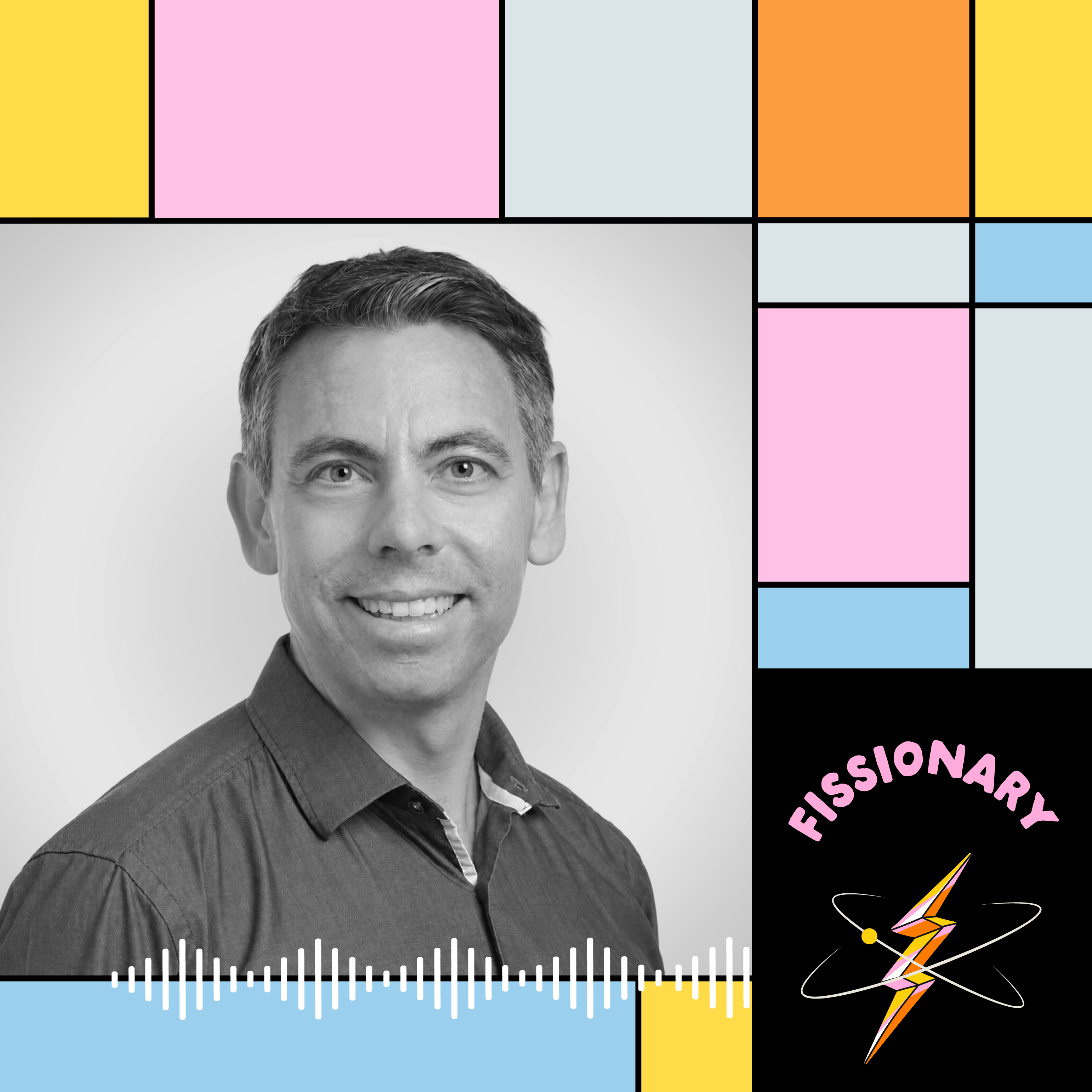
Jordan Houghton And I'm Jordan Houghton. Let's jump in. Welcome back to Fissionary. This season, we've been traveling around the world to see how different countries are approaching nuclear energy. And today's stop is in Europe. Poland has traditionally relied on coal as its main energy source, but that's changing. Right now, Poland is building its very first commercial nuclear power plant, which is expected to start operating in the first half of the 2030s. It's a massive shift for a country that's never had nuclear before. And perfect timing, this episode is dropping right before National Pierogi Day on October 8th. So, hopefully you can celebrate with some good food and also celebrate Poland's nuclear future. Joining us today is Robert Rudich. Robert spent years in the US military and the Department of Defense before being sent to Poland in 2020 as a Department of Energy attaché to help establish the country's civil nuclear program. He now serves as Chief Business Development Officer at SGE. Rob, welcome to Fissionary! Thanks so much for being here.
Robert Rudich Thank you so much for having me. It's fantastic to be here. Always excited about talking about our—our favorite subject, building new nuclear.
Jordan Houghton So Rob, you work for SGE. We're gonna talk about the projects that you all are working on. Tell us a little bit about the company.
Robert Rudich So, SGE is a regional developer for small modular reactor, or as we sometimes call, standard modular reactor projects. We are not only a developer, but we're an investor in the technology itself. SGE, along with TVA in Tennessee and OPG in Canada, came together with GE and Hitachi to invest in the standard design of the BWRX-300. And now, our role is to work with GE to build that reactor on a commercial basis across Europe. We do that based on a fleet methodology of building nth-of-a-kind using a proven technology and a disruptive business model. And this really lets us bend the cost curve in terms of how to build this reactor at fleet scale. So, in our home country of Poland, where we're building 26 units with our partner, ORLEN. And then establishing similar projects across the region in Lithuania, in Hungary, in Bulgaria where we're developing relationships with local partners. We've recently just launched a 14 unit, 4.2 gigawatt program in the UK and we're looking forward to establishing similar programs in a number of other countries in the very near future.
Jordan Houghton So how did you first get involved in nuclear?
Robert Rudich So, this is a great question because it was an absolute and total accident. I kind of had a series of jobs that—that led to this. So, you know, as you mentioned, I was in the military for a long time and then eventually came over to NNSA, National Nuclear Security Administration, working on nuclear and radiological security programs. So, physical security, cybersecurity, policy security for radiological sites, radiological storage sites, research reactors, things like that. And the overlap was the military background, but more than anything, it was doing a lot of work with foreign partners in the military, helping them develop capacity for security programs, training them, things of that nature that brought me into NNSA. From there, I ended up being the Department of Energy attaché to Poland. And that's kind of always an interesting position because when you do that, you represent the whole department. So, we have people coming into the attaché program from—from all over, and I came from the radiological security background, but ended up going to Poland and working a lot on their civil nuclear sector. It is a really, really cool job. It exists at multiple U.S. embassies around the world. We have last I checked 22 attachés. So, Department of Energy is a huge entity between lab sites and plants, lab contractors, federal employees, et cetera. 50-60,000 people, and we have 22 people that work as diplomats in embassies around the world. And you do two things in that role. Number one thing is you are the Secretary of Energy's representative to that country and to that mission. You represent the Secretary and the Department. And then at the same time, you are the U.S. Ambassador's energy advisor for that country.
Jordan Houghton Love that. That's great background. One of 22. That is a pretty good feather in your cap. So, when you landed in Poland in 2020, what was the starting point there? What was the landscape in Poland for nuclear?
Robert Rudich So, an interesting thing about that, when the position was originally created, it wasn't really focused on nuclear energy. When they first decided in, I think, 2018 that they would create the position, there was a lot of thought about natural gas cooperation and about Poland becoming a big regional importer for U.S. LNG. But by the time I got there in 2020, U.S. companies were doing a much better job of meeting Polish demand that Poland was building import capacity. So, there wasn't a ton of gas work to do because a lot of the near-term work had already been, kind of, done. But very quickly, it became apparent there was a huge opportunity in Poland to start a civil nuclear industry. Poland is one of the largest countries that doesn't have a civil nuclear industry to date. They have one reactor, it's a research reactor. And they're one of only big economies in Europe that doesn't have a nuclear industry. So, they had a lot of interest and need for it and really needed a trusted partner to help them deliver that, so that really became my mission during my time at the embassy in Poland.
Jordan Houghton So you want to bring new nuclear to a country. Where do you start? Where did Poland start?
Robert Rudich So, it really started with Poland coming to us. Late 2017, early 2018, the Polish government came to the Department of Energy and said, we would really like a nuclear industry. We’ve wanted one for a very long time. We tried once at the late Soviet era. It fell apart after Chernobyl—Poland, remember, is neighbors with Ukraine, and we are only a couple hundred kilometers from Chernobyl right now. So, it fell apart in the 80s and they wanted to do a new start. Poland and the United States have a fantastic relationship. When I worked at the embassy, we used to say the United States is more popular in Poland than it is in the United States, meaning that our approval rating for ‘do you like America’ was higher in Poland, than it was in the United States. So, Poland said, look, US has the world's best technology. They have the world's best companies. Let's go to the Department of Energy and ask them to build a program. So, we started at the very top level, at the governmental level, and then planned down from there.
Jordan Houghton You helped Poland understand what it takes to have a civil nuclear program. What were the biggest political and policy hurdles that had to be cleared when you undertook this?
Robert Rudich So, I think that the biggest challenge, and this is a challenge we're seeing all over the world right now, it's really the redefinition of the role of government in nuclear energy. Because historically, nuclear energy projects, especially in Europe, have been looked at as state instruments between states. Especially in Central and Eastern Europe, almost all the reactors here were built by Rosatom, either pre or post-Soviet Union. So, it's all VVRE reactors, and those were built because the Soviet, or Russian, government worked with the local government to downwards kind of plan and finance a program. Now that all these countries have moved to looking—to be westward-looking and are working on commercial terms, that that's a lot more complicated, especially when we talk about U.S. technologies. Because there's still, I think, this historic instinct or understanding that the governments will sit down and one government will decide how to pay for a nuclear program in another country. And that's just not the way U.S. companies work. We don't have a state-owned nuclear company in the United States. We don't want a state-owned nuclear company. We have private companies that sell technology, and that's why we have the best technology, I would say, because we have let our private sector be successful. But that means that putting together the project is a lot more complicated because it's not turnkey. You don't just go to one entity that provides the technology, the construction, the financing, the political support, et cetera. It's really a team effort. And that's where, you know, we've kind of developed a business model here in Poland. Now we work with GE Vernova Hitachi and we have a Polish company here that does the development services. And then separately we have participation from the U.S. government that puts together some of the financing, the political support. But we also have a lot of commercial financing. So, we—instead of just having one person you go to, we have to bring all these things together. And that's kind of been the role of the company that we've developed is recreating that central point that historically was filled by a state-owned company.
Jordan Houghton So, I want to talk a little bit about coal in Poland. Poland was a coal country for decades, but it decided to go nuclear. And I'm curious, why did Poland have what it takes to build nuclear after having such a strong base in coal?
Robert Rudich So, you know, the difference between Poland and pretty much all the other countries in the region is, Poland is the only one that doesn't have a legacy nuclear program. All of Poland's neighbors, pretty much with very limited exceptions, had a nuclear program during the Soviet era. They weren't, for a long time, offered an opportunity to develop a nuclear program. So, Poland really relied on the thing that it had for national security domestically, which was coal. And until quite recently, over 90 percent of electricity generation in Poland came from coal. That number has been rapidly declining over the last decade for a number of reasons. It's become apparent to Poland that the only real long-term answer to replicate that energy security is going to be nuclear energy. Gas has a role, renewables have a role, they're all important and helpful, but the only way to get real long-term energy security for baseload energy is going to be nuclear energy for them. It's very obvious to Poland the challenges of depending heavily on natural gas for long- term energy security, but nuclear energy is great. It meets the EU and Polish goals for net zero, nuclear energy provides immense energy security because they can support—store years of fuel on site and easily import even in different difficult logistical situations. And it's something that they can really own domestically for their energy security. So, coal is phasing out for a number of reasons. Mostly Poland is running out of it. The Polish hard coal mines are some of the deepest on earth because there's just not a lot of affordable, accessible coal left to mine. And that's why they're working so hard to develop nuclear energy here to replace it, frankly, before the coal runs out.
Jordan Houghton So, something we talk about a lot is workforce development. And Poland has had a strong manufacturing base with skilled workers. Nuclear's brand new. How do you take that existing workforce, such as welders, engineers, manufacturers, and transition them into a growing nuclear industry?
Robert Rudich I think upcycling, as we'd say, is really the key to this. When we look at developing civil nuclear programs, when we look at how we're going to build our SMRs here in Poland, we don't look at needing a plant full of nuclear physicists. Poland has nuclear physicists, it has a research reactor, it has a training program, but we don't need an army of them. We mostly need those people that you talked about. It historically has been a fantastic manufacturing hub for Europe and that has led Poland to be the fastest-growing economy in the EU for the last 30 years. So, it's got a lot of well-trained, skilled workforce. The thing that I think companies and workers really need to plan on is, they need a pipeline. Because there's not a lot that it takes to get a skilled welder to become a welder that's qualified to work on a nuclear program, but somebody needs to pay for that and somebody needs to commit time for that, whether it's the worker getting paid to do it or the government offering a training program or a company offering a training program. We found the best way to, kind of, do that is a twofold approach. One, a lot of the governments in the region, including in Poland, are working to develop their workforce and putting government programs in place to make that training available. The other thing that we do is we look to build a commercially financed fleet of SMRs is we want to be able to send a strong signal to industry that there's a pipeline. So, part of developing a fleet approach means it's not just a contract to do something once on one reactor, it's a contract to do something many times on a large number of reactors, maybe in a large number of countries. By putting out that pipeline, we can attract companies that want to scale up their workforce, that want to scale up their facilities, that want to work with US companies to import, maybe a license to build something. And there's frankly a lot of the supply chain that is around the world that is looking at, hey, all these reactors are coming to Europe. How can I set up a division of subsidiary in Europe with Polish partners, with Hungarian, Romanian, et cetera, partners to manufacture or do part of my manufacturing in Europe?
Jordan Houghton So, Poland now has large scale reactor projects and SMR projects moving forward, while other European countries are still in early planning. What allowed Poland to accelerate past other countries and get things really moving and underway?
Robert Rudich Part of it is the demand. I think historically, when we've looked around the world at nuclear energy projects, you have, kind of, two groups of people, people that want them and people that need them. There's people that have a real need for net zero base load power. And if you really need it, nuclear provides a solution like none other. And the difference in Poland is kind of what I talked about earlier, they don't have a legacy program. So, in Hungary, in Bulgaria, in Romania, in a lot of these countries, they're looking at new nuclear, but they're also timing it with the replacement of their existing fleet that was built in the 60s, 70s or 80s. Poland doesn't have that fleet. Coal is running out, natural gas has security and capacity complications. They need nuclear energy, basically, yesterday. So, they're pushing forward and they're focused. The other thing that I think really differentiates Poland is the size and wealth of the country compared to some of its neighbors. On the large reactor side, I think something that set Poland apart is a legally binding 15 billion euro commitment from the government to pay what it actually costs to build these reactors. And some of the other countries that are looking at large reactors are still kind of scratching their head to say, if I don't have 15 billion euro, can I still do this? And that's a big question. And not all countries have the financial resources that Poland has. On the small reactor side, we do see a lot of opportunity to serve those countries because the financial commitment is significantly smaller. And on the small reactors side, we can also mobilize private capital much easier because the size of the investment, the shorter construction time. Things like that make it a more commercially investable project. But, you know, the other thing that is really key to our fleet scale SMR deployment model is scale. And that's why Poland was such a great place to start because, you know, Poland is looking at a need for 19 gigawatts of replacement generation for retiring coal.
Jordan Houghton So, in your time at the embassy working as the attaché, what wins are you most proud of?
Robert Rudich It was an amazing job. It was a tough job. It's, it's—so much to be proud of. I do think first and foremost, without a doubt, the thing that I'm most proud of is the support that we were able to provide to Ukraine, especially in 2022 and 2023. Russia has waged an uncomfortable, brutal energy war against Ukraine. And in 2022, the Department of Energy really stepped up to say, hey, we're part of the national security team as well, energy security is national security, Ukraine needs energy security and we have a big role to play. Poland has been a stalwart ally to Ukraine as its neighbor and partner, so my role in Warsaw was to put together the goodwill from Poland and the goodwill from DOE and from State Department and the rest of the U.S. interagency and say, how can we all work together through Poland to support Ukraine? The first and the biggest thing that I think we did was find new ways to get diesel and crude into Ukraine, because prior to February 2022, 99 point something percent of—of either refined or unrefined product came through Russia or Belarus before it entered Ukraine and they suddenly found themselves without any fuel to run on. And I think it was instrumental in keeping them in the fight, and keeping them warm and morale up and all these things that were so important. In the nuclear side, I think, you know, the biggest thing is really showing that the United States can and will compete and win in the international nuclear market. Because frankly, it had been a long time since we had a win in Europe for new nuclear from U.S. technology. And it's not a matter of the technology. I think everybody knows we have the world's best technology. It's just a question of finding business models that work for these countries, that work for the way they want to finance, and wait for them to actually procure this technology without being from a state-owned company.
Jordan Houghton Okay, I want to switch gears a little bit, because this season on our show, we have been visiting different countries and really talking about work that's being done specifically in a country, we've just gone over that with Poland, but something I think that's really interesting about your company is you're actually taking a regional strategy and looking at deploying across multiple countries. So, you're pursuing a fleet across Europe, deploying technology across multiple markets that include Poland, Hungary, Romania, Lithuania. How do you implement a regional strategy that crosses borders?
Robert Rudich That's absolutely right. I'm—what we know about nuclear energy is where we kind of went wrong. And we did a lot of build it once and build it slow and expensive as an industry, and that it doesn't work. It doesn't work economically, at least. What does work is—is building the same thing many times the same way over and over again. You know, that's the great thing about kind of the model that we've developed. We know the technology works. And then what we've tried to do, as SGE, is take a totally disruptive approach to a proven technology in terms of how we build and deploy it in a way that allows for it to be commercially successful, not just technically successful. Our disruptive approach is based on working with leading local partners in various markets, so in Poland, for example, SGE works with ORLEN we have OSGE as a partnership for the Polish market. And then we're establishing similar companies in countries around Europe and some of the countries you mentioned, and also with the UK now, where we're able to work with folks that are local, that know how to be successful in building power projects in their country, and then, we bring a standardized model of how to build. That means everything from bringing regulators together to share their experience and U.S. NRC and Canada's CNSC have been absolutely instrumental in setting the standard of how to work together to license and sharing that experience with our other partners in the region so that they don't have to reinvent the wheel when it comes to licensing the technology. It means developing an integrated supply chain that spans borders that's—it's a little easier to do in Europe because we're all in the European Union, except for the UK that works very closely with the European Union. But developing a reputable supply chain that can support multiple projects, like I said, that will help them have a big enough pipeline to plan for their business needs.
Jordan Houghton You mentioned the UK. And SGE recently progressed the UK fleet to the PRA deep dive stage. What does that mean?
Robert Rudich Sure, so the great thing that the UK did this year is they released something called the Advanced Nuclear Framework, the ANF. It's really a process-based approach to a problem that a lot of countries are trying to solve for, which is, how do I get private-sector money, private industry, to come build nuclear reactors in my country? Because when we talk to a lot of countries, they have huge ambitions for the amount of nuclear energy they want, and they don't have a budget that matches that in terms of what the state can provide. So, what the UK did is they said, all right, we're going to make a program that gives a lot of certainty and process to investors of exactly how do they build a private nuclear project in our country, and that's what the ANF is. They created criteria of everything you need, not just for nuclear technology, but a nuclear project, and there's a big, big difference between a technology and a project. It doesn't intrinsically include an operator, a developer, a site, financing, all these sort of things that take a technology and make it a project.
Jordan Houghton So my follow-up on that, since we were talking about Poland, how does the UK market compare with Poland in terms of timelines and complexity?
Robert Rudich It's very different. United Kingdom is the first country to operate a power reactor. Their history with civil nuclear energy goes back to the 1950s, and they have a number of operating reactors today. They have an experienced regulator that has recently done nuclear new build. Poland is still learning a lot of this. They're learning very quickly, they're going very fast, but they're still learning. So, it's a much more mature market in the UK. I think this program, though, that the UK has created, the ANF program, you know, it builds on what Sweden released last year for their government support scheme. And I think it's really going to be a model for a lot of countries that do want to mobilize private sector investment into civil nuclear technology.
Jordan Houghton So, you're working across the continent now. What lessons from Poland's experience do you think can translate for other countries trying to build and start their own nuclear, commercial nuclear programs?
Robert Rudich Shift in words you made is actually a really important first step. I think, one, countries have to decide if they want a commercial or a government-owned nuclear program. It's very hard to do both. I think you could have a government-supported nuclear program, but especially in the European Union, where there's a lot of rules on how the European Union will let governments spend money, it's very hard to do both at the same time. Poland's done a lot of fantastic work on moving a lot of other countries forward and setting a leadership example for a lot of countries, but they are learning as they're going. I think especially if you want to bring in private sector investment, the more transparency and certainty that you can provide upfront, the better. When we started this project in Poland, we didn't really know what the process would be for government support on offtake. We didn't really know what even the government process would be on approvals for various stages of the project, what role the government would let the private sector have or want the private sector to have, and we've had to kind of develop this incrementally with the government. One thing that's been really helpful across the board that we pioneered in Poland was the use of an intergovernmental agreement, which is a high, almost treaty-level agreement between the Department of Energy and the Polish government, that really sets out some clear ambitions for what the countries are willing to work on together and what their priorities and expectations are for developing a civil nuclear program together. And the reason that's so important is because governments change, people change, ministers change, companies change, all these things happen. Nuclear programs take a relatively long time. So, it's really great at the start if you can set out a written set of expectations of what both countries will do that will kind of bind people as the humans change in and out of the process.
Jordan Houghton Very cool. So, I have one last question for you. It's the same question we're asking all of our guests. What is your favorite place you've traveled to, and why?
Robert Rudich I'm gonna say Sri Lanka. When I worked for the Office of Radiological Security in the National Nuclear Security Administration, we did a ton of fantastic work with Sri Lanka, they set a—I will say, a gold standard in radiological security and response. But it was just a really fun place to go both professionally and personally. The food is amazing, the people could not be nicer, and it's a totally different way of looking at the world than we're used to in the United States, and it's a really small country at the same time. They have beaches, they have mountains, they have amazing historic sites, archeological sites, wildlife, elephant sanctuaries, great religious shrines, and they're really welcoming to letting you experience their culture and learn about their culture.
Jordan Houghton Rob, thanks so much for being on the show. What an inspiring conversation, you did so much incredible work and are continuing to, and just really excited to see where nuclear in Poland goes and beyond. And more importantly to me right now, I'm ready to book a trip. If you enjoyed this episode, make sure to follow Fissionary on Apple, Spotify, or wherever you listen. And as always, while you're at it, please leave us a rating or review, as it helps others find the show. Thanks for listening. We'll see you next time, enjoy your pierogies!