A lot goes into developing nuclear energy across an entire region. You don’t just decide you want nuclear, flip a switch, and then all of a sudden nuclear is there. You need to develop talent across the board.
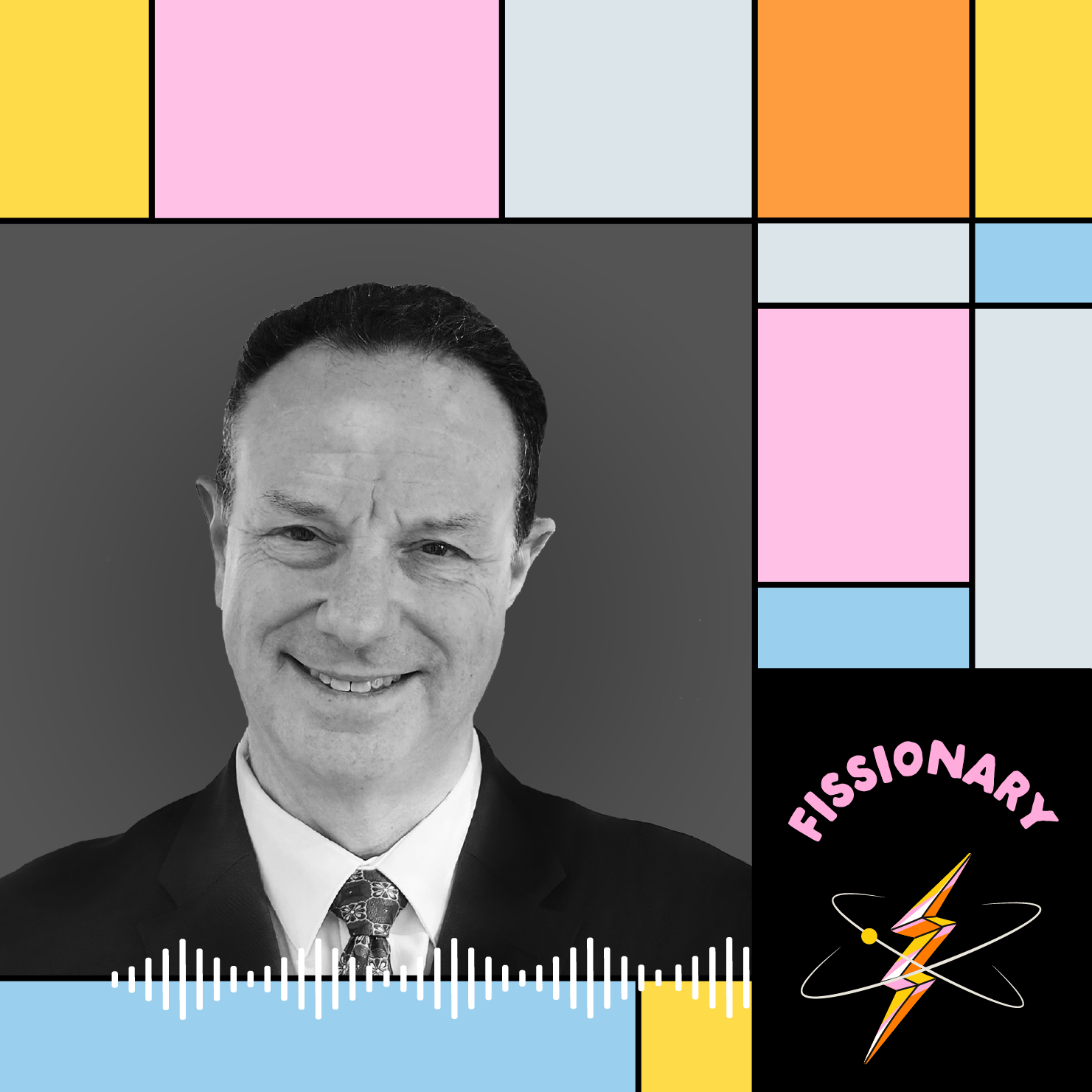
In this episode of Fissionary, Jordan sits down with Callum Thomas, a workforce strategist and talent expert who works across the nuclear sector in the UK, Europe, and beyond. Together, they explore one of the industry's most urgent and underappreciated challenges: building the human infrastructure behind the new era of nuclear growth. Callum breaks down what's actually happening across Europe right now and what it tells us when countries get serious about workforce planning.
Now this feels like our time. This is our time, because these projects, this resurgence of the sector, will either succeed or not based on the people that will make it happen. I think it's as simple as that. It's our turn. We're in the spotlight.
One of the most overlooked aspects of the nuclear world is staffing. Similar to every other field, we need smart and passionate people to move the industry forward. Finding and developing these people is a big part of what Callum does.
I guess I have two roles. One is I'm the CEO of Thomas Thor and we do the recruiting search, workforce consulting and nuclear. But my other hat, I'm the chair of the Talent and Workforce Development Group at the World Nuclear Association. That gives me a really useful dual perspective on the sector.
Callum says the nuclear industry feels much different now than it did just a few years ago. We’re seeing not only the need for clean energy, but the need for energy independence as well. From a workforce perspective, we’re seeing a lot of the workforce get stretched and pulled around due to the rapid investments in nuclear and increased demand. This means we have an opportunity to build out the workforce further, whether it be engineers, lawyers, or something else.
We may need some people that understand the technology who can support procurement processes, but a lot other skills right now are in procurement or contracting or licensing, regulatory—there, of course, we need nuclear skills to deal with regulators—things like sighting, financing, there's a lot of generic aspects to putting together a nuclear program, which in, you know, certainly not nuclear specific, and a few that are nuclear specific.
To learn more about how Europe is developing its nuclear workforce, be sure to listen!
The next episode airs on Thursday, September 3. Make sure to tune in, Fissionaries!
Callum Thomas Now this feels like our time. This is our time, because these projects, this resurgence of the sector, will either succeed or not based on the people that will make it happen. I think it's as simple as that. It's our turn. We're in the spotlight.
Mary Carpenter This is Fissionary, a show exploring how nuclear powers your world. I'm Mary Carpenter.
Jordan Houghton And I'm Jordan Houghton. Let's jump in. Welcome back to Fissionary. This season, we've been traveling around the world to explore how different countries are approaching nuclear energy. So far, we visited Germany, Japan, and even zoomed out for a broader look at global nuclear trends. And no matter where we go, one thing is becoming clear: countries are getting ambitious. They're announcing new reactors, extending the lives of existing plants, and setting bold goals for the future. But turning those ambitions into reality requires more than technology, policy, and investment. It requires people, because a nuclear renaissance doesn't just happen on paper. It takes thousands of skilled workers to design, build, operate, and support these projects for decades to come. So today, we're taking a broader look across Europe with workforce strategists Callum Thomas to explore how countries are preparing the next generation of nuclear talent and what it takes to build the workforce behind this new era of nuclear growth. And if you're tuning in, I hope this episode inspires you to come join us in the nuclear industry because there's a job here for everybody, and we need you. So, let's jump into today's guest. Today, we're joined by Callum Thomas, a workforce strategist and talent expert who works across the nuclear sector in the UK, Europe, and beyond. Through his work in leadership development, recruitment, and workforce consulting, Callum brings a unique global perspective on how countries are building the talent needed to support nuclear growth. Callum, thank you so much for joining us on Fissionary today.
Callum Thomas My pleasure. Thank you for having me, so, it's a pleasure.
Jordan Houghton We're really happy to have you. So, before we dive into some more detailed questions on nuclear, I want to hear a little bit more about you and how you found yourself working in this industry, and what drew you to workforce strategy and talent.
Callum Thomas Well, I've been doing that for 27 years now. So, straight from university, I went to work for a big international search and a HR firm, and worked there 10 years. But I think—I think I knew when I was seven years old, that I would start my own business, it was always my path in life. So, after 10 years of doing that, I left and started Thomas Thor. And that was my first foray into the nuclear sector. I was looking to do something that was really meaningful for the world in the workforce space. Something that was really international, something that was professional, something that was on a long-term growth trajectory, and then I was looking at clean energy, and I learned more about nuclear, and it's just the perfect sector. I haven't looked back since. So, that was nearly 17 years ago.
Jordan Houghton I love that. Also, and I'm sure we're going to talk about this, but it's a really good example of how the nuclear industry needs a really diverse workforce. I think a lot of people think it's just nuclear engineers, but here you are in workforce strategy and talent, and I am in comms, and so there's a home for everybody in nuclear.
Callum Thomas Yeah, yeah, there absolutely is.
Jordan Houghton So, set the stage a little bit for our listeners. When you look across Europe at the nuclear workforce right now, what is happening?
Callum Thomas There's a lot happening. I mean, I guess I have two roles. One is I'm the CEO of Thomas Thor and we do the recruiting search, workforce consulting and nuclear. But my other hat, I'm the chair of the Talent and Workforce Development Group at the World Nuclear Association. That gives me a really useful dual perspective on the sector. And through the WNA work, we get to see what's happening in all kinds of different countries around the world, of course, but obviously I'm in Europe, so I'm particularly close to the industry here. The UK, they’re actually building nuclear power plants, we've got one that's deep into construction and another one that starting and then an SMR one that's going to start soon. But apart from that, it's really project development, that's what's going on in Europe. You've got France, which is a—you know, a huge nuclear nation, like three quarters of its electricity comes from nuclear, and they're preparing to enlarge their fleet and go for another wave of new builds. Then you've got the other countries looking at new builds, either from an existing industry like the Netherlands, where they have one nuclear power plant, or Bulgaria, or in Poland, for example, where they've got no nuclear. So, we've got all these countries then that are looking at large scale nuclear reactors, either to add to one or two they have, or for the first time. Then we've got the countries that are looking at SMR. Probably, I'd pick Sweden at the forefront there. I mean, you could say the UK as well, because they're actually building a Rolls-Royce one now, but Sweden is leading its strategy with the SMR, so they're now inviting interest from the SMR vendors around the world, and there'll be other countries in Europe doing that as well. Then you've got countries that have reversed or are reversing. Belgium that was going to phase out nuclear, and now it looks like it's going to rise. We've got Switzerland who's made it illegal to build more nuclear energy infrastructure, and now, it looks like they're going to reverse that. You've got Italy, that's about to reverse the law on nuclear energy as well. Pretty much every country in Europe is doing something. You got, you know, Slovenia is looking at new builds, you got Finland looking at both the SMR and new builds. We've got Ukraine looking at fleet enlargement, and Hungary. So, there's a lot going on, but it's in the early project development phase in nearly all countries.
Jordan Houghton You just named off a ton of countries, a lot of projects. How does what you're seeing now compare with what you've seen during the last several years? Does this feel different? Is it more significant than it's been?
Callum Thomas No, it feels more significant. And I think it's the same around the world. Now before, the case of nuclear was largely built on clean energy. And now the case is built on energy independence plus clean energy, and that's been the big shift. And as we know, investments are being made. I think firstly, you get your headlines with support for nuclear public opinion changing, then you get the government pledges and MOUs signed and investment commitments. But they happen two or three years before the work actually starts. And so, what we've seen in the last few years is that those headlines have got more and more serious, the commitment from governments and the industry has got more serious. And from a workforce lens, then we see that people are getting—it’s the workforce is getting more stretched and people are getting pulled around, but it's that first five years of project development. That's right now where the needs are. So, it's licensing, it's, you know, procurement, contracting. Maybe some of the early stage front end engineering and design. That's where the work is at the moment. And that's what we've seen in the last few years is probably a step up in the seriousness of the intent and that turning into commitment.
Jordan Houghton So, related to that, we often hear about nuclear growth in terms of projects and policy, but through a workforce lens, which is how you're approaching it, what do you see that tells us how serious or prepared a country might be for nuclear?
Callum Thomas You really can tell a lot by what's happening in the workforce space. There's two main things I'd look at. I think the first one is—is around government investment in the skills pipelines, because it takes a long time to build up and of course, you know, there's competition with other industries, but to scale up a nuclear sector, we need a lot of people coming through the vocational pipelines into some of the trade craft type roles, and that takes time. The countries that are serious are thinking now about what people will be required, what skills will be required in six or eight years time and what do we need to do now. So, just in the same way you've got your long lead items in engineering, which we're very good at. You know, if you're ordering a component in the nuclear sector, there's a whole procurement, you know, strategy around that, and it's so well meticulously planned, but you look at the workforce, we don't really have that rigor. And the countries that are serious, they do. They are thinking, oh no, in six or eight years, we need this, which means we need to start investing in this infrastructure now. The second one that tells you how serious a program is will be the confidence level in the supply chain. The supply chain have been burned a bit before in the last, you know, renaissance we had, 2007 to 2011, a lot of companies in the supply chain got excited about nuclear, they scaled up, and then the industry stagnated for a decade. And they were left having made a lot of investments, having hired and trained a lot of people. So this time, the supply chain organizations who are employing the majority of people for these programs, they are more cautious. So, when you see them taking action, when you them hiring and them investing, then you know the program is serious. And that of course, is based on their judgment on the program, which is, is there investment? Is there political support? Is there a political stability? Is there reliable technology, etc.
Jordan Houghton Fascinating. At the top, we touched on this briefly, and you just mentioned it again, but when people hear nuclear jobs, they're usually picturing reactor operators or engineers. Talk about the kind of roles that are really going to be needed as countries scale up nuclear. You kind of alluded to trades, but let's talk about it a little bit more.
Callum Thomas At the moment, what we need is around project development. So, a lot of those skills are not really nuclear. We may need some people that understand the technology who can support procurement processes, but a lot other skills right now are in procurement or contracting or licensing, regulatory—there, of course, we need nuclear skills to deal with regulators—things like sighting, financing, there's a lot of generic aspects to putting together a nuclear program, which in, you know, certainly not nuclear specific, and a few that are nuclear specific. So, the types of roles that are required, it's lawyers, it is financiers, it is communications people to support public acceptance and stakeholder engagement in the localities where we're building. Contract managers, procurement people. It's that kind of skill sets that are needed now. And then it's construction, and construction is—very little of that is nuclear, and the construction is the one—that's a long lead item, the construction workforce is a long lead item, and that's the other big area. The third area, which is new, is around advanced manufacturing. So, we've got all these SMR and advanced reactor vendors coming in. We've got a race going on, which is fantastic. And there's going to be some amazing innovation and some great things are going to happen through this healthy competition, I think. But one of them will be a shift in the workforce towards more factory-built components and, you know, advanced manufacturing, and that a bit new. The industry in the past has been mainly massive construction sites with thousands and thousands of people. And the idea or the premise with the new innovation and the new types of reactors is that it will be more advanced manufacturing. So those will be new types of jobs, and then we'll be going out to other industries for those types of people.
Jordan Houghton What's interesting is we're talking largely about Europe here, but the things you've just said apply in the United States as well. And I presume also on other continents, I think globally, everyone is seeing the same needs and facing similar challenges. Would you agree with that?
Callum Thomas I would. And there's a couple of exceptions. It's kind of logical, right, because the industry has not been very active for the last two or three decades. And where we have had activity, it's been one project here in Vogtle, or one project there in Finland, or one project they're in the UAE. And so, these have been one-offs. The outlier is China, because they've carried on building throughout, so, they also have such a large population, and they have this consistency in construction in the nuclear sector.
Jordan Houghton Have you learned anything from China that you're seeing on your side from how they recruit and build their workforce and keep it sustained?
Callum Thomas Within China, they've done all the things that other countries talk about in terms of, you know, fix the design and replicate it. When you look at the programs, they have such scale that they're able to invest a lot in the skills pipelines and education pipelines. And they—they are so many graduates coming out. As far as I understand in China, the vast majority of people come through the graduate program because there's just so many graduates, and then go into the trade and the craft type roles. So, we can learn a lot in terms of discipline around sticking to the design, etc., and the benefits of scale, which can only be achieved elsewhere through collaboration. The workforce topic is one that really lends itself well to collaboration. Through my work at the World Nuclear Association, I've seen this. If every employer and every country is trying to do their own thing, then there's a lot of replication and duplication. And I think if we can get our act together and truly collaborate on things like global mobility of people and best practice in educational pipelines, and that's going to pay huge dividends. But it doesn't happen automatically. It takes a lot of work to get it set up, but it's worth the investment in my view.
Jordan Houghton For sure. So, another challenge we're seeing right now is the experience gap with many seasoned professionals retiring and a newer, less experienced workforce coming in. How are countries dealing with that shift?
Callum Thomas I think it's a unique situation in the world because we've got this demographic that are at retirement age have the flexibility to retire, but they've also got 10, 20 years of brilliant health ahead of them, and they want to work. One mitigation is, hire back the people that have retired as consultants. And that's happened at huge scale, but that's starting to become less fruitful now because people are retiring. And then we've got this gap when the industry wasn't really hiring for 20 years, from, like, 1990 to mid 2000s. That's where the challenge is. Then we're seeing lots of countries and also companies, actually, employers, have got campaigns to, to bring people from other sectors. So, whether they call them, you know, sector jumpers, or cross training, bringing people from others sectors into nuclear is essential, absolutely essential. But we're now seeing that's becoming easier because nuclear sectors got a better reputation. What we're not so good at is transferring those skills to the next generation. And it's those flexible contracting employment setups where people are working as consultants but are actually—part of their role is to transfer knowledge to others and they're assigned mentees in a more formal way. That would do a lot. There's a lot of talk around knowledge management and knowledge transfer, but the window is closing from a very, very experienced generation. So, there's more we can do there.
Jordan Houghton One thing that I—that we talk about here in the U.S. a lot is a good thing, and it's, I feel like a potentially good recruitment tool, which is that people who come into nuclear and work tend to spend their whole career there. The jobs are secure and steady, and so you do get these people who have been in the industry, in some cases, like their entire career, and that is an incredible amount of knowledge that they hold going back 20, 30, 40 years.
Callum Thomas Yeah. There's a vast number of people in that category.
Jordan Houghton So, you were also talking about recruiting people into nuclear who are already in the workforce. What industries or backgrounds are translating really well to coming into nuclear right now?
Callum Thomas You know, more than half the people that we bring to the nuclear sector, we're bringing from other sectors. It's a huge part of our business. We maintain a mega project directory, so big infrastructure is a, is a good area. So, whether people are building oil and gas or petrochemical infrastructure or airports, or people that do the World Cup and the Olympics and those kinds of things, anyone that's doing big infrastructure, we track all of those. And we're looking for people that have delivered projects on time and on budget. They could do anything from project controls, project management, construction oversight, licensing, siting, then you've got, like, the energy sector, you've got the petrochemical sector, we've got the defense sector. Defense has been a really good place to hire for the civil nuclear sector. But, of course it defense is booming right now. Those are the kinds of places that we go. And in the future, we're going to be going more towards advanced manufacturing, so we'll be looking at aerospace and automotive because we need people—smart people—to build great machines and factories that are very high precision.
Jordan Houghton It's so fascinating to me to think about looking at things like the Olympics to bring over that workforce. That makes perfect sense, of course. They're building on a huge scale. That's really interesting.
Callum Thomas The Olympics is a unique—a unique mega project because it, it has to be done on time.
Jordan Houghton Yeah, right!
Callum Thomas So, most of the mega projects—and not just nuclear, we have to give ourselves a break—most mega projects are delayed, but not the Olympics. So therefore, you get all these case studies of the Olympics, how we deliver it on time.
Jordan Houghton Yeah, that's really fascinating, I didn't think about that. Going back to something else you said I want to talk about a little bit more, are you seeing younger people become more interested in nuclear careers again?
Callum Thomas Yes. The short answer is yes. Early careers, people have always been attracted by complex mega projects, by the long-term nature of the sector, which gives job security, the international nature of the sector. Those have always been attractive things, but what's been added to that is the purpose. Before, people saw nuclear as a bit of an unnecessarily dangerous energy source, and now are widely accepted as it is, which is a clean energy source which provides energy independence and is also fascinating technology. So, that purpose element of it is what's increased the interest. I speak to a lot of organizations that hire large numbers of graduates, and they don't have a problem attracting people. We've got no shortage of people at that early career phase. We've got some of the more experienced roles because of the dropoff, as you said, of these people that will spend their careers in nuclear. That's the area that's been harder to replace.
Jordan Houghton I'm curious, the younger early career professionals that are coming in, are they more interested in energy independence or climate or is it a combination of both?
Callum Thomas I think they're generally more interested in the clean energy aspect, but it's probably carries a bit more purpose, but also, I think it depends on the country. In some countries, the populations, they really understand the negative consequence of not being energy independent. If you're buying gas from a country that cuts you off, if you live in that country, suddenly energy independence has a huge purpose that you'd be really motivated by. If you haven't felt that pain, then a bit less so. What's changed is that, you know, I think people were always interested for the clean energy purpose of nuclear, but the projects were quite slow and they’d stop-start, and then—so it didn’t offer that security that people were looking for. Now there's more solidity, more confidence in the projects happening, which is a big one, that just feeds into job security. My colleagues and I talk to thousands of people a year, either moving jobs or looking to move into nuclear, and that job security is really number one.
Jordan Houghton So, Europe can be quite diverse as there are so many different regulations, languages and systems for each different country. Does that impact the complexity of workforce development across the region? And how do you handle it?
Callum Thomas It is more complex. There's political complexity, there's security clearance complexity, visa complexity, language complexity, and regulatory complexity. So, if we compare it to the U.S., you've got the different states. It's basically like the same thing, but every country is different. Some countries are becoming more nationalistic and therefore want to do things locally, which makes it more difficult. Others are really open to international collaboration. Some countries are very close to giving security clearance to non-national citizens. Visas can become more complex. The project language is English, then it opens up a whole load more options for the workforce, but normally there are multiple languages going on. It does make the scene in Europe more complex, but that's how it is for other industries as well. There's a lot of examples of other successes where these complexities have been overcome in order to harness the richness of diversity and economies of scale at the European level.
Jordan Houghton And you work across different regions, not just in Europe, so when you zoom out globally, where are you seeing similar or even different challenges related to this?
Callum Thomas I do see a lot of similarities in the workforce space. The industry is generally in rebuild or reignition mode. For many years, it was about the public won't accept and the governments are not interested in nuclear. And then they were. And then it was about, oh, but we need the money. And now the finance is coming to the sector. And now it's about, oh, we need the people. So, most countries are in that same—okay, we've got, we've got the political and public backing. We've got the financial backing. We now need the people to be ready. And that's only happened in the last one or two years, but more or less, across Europe and North America, that's what we're seeing now. It's, okay, this is happening. Let's get ready from a workforce perspective.
Jordan Houghton That's so exciting to me to have moved on from the support to the financing and now we've gotten far enough along that we need to staff up and hire the people to actually bring these things online. If you've been in this sector a while and seen the conversation progress, it feels like we've really gotten to a place where things are happening now, and we need the people to keep them moving.
Callum Thomas Yeah, it really is. I started Thomas Thor 17 years ago. The sector has been through a lot since then. We had Fukushima in 2011. So, there's been a lot to deal with. Now this feels like our time. This is our time. Because these projects, this resurgence of the sector, will either succeed or not based on the people that will make it happen. I think it's as simple as that. It's our turn. We're in the spotlight.
Jordan Houghton We've talked about SMRs a little bit throughout. I want to go a little deeper on SMRs specifically. How does that technology coming into the picture change the workforce conversation or impact it?
Callum Thomas A lot of the work I'm doing now at Thomas Thor with my colleagues is in the SMR advanced reactor space. You know, we have a front row seat to see how it's developing. And I think many of these organizations see themselves as climate tech companies, fast-moving technical solutions to our energy needs, rather than energy companies or, you know, electricity providers. But they're still hiring from the nuclear sector, so, in the short term, what we see is they still need to stand up these projects. They still need to get regulatory approvals. They still need to build a supply chain that understands nuclear materials and nuclear components, etc. There is a squeeze right now because the SMR advanced reactor space is—is hiring from many of the same pools as the traditional nuclear sector. The promises are that there'll be many less people needed to operate, there'll be construction happening in factories, so that should change the dynamic. But all in all, it's amazingly exciting because, ultimately, it's gonna just add value because there is some crossover. Where you can choose, do you want a big plant or a small one.
Jordan Houghton If a country is serious about either bringing the first nuclear online in their country or expanding their current fleets, what's the first thing they need to get right when it comes to people?
Callum Thomas Well, two words, construction workforce, that is what has made or broken the projects. Getting that right means starting very, very early. Figuring out the pipelines of people into the project and link to that how you're going to retain people, maybe sharing people across other projects or scheduling, you know, staggering projects so you can move people around. When we've got lots of projects happening together, we're going to have to think really seriously about how we get the construction workforce to deliver these on time and on budget. Because if we don't and we go over budget, then the finance is challenged, and then the political and public backing is challenged because it's not value for money. So, getting the construction workforce ready from the beginning is the route to a successful project, and that's very much in the workforce space.
Jordan Houghton Callum, every time I think about this now, I'm going to just think about the Olympics. Thanks to your great example. Okay, last question for you that we are asking all of our guests this season. What is your favorite place you have visited?
Callum Thomas If I'm talking about the nuclear sector, my favorite place was the Angra nuclear power plant in Brazil, which is a few hours down the coast from Rio. I haven't visited them all, but it has to be the most beautiful nuclear power plant location. By the beach; it’s just a beautiful place in a beautiful country. I'm lucky enough for work and in life to have traveled all around the world. And I have to say, when I think about my favorite places I've been at full stop, it's all about people. Some of the best place I've been were probably not, somewhere that you'd think is exotic or impressive, but because the people were there, those are my favorite places.
Jordan Houghton I love that. That's a great answer. Big thank you to Callum again for joining us today. Fascinating conversation, so much work going on all over the world. Behind every project, policy and technology are the people making it happen. And we're thrilled to see more people join us as more projects come to fruition here in the U.S. and around the world. If you enjoyed today's episode, please follow us on Apple, Spotify, or wherever you listen, and leave us a rating or review to help others discover the show. We'll see you next time on Fissionary.