Welcome to our second stop on the Fissionary world tour: Japan!
Following the accident at Fukushima in 2011, the future of nuclear energy in Japan seemed uncertain. But for a plethora of reasons, including meeting net-zero targets, reducing energy imports, and the landscape of the country itself, Japan is seeing nuclear in a new light.
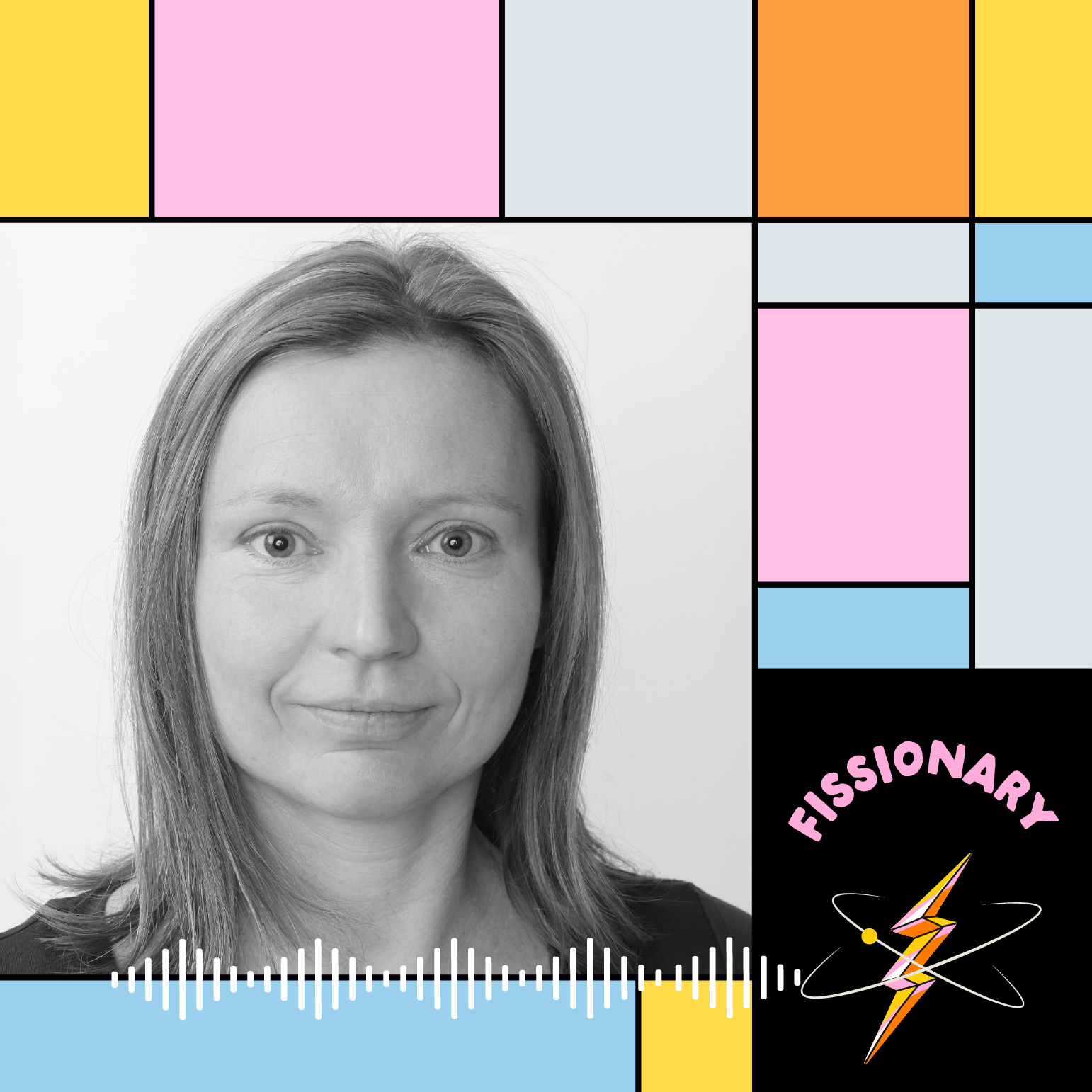
Jordan sat down with Jane Nakano, a senior fellow with the Energy Security and Climate Change program at the Center for Strategic and International Studies, to discuss the state of nuclear energy in Japan.
Before Fukushima, nuclear supplied roughly one-third of Japan’s electricity. As Jane explains, Japan had to increase its spending on fossil fuel imports by 60% to make up for the loss of nuclear. And on top of being expensive, importing more energy was detrimental to the country’s energy security. But following the accident, the Japanese government updated its approach to nuclear safety and established a new, independent regulatory body in preparation to bring nuclear back.
Following the accident in Fukushima, the Japanese government undertook this major overhaul of how Japan approaches nuclear safety regulation and really strengthened some of the safety standards. In the fall of 2012, Japan established this new regulatory body called Nuclear Regulatory Authority. … The conversation and the focus on independence and the importance of independence basically led them to have an authority regulator that's outside of the ministry.
One big reason why Japan is reinvigorating its nuclear capacity is climate. Jane says that Japan takes their net-zero goals seriously, and that’s why nuclear is such a perfect fit.
Japan is an advanced manufacturing country that is also firmly committed to the mid-century net zero target. But Japan does lack domestic energy and natural resources and so for that reason, I think Japan generally values range of clean energy technologies, including nuclear, not just for the fact that they have very minimal greenhouse gas emissions, but also these technologies allow Japan to stay away from having even bigger import dependence for fossil fuels.
As Japan looks to the future, there are plenty of areas that need to be addressed to keep the nuclear program moving forward. Jane discusses the most important points, from extending the lives of existing plants to building new ones to changing nuclear’s societal reputation.
There are many steps that are now in Japan to allow much greater use of nuclear energy to help Japan meet its energy security and energy transition goals. Things like looking at the license extension, looking at new replacement builds, even new technology development. But all these things to be able to continue going forward, the most important thing is the continued steady efforts by the nuclear utilities and the Japanese government to really restore the public confidence.
Don’t miss this crash course on nuclear energy’s evolving role in Japan. And keep your passport out for our next destination!
Jane Nakano In the previous couple of strategic plans, the Japanese government's approach was to really reduce the reliance on nuclear. But in the latest version, the seventh strategic energy plan, for the first time [since Fukushima], the Japanese government said the country seeks to maximize the use of nuclear. This is obviously a major change.
Mary Carpenter This is Fissionary, a show exploring how nuclear powers your world. I'm Mary Carpenter.
Jordan Houghton And I'm Jordan Houghton. Let's jump in. Hello, Fissionaries, and welcome back. As you know, this season, we're taking a global look at nuclear, exploring how different countries are approaching energy, innovation, and the future. You may notice that I'm here hosting solo, and that is because I'm thrilled to share that Mary has joined the Cool Moms Club and will be taking some time away with her new addition while we continue on our world tour. Mary, we send our congratulations and best wishes and can't wait to have you back with us soon. So, Mary will be on her journey while we're on our global journey, and today our stop is in Japan. Few countries have experienced a nuclear journey quite like Japan. After Fukushima in 2011, the country's nuclear future seemed uncertain. But today, rising energy demand, energy security concerns, and ambitious climate goals are prompting a new conversation about what role nuclear should play moving forward, and that's exactly what we're exploring today. So, let's jump in. Today we're joined by Jane Nakano, senior fellow with the Energy Security and Climate Change Program at the Center for Strategic and International Studies. Jane previously worked at the U.S. Department of Energy and specializes in civil nuclear energy, particularly in Japan and China. Her work focuses on the intersection of energy security, global markets, and climate policy. Jane, welcome to Fissionary!
Jane Nakano Thank you so much for having me today.
Jordan Houghton I'm really happy you're here, very excited to dig into Japan, but before we do that, I would love to start off by learning a little bit more about you. What got you interested in energy?
Jane Nakano Back in graduate school, I studied international security policy and including nuclear security issues, policy issues. I was fortunate to become a nonproliferation graduate fellow with DOE's NNSA—National Nuclear Security Administration—once I finished with graduate work. From there, my work focus, but also interest, sort of expanded to include energy security issues, certainly beyond nuclear non-proliferation issues. It's been a wonderful career since then, now with CSIS.
Jordan Houghton So, you're a senior fellow there. For listeners who may not be familiar with it, tell us more about CSIS and what does your work there involve.
Jane Nakano CSIS is a Washington D.C.-based nonprofit policy research organization, and we are strictly non-partisan or bipartisan, and it's been around since the 1960s. Its 250-plus full-time scholars, plus a network of affiliates, cover a range of public policy issues including defense through AI, also energy and climate, global health. As well as regional affairs covering almost every single continent. I undertake research on a range of global energy security issues, such as the civil nuclear competition between the United States, China, and Russia. And I share my analysis and provide policy recommendations through briefings, conference speeches, and writings.
Jordan Houghton Fascinating. So much to cover there just talking about the US, Russia, and China without everything else you just mentioned. I also want to ask you, you have spent much of your career studying Japan's energy system, but you also have a personal connection to the country. Tell us about that and how it has shaped the way you think about Japan's energy challenges and opportunities.
Jane Nakano So, while I was at the Department of Energy, I had the honor of serving at our embassy, the U.S. Embassy in Tokyo. And as a Japanese American who had spent a part of my childhood in Japan, I thought I knew Japan well, or at least well enough. Working with Japanese counterparts and living there, engaged in a range of energy security and energy and climate environmental policy discussions, I learned the way in which the Japanese government seeks to balance multiple considerations that those of us from the United States may not fully appreciate. Things like limited natural resources, also, obviously, Japan has a lot of earthquakes, and the safety issues. My experience serving in the U.S. Embassy in Tokyo taught me a great deal about both the complexities but also some of the unique attributes of Japan's energy policymaking.
Jordan Houghton Okay, so I think most of our listeners in one way or another are going to be aware of Fukushima and what happened there. So, giving some background, before Fukushima, nuclear supplied roughly a third of Japan's electricity. Tell us a little bit about what happened in the months and years following that accident and what the impacts of losing nuclear capacity meant for Japan.
Jane Nakano Following the accident in Fukushima, the Japanese government undertook this major overhaul of how Japan approaches nuclear safety regulation and really strengthened some of the safety standards. In the fall of 2012, Japan established this new regulatory body called Nuclear Regulatory Authority. Prior to Fukushima, the regulatory authority belonged to a ministry, the same ministry that also promoted nuclear energy use. Following the accident, the conversation and the focus on independence and the importance of independence basically led them to have an authority regulator that's outside of the ministry. As far as the energy supply mix goes, you know, losing nuclear did change the inter-fuel balance there. Particularly between 2013 and 2015, Japan suspended its nuclear fleet, both for safety checks, but then also [regulatory] upgrades. So, between 2013 and 15, zero nuclear power generation. And that led to massive increase in Japan's import of liquefied natural gas. So, when you compare Japan's LNG import in, you know, 2014, it was roughly 25 percent more, higher than the level right before Fukushima in 2010. Also, the three years following Fukushima, the Japanese ended up spending roughly 60 percent more for fossil fuel imports. The dollar figure I have is 270 billion dollars. I mean, that's—that was a huge spending back then.
Jordan Houghton In recent years, we're seeing Japan restart reactors. It's shifting its national energy strategy toward nuclear again. What has driven that reconsideration?
Jane Nakano There are a couple of things that really contributed to this change in my view. One is the greater awareness of some of the economic effects of not having more diversified and perhaps less fossil fuel-dependent energy supply portfolio. But then also there's been push for data centers and also AI use. Both data center buildout and also operating in AI are pretty energy-consuming. So, Japan has been trying to see how they can really meet this growing electricity demand. Leading up to recent years, Japan was really expecting their electricity demand to actually contract. For example, up until recently, they thought their power demand would be about 10 percent lower in 2030. Right at the moment, they realize that their demand will likely be as much as 20 percent higher by 2040.
Jordan Houghton So, tell us about Japan's latest strategic energy plan.
Jane Nakano So, the Japanese government releases a strategic energy plan every three years. And obviously this requires a lot of close examinations of different trends beyond energy. Sometimes it's what's happening in the energy-producing areas of [the world] or [domestic] population, GDP growth, all those factors. But every three years they release the plan to really share with the public how the Japanese government seeks to achieve energy security and transition, and also to meet some of the climate goals that the Japanese government has. Now the latest one came out back in 2025, early 2025. You know, one of the biggest changes in that document is this major shift regarding the use of nuclear energy. In the previous couple strategic plans, the Japanese government's approach was to really reduce the reliance on nuclear. But in the latest version, the seventh strategic energy plan, for the first time [since Fukushima], the Japanese government said that the country seeks to maximize the use of nuclear. This is obviously a major change. But to me, what's enabled it is this continued steady effort by the nuclear utilities and the Japanese government to regain the public confidence that was really sort of shattered in the aftermath of Fukushima. It wasn't just the confidence in nuclear safety, but in also government's crisis management capability. I think the strategic plan is the reflection of the public sentiment, being more ready for the nuclear use.
Jordan Houghton And do you think that the government has, and the industry—do you feel like it's been like a steady clip to bring the public back to nuclear, like slowly re-engaging their trust over the last decade?
Jane Nakano For the past 15 years, both the utilities and the Japanese government realized that still so many people are dislocated from the radiation effects, while also, there were a lot of casualties, not from nuclear, but from the tsunami, so the area was significantly impacted. I think they early on realized that this is an extremely sensitive and delicate situation [and] the only incremental and earnest and steady engagement could really help regain the public confidence, and even to some extent, to have more openness from a range of segments within civil society in Japan to be willing to listen to what the government had to say and really see the data, hear the explanation from the nuclear utilities. It's been a careful two-way street. If anything, I think a lot of listening sessions to what, you know, different local communities have to say about how they feel about both the advantages and some of the concerns associated with nuclear use.
Jordan Houghton So, listeners know that I used to work at a nuclear museum in Las Vegas, and I would engage with the public pretty much every day, and we got a lot of people into the museum who had questions about what happened at Fukushima, and there was a lot of—here in the U.S., people didn't understand that the radiation effects were not deadly, and that the displacement of people and evacuating them when maybe they didn't even need to be evacuated actually resulted in a lot of deaths. Has that been understood in Japan, or is there the similar radiation fear in Japan as well?
Jane Nakano I think Japanese public has always been much more aware of the general radiation issues, given the experience of Hiroshima and Nagasaki attacks on the Japanese population. Having said that, the accident from civil nuclear facility is quite different from the deliberate use of nuclear as a weapon. So, I think to some extent the accidents like Fukushima's, you know, could really touch the nerve differently among Japanese population because of the Hiroshima experience, but at the same time, at the general public, I would say that the literacy level when it comes to the radiation is probably, you know, higher. I would put that, you know, the radiation concerns as part of some of the ways in which that the Japanese government responded, including, you know, the effort to restore public confidence in nuclear safety through the establishment of the new regulatory body.
Jordan Houghton I want to pivot to something you talked about earlier. You mentioned climate as being a driver and energy security as being a driver. They're both sort of coming together to bring Japan back toward nuclear. And I would love for you to get a little bit more detailed on why nuclear is viewed as important to both conversations at the same time.
Jane Nakano So, Japan is an advanced manufacturing country that is also firmly committed to the mid-century net zero target. But Japan does lack domestic energy and natural resources and so for that reason, I think Japan generally values range of clean energy technologies, including nuclear, not just for the fact that they have very minimal greenhouse gas emissions, but also these technologies allow Japan to stay away from having even bigger import dependence for fossil fuels and have much more diversified energy supply portfolio, and that could be much more resilient to external price shocks. And then what's also interesting and probably sometimes, I guess, underappreciated, is that Japan has a fairly limited flat land. About two thirds of the country are mountainous. And of course, we also have quite a few little islands as well, but the fact that nuclear, you know, has is extremely high-energy-capacity-factor technology and source makes it a viable option for Japan.
Jordan Houghton So, related to that, I know that energy prices can also have a huge economic impact and especially on consumers and families. How's that playing into this?
Jane Nakano So following Fukushima, yes, the government and the industry did spend a lot more for energy. I think a lot of households were trying to have energy conservation. There was also, I think, the government advisory to, you know, try to keep the indoor cooling temperature at a certain level. It was, you know, roughly 78 to 82 degrees Fahrenheit. I remember visiting Japan, not the summer right after Fukushima, but the year following, and it was pretty warm indoors. But the government and public facilities tried to lower not just the temperature, but perhaps run fewer elevators, trying to turn off the lights as much as possible. Right at the moment in Japan [against the background of the Hormuz energy crisis], I think a lot of measures are much more about how to shield the regular households from the high gasoline prices and power bills. So, the Japanese public have seen some price effects, but not to the level that has really triggered some panic, unlike 1970s energy crisis. And actually, recently ,the Japanese government finalized roughly 20 billion dollars worth of supplementary budget for this fiscal year to subsidize these gasoline prices and power bills to really, you know, address some of the economic strains on the Japanese daily life. Now, having said that, I think, you know, Japan is highly import-dependent for oil and gas, and so some of the—there have been some announcements that there'll be an increase in, like, food products and beverages because, not so much the food itself, but the packaging are made of, you know, plastics and many of the things that are basically crude oil byproducts. There have been some announcements starting next month, there'll be some increase in prices of drinks and food products.
Jordan Houghton So, I'm going to pivot a little bit to the future. Japan's looking at extending plant lifetimes, they're investing in newer reactor technologies. What does the next phase of Japanese nuclear power look like?
Jane Nakano Yeah, there's, you know, a lot of focus on plant lives and not just restarts, but new reactor builds, also new reactor technology development. Under the current law, the reactors are licensed to operate for 40 years, and there's a one-time 20-year extension that's allowed. But I think there's a greater appreciation for the fact that many of these, you know, the Japanese reactors are getting pretty old. Just recently, there was a latest estimate that by 2040, Japan may lose four reactor units. These reactors reach the 60-year operational limitation. These are obviously not the, you know, technical limitation, these are licensing. And then by 2050, additional 11 units may reach that 60-year limitation. And that really makes it hard for Japan to reach the net zero target. There is a greater interest in trying to extend the operational life license. Also, right at the moment, the Japanese government committee that's deliberating really, you know, about how many reactors they want Japan to build between now and 2050, it looks like they might come up with a new goal in the coming months of building as many as five new reactor units by then. Because right at the moment, Japan's plan is for nuclear to account for roughly 20 percent of electricity supply capacity in 2040. So, they really have to start thinking about new reactors and basically sort of replacing the aging, retiring ones. As you know, the nuclear construction does take time. There's also utilities like Kansai Electric that have started some geological survey to see if they can, you know, build a replacement reactor. It is a more geological and topographical survey. It's Mihama Nuclear Power Station. So that's another sort of a movement pointing to the direction of, you know, greater use of nuclear power generation. There's also next-generation light water reactors that are under development by some of the Japanese companies. So, there are so many pieces that are starting to align.
Jordan Houghton I mean, when you look back on Fukushima and how far the country has come to get back to where they are and be so forward thinking, too, is really incredible. When you look globally, do you think Japan's experience offers lessons for other countries thinking about nuclear and their energy security?
Jane Nakano There are some general lessons. You know, one that, you know, there's no single energy source that's really silver bullet, whether it's from energy security perspective or import dependence, even, you know, for the Japanese, some of the renewable energy technology components are import-dependent on China. There's been a lot of debate on the supply chain security. There are some non-proliferation and safety-related issues that may be more unique to nuclear than, let's say, gas. But I think Japan's experience shows that diversification is the key. If you become way too dependent on imported fossil fuel resources, you'd see that translate into huge spending by the government and industries, even if the households could be shielded by some of the buffers. But Japan is now looking at nuclear as much more of a viable and potentially robust option because of its unique attributes, and particularly the high capacity factor and zero-carbon emitting attributes speak to the fact that to Japan, that are very much limited in flat land, but then also taking these climate commitments quite seriously.
Jordan Houghton My follow-up question to that is the NRC, which is the U.S. Regulator, is undergoing some major reform and modernization. Do you think there are any lessons Japan can take from that as it continues to navigate its own nuclear future?
Jane Nakano The post-Fukushima regulatory reform benefited greatly from the U.S. regulatory experiences post-Three Mile Island. Their former commissioners, such as Dr. Meserve, that actively spoke and have given advice to the Japanese policymakers as they decided to really modernize and have this much more independent regulatory body. You know, these things are a work in progress. You know, it took the United States many years after the Three Mile Island accident to probably have certain institutional contours set. And I think Japanese have been on the track of having much more independent, much more transparent system. Now, I think they're, you know, watching the discussion and developments within the United States of adding more efficiency to nuclear regulation within the Unites States. And I think striking the right balance between efficiency and independence and transparency, it's something that's probably always sort of an ongoing process. There's never sort of a, you know, perfect stage, but I think they're certainly closely watching what are some of the lessons that may come out of the current NRC modernization effort.
Jordan Houghton Fascinating. So, looking ahead, what do you think are going to be the most important next steps for Japan to successfully rebuild nuclear and bring it in as a major part of its energy mix going forward in the next decades?
Jane Nakano So, there are many steps that are now in Japan to allow much greater use of nuclear energy to help Japan meet its energy security and energy transition goals. Things like looking at the license extension, looking at new replacement builds, even new technology development. But all these things to be able to continue going forward, the most important thing is the continued steady efforts by the nuclear utilities and the Japanese government to really restore the public confidence. And again, not just in nuclear safety, but also the Japanese government and the Japanese society’s ability to manage incidents and accidents related to nuclear energy.
Jordan Houghton Great. So, closing question—we're asking all our guests this season. What's your favorite place you've traveled to and why?
Jane Nakano So, there's no single place. I'd say I've taken a road trip on the historic Route 66. Quite a few years ago, but that was a fantastic trip. I loved it because it just really gave me a renewed appreciation of the vast land that our nation has also just very diverse landscape, local, you know, cuisines, the, you know, people, just different lifestyles, and I just loved it. And we got the map of the original Route 66 from the Historical Society and tried to stay off of, obviously, the more modern Route 66 and try to stay at some of the motels that have been around for a long time. That was quite memorable.
Jordan Houghton I love that you have traveled all over the world and your most favorite, memorable trip is right here at home on Route 66. That's perfect, Jane, I love it. Truly appreciate your time.
Jane Nakano Thank you! I really enjoyed this conversation.
Jordan Houghton Amazing conversation with Jane today. Really enjoyed her insight. Japan's journey has been fascinating to see developed and really looking forward to see what they do next and what's in store. If you enjoyed today's episode, make sure to follow Fissionary on Apple, Spotify, or wherever you listen. And please leave us a rating or review, it helps others discover the show. Thanks so much for tuning in and we'll see you next time on Fissionary.
The next episode airs on August 20—make sure you tune in, Fissionaries!

.png?language=en-US)