It’s hard to turn on the TV or scroll through Twitter without seeing headlines like these:
- “Extreme Climate Change Has Arrived in America”
- “2018 Climate Breaks Long-Held Records, Underscoring Dire Picture”
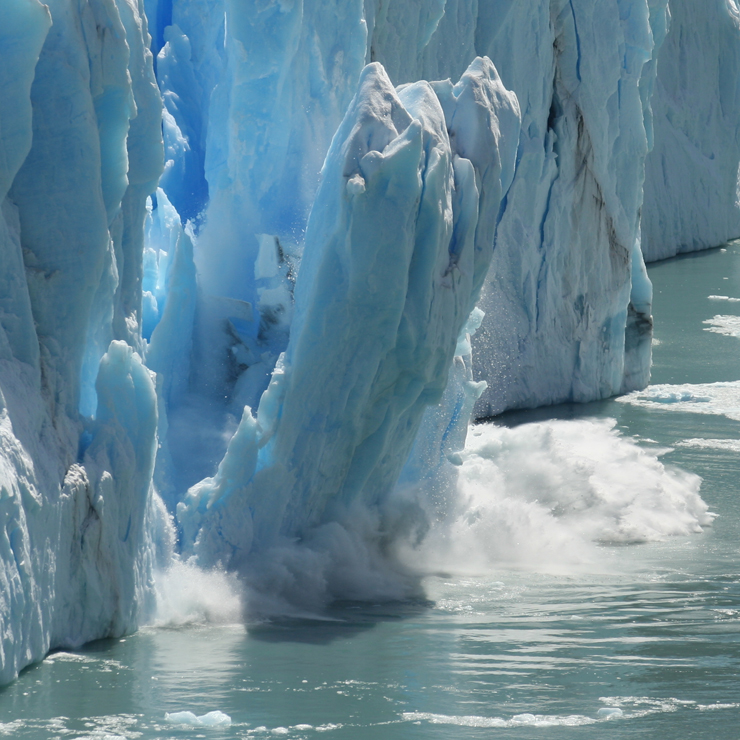
- “West Antarctica Is Melting—And It’s Our Fault.”
If the seemingly never-ending onslaught of climate news is making you feel hopeless, anxious, depressed or all of the above, you’re not alone.
How does climate change lead to climate anxiety?
Although there is no clinical definition, “climate anxiety” or “eco-anxiety” is the distress caused by the changing climate and its impact on people and the environment. It’s becoming a common term in our 21st century lexicon and affecting populations of all ages, as a recent Gallup Poll reported. Climate-related anxiety has become such a significant concern that the American Psychological Association published a report and comprehensive guide on the mental health impacts of climate change in 2017.
The impacts of climate change have been increasingly featured in mainstream media, especially following the October 2018 United Nations’ Intergovernmental Panel on Climate Change (IPCC) report that predicts severe effects of climate change by 2030. Multiple national news outlets have recently covered how this news affects our mental health, including CNN, People, Rolling Stone and Vice.
Climate anxiety was even featured as a subplot in the June 23 episode of the HBO series “Big Little Lies.” During a school lesson on climate change, one of the main character’s daughters has a panic attack, inciting one of Laura Dern’s character’s epic takedowns and resulting in a parent teacher assembly to address the topic and placate the hyper-involved helicopter parents.
Even royalty aren’t exempt from climate anxiety. During his interview with Jane Goodall for the September 2019 issue of “British Vogue,” Prince Harry shared his concerns for the “terrifying” state of the world and his desire to leave something better behind for the next generation, noting that he and wife Meghan Markle will have “two, maximum” children, a limit likely due in part to environmental impact concerns.
What can we do about climate change?
There’s no simple, quick-fix solution for climate change, but there are small ways to combat anxiety about the climate that are within our reach. Finding ways to reduce your carbon footprint by taking public transportation, recycling and eating a plant-based diet are steps that may alleviate climate anxiety while doing good for the planet.
But it will take large scale changes and unprecedented actions to avoid the worst of the damage, according to the IPCC. As stated in the report, “Global net human-caused emissions of carbon dioxide would need to fall by about 45 percent from 2010 levels by 2030, reaching ‘net zero’ around 2050. This means that any remaining emissions would need to be balanced by removing CO2 from the air.”
The report outlines “mitigation pathways,” ways that we can limit warming to 1.5 degrees Celsius above preindustrial levels, thus preventing more serious consequences down the road. The key pathways include energy-demand reduction, as well as deep reductions in agricultural emissions, which account for 13 percent of total emissions, and electrification of sectors like transportation.
But in order to limit warming to 1.5 degrees, we need to reach net-zero carbon dioxide emissions globally around 2050. To achieve such an ambitious goal, we must increase our carbon-free energy generation to supply a share of 52 to 67 percent of primary energy.
How can we reduce carbon emissions?
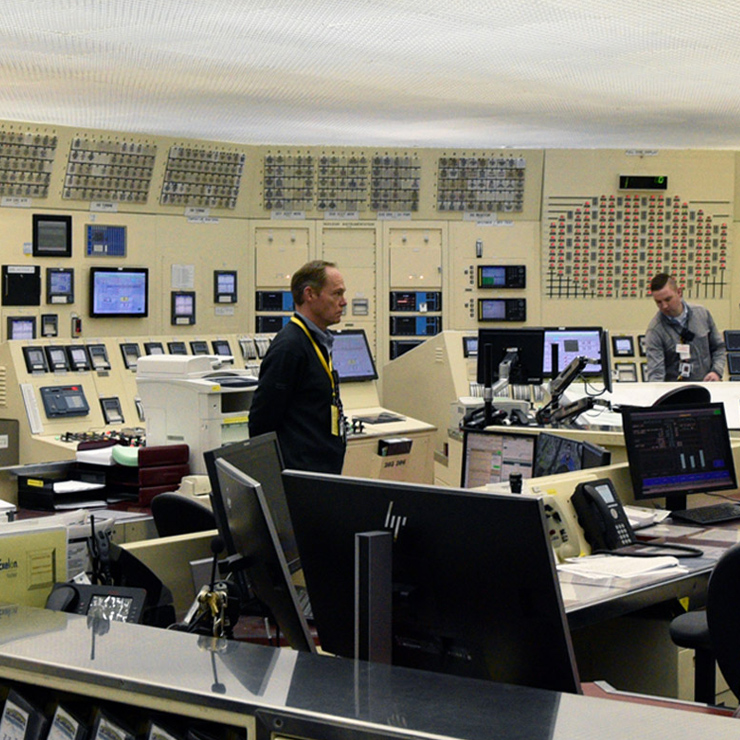
The best way to reduce carbon emissions is by utilizing all sources of clean energy we have at our disposal and continuing to invest in new technologies—including nuclear carbon-free energy.
Renewables are growing rapidly and are expected to reach 12.4 percent of global energy demand in 2023 according to the International Energy Agency’s Renewables 2018 report. They are a critical part of our energy infrastructure, but relying solely on intermittent energy sources poses challenges and reports show that we can’t meet the rapidly increasing energy demands on renewables alone.
More and more organizations, including the IPCC, are pointing to nuclear carbon-free energy as a key part of achieving our carbon reduction goals. Within the past year, the Union of Concerned Scientists, The New York Times, and Bloomberg have all released reports or opinion pieces attesting to the value of keeping nuclear plants online, with Bloomberg stating that “nuclear power is crucial to the effort to stop climate change.”
It’s not just about valuing the current nuclear fleet, though in the United States we’ve seen that when nuclear plants close prematurely, carbon dioxide emissions do increase. Investment in advanced nuclear technologies, like small modular reactors, as well as energy storage technology, is necessary to ensure both nuclear and renewables can produce electricity as efficiently as possible.
Is there hope to protect the planet from climate change?
Despite the IPCC’s dire warnings, there are reasons to be optimistic about the future in my opinion. Although U.S. carbon emissions increased in 2018, they have decreased significantly since 2005, and have declined each of the previous three years, reflecting a global trend. There are global commitments, like the Paris climate agreement, to reduce emissions and a growing number of activists, like Greta Thunberg, who are championing a global youth movement against climate change.
The private sector is also taking steps to reduce environmental impact, like Xcel Energy Inc. which has committed to a clean energy goal of zero emissions by 2050. In Congress and in state legislatures around the U.S., politicians from both sides of the aisle are uniting in their support of advanced nuclear bills that would provide funding to develop new technologies, as well as implementing state clean energy standards that value nuclear as our leading carbon-free source of energy.
If you’re passionate about the environment and want to keep your climate anxiety at bay, consider taking action by joining organizations like Nuclear Matters that advocate for clean energy and reduced carbon emissions.
Often our anxiety is based around a negative impact, and is fed by feelings of hopelessness. As Janet Swim, The Pennsylvania State psychology professor who has authored several publications about psychology and climate change, said in a recent CNN feature: "Instead of focusing on the fear, you should instead focus on what you want to do. If you get closer and closer to a solution, you can feel more pride and there is hope."
.jpg?language=en-US)