JP Morgan Chase & Co.—one of the largest banks in the world, managing over $2.6 trillion in assets—has committed to change its investment portfolio to reduce carbon emissions and “start aligning [their] financing portfolio to meet the Paris [Agreement] goals.”
JP Morgan Chase’s announcement is one of many recent commitments made by financial institutions to address climate issues; however, climate-conscious investors are calling for them to do more. Recently, three Rockefeller heirs formed BankFWD, a coalition urging JP Morgan Chase and other major firms to divest from carbon-emitting fossil fuels, not just increase sustainable investments, in order to protect the climate.
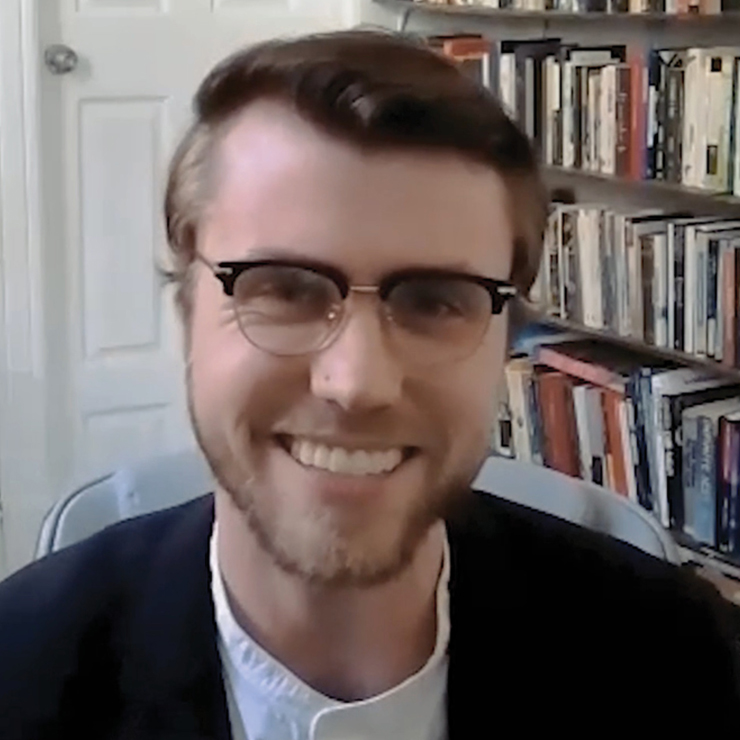
According to Emilie Mazzacurati, major banks and asset managers are increasingly considering the impacts of a changing climate on long-term strategy, but we just may not see concrete action yet. Mazzacurati is founder and chief executive officer of Four Twenty Seven, an affiliate of Moody’s Investors Service Inc. that measures climate risks.
“There is a lot of work being done internally that is not yet reflected externally because those organizations like to have … all their ducks in a row before they come out with details,” she said in the latest episode of Off the Menu with Monica Trauzzi.
Still, sustainable investing, especially in energy, has seen significant momentum as of late. Philanthropists like Bill Gates are investing in solutions and even family offices, which manage the wealth of affluent individuals and families, are beginning to act for the climate.
The good news for investors is there is a lot of promising innovation when it comes to reducing emissions. Wind and solar are expanding and provide hope for a carbon-free energy system, as does nuclear energy—which supplies nearly 55 percent of carbon-free electricity now. Nuclear energy is also poised to be a major player in the future with advanced reactors which can help decarbonize transportation and heavy industry as well.
So what does Mazzacurati think we need to continue driving investment in these kinds of climate change solutions?
“We need strong policy signals. That's not the only thing that we need, but that has been the bane of everybody working in renewables or clean energy and carbon-free energy,” she said. “Is the U.S. committed to reducing emissions in a way that's meaningful or not? … There’s no clear signal.”
View the full episode with Mazzacurati—the first in a series on financial investment in carbon-free energy—and check out other episodes of Off the Menu with Monica Trauzzi.
Transcript
Monica Trauzzi:
Wall Street and big businesses are making moves to invest in a carbon-free future. They're leaning on people like today's guest, Four Twenty Seven CEO, Emilie Mazzacurati to create their plans. Emily and I talk virtually about creating a carbon-free future with wind, solar, and nuclear. We're at For Five Coffee today. I'm Monica Trauzzi. This is Off the Menu. Emily, thank you so much for joining me today.
Emilie Mazzacurati:
Thanks for having me.
Monica Trauzzi:
So let's talk about Wall Street because the conversation on Wall Street has been a little slow, in my view, slow to incorporate the impacts of climate change when we're talking about investment prices. Do you think that Wall Street is speeding up now? Do you think that there's more of a focus on this?
Emilie Mazzacurati:
We are seeing changes from the large bank managers that may not be visible to the human eye, if I may, in the sense that there's a lot of work being done internally that is not yet reflected externally because those organizations like to have things really well set up and all their ducks in a row before they come out with details. So you might see glossy report with a little bit of arm waving saying, "We're working on this." I think for a number of those organizations, it's true. They're working really hard on it, but like some of those kids who wait until the last minute to talk because they want to make sure they get the full sentence right, there is in a sense that they're going to wait until they're ready to really show what they're doing and how well they're doing it.
Monica Trauzzi:
And they're also, they're planning for something that we kind of know, but is still far enough into the future, that there's a little distance created between where we currently are and what the future reality might be?
Emilie Mazzacurati:
That's really a blocker is being able to bring that point home with fund managers on how has this driven performance in the past four, in the last eight quarters maybe, and, therefore, how should this affect my investment decisions for the next year? It's not so much denial or not thinking that it's relevant. It's really trying to figure out where that tipping point is going to be and whether it's going to be in six months, in three years, in six years, that has big implications for investment decisions.
Monica Trauzzi:
The science tells us that we need to go carbon-free. There's a lot of technology that can help us get there that's already existing. There's also technology that's being developed, but we need investment to happen. What do you think that thing is that needs to happen to kick the investments into high gear?
Emilie Mazzacurati:
We need strong policy signal. That's not the only thing that we need, but that has been the bane of everybody working in renewable, or clean energy, and carbon-free energy in the U.S. is the back and forth on policy decisions. What is in? What is out? What gets subsidies? What doesn't? And is the U.S. committed to reducing emissions in the way that's meaningful or not? And, of course, as political winds shift and the opinion of electors might change may or may not be reflected by the government in place. It changes by state. There's no clear signal. So a lot of investors who came in early in the clean tech space lost money because there wasn't a market for those technologies to grow. While in the meanwhile, we continue to heavily subsidize carbon intensive technologies and fossil fuels.
Monica Trauzzi:
Are there technologies that excite you the most?
Emilie Mazzacurati:
I get a little frustrated because, as you say, there is a lot of technology that exists that we're not using or that we're not using at scale.
Monica Trauzzi:
Talk to me a little bit about Europe and how the regulatory environment there is impacting what we're seeing in the U.S.
Emilie Mazzacurati:
Yeah, going back to this idea that policy is going to be an important driver in really shifting the market and investment patterns, the EU has been really forging ahead with regard to new regulation for corporates, for investors, for insurance, for pension funds, you name it, with a deliberate effort to raise the bar with regard to disclosures, with regard to how one looks at a green investment, a carbon-free investment. What counts? Making sure that there are label and rules and also rolling out a set of ambitious regulation around climate stress tests. And pushing banks to really look at their portfolio and what happens in case of a disorderly transition scenario? All the planes are grounded and, therefore, airlines are at risk of going bankrupt or receiving maybe subsidies from the government. Really looking into this type of detailed assumptions. A lot of the banks that are subject to those regulations are also operating in the U.S. They're very large global banks. So that's driving how those large players are thinking about climate risk, even if in the U.S. we don't have yet this type of regulatory push.
Monica Trauzzi:
All right. Well, thank you. I really appreciate your time. Thank you for joining me. I'll talk to you soon.
Emilie Mazzacurati:
Thanks for having me.