Innovation, supported by robust policy and government action, is the only way we can reduce carbon emissions fast enough to protect the climate.
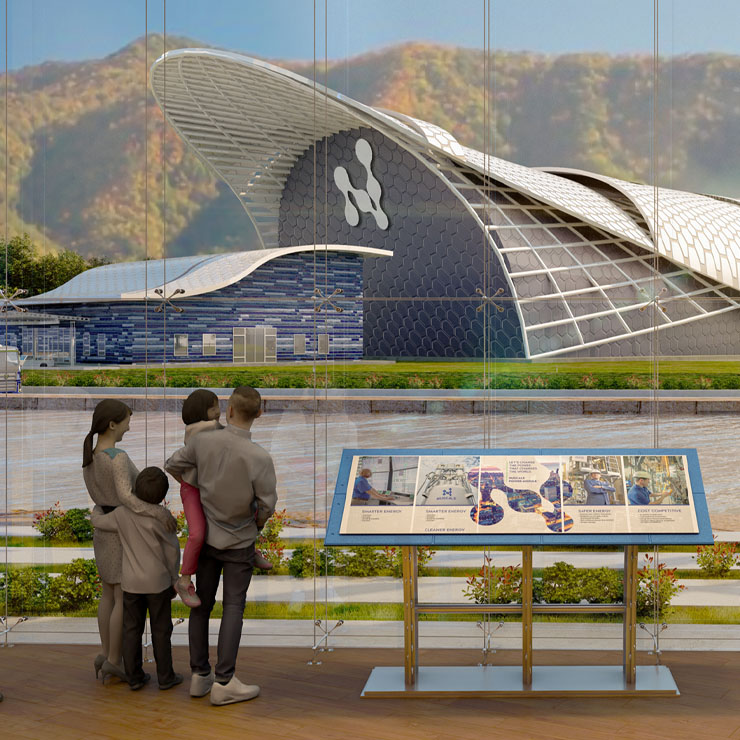
The U.S. Department of Energy—in partnering with the nuclear industry—moved this effort forward today as it announced its selections for the Advanced Reactor Demonstration Program. Through the program, two reactor developers have each secured $80 million in funding for new reactor concepts that can be built and operational within seven years: TerraPower LLC for its Natrium system, a sodium fast reactor paired with a molten salt energy storage system; and X-energy LLC for its high-temperature, gas-cooled reactor design, Xe-100.
The program also includes two other “pathways” for funding projects which will be longer term. The selections for these pathways will be announced later this year or early next year.
The United Nations Intergovernmental Panel on Climate Change and similar organizations have urged that the world needs to see drastic reductions in carbon emissions by 2030 to avoid the worst effects of climate change. In the United States, numerous utilities and some states have made commitments to be carbon-free or carbon-neutral by 2050. By working with the industry to demonstrate new reactor concepts and bring them from blueprints to reality, DOE is pushing to make sure that we can reach our carbon-free future.
To reach our climate goals, we need innovation to continue across the energy sector.
This announcement comes on the heels of other innovation news in the industry, which every week seems to bring more developments: Last week, DOE announced $26.9 million in funding for three nuclear technology projects, two of which that demonstrate using nuclear energy to produce hydrogen fuel. The department also recently moved the Versatile Test Reactor—which will speed the development of advanced reactors—closer to reality as it enters the engineering design phase. Plus, last month the U.S. Nuclear Regulatory Commission approved the small modular reactor design from NuScale Power LLC.
To reach our climate goals, we need innovation like this to continue across the energy sector.
“Innovation isn’t one of the things we need to do to tackle climate change. It is half the game,” said Varun Sivaram, senior research scholar at the Center on Global Energy Policy. “If we drop the ball on this one, we are lost.”
Other carbon-free sources like wind and solar are pressing their technology forward as well. Duke Energy is partnering with the U.S. Army on a floating solar unit at Fort Bragg in North Carolina, which will feature solar panels built over a lake to increase efficiency and reduce land use. Additionally, researchers are looking into using additive manufacturing to produce components for wind turbines to lower cost and improve performance—a technique that can also be used for other energy sources including advanced nuclear.
We need every tool we can get to reduce carbon emissions—including many promising ones that haven’t arrived yet but are close. In September, the International Energy Agency called on governments to play a “decisive role” in reducing carbon emissions, saying that “The clean energy technologies we will need tomorrow hinge on innovation today.”
Luckily, there is abundant innovation happening in nuclear energy and across the carbon-free energy sector. We must continue to see policy support and investment demonstrated by initiatives like DOE’s Advanced Reactor Development Program.