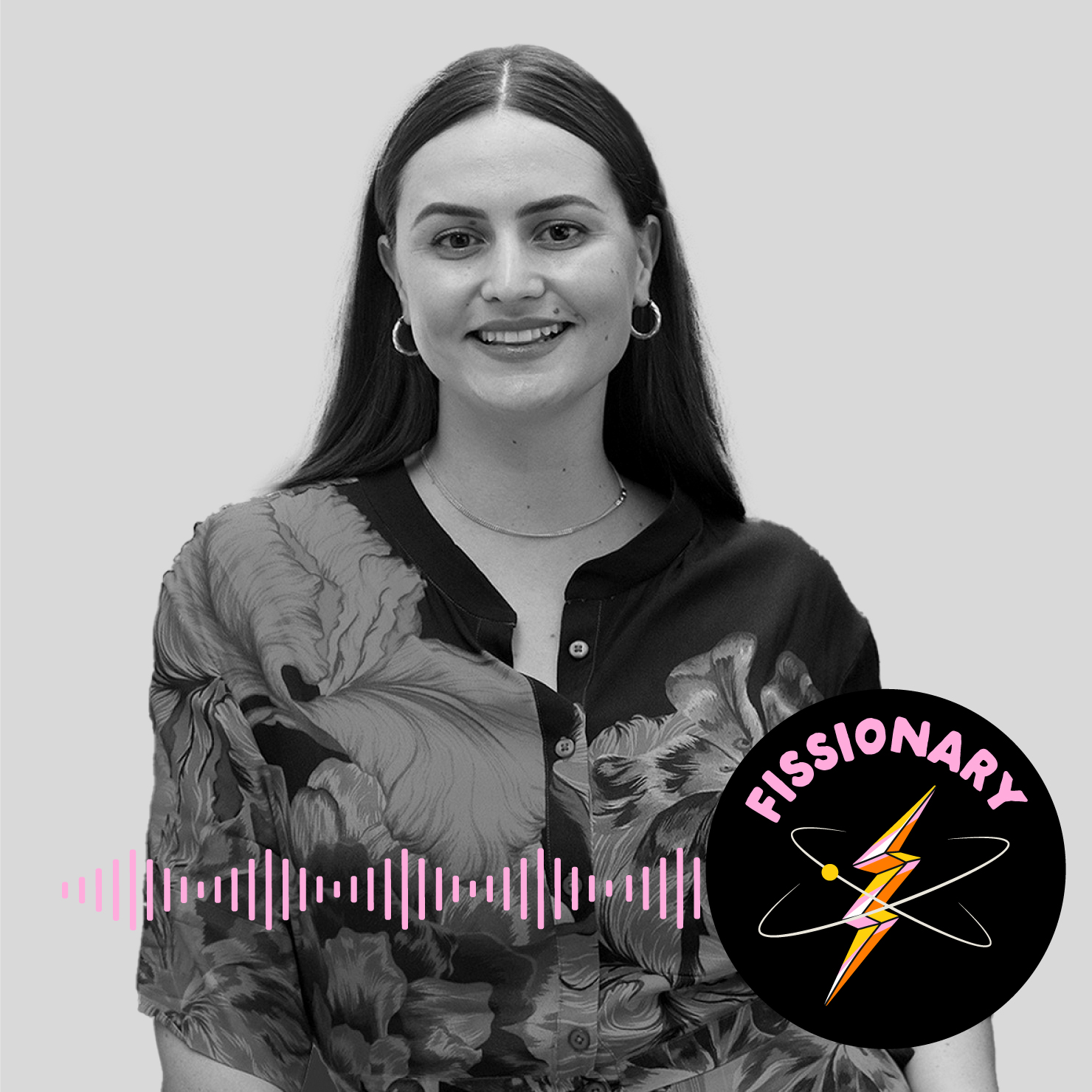
Jesus Nunez, the CEO of the Nuclear Alternative Project (NAP), wants to bring nuclear energy to Puerto Rico, whose electric grid is unfortunately in the news quite frequently. The island’s grid is regularly destabilized by hurricanes, and with climate change, this could get worse. Jesus believes, nuclear could play a major role in fixing that.
On this episode, he joins Mary and Jordan to talk about how extreme weather can impact electricity, what it was like growing up in Puerto Rico, his work as a senior structural engineer at Bechtel, how nuclear is a reliable energy source that can support a strong grid on the island, and more. He even points out that when he was a kid, Puerto Rico’s grid might have been better than it is now and explains how we got to this point.
I think the grid was not as bad as it is now because it was—it was better. But certain situations between the governance of the system, and maintenance issues, and they didn’t update some of the generation assets, it started to deteriorate to a point that—where we are now, right, that people are having more blackouts and it’s affecting the economy and every person living on the island.
Many of us tend to take electricity for granted—when you flip a switch, a light turns on; when the temperature gets too low, the thermostat kicks on. Jesus points out that this isn’t a reality shared by most Puerto Ricans today.
They’re [Puerto Ricans] having a lot of issues not only in the transmission and distribution portion of it, but also the generation. They’re having a low margin in the electricity market and that’s affecting everyone’s lives.
His lived experiences are why he is doing the work that he does today, and why the NAP is so important. For his whole life, he wanted to be an engineer, so when he got his master's degree and his job with Bechtel, he knew he had a chance to give back to the community that raised him.
In addition, Puerto Ricans —and many others in the Caribbean —are historically marginalized people, which makes it all the more important to provide them with the resources and technology necessary to stabilize their electric grid. In comes the NAP.
Not long after Jesus started the organization, Hurricanes Irma and Maria hit the island in 2017. Some people were without power for a year. This provided extra motivation for Jesus to really create the change he wanted to see.
Our mission, and our compromise, is to educate people in Puerto Rico and to make sure they understand how nuclear, with advanced reactors, could be a possibility and something that helps them in the future.
According to the NAP’s feasibility study done in 2020, 94 percent of Puerto Rico’s population is interested in nuclear. This is a massive indicator that not only can we implement next-generation nuclear technologies in Puerto Rico, but we can increase interest in nuclear globally through communication and storytelling.
Mary Carpenter
This is Fissionary, a show exploring how nuclear powers your world. I’m Mary Carpenter.
Jordan Houghton
And I’m Jordan Houghton. Let’s jump in. Hi, Mary, how’s it going?
Mary Carpenter
Hey! Good. How are you?
Jordan Houghton
I’m doing well. I am very interested to speak with our guest today. He is Jesus Nunez, the CEO of the Nuclear Alternative Project, and he grew up in Puerto Rico. And his goal is to bring nuclear to Puerto Rico to help stabilize their electrical grid, which is, oftentimes, and has been—you’ve all seen it in the news—intermittent because of the impacts of hurricanes around the island.
Mary Carpenter
Puerto Rico faced a lot of challenges in recent years because of these horrible weather events. I know part of the reason that Jesus started the Nuclear Alternative Project was because of Hurricane Irma in 2017, and then they were quickly struck again a couple weeks later by Hurricane Maria, and that caused absolute devastation on the island. And, you know, their cell sites were down, their water waste treatment plans were inoperable, there were landslides, their roads were impassable, most of the island lacked clean drinking water, and on top of this, a hundred percent of their electricity grid was down. So, he—you know, growing up there, thought that this was a critical opportunity for him to do something to step in and find a way to make their grid more stable as they continue to face these disasters, and he thought nuclear would be the best solution to do that.
Jordan Houghton
I think that it’s a really important conversation to have right now because extreme weather events are impacting people all over the globe. We’re sitting here now recording this conversation during an extreme heat wave that is threatening energy security not only in the United States, but across the globe. Places that don’t usually face extreme heat are dealing with it right now. And I just think it’s really important to consider how nuclear has the ability to be a strong backbone to the grid when there are extreme weather events.
Mary Carpenter
Yeah, I mean, we’re recording this episode during hurricane season, you know, as we’re tracking hurricanes that are currently forming right now. So, you know, living in DC, we are not usually hit by hurricanes. You know, we’ve had some weather events. We had a derecho probably, like, five or ten years ago now, and I remember the wind just knocked power out for the whole city, and this was in the middle of the summer and it was so hot, but I was fortunate that I had power, so I had people sleeping all over my condo because they didn’t have air conditioning for several days. But, you know, most of the time we just go by with our regular days, you know, our cell phones are charged, we can watch TV, our air conditioning’s on, and you don’t think about it until a disaster happens that, you know, you really do need this reliability in the grid to make it through regular days as well as disasters.
Jordan Houghton
Yeah, I grew up in the Midwest and I dealt with power outages all the time. In the winter, there were blizzards that would knock out power. In the summer, we would have severe storms, sometimes tornadoes that would knock out power, and I would lose power for—I don’t know, two to three days, sometimes it was only half a day, and I thought I was gonna lose it. It’s horrible no matter what the season is because you’re freezing in the winter, and it’s too hot in the summer. And I remember this one blizzard that hit when I was in high school and we lost power for four or five days, and that was the longest that I had ever been without power. And it felt—of course, I was, like, a high school girl, so I was very concerned about how I was gonna wash my hair.
Mary Carpenter
Oh, of course. tragedy.
Jordan Houghton
Very—yes, tragedy, and I realized, like, what a first world problem I was experiencing, but my husband is from Miami and actually was there during Hurricane Andrew and didn’t have power for three months.
Mary Carpenter
Oh, my god! In Miami?
Jordan Houghton
Yes. In the middle of the summer. And so it made it made me think about how my two day power outages were really nothing compared to that.
Mary Carpenter
Yeah. And then that’s like—even compared to three months, like, that was nothing compared to what Puerto Rico had, so.
Jordan Houghton
Exactly. He told me that they used to run around the block in the house to get really hot and sweaty before they’d go take a shower because they only had cold water for the showers, so they tried to get themselves like sweltering hot so that the cold water didn’t feel as cold.
Mary Carpenter
Which honestly probably wasn’t hard to do in Miami in the middle of summer!
Jordan Houghton
Correct. But I think a lot of us—we have the benefit of, when we turn on the light switch, the power comes on. And if we do lose power here, it’s usually a minor inconvenience, but it seems like, more and more, we’re seeing more hurricanes that are knocking out power for months and months upon end in places like Puerto Rico. Or, there was the issue with the Texas grid during winter a couple of years ago where they were without power in frigid temperatures. It’s like we—nobody can ignore this anymore.
Mary Carpenter
Yeah. And I mean, we continue to message how nuclear is critical for climate change, so, you know, nuclear really comes into play addressing the underlying issue of the severe storms that we’re getting, and we’re continuing to see it get worse, and it also addresses, you know, how nuclear can power through storms and be there to power recovery. And that’s actually something interesting that maybe listeners don’t know, but with advanced nuclear, we have small reactors, we have microreactors, and the microreactors, especially, are gonna be very easy to transport, so you put them on ships, you can put them on trucks, and you can take it to places like Puerto Rico where the power is out for an extended period of time and, you know, while you’re working to re-set up the grid, you can have these microreactors power communities on their own, so there’s a lot of different ways that nuclear plays into this conversation.
Jordan Houghton
That’s a great point about smaller and microreactors because not only does that help in a place like Puerto Rico where they need power because of an outage, but that’s critical for powering rural areas as well. I think that’s another thing that is taken for granted. People who live in large cities or around metropolitan areas have reliable access to power, but there are still a lot of rural areas in this country and around the world where they don’t and bringing microreactors to those communities can literally change their lives.
Mary Carpenter
That’s so true. And we’re excited to get those online and start powering those communities.
Jordan Houghton
Let’s jump in with our guest today, Jesus. We are thrilled to welcome Jesus Nunez to the podcast today. He is the CEO of the Nuclear Alternative Project and a senior structural engineer at Bechtel. Jesus, thank you so much for joining us, and I’m hoping to kick things off—you can give us a little bit of your background and how you got here.
Jesus Nunez
So, a little bit of my background—I grew up in Puerto Rico, I was born there, I studied in the University of Puerto Rico Mayagüez, did my bachelor’s degree there, and my master’s degree. And when I was doing my master’s degree, I got the opportunity to work with Bechtel in the nuclear industry. I mean, it has been fifteen years since that happened. But also during that, after five or six years in Bechtel, I had the opportunity to be part of this nonprofit organization, the Nuclear Alternative Project, and currently, I’m the chief executive officer, I’m running the nonprofit.
Mary Carpenter
Jesus, that’s great. I want to back up just a little bit. Growing up on an island, what was the power situation like? Were most people connected to the grid?
Jesus Nunez
So, when I was growing up, like, everyone that I knew was connected to the grid. Maybe you have some minor houses, very remote in the island that didn’t have the capability to connect to the grid, but I think almost everyone was connected to the grid. I mean, during my first years growing up, I think the grid was not as bad as it is now because it was—it was better. But certain situations between the governance of the system, and maintenance issues, and they didn’t update some of the generation assets, it started to deteriorate to a point that—where we are now, right, that people are having more blackouts and it’s affecting the economy and every person living on the island.
Mary Carpenter
So, when you’re growing up—just a normal day, did you have those power outages, or when did those start?
Jesus Nunez
We probably had some outages of one or two hours, three hours max between weeks, but it was not as constant, as it is now, right?
Jordan Houghton
I know you were there for Hurricane George, and I’m wondering if you can talk a little bit about what that experience was like.
Jesus Nunez
So, Hurricane George, it was kind of interesting because I—my mom’s house is in a town—a small town in the rural area, a mountainous area called Cidra. The hurricane eye passed through our home, so when the hurricane eye was on top of our home, we went outside and then we looked outside and everything was calmed down and everything. Obviously, there was a lot of damage. Also, the wind affected a lot of the distribution system of the grid. I was in high school at that time and we were without electricity one or two weeks. The thing is in Puerto Rico, when there is no electricity, because you have a lot of difference in elevations, some of the places don’t get water because the water needs electricity to—they need to pump it up.
Jordan Houghton
I believe it was something like 96 percent of the island was without power at some point or another during that hurricane.
Jesus Nunez
And, yeah, it affected the lives of people, you know, school—we were going to school, and we were getting out, instead of three o’clock, we were getting out at lunchtime because we didn’t have water services, so yeah, it did affect the daily life of everyone.
Jordan Houghton
We talk a lot in this industry about how people take power for granted. When you live in a place where the lights always turn on when you flip the switch, it’s almost hard to imagine not having power for that long, but that is reality for a lot of people, even not in natural disasters, and rural areas, etcetera.
Jesus Nunez
Yeah, it is a reality in Puerto Rico right now. I was listening to the news and this past week, and this week there is a heatwave in Puerto Rico. And a lot of the transmission lines are getting over-stressed because of the heat. A lot of the generation assets, the big ones that we have, they were scheduled to do maintenance. I just read in the news that the coal plant that is there, that is planned to shut down in the next two years, two or three years, they asked the land manager not to do the maintenance, the routine maintenance, because they were—they are running very low on the reserve margin. I heard yesterday it was less than a hundred megawatts at the reserve margin. They’re having a lot of issues not only in the transmission and distribution portion of it, but also the generation. They’re having a low margin in the electricity market and that’s affecting everyone’s lives.
Mary Carpenter
This experience you had, you know, going to school without power, did that play into, kind of, where you are today in the field that you’re in?
Jesus Nunez
Since the beginning of when I was growing up, I always told my mom I was going to be an engineer. When I was in my master’s degree, I never expected to get out of Puerto Rico to work, and this opportunity happened with Bechtel and I just continue to follow it when the opportunity became to make the Nuclear Alternative Project nonprofit organization, I saw it as an opportunity to kind of give back something that I was learning here in the mainland and give it back people in Puerto Rico, since I know that the industry was not really open in Puerto Rico.
Mary Carpenter
Okay, so I want to learn more about the Nuclear Alternative Project. So, I know in 2015, you were contacted by some college friends about the idea of starting the project. I love that your friend asked you, ‘How is it that no one is talking about advanced reactors to help solve Puerto Rico’s energy problems? From an engineering standpoint, these reactors make so much sense. They are smaller and with all the safety enhancements from previous generation designs.’ So, after your friend contacted you, what happened next? How did this project start?
Jesus Nunez
It was actually Eddie Guerra, he’s a friend of mine. He contacted me, I was driving back from work from Virginia and he contacted me and I was—we were discussing this, and he just said, ‘Hey, would you like to be part of this organization?’ And, obviously, I talked with my wife about it, and I said yes. We started very small. We started trying to make our bylaws and all the things that we needed to do. Our mission, our logo, and all those things. And then, you know, the process started getting bigger, especially when Puerto Rico, got hit by a hurricane, that we saw it as—Hurricane Maria, that we saw it as—probably points where we started doing more work and educating more people about it and studying the nuclear energy in Puerto Rico.
Jordan Houghton
You mentioned Hurricane Maria. Irma and Maria hit in 2017, which is not long after you started the Nuclear Alternative Project, and that led to—and some people were without power for almost a year, I believe, during the aftermath of those hurricanes. How did that make you feel in the time, as someone who was from Puerto Rico, grew up there, what was your feelings when you were seeing people live through that?
Jesus Nunez
My mom was in Puerto Rico at that time. She was staying by herself, so I didn’t have contact with my mom, like, for two weeks. I had been through George, so we were used to it. But when Hurricane Maria happened, and I saw that communication from the island was zero—I knew my mom was okay, she lives in a reinforced concrete home and all that, outside the flooding areas. But, you know, it’s very stressful, you being here, you cannot do anything about it. And I think that motivates me and others in our group to do a little more, even if it’s in our own time, right? We do this on our own time. It kind of motivates us to continue educating and studying this possibility for Puerto Rico. The road is not straight, right? There are challenges, and we cannot solve all the challenges. Our mission, and our compromise, is to educate people in Puerto Rico and to make sure they understand how nuclear, with advanced reactors, could be a possibility and something that helps them in the future.
Jordan Houghton
That’s a great transition, I think, for you to talk a little bit about why you see nuclear as such an optimistic and great solution for natural disaster recovery, especially in Puerto Rico.
Jesus Nunez
So, for Puerto Rico, like, if you see what happened during Hurricane Maria and even George, the problem is you can have big portions of the island being shut down by these hurricanes because either the transmission line gets knocked down or the distribution lines get knocked down. If you see, through both hurricanes, there was a need of having, generators, right? And especially during Hurricane Maria, and those generators, they need diesel, right? They need a constant refueling of diesel. I see nuclear, the nuclear industry with these new technologies in the near future that could be an asset that Puerto Rico could use to power the critical infrastructure of the island and avoid what happened during Hurricane Maria, that a lot of people died, not during the hurricane, just after that because we didn’t—they didn’t have power for the hospitals or creating our infrastructure.
Mary Carpenter
So, following Hurricane Maria, what did NAP do? How did your organization react?
Jesus Nunez
So, what we did—we were already engaged with the community, we started conversations, but what we did was submitted a proposal to the Department of Energy to do a preliminary study about advanced reactors for Puerto Rico. And we got funded for that, for a portion of what we really wanted to do. We started educating people about—when we finished the study, we started educating people about what we found and how this could be a possibility in the future of the island. And, you know, we continued engagement with our volunteers. We do the best we can to push and educate people about it.
Mary Carpenter
That’s really great, you’re doing something—you know, it seems like a lot has changed since 2017 and the hurricane. A Bloomberg article from 2022 reported that since 2017, the federal government has spent 12.8 billion dollars to modernize Puerto Rico’s electric grid. Have you seen real changes happen? Has anything actually improved?
Jesus Nunez
There is a lot of changes in the transmission distribution lines that they need to do. And some of the equipment they have to change is not something that you can buy in Walmart, right? It takes some time to get it there. These are big projects, so I think people probably—that’s why they’re getting anxious about it because they think that they can be changed in a month. I mean, I think there is some improvement in terms of the bureaucracy of it.
Mary Carpenter
So, with all this change to the energy grid in Puerto Rico, How do we get nuclear involved in Puerto Rico?
Jesus Nunez
The feedback I got, I have gained from people—obviously, there will always be people that, they don’t like nuclear, right? There is always a question about the used fuel, being Puerto Rico so small, how you can manage that. I think the path for Puerto Rico to have nuclear is, first, have one here in the States and for politicians and people that are the ones that make decisions in Puerto Rico to see it working, show the people, and then also continue educating the people. I think in part of—there were some students in the University of Puerto Rico Mayagüez that started an ANS chapter. They already are pushing for—they are starting to start some courses in nuclear engineering in August. It’s not an entire program, it’s not, like, a bachelor’s degree or a PhD in in nuclear, but it’s a start, like, the students are interested. They would like to be part of this and, and I think that’s how this starts coming together, right? Like, we are putting only a grain in there, and some other people are doing their work, and at the end of the day, like, I tell people, like, if nuclear is for Puerto Rico, it will happen, it’s just—it will take time, and education, and the politicians need to be part of it, and right now, they still don’t feel confident because they want the people to feel confident first, right?
Jordan Houghton
I read in your feasibility study that nuclear has, like, 94 percent of the population interested, though, that’s impressive. I mean, considering that you’re not—it’s not a place where people have grown up around nuclear, live around nuclear. What do you attribute that to?
Jesus Nunez
So, I attribute that—that was done after Maria. Just imagine yourself, right, you’re living in an area that you are without electricity for a year. And then you bring a technology that could help you, and you want to understand if this could help you, right? So, people were more open to solutions when Hurricane Maria passed. After that, you know, recent earthquakes and all that, probably that number is not the same, right, because people get more scared because of earthquakes, because there were some earthquakes happening when we were finishing the study. But I attribute that to—that picture of that moment, of people getting out of Hurricane Maria, being without electricity for a year, saying ‘Hey, I mean, we need whatever works.’ Right?
Mary Carpenter
Do you think most people on the island are thinking more along the lines of traditional nuclear, larger power plants? Do they understand that there’s—new nuclear is coming, and it could be a great option, you know, for more remote areas on the island? Is that something people know about, or is that something that—an education campaign would be helpful?
Jesus Nunez
There’s still people that relate nuclear engineering to weapons in Puerto Rico, especially people that are opposed to it. They still also relate it to the big nuclear, obviously, to the thousand-megawatt electric plants because, you know, we get asked a lot about, ‘Hey, if something happened, we have to evacuate the entire island,’ because we are a hundred by forty miles. And there is—emergency plans are on a fifteen-mile radius for a nuclear plant, right? For the big ones. They still relate that—they still have those relations. And also, you know, the media, obviously, there is a big renewables hype in in Puerto Rico, so the media doesn’t touch the topic of nuclear, and when they touch it, it’s not for something good, right? So, we have to continue educating. A big educational campaign would be better because people will see that, hey, this is what is coming, right? And that’s what we’re doing, like, recently, I was ein Puerto Rico—I’m part of the College of Engineers and Surveyors of Puerto Rico. It’s an organization that has been in Puerto Rico for 85 years. In order for being an engineer in Puerto Rico, you need to be a member of that organization by law. And I was with them, and I’m—we’re engaging to bring the nuclear engineering topics to all the other engineers that are interested to learn about it. They have people that have worked in this industry in the 60s, they have people that work in the reactor BONUS on the island, the experimental reactor that we have. They’re interested, but also they are cautious because they have seen other technologies not being successful, right? So, they want this to be successful and they see this as a possibility for the future in Puerto Rico.
Jordan Houghton
What do you see as the Nuclear Alternative Project’s next goal? What are your short-term goals? What are you trying to accomplish next?
Jesus Nunez
We’re continually educating people. What we want these people to, to get outside of the box of what the typical media promotes, right? And we want those people to look at nuclear and look at the technology, look at the challenges and also the benefits of what nuclear provides and to make a decision based on that. I’m not on some non-expert opinion that we have within the island, like, in the US, in the US, mainland, right, that they come and they go to the media and people get scared of everything without any real technical information. So, we’re trying to do that. Another thing that we’re doing, we are going to do a preliminary economic analysis of how this could impact the island. We have an economist helping us with that. It will be a small document, but it will give some picture of how advanced nuclear reactors could help the island in the near future, if Puerto Rico implements them, economically.
Mary Carpenter
So, we talked a lot about disasters today. You know, disasters aside, why do you think that nuclear would be a good answer to power harder-to-reach areas, like an island, but also in the mountains, you know, in the desert?
Jesus Nunez
I think it’s because of the refueling cycle that you have, right? Especially Puerto Rico, like, right now, like, they’re having a lot of issues when the when the war in Russia happened, between Russia and Ukraine, there was a shortage of natural gas, right? And they needed to, instead of running their plants with natural gas, they start running the ones that run with diesel and other fossil fuels that they were more expensive. I mean, when you have a remote area, and if you don’t have a reliable source of energy, and you have a very small amount of plants that could be good while one of the plants can shut down because of some uncertainties, then you need something like nuclear that is very reliable and it’s running 24/7, compared to other sources of energy that that their capacity factors are way less than that.
Jordan Houghton
Is there anything we haven’t asked that you think is important to cover before we wrap up?
Jesus Nunez
Before Hurricane Maria, Puerto Rico was not really in the picture of a lot of people in the States, right? I think it could be because of, you know, political status of where we are right now, we’re an unincorporated territory. And I think people in the mainland should take seriously what Puerto Rico can provide to the table, right, and help out there. I mean, there is a lot of things that Puerto Rico is probably—they have inexperience. We do have a lot of people without good experience. Now that there are a lot of Puerto Ricans, like me, in in the private industry to work in nuclear, we have a lot of people in the Nuclear Regulatory Commission that are from Puerto Rico, and you can transfer that knowledge to people in the island and help out.
Jordan Houghton
That’s really great feedback, and so important as the nuclear industry looks to develop its future workforce as well. We want to see nuclear power scale up and we need people to staff the plants and to bring it, bring it to life, bring it online.
Mary Carpenter
Alright. One last question. Describe the future of nuclear energy in one word.
Jesus Nunez
I define it as a nuclear revolution.
Mary Carpenter
Revolution. I love that!
Jesus Nunez
We had the Industrial Revolution, but I think people are focusing probably in the wrong technologies right now. I think nuclear will be the future of the of the world.
Mary Carpenter
Thank you again, Jesus, for all the work you and the rest of the team at the Nuclear Alternative Project are doing.
Jordan Houghton
I hope we can revisit this conversation down the road and talk about how much nuclear has positively impacted Puerto Rico.
Mary Carpenter
If you want to keep up to date with the work that the Nuclear Alternative Project is doing, you can find them on social media, and, of course, their website, nuclearalternativeproject.org.
Jordan Houghton
Don’t forget to follow us and leave feedback wherever you get your podcasts. Thanks so much for listening.
The next episode airs on Thursday, November 16th—make sure you tune in, Fissionaries!


.png?language=en-US)