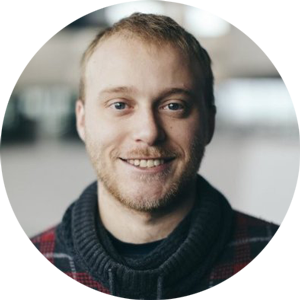
Rickey Ruff, the founder of Global Nuclear Concepts (GNC), wants people to know about the intersection of fashion and nuclear energy. This doesn’t mean that he wants a reactor to walk the runway at New York Fashion Week — it means that he wants nuclear energy to power the fashion industry.
On this episode, he joins Mary and Jordan to talk about how the fashion industry, and fast fashion in particular, have contributed to climate change and what we can do to fix it. Between the massive amounts of both carbon emissions going into the atmosphere and waste going to landfills, we have a lot of work to do. Rickey has a solution.
That's what led me to nuclear, actually. The whole world does not need more fashion brands, let's say, but what we do need is a way to make things more responsibly, more sustainably, that will actually help our planet and not contribute to more carbon emissions, and you know, I feel like that is where I would be best served.
The fashion industry is responsible for 1.7 billion tons of carbon emitted annually. Billion, with a ‘B’. A large part of that comes from the factories where clothing gets produced. Rickey wants to address the source of these issues, which means going t o ithe countries and stakeholders that are actually producing the clothing.
While many fashion brands are known for being innovative in the way they design clothing, this is an opportunity for the entire industry to innovate in how they produce their clothing. As Rickey explains, this isn’t an issue for just one or two brands — it is an issue for all of them.
I don't just want to work with one brand. I want to work with all the brands. It's a whole, full-scale industrial push, and I'm really proud of the industry for taking strides. It's just a matter of the resources and access to the ability to make a change that I think needs to be improved. I do think there needs to be more of a direct vehicle and a direct pathway for brands to improve.
With GNC, Rickey has made it clear that his mission is to decarbonize manufacturing in fashion. Rickey is working on improving the public opinion of nuclear power, creating industry meetups where members of the fashion industry can get together with members of the nuclear industry, and running pop-up museums during fashion week that allow nuclear manufacturers to showcase their work. In the end, Rickey hopes to retrofit factories with micro-nuclear reactors. He knows this isn’t a problem that can be fixed with just one or two changes; we need massive and organized change.
It is a global nuclear concept. It's a full-scale initiative that requires so many diverse stakeholders and it requires each of us. Right? It requires not only the public, not only the manufacturers of nuclear reactors, not only fashion industries, not only brands within the fashion industry, it requires everyone. And it's my goal to really galvanize all of these stakeholders and let us all head in a direction together.
We need to pull as many levers as possible to achieve net-zero carbon emissions, and getting the fashion industry to go nuclear is one of them. Hopefully, in the not-so-distant future, the shirts and dresses that you see on the shelves will have been made with the help of nuclear energy.
This is Fissionary, a show exploring how nuclear powers your world. I’m Mary Carpenter.
Jordan Houghton
And I’m Jordan Houghton. Let’s jump in. Hey, Fissionaries! Thanks for tuning in to our show today. Mary and I are thrilled to have you here and we’re really excited to talk to our guest.
Mary Carpenter
This is a dream episode for me, Jordan. We are talking to Rickey Ruff today. He has spent most of his career working in the fashion industry, and he noticed there was a lot of room for improvement when it came to orbit emissions. So, he started a new company called Global Nuclear Concepts, and it’s an organization with the goal of changing perception, raising awareness, and pushing for nuclear to power the fashion industry. So, today, we are talking about fashion and nuclear, my two favorite things.
Jordan Houghton
I am so excited that we’re getting to have a conversation with fashion and nuclear, totally unexpected, I hope it is a pleasant surprise for our listeners that they’re gonna find out that there is, in fact, overlap here and a really important mission for nuclear in an industry that is responsible for 1.7 billion tons of carbon emissions annually.
Mary Carpenter
Yeah, fashion’s really been in the news lately when people have been talking about climate change. Like, ‘fast fashion’ is a word that’s thrown around a lot but when you put that into perspective of how much clothing that’s going into landfills—I was reading about this before we were talking today—and I found that in the United States, we throw out more than 34 billion pounds of used textiles. If you divide that across a population, that’s more than a hundred pounds of textile waste per person each year. So, all of these clothes that people are buying and wearing once or twice and getting rid of is creating a huge issue for our planet.
Jordan Houghton
It’s absolutely crazy to me, that number is so staggering. It’s not something I really thought about until we had this conversation, and I also read that almost 30 percent of all clothing that is made around the world is never sold. So, in addition to people buying things, wearing them once or twice, discarding them—a huge amount of clothing is manufactured, it’s never even purchased, and then it has to be disposed of without it ever being worn.
Mary Carpenter
Yeah, that’s concerning. And, I mean, I get that people walk past the store, see something really cute in the window, it’s a good price, they grab it, wear it out on a Friday night, and then don’t really need it anymore, right? I will admit, I’ve been there. I’m slowly shifting though towards the cost per wear aspect. I think that that’s kind of been something a lot of people on social media I’ve seen think about as well. You know, you invest in these pieces, they are more expensive, but you’ll wear them for a long time, and I want these pieces now that are in my closet for years that I can wear over and over again. More of an investment upfront, but if you look at that cost per wear, it is worth it, plus it’s better for the environment.
Jordan Houghton
A hundred percent my feeling, I try and invest in good pieces. That’s totally how I frame it to my husband when I bring home another expensive pair of shoes or handbag, like, I may have this for the rest of my life, I’m not gonna have to get rid of it!
Mary Carpenter
Yeah, maybe I should not have just sold out our marketing tactic to our significant others!
Jordan Houghton
You know, the other thing that is staggering to me and any other parents listening to this are going to understand: kids’ clothing. When you’ve got little kids, they’re growing out of stuff, sometimes month to month. There were plenty of clothes that I had for my kids when they were babies, they wore once. And the next time I pulled it out to put them back into it, they were grown out of it. And these are practically brand-new clothes because they’ve only been worn once, and I would always try and donate them or take them to consignment sales and make sure that they get reused, but I’m sure that’s not the case for everybody, and it’s just—I mean, fortunately, it’s smaller squares of fabric because you’re talking about baby clothes, but the manufacturing process is still in place for all of that.
Mary Carpenter
Yeah, I do feel like kids’ clothes—I see a lot of my friends, you know, posting that they want to give them away, share them with other people, so hopefully that helps a little bit. I do wonder if things like Poshmark and some of these other resale websites are helping to cut down on some of the waste because that’s a good way to get the clothes from one person to another and not from one person to a landfill. So, hopefully things like that are helping. But, you know, Rickey really is trying to help the industry from the source, powering these companies that use a ton of electricity with clean electricity is a great way to make fashion sustainable from the very beginning, and he’s doing a lot of cool things to try and make this happen. He is going to fashion weeks, for example, and trying to connect with companies to share how nuclear can help them and then eventually connect them with small reactor companies and kind of be the middleman to make that happen. So, it’s a great idea, I’m really excited for our listeners to hear more.
Jordan Houghton
Yeah, let’s jump into the interview.
Mary Carpenter
Hello, everyone! Today, we have Rickey Ruff joining us. Former Ralph Lauren Global Manufacturing and sourcing manager Rickey Ruff aims to eliminate fossil fuels from fashion manufacturing. The mission is to retrofit every apparel, footwear, and accessories factory in the world with a micro nuclear reactor. Rickey, thanks so much for joining us today!
Rickey Ruff
Thank you so much for having me. I’m so excited to speak to you this morning.
Mary Carpenter
Tell our listeners a little bit more about you. What’s your background, what you’re doing now, and how you got there.
Rickey Ruff
So professionally, my background is in fashion. But my passion really is in making. When it comes to taking an idea and turning it to a real concept, and then actually producing that concept so that it’s available for the world to share in, that’s one of the most special processes to me. So, the fact that I get to do that professionally and have done that professionally is, like, just—I’m a humble servant of that process. Right? But the idea of fashion, to me, has always been close to my heart, like, I’ve been making clothes since I was seven. So, to actually work at some of the largest fashion companies in the world, and just see how the magnitude of that process works on the global scale is something that I hardly consider work. I’m just excited to do it every day. When I wake up every day and go into the office, it’s just something that, like, really gives me a lot of fulfillment.
Jordan Houghton
Where did the passion come from when you were seven? How did how did you start making clothes then?
Rickey Ruff
You know, I got a sewing machine for Christmas. And I was always interested in fabrics. And it was this cliche of, like, just not being able to see what I wanted to buy. So, I’m like, okay, if I can’t buy it, I probably should just make it. And that’s just something that’s always been a part of me, so when I look at, like, the go-to-market process now and when I look at the inputs necessary to bring product to market, like, what the consumer really wants is a key driver of all of that. But, yeah, to me, it’s a technical art, but it’s also a science, but it’s also one of these things where there’s no right answer. Season after season, when you bring product to market—big brands actually struggle with this all the time—you’re planning your inventory based on what you hope and project that customers will respond to, but you really never know. So, you’re always on your toes and there’s no magic formula. There’s definitely tools that you can use to make quite informed strategy decisions, but it’s always something where you have to be in tune with your market, and that’s one of the major things I learned back at Ralph.
Mary Carpenter
I love that you decided if you couldn’t find something you wanted, you make it. I do the same thing. That’s something my mom and I do together, like, if we have this vision and we can’t find what we’re looking for, we get out the sewing machine and make it. Do you still make clothes?
Rickey Ruff
You know, I do, I do. There was this whole period of my life where I wanted to have my own brand. And ‘Rickey Ruff’, I could see that on, like, storefronts, and I could see that all over the place, and that was a huge goal. At the moment, I do feel like it’s super saturated and the things that I make currently are really just for me. So, it’s not something that I’ve given up on, but it’s just something that, you know, my passions and what I think the world needs actually has evolved a bit, quite honestly, and that’s what led me to nuclear, actually. The whole world does not need more fashion brands, let’s say. But what we do need is a way to make things more responsibly, more sustainably that will actually help our planet and not contribute to more carbon emissions and, you know, I feel like that is where I would be best served. That’s where my skill set is best served. That’s where I could be of greatest service to the global population and to the planet at the moment. So, if we solve this climate crisis, and if we solve this energy crisis, perhaps I can get back to that, but at the moment, all of my passion and focus is based on making our manufacturing process as clean and sustainable as it can be.
Jordan Houghton
Can you talk a little bit about why that’s important, why decarbonizing the fashion industry is so critical at this time?
Rickey Ruff
You mentioned that we’re responsible in fashion for 1.7 billion tons of carbon emitted annually. Right? So, based on that figure—there’s other industries that also contribute to that number, but the fact that fashion is such a significant contributor is the reason that we need to address it. And I actually love the industry, and I love all the companies in the industry. And I just hate it that we are contributing to the issue in a negative way. So, it’s really important for me to fix that on behalf of myself, on behalf of the whole industry. I want us to be as clean as possible.
Mary Carpenter
Do you think the fashion industry gets a bad rap when it comes to its contribution to climate change, or is it valid?
Rickey Ruff
So, I do think that the rap that we get in fashion is justified. It is valid. And I do think that’s the primary reason that I want to fix it. Right? I’m not here to say that, you know, were just unduly blamed and unfairly blamed. Of course, there there’s plenty of objective information that has contributed to the fact that, you know, the 1.7 billion is unnecessary. So, yeah, we do get a bad rap, but it’s not an unjustified rap, and that’s why we have to fix it.
Mary Carpenter
So, I shop a lot. And I often see things online or in stores on tags that—you know, about sustainability, or that this garment was carbon-free. Are clothing brands actually making real strides towards addressing the issue or is it lip service?
Rickey Ruff
That’s a very good question and a very direct one, so thank you for asking it. So, in terms of the way that the industry functions at the moment, especially when we look at some of the mass brands and some of the greatest contributors to that 1.7 billion ton figure. Right? It’s not always in their control because they do not own the factories. So, it is my goal to go directly to the source and not really treat a symptom, but to treat the real cause. So, again, brands are just putting out product, right? They’re designing it, but they’re not necessarily making it. We would have to go to the countries and the stakeholders that are actually producing the garments to fix the real problem. So, although I think brands are well intentioned, I do think the scope of what they can actually affect is quite limited without addressing the real manufacturers first.
Jordan Houghton
Are there any brands that you really admire right now for what they’re doing in this space?
Rickey Ruff
I admire the industry as a whole. I don’t just want to work with one brand. I want to work with all the brands. It’s a whole, full-scale industrial push, and I’m really proud of the industry for taking strides. It’s just a matter of the resources and access to the ability to make a change that I think needs to be improved. I do think there needs to be more of a direct vehicle and a direct pathway for brands to improve, and I do think that is missing And I do think that’s where I come into play in this whole initiative because, again, brands will do all that they can, but some of it is out of their scope and out of their control without actually addressing the factory first.
Mary Carpenter
So, you started Global Nuclear Concepts. Where did you come up with the idea for this company?
Rickey Ruff
So, it was actually, you know, back in 2020. So, I did my masters in Switzerland, I studied international management, and it was really the UN SDGs that inspired me to, like, just think about my career and to think about industry more holistically. I consider myself an industrialist. And I love, as we mentioned previously in the conversation, I love making things, I love manufacturing things, just the idea of industry excites me. The idea of magnitude and large-scale production excites me. The idea to reach the whole world with a product excites me quite a bit. But after my masters, I started to just think about that more holistically. Obviously, in Switzerland, it’s such a clean place, and it is such a pure place, so it just also begged the question of, how could we ever let industry assault what’s so beautiful about the planet? So, those two ideas began to become quite divergent in my mind, so that’s the one side of it. Also, just on like a personal side, my mom worked with people that worked on the Manhattan Project, and there was exposure to certain harmful aspects of nuclear during that project, and there were government programs that actually wanted to make whole these people that had that exposure and she was leading one of those programs. So, since I was a kid, I was not afraid of nuclear for that reason. I could always really understand its value and its use and had to be safe and clean with it. And so, I just thought, okay. I have this background in fashion. I have this, like, real interest in making it sustainable. How can I actually have an impact and make an effect? And then, obviously, the fact that all of this carbon through our oil and coal and gas uses taking place at the factory level, it just began to materialize this sort of business model this area for impact began to materialize more clearly. And that’s when I got the idea to start Global Nuclear Concepts, and also just to leverage a lot of my contacts and industry experience with factories with this newfound understanding of nuclear. It just, to me, clicked in my mind and it was something that I just felt uniquely suited to drive forward.
Mary Carpenter
So, what kind of work is Global Nuclear Concepts doing?
Rickey Ruff
So, at the moment, it is my mission to decarbonize manufacturing in fashion. But I do also see myself as a marketing engine for the nuclear industry. It’s all about the public adoption. And so, it’s almost a dual path because as nuclear manufacturers are actually developing and getting all of the, let’s say, government approvals that they would need from the regulatory framework to deploy these reactors, at the same time, the public’s opinion and adoption of this nuclear power needs to be—it needs to be brought forth as well. So, yeah, in terms of the work that we’re doing, it’s three real initiatives. One is called shaping the message, and that is a full-scale, nuclear-facing initiative where we need to, as a nuclear industry, bring together the messaging that is public-facing about why nuclear is safe, about why it’s good, about why we need it. I do think that’s something internally within the nuclear industry that we need to align on so that message that is public-facing is quite clear and lands well. And the second initiative, posting these industry meetups. It’s a chance for the fashion industry and stakeholders and executives from fashion—decision-makers—to really get together with the nuclear industry and to build that bridge and for each party to explain what they need—it’s almost an informal, dinner-style requirements analysis so that both industries can come together and understand each other’s needs and really build the solutions for what we need. And then the third part are these pop-up museums during fashion week—right? —that will allow nuclear manufacturers to showcase their latest technologies to the fashion public. So, those are the three initiatives that I’m currently building out. Like I said, they will happen this fall. And they’ll—the first will be happening in New York. So, that’s certainly what we’re doing.
Jordan Houghton
I want to back up for just a moment and ask you, how do you see nuclear decarbonizing the fashion industry? Where do you see the impact being made?
Rickey Ruff
So, when we talk about some of the processes that are required to manufacture garments, it’s quite energy-intensive. So, if we could, let’s say—this is a scenario—replace all the oil and coal and gas usage at these manufacturing sites. So, imagine a campus, even the size of a college campus that we would see here in the United States. Imagine that in Southern China. Imagine that in Midwestern India. Imagine that in Burma. Imagine that in the Philippines. Right? These kind of campuses are just so energy-intensive, and imagine them just belching fossil fuels. So, if we can replace what they currently use for their energy source with a micro nuclear reactor, that would immediately erase their carbon footprint at factories. So, again, it’s on-site, and it not only provides all of the energy required for the manufacturing, but it also allows for latent energy for those manufacturing communities. So, it’s hitting a human rights, like—you know, human welfare topic as well, because in the developing world where many of these factories are held, most of those communities are energy insecure. So, it’s allowing them to advance themselves as factory workers and as factory communities, but it’s also allowing the factory to erase their carbon footprint. So, from that perspective, it really is hitting the issue from two sides, but that is exactly how I plan to decarbonize the manufacturing process.
Mary Carpenter
Do you think that these manufacturers will embrace nuclear?
Rickey Ruff
To me, it’s not about the manufacturers embracing it. My vision is a bit more large-scale than that. It’s of such magnitude where I want a country to adopt it. And then the company can adopt it, and then a manufacturer will adopt it. Right? It’s not just about a company or a manufacturer. It is about a country. And from that top-down, cascading perspective, that is my approach for adoption. So, since you since you brought that up, I’m actually headed to Nepal as well. I’m gonna have a chance to speak to the Prime Minister there. And so, if Nepal actually adopts nuclear as their primary source of electricity, since their grid there already is quite unstable and—I could say, in many ways insecure—if they were to use nuclear to actually build out their grid from scratch, and they were to use it, obviously, for manufacturing, it would be a domino effect and all the other aspects of their energy infrastructure would be based on nuclear as well. So, from my perspective, it’s about a country first, then it’s about a manufacturer, then it’s about a company. That those things all work in tandem, for me.
Jordan Houghton
Rickey, I love that because so many of these countries that you mentioned face energy insecurity. We here in the United States take for granted that when we flip the light switch, lights are gonna turn on, or that the air conditioning works, stuff in the refrigerators kept cold, but there are so many places around the world where that is not the case for millions of people. So, I love the idea that it is changing countries and the industry at the same time.
Rickey Ruff
Yeah, so we are lifting, we’re lifting people through this, and I think that’s a big part of energy security and just national security as well, if we were to talk about the oil and coal and gas usage that happens on a geopolitical scale. So, I think anyone that flips a light switch is a part of—someone that can make a difference is a part of this full-scale initiative. So, when I say full-scale, I mean everyone on the planet can participate. And especially in America, we do take things in the rich world for granted. You mentioned the refrigerators, you mentioned, like, our just—our life in general is so energy-intensive in ways that we don’t even realize sometimes We do often take for granted that everything is just going to work. You know, the fact that our laptops work, the fact that we can charge our cell phones, the fact that we can watch television, or, like—all of these things are just so energy-intensive that we don’t really even think about the upstream process. So again, anyone that uses electricity has a responsibility, in my opinion, to help solve this issue. And I do think nuclear is the elegant solution that allows us to fix it in quite immediate ways. If we talk about 2025 goals and the 2030 goals and the 2040 goals, that all countries really have paid lip service too. We need real mechanics to how we’re going to accomplish all of that. And we need a real vehicle to how we’re going to hit all these goals, and nuclear is a quite elegant and immediate direct way that we can do that. And even more than that, I think fashion is an accessible onramp that allows everyone to participate. I think we’re all conscious enough to want to help, but it’s a matter of knowing how. If you buy clothes, then you are someone that can help fix this. And if we could fix manufacturing, we could erase that ‘1.7 billion tons of carbon’ figure.
Jordan Houghton
That’s amazing. There are so many fashion brands that have powerful influence and name and the people who work for them. Do you see the brands having a huge influence in moving the factories and countries to decarbonize?
Rickey Ruff
You know, I think fashion is all about trends and it is all about what’s forward facing and what is futuristic, just by the nature of the industry. So, I do think all of the brands together can make a huge difference. I think there’s quite a bit of liability at the moment to embrace nuclear. However, I do think nuclear is what’s next. And I do think, from a trend perspective, fashion as an industry has the ability to really change and shape that just because of the ability and power that fashion has to change and shape any trend. So, that’s to me why it’s so powerful and why it’s so cool and why it is just like sexy, really, and why everyone can relate to it. It’s my goal to make nuclear relatable, and I think fashion is the way to do it.
Mary Carpenter
That’s a great perspective, and I’m curious, I want to go back a little bit—why Nepal? How did you get involved there?
Rickey Ruff
As a personal project, I actually have a lot of tattoos, and it’s my name in every country of the world, right, every language in the world. And so, I’m actually—I consider myself a man of the world. To travel and to be deeply immersed in these different countries and different cultures is also a huge personal passion of mine. So, I do have my name tattooed in Nepali, and the person that helped me translate it actually has a community where there’s, you know, cashmere manufacturing that’s taking place, on a very pure side. And so, on some trips in Nepal, I was able to just meet some of these communities and really understand how in the Himalayas around Mount Everest, like—this is some of the highest quality cashmere on earth, objectively. And anyone in the industry would agree with a sub-twelve micron cashmere being, like, the highest quality. Right? So, just seeing how that could plug into some of the most luxury fashion brands, I just saw a huge opportunity to help these people participate in the global economy and also get them access to sustainable and reliable baseload energy through nuclear. So, a micro reactor in the mountains of Nepal would not only give them energy, but also give them the ability to manufacture this cashmere at a large scale. So, I was there last fall, I’m gonna go back, but—again, just the natural terrain of the Himalayas and the fact that it produces this high quality product and the fact that the industry is actually hungry for this high quality product, I just saw myself as a vehicle and kind of a linchpin to create that bridge. So, that’s how I ended up in Nepal. And then on top of that, it’s just a beautiful place. And it’s just beautiful people there. Like, of all the places I’ve been on Earth, I think Nepal may be one of my favorites. And I think the purity of it is why. And I think if we could approach the rest of the planet with this sustainable mindset that is just ingrained in the people there—I do think that is the solution to not only solving the climate crisis, to not only solving the energy crisis, but also to just, like—solving the whole sustainability proposition. That mindset that they have there is what everyone needs to think.
Mary Carpenter
I love that you’re looking at this as such a large issue. It’s so much bigger than fashion. It can definitely help the fashion industry, but it’s so much bigger than that. Do you have any plans to go to other countries?
Rickey Ruff
Absolutely. Not only other countries, but other industries. So, Turkey is a big one for me. So, I spoke to some manufacturing groups there that are actually building new facilities, and they want to ramp up their production, and they want to really reclaim some of their historic garment manufacturing capabilities, and I would love to be a part of that. When we talk about, like, periods of history, there is a turning point happening right now. And in Greece, in Turkey, in India, for sure, in Italy, for sure, they’re reclaiming some of their historic manufacturing capabilities. So, with the new factories that are being built there, it is my intention to really plug in a microreactor at all of those new sites.
Jordan Houghton
Tell us a little bit more about the plans you mentioned for fashion weeks.
Rickey Ruff
Yeah, so fashion week, I’ve been going to since 2007. As a person that’s interested in fashion, as a person that dreamed about working in the industry. Back at Ralph Lauren, like—I moved to New York right after high school. And, like, I wasn’t always at the position that I am now; I started, like, as an intern there, actually. But I was a kid just really excited about fashion week, and excited about fashion, and I grew up in this industry, and I grew up doing that. I even got like, Gladys Perint Palmer, like, a chair at one of her shows. Like, I was just so excited to be on the scene back then. And I’ve even, like, walked in fashion shows. So, I really approached fashion and the industry in fashion week from a very comprehensive perspective. So now, at this stage, I intend to, like, actually drive the industry, like Fern Mallis, and just the idea of that Bryant Park New York Fashion Week. This was, like, one of her ideas she was the progenitor of. So, just kind of admiring her and figures like that in the industry, we’re talking, like, back when Donna Karen and Calvin Klein and Ralph were the forefront of American design. It was all in just coming together and it was, again, an industrial effort. It wasn’t about one brand, it was about the industry. And that is the attitude and the mindset that I hope to revive, but I want nuclear to be a part of it, and I want sustainability to be at the center of that conversation now. It’s not only about the aesthetic It’s about the responsibility of what’s being manufactured and how it’s being manufactured. So, yeah, when I talk about fashion week now, it’s not just about New York, and it’s not just about Milan, and it’s not just about London, it’s not just about Paris. Those are certainly the biggest markets on an annual calendar scale when we talk about the industrial calendars, but at those fashion weeks, it is a matter of having my own site that is adjacent to all the shows where I would bring in all of the manufacturers. Many of them, we are on a path down the road with at the moment to getting them signed and actually being able to bring their latest technology, their latest reactor technology, to be able to present that to the public at almost a trade show kind of field is exactly what that will look and feel like. The first one in New York, obviously, but that’s in initiative that I intend to roll out around the globe at these fashion weeks.
Mary Carpenter
So, I guess what you’re saying is you want to bring in nuclear developers and have them meet with the fashion companies? Is that kind of where you’re going with this at fashion weeks?
Rickey Ruff
That is correct. Fashion companies, but also the fashion public, and also tastemakers, and also trendsetters. Fashion is so far and advanced both literally and figuratively. So, from an operations standpoint, the fashion calendar works far in advance of when articles actually hit the selling floor. We’re talking, like, 18 months in advance—trying to make that faster across the board, that’s an industry initiative to make those fashion calendars actually closer to market. But the reality is, if you’re making millions of garments, it takes quite a long time to do that. So, for example, in the fall of 2025, brands are actually working on those pieces now. They’re working on that aesthetic now. So, just by nature of the fashion industry being ahead, I think nuclear—even if the actual reactors aren’t ready for market today, by the time the public is ready for them, they need to be aware of them. So, it’s a chance to take advantage of that advanced cycle and get, first of all, brands, but also the actual public and the consumers excited about nuclear at these forward-facing events. So, for example, if we were to go to fashion week this fall, we’ll be seeing things that will hit the market next year. So, just that advanced nature of it makes it a requirement to get nuclear a part of the conversation as early as possible.
Jordan Houghton
I’m curious what sort of conversations you’ve had so far with both the fashion industry and nuclear companies and what sort of feedback you’re getting.
Rickey Ruff
So, I think one of the quotes that I’ve gotten before is like, ‘that’s a great idea if you can make it work’. If you can actually get a reactor to the factory, that’s great. Let’s talk again when you actually do that. So, I actually, at the moment—the road map is there and the interest is there But what I would really require is the wind at my back of these manufacturers of nuclear products to actually help me go down that path to get one deployed. Because even if a factory wants one today, the question is, like, what are the mechanics of actually getting them that today? That’s what we’re up against at the moment. Another big piece of it is the public, I can’t stress that enough. I think the perception of nuclear needs to be rebranded and addressed. And that’s another big piece of what I intend to do, and what I’m doing at the moment. It just needs to be rebranded. A full facelift is what the perception of nuclear needs, especially in this country, less so around the world. But we need to rebrand how it feels in the hearts and minds of everyone.
Mary Carpenter
What kind of face lift does it mean?
Rickey Ruff
We need to focus on the advancements. When we talk about a micro reactor, and the way that they’re built and deployed and set up and some of the applications that they’re being engineered for, I think that’s what needs to be the focus. They are subterranean. They require refueling every five to ten years. Like, these are just the beautiful parts of the advancement that we’ve made in nuclear that we need to be stressing from a marketing standpoint. For me, it’s not as narrow as a climate solution. There’s a few separate topics that it’s just so appropriate for. So, obviously, climate. Obviously carbon emissions, of course, fully on board, but it’s, to me, also about energy security. And not in the sense of having baseload energy that’s required for everyone. Energy security as in national security, as in this non reliance on foreign energy sources. To hit the nail on the head, like, Russian oil and coal and gas, right? If we could get away from some of these foreign dependencies that we’ve grown to rely on, I think that would make us stronger as nations, but not only the United States, it would make any nation more energy secure if they could depend on nuclear for their own sources of energy. It just makes everyone more secure, and then conversations that enter the geopolitical realm are predicated on certain energy dependencies. I think that’s used as a leverage point where certain actors around the world can really lean into and wield power over other nations because of their energy supremacy, and I think that would absolutely level the playing field if everyone had access to this clean, carbon-free energy source of nuclear power.
Jordan Houghton
Rickey, we like to end by asking our guests to describe the future of nuclear in one word.
Rickey Ruff
Now.
Jordan Houghton
It is time.
Rickey Ruff
It is right now. Absolutely.
Mary Carpenter
Rickey, I want to—since we’re with you, I want to take this one step further. How about the future of fashion, of the fashion industry, in one word?
Rickey Ruff
Sustainable.
Mary Carpenter
With nuclear, right? We need nuclear to make it sustainable!
Rickey Ruff
It is a global nuclear concept. It’s a full-scale initiative that requires so many diverse stakeholders and it requires each of us. Right? It requires not only the public, not only the manufacturers of nuclear reactors, not only fashion industries, not only brands within the fashion industry, like, it requires everyone. And it’s my goal to really galvanize all of these stakeholders and let us all head in a direction together, and it’s really exciting to see the amount of progress that we can make in a very short period if we’re just all aligned and fostering that alignment is my primary goal.
Mary Carpenter
Rickey, thanks so much for this conversation today, and thanks for everything you’re doing for, you know, not only the fashion industry, but you’re working to decarbonize the whole world. So, this is big. Thank you.
Jordan Houghton
This was incredible conversation today. Mary, I love how much I get to learn about you every time we do these episodes, and I just have to call out and ask about the clothes that you make with your mom.
Mary Carpenter
Yeah! It’s one of our favorite hobbies. We love, especially, making caftans. I’ll show you some pictures sometime, but we made this cool pattern and we play around with it. Actually, for my wedding, my mom made—well, we made it together, but she did a lot of work, it was part of, like, a gift to me—my second look dress, and it was, like, this white dress with all these feathers. It was really fun. So, it’s a good hobby for us, and it’s good for sustainable fashion, right, that we’re making our own and keeping them for a very long time.
Jordan Houghton
This is so wonderful. I’m—you made a wedding dress with your mom, that’s so exciting and so cool! As far as caftans go, where is the Etsy store? I feel like we need—
Mary Carpenter
That’s a dream!
Jordan Houghton
Where do you like to find your fabric?
Mary Carpenter
So, there’s this really cool store out in Maryland. It’s kind of Bethesda, Chevy Chase area, it’s a little bit outside the city, but it’s huge and they have so many options. It’s like, a locally run store, so they have really good stuff.
Jordan Houghton
That’s just such a cool thing to do with your mom. What great memories I’m sure you make in addition to all of the amazing clothing. Yeah.
Mary Carpenter
If we can’t find what we’re looking for, we just make our own, so—it’s fun.
Jordan Houghton
Fantastic. Well, thanks so much to Rickey Ruff for taking the time to talk with us today. It was great to have him on the show.
Mary Carpenter
Thanks everyone for listening. If you want to learn more about Global Nuclear Concepts, check out the link in our show notes, and don’t forget to rate and subscribe. We’ll see you next time!
The next episode airs on Thursday, December 14th—make sure you tune in, Fissionaries!
Sign up for updates and new episodes: