Ever since I was a little kid, I wondered what it would be like if Jackson Pollock had painted some uranium instead of The She-Wolf or if Willem de Kooning had painted a nuclear security summit instead of his famous Woman-Ochre. Luckily, I live in the same timeline as Angel “Ralph” Rafael Vázquez-Concepción.
Ralph is an artist, educator, and advocate who blends nuclear technology with the beauty of abstraction. From uranium glass to abstract expressionism, Ralph explores the atomic world through a creative lens, using art to challenge our views on nuclear power. Mary and Jordan dove into his story, his vibrant creations, and how he uses art to spark conversation about energy, climate change, and humanity’s future. From education to activism, Ralph’s work challenges us to rethink our approach to science, technology, and the future of energy. He wasn’t always planning on working with art, though.
I grew up in a household where I had an uncle that was very active in my upbringing who was a radiologist. I remember seeing his books for when he was studying to become a radiologist and learning all about the bones and internal imaging. My mother then was diagnosed with cancer. And it was really difficult because she barely lasted two weeks and she was gone... It was really, really hard on us. At that time, I decided that I wanted to go into medicine, and particularly nuclear medicine.
After getting accepted into the University of Puerto Rico for nuclear medicine, Ralph realized his skillset was better suited for being a teacher. It was when he was teaching that he started connecting with artists more.
So I worked in the early 2000s in Puerto Rico establishing contemporary art spaces and working in contemporary art publishing. I worked in one of the first art magazines published in Puerto Rico about art, ArtPremium. I worked there for a few years and I did a lot of studio investigations. I became enamored by Puerto Rican abstraction and their connections to US abstraction.
Ralph grew up in Puerto Rico, where weather can really shape your view of the world. As a survivor of Hurricanes Hugo and Georges, Ralph knew how dangerous big storms could be and how they could affect the power grid. That is where things sort of came together for Ralph in his career.
Every time there's a storm, they just fix something and it manages to work. No one can really draw out or map out the grid or tell us exactly how it works. So that was a wakeup call for the relevancy of energy stability. And you can't run a society without energy. That's the basis for everything that we do.
Ralph wants to use art to invoke emotion. Historically art has done that for other technologies, and he can help do that for nuclear technology today. Learn all about how art can benefit nuclear and about the Jackson Pollock of the nuclear industry by listening to this week’s episode of Fissionary.
Mary Carpenter This is Fissionary, a show exploring how nuclear powers your world. I'm Mary Carpenter.
Jordan Houghton And I'm Jordan Houghton. Let's jump in. Hello, Fissionaries, and hi, Mary.
Mary Carpenter Hey, Jordan. How's it going?
Jordan Houghton It's going good. I'm really excited for today's episode.
Mary Carpenter I know, this is so different from anything we've ever done. I think it'll be very different for a lot of our listeners, but I think everyone's going to love it.
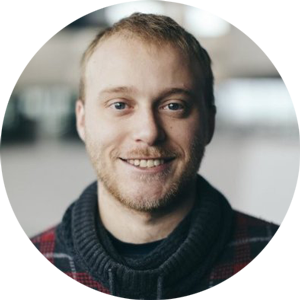
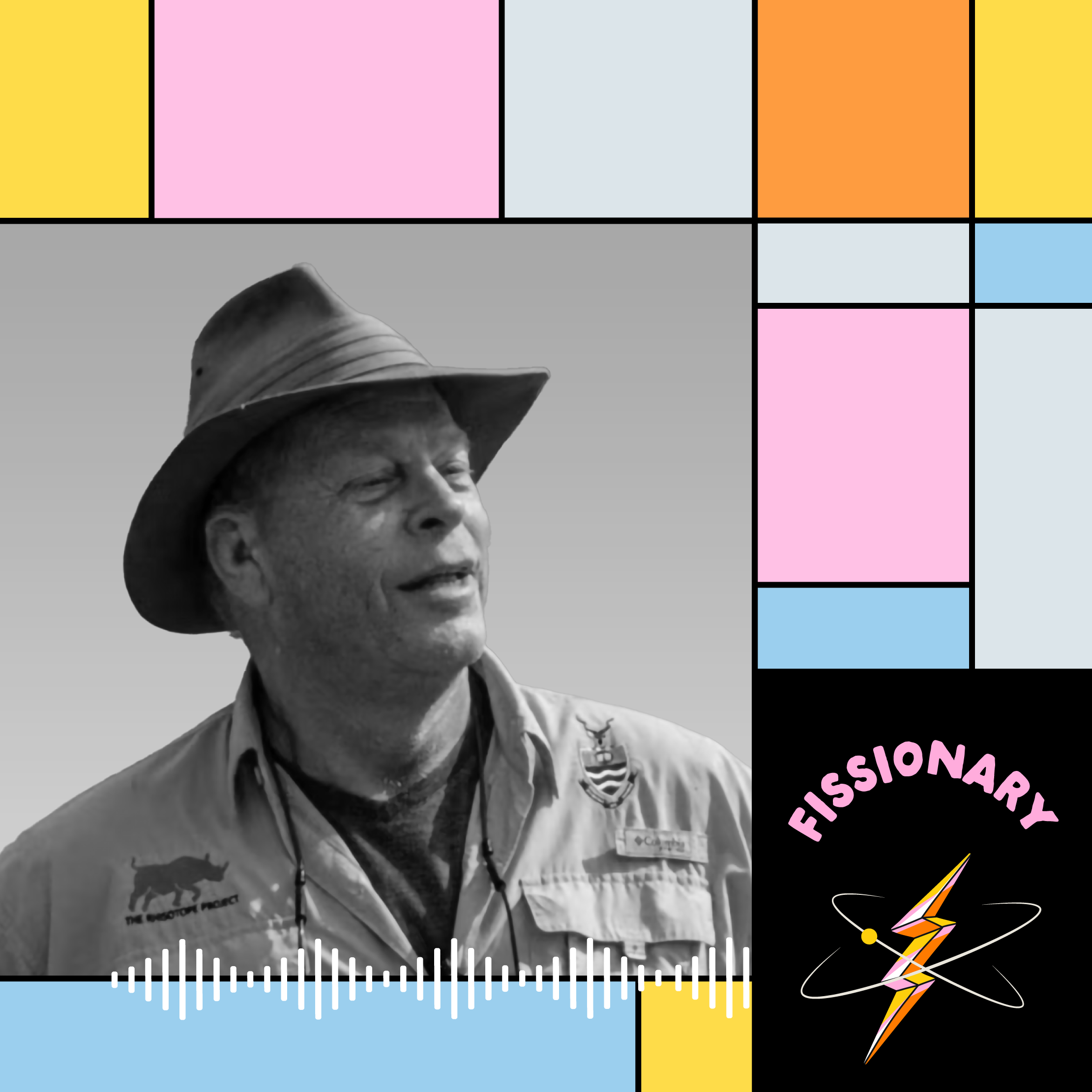
Jordan Houghton So we're talking today to Ángel Rafael Vázquez-Concepción, who goes by Ralph, and he's an artist and educator. We talk a lot about art in this episode, but I was also really excited for all of the science history lessons he dropped. And you can tell he's definitely a teacher and somebody who loves to share knowledge.
Mary Carpenter He's brilliant and has so much knowledge about nuclear weapons and his strong stance against them, and he has a lot of knowledge about nuclear energy and his strong support of it. So, it really paints an interesting juxtaposition between the two and how you can be against the weapons, but for nuclear technology for different reasons, because they are different things that sometimes get confused. So, it's interesting to see his perspective.
Jordan Houghton I really loved this idea that art appeals to our emotions, like there's an emotional connection with art, sometimes intellectual as well, but the idea that for some people talking about climate change and nuclear energy's part and fighting it, people can have emotional reactions to it. And so, the art sort of meets them where they are. From an educational perspective, I think that's a really interesting strategy.
Mary Carpenter And he talks about being in museums and showing nuclear energy and the benefits of it in museums, because I'm sure a lot of people can relate to the fact when you're walking around museums and looking at different art and different perspectives, you really open your mind to new ideas and you think about things that you don't always think about on a daily basis. So, it really is such an important place to promote nuclear energy and an important place for nuclear advocacy because it's a different audience, but it's also a place where people are interested in different ideas and different perspectives.
Jordan Houghton And I have to say that I love art. It would be hard for me to name off some favorite artists because I love wandering around art galleries. I just wander around and I'm like, I love that, or I don't love that. I take whatever the first emotion is that hits me when I'm looking at visual art. And I was scrolling through Ralph's website. He has so many amazing pieces. We're going to link it so you can see all the different pieces that he's done and has featured on his site. Lots of different media used and he has a recent one from this year called For All Mankind, and it just hit me. I would love to see it in person because the picture is so cool. It is the globe with the atomic symbol around it. So, it's turned the earth into the atomic symbol with all of these beautiful colors in the background. And when I saw it, it feels both energizing and peaceful, but also just so optimistic. Once you listen to Ralph talk, you'll realize that he is an optimist. And I feel like I see some of that personality in this piece and it's really beautiful to me.
Mary Carpenter I hope listeners will take a minute to check out their work because that picture is incredible. They also have uranium glass art, which is really cool to see, and they use different mediums to create inspirational pieces. So, definitely take a minute to check out their work after you listen to the episode. It's such an inspiring story and shows just how nuclear touches lives and people in different ways.
Jordan Houghton Today, we have the pleasure of speaking with Angel Rafael, or Ralph, Vázquez-Concepción, a talented artist, educator and advocate whose work explores the intersection of nuclear technology and abstract art. With roots in Puerto Rico and a deep personal connection to the history of nuclear power, Ralph uses his art to challenge our perceptions of atomic energy. From using uranium glass in his artwork, by the way, absolutely amazing collection, I'm really excited to talk about it, to advocating for a balanced view of nuclear energy's role in our future, he brings a fascinating perspective on how art and science can inspire meaningful conversations. Ralph, thank you so much for joining us. We are really excited to talk to you, and I just did a quick background on you, but I'd love to hear about you in your own words. So, can you share a little bit more about your work with our audience and what drew you to nuclear?
Ralph Vázquez-Concepción Thank you so much for the opportunity for joining this wonderful podcast. It's been a slow arrival. And for most people that I've met that work in nuclear, it's been a very different road for all of us. For me, it started around 2012, or actually started much earlier than that around the time that I was ten. And my mother passed away, unfortunately, of cancer. And I remember at that time I had grown up in a household where I have an uncle that was very active in my upbringing who was a radiologist. So, I remember growing up and seeing his books for when he was studying to become a radiologist and learning all about the bones and learning all about internal imaging. And so, my mother then was diagnosed with cancer and it was really difficult because she barely lasted two weeks and she was gone. She was diagnosed with leukemia and in two weeks, she was gone. And it was really, really hard on us. And at that time, I decided that I wanted to go into medicine, and particularly nuclear medicine, because the oncologist that took care of my mother made such a huge impact on us as kids, and the way that he was so supportive of my family throughout the process and even afterwards. It left an imprint. It left an imprint of how humanity and technology come together to try to save lives. Then when I went into college, I was admitted to the University of Puerto Rico through nuclear medicine. But I quickly realized that I'm more of a humanist and I had deep desires to go into teaching. I made the switch to be in nuclear technology to then become a teacher. My training in teaching then took me to take art history classes, and then I started hanging out with the art crowd, and I started getting involved with the arts. Within the arts, I was always kind of the arts and science guy, though, and I was always asked to come in to serve in panels or to work with people who had interest in science and to mediate the institutional requirements for art exhibition and also honoring the scientific process. So, I worked in the early 2000s in Puerto Rico establishing contemporary art spaces and working in the contemporary art publishing, I worked in one of the first art magazines published in Puerto Rico about art, ArtPremium, I worked there for a few years and I did a lot of studio investigations. I became enamored by Puerto Rican abstraction and their connections to US abstraction. Then the whole thing began to do its thing, you know how humans kind of stumble upon things, and then we see connections and then work out a professional profile that helps everything come together. I feel like at 40, 43, I finally reached a point where I can sit down and have a conversation with two adults and talk a little bit more in depth about the connections between all of these fields, about how the humanities and arts, how it connects with science and how it connects with the technology that brings us together.
Mary Carpenter That's so cool, because one of the big things we try to do on this podcast is connect nuclear energy to bigger things. So, I'm really excited to talk to you today because clearly you have such an interesting perspective of how nuclear touches different lives and industries. But I want to go back a little bit. So, you grew up in Puerto Rico, how did that shape your perspective of nuclear energy?
Ralph Vázquez-Concepción I am a survivor of Hurricane Hugo in 1989. It was a devastating storm that came through. And then in 1998, Hurricane Georges came through the island. And I remember both times, the energy grid was shredded. And then 2017 happened, Maria, the same thing. The country's energy grid now is held together by the Holy Ghost, and we don't even know, every time there's a storm, they just fix something and it manages to work. No one can really draw out or map out the grid or tell us exactly how it works. So that was a wakeup call for the relevancy of energy stability, and you can't run a society without energy, that's the basis for everything that we do, and there's huge, huge, huge civil strife where there isn't access to energy. That was what's become clear and evident to me ever since I was a child. So, I've always been very interested in the way that we are located in a place that puts us in the path of all of these things and we have to construct smartly. So, this is something that has always stayed with me ever since a child growing up and seeing face to face what these storms can do. The island also is highly contaminated. I grew up in an industrial town in the northern coast of the island Cataño. Cataño's right across from San Juan. And it's an industrial town which is, I would say more than half of that municipality has been deeply, deeply poisoned by all of these corporations that have operated there. So, I've always been very mindful of since I was a kid, that technology is good, industry is good, but also we need to keep an eye on it, because it may do harm that is not being addressed or talked about. So, I've been able to hold those things in my experience in my lifetime.
Jordan Houghton So, we're going to include links to visuals in our show notes, but I would love if you take a minute to describe your art for our listeners and how you would describe the style.
Ralph Vázquez-Concepción So, my style is highly, highly, highly, highly informed by the history of US abstraction. So, we have to go all the way back to the early 19th centuries and the way that Americans began collecting and intimating with abstraction coming from Europe and then how we embraced it by the mid-century. So, this is, to me, a very interesting story and I love how abstraction is American in many, many ways. So, like when you look at the abstract expressionists and when you look at the work of contemporary artists today who are working in the language of abstraction, they are some of the ones that can bring the most public to look and partake in our experience because their work is so open and universal. I mean, Jackson Pollock can go to any country on earth, and it will connect. It will have a way of infiltrating or seeping into that consciousness, that way of being. So, this is the universality that I think is so important. The internationality that is so important as well. So, I am also deeply inspired by the philosophy of Maurice Merleau-Ponty. He's a French philosopher and he's a proponent of the idea that we're all living in our own private hallucination. I love that idea. And I seek to harness it, I aim to explore these lived experiences, I want to explore the existential layers and going beyond just representation to evoke the emotions that are tied into our desire to achieve results with these technologies and our fears.
Mary Carpenter So, nuclear is a technical topic, so how do you approach translating complex scientific and technological themes like nuclear into abstract visual art?
Ralph Vázquez-Concepción While the technology is very objective and very clear and very scientific, its impacts are not. So, people have been impacted very differently and the emotional impact of this history is all buried under the facts, so I feel like that's actually the obstacle for us to embrace nuclear today is because we've created a cap that is impenetrable and no one likes that. We want to be able to bring emotion. In fact, it has to be a two-way street. I believe art has always done that for technologies that have been confronted by skepticism in the past. And I believe it can do a great deal for nuclear technology today.
Jordan Houghton I would love to hear more about that because you mentioned switching from medicine to teaching, and I really see a connection between art and education and drawing people in through that medium. So, talk about that a little bit. Do you think people are more receptive to learning through art? And how do you see people's perspectives begin to shift using that?
Ralph Vázquez-Concepción So one of the things that I discovered, Jordan and Mary, is that people usually have a very unique relationship to art. It's not figured out. It's very hazy, very fuzzy, very intangible many times. I think that's a great plus from when you're trying to talk about something deep and when you're trying to talk about something that is so charged with historical gravitas as our embrace of the atom and the atomic forces. So, I say in museums, you go and you encounter such horrendous topics like death, the finality of society, civilizations, you encounter all of these things, but you have such a different attitude when you're in a museum and when you're in a gallery space. It can do great things to have this conversation in those spaces where our guard is less defensive and more receptive. These are spaces that we go to find meaning, and that gives these spaces and these locations such a unique point of access to these topics. Death is universally depressing, but if we talk about death in a museum, it's different because we're talking about the aesthetics and we're reflecting on what the artist is presenting us with. We are taking a more scenic route around death, and it's not just direct death finality, cessation of projects. I believe that in this exploration and this aesthetic exploration, there's huge opportunity for us to do away with a bunch of myths, preconceived notions, and prejudices that we may have; maybe even become aware of them and how they're shaping our opinion and how we're embodying contradiction and we may not even know it. Museums are spaces where we question ourselves and when we allow ourselves to be wrong. And I think that's a huge, powerful position to be in when we're having conversations like this.
Mary Carpenter That's so true. And I'm glad you're there because I don't think a lot of other nuclear advocates are in museums. So, I appreciate the work that you're doing and you're clearly telling a story with your paintings. I'm curious, though, are you also telling a story with the materials you use?
Ralph Vázquez-Concepción Thank you for bringing that up, Mary, because nuclear artists that have shaped me in the past, they have engaged in trying to bring in nuclear technology in the gallery space or into the museum, which is something I'm not interested in doing because I am not interested in triggering people's existential brain cortex, you know, I'm not interested in triggering people's amygdala. I don't want to create an amygdala hijack in my public. I want people to really handle their emotional response, and I believe painting is a huge ally in this process. American artist James Acord is the only American artist who has ever been given permission by the Nuclear Regulatory Commission to be able to use radioactive materials in his sculptures, and he committed suicide in the early 2000s, unfortunately, he was an extremely lonely soul, extremely misunderstood throughout his lifetime, he was also very out there, you know, so his life and his work has been a cautionary tale for me. Like, make sure you don't isolate yourself, make sure that you are pursuing communal spaces while you're also pursuing these topics. Don't alienate yourself. Don't commit acts of, you know, this cowboy mentality, I think he was kind of a cowboy in many ways. And he was haphazard and he could have scared off a lot of the spotlight, scared off, certainly a lot of the people that I know because he wants to bring radioactive material into the gallery space. That is very difficult for me to relate to or want to do or pursue because I understand. But I do want to address the forces. I do want to address the phenomena, and this is where my connection to Merleau-Ponty comes in. We're talking about representation of these forces. That is squarely the realm of painting, squarely the realm of art. So, where contemporary artists have sought to bring their subject matter into the gallery space for analysis, I will do that with nuclear technology. I will continue to pursue the modernist painting route in order to represent these powerful, universal, foundational forces of the universe.
Jordan Houghton I saw your uranium glass collection online, and when you're talking about bringing radioactive materials into spaces, I came to NEI from a museum where I would have uranium glass and invite people to touch it and use a Geiger counter on it to sort of teach them how you can detect radiation. And people didn't want to touch it! Even though, I'm like, no, it's safe. You can touch the uranium glass. You can touch the Fiestaware. People were worried to interact. And I'd have parents with kids like, really, is it seriously safe for my kid to touch this? So, I think it's interesting even at that level, introducing people to it, but your collection is stunning and we will link it, but just absolutely gorgeous pieces.
Ralph Vázquez-Concepción Another way to showcase that internationalist angle that I want to represent is I am an internationalist at heart. I want our global community, our global society to continue to thrive, I don't want our societies to close off and for us to become discrete societies. I want us to continue to work together and bring that diversity together to show us what that Star Trek future could be, you know? But when I collect, I collect from across the world, and I'm deeply interested in the story of the craft. How was it that the craftspeople were able to arrive at that design or that style of glass? Lead has been historically added to glass forever to harden it, to give it a more stable glass matrix, but also make it easier to carve. It makes it more stable for carving. So, lead is the final process of breaking down of uranium. So, uranium goes through all of these elemental changes until it lands in lead. So, that experimentation of adding metals to glass try to make them more malleable, more stable as a matrix for holding, we're also making art that led us to discover uranium salt as a tainting agent. That's how we discover cobalt, gold, that's how we get red, blue glass. And then that process of art making, I like to juxtapose with the vitrification process of the way that we made nuclear waste more stable by encasing it in glass. And so, there's a strong formal connection between how uranium glass is made and it's safe because it stabilizes the radioactive material in a silica matrix and the way that vitrification works as an industrial process. So, I like to tell them that I collect this glass, I use it, I live with it, it's safe, a lot of our assumptions about it are wrong. Maybe a lot of our assumptions about these other things are wrong. Through this example, probably uranium glass is the only radioactive material that I would ever work with, and it's because it's safe and it's stable in a glass matrix. I like to talk about the chemistry. My students are sick of hearing about fluorescence and the difference between fluorescence and phosphorescence and all of the differences of emitting light that different elements have. I want students to be in love with it. Like, I went to a trip to Reno with the travel club last year, I was one of the chaperons, and they're like, Mr. Vázquez, what do you do? Let's do something with you. So, I took them with me to a bunch of antique shops with my UV lamp and like, I need you to help me find this glass that I collect and that it completely glows, and then I was talking to them about the chemistry of it, and they were like, happy, shining on all the glass, and so it's about creating fun ways to relate to these chemicals, to these processes, this phenomenon, bringing them in and becoming less afraid of radioactivity. Radioactivity, for all intents and purposes, is driving evolution, as I've heard many scientists say, it produces genetic variation, and variation is at the heart of evolution. So, radiation is part of our lives. It's part of everything. It's the warmth that we feel from the sun. I saw a meme about this and I share this with my students all the time, like, if God wanted us to use nuclear power, he would put a fusion reactor in the sky! Well, he did. So yeah, I joke and I try to bring in all these different ways of relating to radioactivity and nuclear phenomena that help people feel less afraid, more empowered around it.
Mary Carpenter Do you find that your students change their perception of things like nuclear energy in your class?
Ralph Vázquez-Concepción It's too early to tell, but I think exposure is the most important key, right? I was exposed, so I'm not afraid. So, I keep thinking that the same will happen with them. So, it's exposure. And just to put a finer point on the international collection, I loved how uranium glass was first produced in the late 18th, early 19th centuries in Eastern Europe is where all of the mines of silver are, uranium is usually found under the vein at the end of a silver vein and pitchblende, which is the line of the silver ends, it was a waste product. Obviously, we know the story of Marie Curie picked up all that pitchblende, grounded it all up and was able to isolate the radioactive elements. Also, Henri Becquerel was obsessed with fluorescence. I love his story. Few people know he's a third-generation scientist with a vast collection of fluorescent elements in his house. So, imagine being a third-generation scientist in the 19th century wondering about fluorescence, and that's how he was able to arrive at the uranium salts emitting this force that is picked up by Marie Curie and the rest is history. Also, the role of photographic paper and the way that technologies crossbreed, cross intersect. It was photographic technology mixed with this chemical interested emitting particles, and I needed to capture them, so I'm going to use this other material from this other field, and so I love that. I tried to do that in my studio to, like, try to use different materials for different outcomes and then, like art, try to cash in on the results, the aesthetic results.
Jordan Houghton I now wish I could be one of your students because your classes have to be incredible. We've done art, we've gotten some nuclear history in here, this is great, great fun. You've described nuclear technology as morally neutral, and I'd love to hear you expand on that and how it shapes your art.
Ralph Vázquez-Concepción So, one of the things that I talk about in detail with my kids is how we are all responsible for the things we do. So, the technology itself is not inherently good or bad, it's in how we apply it. It's then how we use it or how we not use it. In many ways I try to tell people it's how we use it, how we manage it, that ends up making the technology ultimately be good or evil. The same with science. We're taught this by Mary Wollstonecraft Shelley and the modern Prometheus. Technology can be used for evil or it can be used for good. We have the doctor that heals, but we also have the doctor that does the opposite. So, we want to make sure that we're not creating Frankenstein. So, we have to work with communities, we have to work with scientists, and we have to make sure that we're all in alignment to make sure that the technology is working for us and that there aren't any pockets of interests that are then monopolizing the benefit. This is what I mean by neutrality, and I also like to place the responsibility squarely on the shoulder of the human stewards of the technology, because the technology is in itself doing things. It's us. We have to make a decision to be responsible stewards. And that goes with energy, and that goes with food, that goes with every major industry.
Mary Carpenter So I know growing up in Puerto Rico, climate had a big impact on your life, and you told us your story, how medicine had had an impact on your life. Do you show these themes in your art also?
Ralph Vázquez-Concepción Yes, I have in many ways tried to engage the topic, but I work art in terms of projects. So, if I'm working on a project—I have not yet done a project with nuclear medicine, I would love to, but I like to tell kids like, look, we use this to image ourselves. It's almost like we're creating a painting inside the body. When we're drinking something in order to then have the MRI, and I'm like, look, this is painting. We're looking at a painting, we're making sense of it. It's just the application of it that's different. But the principle is the same. We're creating a stain that then we're analyzing. So, I like to tell them that there's artistry involved in everything, and especially in nuclear technology, because we're manipulating fundamental forces, so there's huge artistry in the design of a reactor.
Jordan Houghton Are there other artists that you follow that are working in the climate space?
Ralph Vázquez-Concepción In the climate space? Yes. In the nuclear space, also in the anti-proliferation sphere, because I'm very staunchly anti-nuclear proliferation. We do not need any more countries out there, nuclear saber rattling. We don't need any more of that. I think the kids have enough to worry about with climate change. So, the whole notion of artists that are working within the space is very diverse. For example, Yelena Popova is an artist who has created a project around nuclear research. She's not a fan of nuclear technology, as many artists are not, because they're from the humanities department, and the humanities department has a strong bias against these technologies for the nuclear accidents that have occurred, few and far between as they have been. So in that way, I try to inform myself through her work and then let my artist's brain kind of process everything that she's doing and internalize it and have a dialog, conversation, discourse with what she is doing. She's bringing in radioactive materials into the gallery space, by the way, which I think is a scare tactic, but that's just me. I do love her work because it's about research and the way that materiality and research converge in contemporary art, I love that. And in the contemporary art space in Kazakhstan, I met a painter, Karipbek Kuyukov, is a wonderful painter. He is also in the anti-nuclear proliferation camp, and he has been impacted by nuclear testing in the Soviet Kazakhstan, and he is one of those artists whose optimism is entrancing. Like, I try to be optimistic, but this man is incredible. His love of life, his zest, and his love of art, and his belief that art and poetry can ultimately help politicians see a different side of their constituencies. So, I love these two artists, and they represent in my brain right now the two sides, the critical and the supportive, the humanistic and the technological. And so I praise both of them. Contemporary painters that I love are varied. One of the most important painters that has impacted me is Julie Mehretu. She is an established painter, an American painter, but I would say that she's a high priestess of contemporary abstraction. Like, I consider myself as pursuing the same line of exploration and the way that she breaks down modernism, in the legacy of modernism in terms of visual art, I also share in that.
Mary Carpenter So, how do you influence the opinion of someone in the humanities department who's very against nuclear?
Ralph Vázquez-Concepción I address their concerns. I embrace them. And I bring them in. And I still share with them my interest in pursuing and in supporting, because the bigger picture is what's important. And I also try to help them see how their perspectives might actually be shaped more by fossil fuel interests than they might think. I invite them to do a little lateral reading and where they're getting their facts! I'm a huge fan of lateral reading and I've been pursuing it since I've seen how much oil is everywhere and it present itself as green and it present itself as all of these different—so I'm a huge fan of taking the time to listen to someone who disagrees with you, it’s the biggest gift. And the biggest gift you can give yourself because you're really teaching yourself about what you represent. If you cannot sit there and listen to somebody who doesn't agree with you and keep cool, then you're probably not as sure as you think you are about what you think.
Jordan Houghton I have to bring this up with you. This is something we have talked about internally with our comms cohort. People don't like the imagery of the cooling towers from the nuclear plants. They think that they're very scary looking, they're sort of industrial. The steam that comes out of them is just water vapor, but people think it's bad pollution coming out. And so, we've had this idea, why don't they paint murals on the cooling towers? Do you think that that would impact how people see them, if they had beautiful art on them instead of just the concrete?
Ralph Vázquez-Concepción Architecture is a tricky thing. So, when you look at their reaction to cooling towers is no different than popular reactions to brutalism. It's misunderstood, it's blocky, it's cement, and I think that people don't have a friendly relationship or friendly associations with industrial architecture. Zion Lights has this funny meme of just installing a huge handle on it to make it look like a giant coffee mug, because that's what it is! It's just a steaming cup of water! It's nothing else. So, I would invite people to do public art on cooling towers. I think that's a great solution. But we have to make sure that we are inviting the artists that will not perpetuate the fear! You know, because I don't know if Banksy will be very helpful here. But the goal here is to present them as what they are. They're essentially just a way to keep the steam from going to the sides and just go straight up into the atmosphere. It's just directing the steam. It's a giant—what it is, it's a giant coffee cup with a handle! You know, so, yeah, I think cement architecture, concrete architecture, just has a bad rep. I don't think it's really as much about the cooling tower as it is just about a popular reaction to cement and large amounts of it. And a lot of modernist buildings have had the same reaction, like our Archdiocese of San Francisco looks just like a cooling tower, and they call her, "Our Holy Lady of Maytag"! You know, people love to point fun at things that jut out of the ground in a funny way and cooling towers do. I think it's a visual thing.
Jordan Houghton You're talking to two people who are based in DC, so you hear a lot about the conversations about the brutalist architecture of DC buildings and its—
Ralph Vázquez-Concepción Well, the Hirshhorn has a terrible rep!
Mary Carpenter I like the Hirshhorn! I think it’s cool.
Ralph Vázquez-Concepción People don't like the Hirshhorn either. But you and I love cooling towers, too! You know, but this is the thing. It's like people have a reaction against this cylinder of cement, you know, it's evil! I would actually drag it up a bit because I always see cooling towers as cinched at the waist. So, it's like, yeah, yeah, you do it, girl!
Jordan Houghton Snatched!
Ralph Vázquez-Concepción You're snatched for the gods! So that's how I relate—I would put, like, a giant corset on it.
Mary Carpenter So, speaking of DC, I saw you on the State Department's website on the art and embassy's program. What is that? I'm so interested.
Ralph Vázquez-Concepción So as an artist, I have sought a different path. I have never sought commercial galleries as a thing. I have nothing against commercial galleries. If any commercial galleries wants to contact me after this podcast interview, you're free to. I love business. But the thing is that I have never sought to really live that life. I've wanted to be an artist that has a different kind of trajectory, relates with different institutions. And so, the State Department is one of those places that I've always wanted to be at. I know the CIA collects abstract art and they're obsessed with it. Actually, abstract expressionism has been stated to be a psyop by the CIA in combination with the Marshall Plan. It's actually a psyop against the Soviets with their social realism. Put an abstract expressionist piece next to a Russian piece of the same time, and then you'll see what I'm saying. It becomes part of a brand of freedom. And so, I wanted to also always be part of this government relationship with abstract art. So, when the State Department knocked and said, Hey, can we put your paintings in the embassy in Kazakhstan? Kazakhstan has been impacted greatly by nuclear weapons, your work is against the legacy of nuclear testing and the negative legacy of the atomic age. So, they paired me up with other artists to be part of the temporary exhibition at the US Ambassador Daniel Rosenblum and his wife Barbara Waxman's house in Astana in Kazakhstan. So, I got to travel out there with the State Department and visit with many artists, from high school level all the way to college level and all the way beyond, because I met even with the Guild of Kazakh Artists. It was an incredible experience to meet artists who, like us, here, American counterparts who are addressing our legacy of atomic age, they're addressing their legacy of the atomic age. And so, it was fascinating to meet in person, Karipbek Kuyukov, of whom I mentioned earlier in the interview as one of the contemporary artists who has most affected me as a painter, I met him in person there, and it was a great opportunity to not just share my craft, but the way that the message got me involved with Kazakhstan and in the way that Kazakhstan was able to embrace the American part of the story. Because we've been working together. There's been the nuclearization and non-nuclear proliferation efforts between the state of Nevada and Kazakhstan, particularly the Nevada-Semipalatinsk Movement in the 1990s. It was great to be able to not just read about that history, but be a part of it, to meet people who were shaping that history and who are continuing to shape that history. I love the experience through the State Department and particularly the work with Ashley Forbes, who visited the country with me. We did great work with meeting people and just talking to them about nuclear technology and nuclear energy and also nuclear non-proliferation, which is a topic that contemporary artists there are very versed and very open to talk about. I would say even more than us, so I was kind of jealous. Like, oh my god, Kazakh artists are the top of the heap. Oh my god! You are so behind!
Jordan Houghton want to go back to your scientific sensibilities for a minute. You grew up in Puerto Rico and obviously witnessed natural disasters, and we're seeing more of them because of climate change. And I'd love to hear your thoughts on how do you view the future of nuclear energy in regions like Puerto Rico that are just so vulnerable to climate disasters?
Ralph Vázquez-Concepción Actually, the density of the energy that is the most important for me, because wind and solar aren't really viable in a country that can have many, multiple hurricanes come through in a season. So, that to me is important. I also want to factor in that Puerto Rico is very seismically unstable. So, these are things that we have to design around. And so, I believe that Puerto Rico needs this huge investment in energy grid that is going to be able to give them longevity and stability. I don't see any other option other than nuclear. The engineering and the design specifications for a geographical location of Puerto Rico, they are viable. They're possible. We built them in Japan. We have the know-how. We just need the willpower and the money.
Jordan Houghton I want to, for our listeners, call back to an episode we did in our first season with Jesus Nunez with the Nuclear Alternative Project. He is also a native of Puerto Rico and is working to try and bring nuclear energy to Puerto Rico to help stabilize the grid there. So, if this part of the conversation has piqued your interest and you haven't listened to that episode from season one, definitely go back and hear that conversation. Ralph, I don't know if you've crossed paths with Jesus, yet.
Ralph Vázquez-Concepción I haven’t crossed path with him. I have read deeply about his work and I cannot wait to meet this person, so I look forward to it.
Jordan Houghton He is truly a Fissionary, as we like to say here on our podcast.
Ralph Vázquez-Concepción I love that word play, too, by the way.
Mary Carpenter It's also such an important time to be having this conversation. We're right in the middle of hurricane season and we've seen some really bad devastation.
Ralph Vázquez-Concepción I can't help but think of the three four months I spent without being able to speak to my family because there was no power. The uncertainty. And I keep thinking about documentaries like Blackout, is a documentary that talks about the blackout in New York in the late 1970s. And one of the scariest lines that I have ever heard in a documentary film is that areas that were affected by that blackout, to this day have been unable to bounce back. So, once the power goes out and civility and society descends into a situation of strife or confrontation, you cannot recover what you've lost. It takes decades for you to build a society, and it takes just a couple of minutes for you to undo—a couple of hours for you to undo. So, this to me is a very, very, very critical issue, especially in the United States. Just look at the history of any blackout and see what has ensued, and then you'll realize why I never want that switch to go out.
Mary Carpenter So, someone who's navigating both the art world and nuclear advocacy and has had personal experience with blackouts and devastating storms, how do you balance presenting nuclear power in a way that challenges both activists and skeptics?
Ralph Vázquez-Concepción So in a way, my commitment to critical thinking and my commitment to having conversations with both serves to do that. I challenge everyone by having a conversation with everyone, by not reacting in the prescribed way, which is rejection. I feel like a lot of people are react to it almost like it's a religion. I don't do that. I try to keep people at ease and I try to keep people convinced that I am looking at what they're looking at and that I'm worried about what they're worried about and that there's no division, that there's no divide. So, that's how you keep communities together when you're a teacher and you're working with administrators, you're working with other teachers, and you're working with students. So, I feel like the nuclear industry stands to learn a great deal from community organizers, people who are working with unions, people who are working with direct community engagements. You can't just beat people over the head with facts. You have to put in the time. You have to pay the respect. You have to be in the room. You have to listen. That is the only way that you're going to drive that conversation forward.
Jordan Houghton What reactions have you observed from people to your climate themes in your art?
Ralph Vázquez-Concepción Because I am not paid for by the nuclear industry in any way, shape or form, I am really, really, really, really a member of the general population, I'm not paid for by anyone, my money comes from education. So, that opens a lot of doors because they don't see me as a shill. They don't see me as a blind supporter because obviously that's what's paying for my check. And I don't mean to insult anybody who is doing that, I believe that nuclear workers are the most important players because they're the ones who are delivering the services, so I never want to undermine their value, but I do want to recognize that in the sphere of public opinion, they're seen as biased because they're getting paid. So, my position opens doors, gains trust and is more unimpeachable because I'm not getting paid for them, I'm really a member of the population that really wants to continue to benefit from my reactor in Diablo Canyon, and I want to continue to reap the benefits of green energy and in living in a society that takes into account the environment and human happiness.
Mary Carpenter Do you have a favorite piece of nuclear related art that you've created?
Ralph Vázquez-Concepción One of my favorite pieces—it was my first large format painting, because I was working small format, but then the pandemic hit in 2020. And I'm like, I really need to start and commit to this topic, so my first painting that I made in 2020, large scale, six feet by nine feet, Trinity, which is actually inspired by the Trinity Test, and I wanted it to be the initiation of this experiment in my large scale painting, and I wanted to title it Trinity, just like the first experiment in the nuclear weapon. So, in a way, that painting led me to fall in love with painting and also see the beauty and the destruction of this technology, and how when we're confronted with something so large, we fall into an awe state of silence. And I think that that is a feeling that I wanted to capture in that painting, and every time I see it, I remembered of that mental state, of that uncertainty of the pandemic and that desire for us to be able to survive and move forward even in the face of this challenge. That painting for me emotionally at the moment that I made it, the time that I was making it, the topics that I was trying to convey. That painting, which is on my website, and I spoke about it with the Atomic Trends interview with David Dakers, the interview that you referenced earlier, I mentioned it to him that, it was a pivotal moment. I tackled a large format painting and it sealed the deal for me.
Jordan Houghton Your passion for this area really started when you were a kid and with what happened to your mom. Does she still influence what you do?
Ralph Vázquez-Concepción Yeah, of course. She definitely still have presence in my life. My mother wanted to be an artist. My mother wanted to be two things before she passed, she wanted to go into the military and she wanted to be an artist. She worked with painting when I was a kid, she had her painting studio in the house, so I grew up looking at her paint and see her work and worked with her. So, when I started to do my own college and career preparation, I kind of still wanted to pursue art as a thing, so my mother left me with that sensibility. She worked in a hospital. She worked in the emergency room. So, she raised in me a resilient person who understood that we need to move fast in order sometimes to get the best results. This all connects. She’s still with me every single day.
Jordan Houghton That's really touching and so incredible, Ralph, amazing.
Mary Carpenter I love that she's with you. What would you tell others who want to get involved in supporting nuclear, but in a creative way?
Ralph Vázquez-Concepción I've seen the cutest things, from baking cookies to making little earrings with the little atoms, anything that you can do to draw attention to atomic energy or to nuclear technology is welcome. So, if you're an arts and crafts person, incorporate that imagery, incorporate symbolism into your artwork, and try to get people to see it and become familiar with it and embrace it. You'll be shocked at how quickly we can turn this around if we all did our part.
Jordan Houghton Do you have any new projects or exhibitions you're currently working on that you can tell us about?
Ralph Vázquez-Concepción I can tell you I'm working on an exhibition project that is going to happen in Puerto Rico in 2026. So, I'm working with an art historian, Abdiel Segarra-Rios, he is an art historian who's currently working at the Museum of Contemporary Art and in his doctoral thesis, he’s investigating the historical development of Puerto Rican abstraction. And so, I'm included in his investigation as a strong proponent in Puerto Rico abstraction was seen as a secondary or as an unwanted method of artistic expression until the 70s or 80s, because it was associated with American art and American art was seen as foreign, as an outsider, as an invader, remember, Puerto Rico was invaded in 1898 by the U.S. and it was made into a colony, in 1917, we’re made into citizens. And it's not until 1952 that we're able to elect our own governor and we create our Constitution. We have a tense relationship with the U.S. in that regard. So, my friend Abdiel and I, are working together in this exhibition of his thesis in 2026 on the island. So, I'm looking forward to that. But at any time of the year, I could be sent an email and I could find myself making a mural in a corporate office, or I could be making a painting for an exhibition. Like I just recently had an exhibition at the Anthropocene Institute in Texas. They did an exhibition called Beautiful Nuclear, and they included a number of contemporary nuclear artists, and I was lucky enough to be invited to that. So, I'm happy to work with them in any upcoming exhibitions or projects. I haven't been given any invitations yet, but I have been told that they're coming down the pipe, so I'm open to working in art projects. I don't have anything happening right now other than that project in Puerto Rico, but conditions might change, like the climate.
Jordan Houghton I'm hoping that you're going to get a call about jazzing up cooling towers.
Ralph Vázquez-Concepción I believe that that is totally possible. I love brutalism, I love concrete, and I think that it has a bad rep out there, we need to love it. It does a lot for us.
Jordan Houghton We need to switch our mindset here. We were thinking about changing them and we need to love them for who they are.
Ralph Vázquez-Concepción For who they are, you know?
Jordan Houghton Yes. Yes. I feel like I've had a philosophical revelation during—
Ralph Vázquez-Concepción This is what Maurice Merleau-Ponty helped me do. He's like, the phenomenon is a phenomenon and you have to embrace it.
Mary Carpenter And you do embrace it. I have one more question. You work with youth, you're a teacher. How do we change our outlook from the youth about nuclear and how do we get them interested in careers in nuclear? Because we're in a need a lot of workers soon.
Ralph Vázquez-Concepción You just highlighted, Mary, why I'm so optimistic about nuclear. So, people look for reasons to be optimistic—there it is. You look at a young person's face. That's the reason. They need to have things that they aspire to. They deserve that. They deserve choices. They deserve to live choice-filled lives, that is the mission statement of our school and I deeply, deeply believe that. I want my kids to aspire to work in the energies of the 21st century. So, I constantly try to keep them jazzed about the agency they have over all of the things that are coming. I am not a climate doomer. I try to imbue my students with optimism and I like to inject them with a sense of agency. All of these things, you can beat back and you can be an active agent in the solutions to these problems. You don't have to settle. You can aspire. Maybe you don't have an engineer in your family, well, you'll be the first engineer in your family. And getting them involved with problem solving and puzzles I think is so important because that is what's going to lead us to be able to make the necessary connections to see these solutions and to be able to find our niche within these solutions.
Jordan Houghton So, our final question for guests this season is what's the last TV show you've binge watched?
Ralph Vázquez-Concepción I have a very funny answer to that question. My partner and I just finished watching The Circle. We Love Netflix's The Circle, we're obsessed. And I think it actually connects perfectly with the conversation around nuclear technology because it's always about isolation, communication, control. These are the main themes around nuclear, you know? How do we make sure that we control the perception of reality? So, these are all things that run deep in both the nuclear conversation and that show. So, I love that show in the way that I connect everything back to nuclear, so my friends are already tired. It's like, yeah, he's probably going to make this about nuclear energy too.
Mary Carpenter I have watched The Circle and I never thought about nuclear, but now I will.
Ralph Vázquez-Concepción I like how, for example, internationally, we’re all these characters. The pro-nuclears in Germany, the pro-nuclear camp in the US, the pro-nuclear camp in Eastern Europe and in Africa or in Asia, and so we're all talking to one another, trying to present a picture to the world that helps them be on our side. We want to be the influencers. End the disruptors. Can I take one moment to say one thing, though, because a student of mine dared me—he thought I wouldn't, but I want to make sure that I send him a shout out. My dear student friend, Kevin Ravales, I know you think that I wasn't going to say hello in the podcast, but yes, I did!
Jordan Houghton Can we say hi, too?
Mary Carpenter Yeah, we'll say hi too!
Ralph Vázquez-Concepción Kevin, everybody says hello.
Jordan Houghton Hi Kevin!
Mary Carpenter Hey Kevin!
Ralph Vázquez-Concepción I was telling him that I was going to be in this interview and he's like, make sure you say hello. People will know me. And I'm like, we'll say hello and you'll hear it.
Mary Carpenter I love it, hey Kevin!
Ralph Vázquez-Concepción I teach a lot of newcomers, so I want newcomers especially to be exposed to this possibilities because if they want to have a long term life in this country, I believe that if they start with nuclear technology and they embrace a job in nuclear, they start to not just make good money, but to be part of the future and to help build it.
Jordan Houghton And I love that you've helped illustrate something that we say here all the time, is that whether you're a scientist, an artist, a communicator, there is work for everyone in nuclear energy. There's a place for everybody.
Ralph Vázquez-Concepción Hearts and minds, that's the name of the game. Hearts and minds.
Mary Carpenter What a great note to end on!
Ralph Vázquez-Concepción Thank you so much.
Mary Carpenter Thank you. That was so much fun, and I cannot wait to see if we actually can one day change what the cooling towers look like.
Jordan Houghton I'm so inspired to convince people that we need to accept them for who they are and their natural brutalist beauty.
Mary Carpenter Truly has changed my perspective.
Jordan Houghton I totally agree, I was not expecting that. But yes, they are beautiful for what they are and we don't have to be afraid of them and they—we can appreciate. Also, a new show to add to the watch list, I have not watched The Circle yet, but now it's on the list.
Mary Carpenter I mean, I have watched some of it and I liked it, so you should watch it.
Jordan Houghton They're stacking up really fast here. Though, I do appreciate that so far, I'm getting new shows to watch and not things I've seen before, so that's been fun.
Mary Carpenter I know, I'm always looking for new shows.
Jordan Houghton I hope our listeners are getting new things to watch as well.
Mary Carpenter So, if you enjoyed the show, we'd love to hear from you. Support the podcast by subscribing on Apple, Spotify or wherever you listen. And don't forget to leave a comment and let us know your thoughts on the episode, and don't forget to check out the art. We'll leave a link to find the art in the show notes.
Jordan Houghton And thanks especially to Kevin for tuning in to this episode.
Mary Carpenter And Kevin! Hey, Kevin. Thanks for listening, we'll see you next time!
The next episode airs on Thursday, November 21—make sure you tune in, Fissionaries!
Sign up for updates and new episodes: