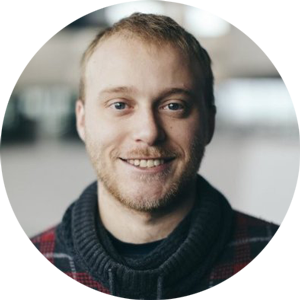
When I was 18, I was trying to see how many episodes of The Office I could watch in one night while eating an entire box of Oreos. 18-year-old Will Shackel is spending his time working to bring nuclear energy to Australia. We are not the same.
In this episode of Fissionary, Jordan and Mary sit down with the teenager working to reverse Australia’s long-standing nuclear ban. Will Shackel, the founder of Nuclear for Australia, has become a leading voice for nuclear advocacy. From his meetings with global leaders like Emmanuel Macron to his work debunking myths about nuclear power, Will discusses the challenges and triumphs of changing public opinion in a politically charged landscape.
I was doing some school assignments, and I stumbled across the fact that nuclear energy was banned in Australia and that really got me interested because I could see how nuclear energy was being used around the world and to realize it was banned just really didn't stack up to me.
After Will’s interest in nuclear was piqued, he hasn’t gone back. When he was in 10th grade he started doing research, talking to experts around the world, and posting on social media all about nuclear. Then he decided to launch Nuclear for Australia, which is now the largest nuclear advocacy organization in Australia. They have amassed over 77 thousand supporters and are massive on social media in providing information and debunking myths around nuclear.
His star in the nuclear space began to rise.
I think the biggest highlight for me was at COP28 last year...and the number of world leaders I was able to meet was really incredible. So, for instance, I had a chance to interview Emmanuel Macron, the French president. He told me that he believed that Australia should lift their ban on nuclear energy and that made national front pages in Australia when that happened, and there's a lot of other interesting people I got to meet there.
Will has been all around the world to talk with different experts and see different plants, like Diablo Canyon and Vogtle. Will was blown away and by these plants and wants to bring them to Australia. Given that 32 countries already have plants (and 50 more are looking to build some), there’s a lot of ongoing work to influence his fellow Aussies.
At the moment, our opposition party, which isn't in government, has proposed a nuclear policy comprised of around seven potential sites for nuclear stations all around the country. So, it's really a big issue at the moment. Our political leaders certainly have a lot of focus on it at the moment and it'll be interesting when the election occurs next year, if that party is to get into power, we could actually have a government in Australia which lifts the ban and starts building nuclear reactors.
Listen to the full episode to learn more about nuclear in Australia and let us know in the comments what you were doing as a teenager!
Mary Carpenter This is Fissionary, a show exploring how nuclear powers your world. I'm Mary Carpenter.
Jordan Houghton And I'm Jordan Houghton. Let's jump in.
Mary Carpenter Hey, Jordan!
Jordan Houghton Hey, Mary! Welcome back to Fissionary, listeners.
Mary Carpenter Hey, Fissionaries. Thanks for joining us today. Very excited for you to meet our guest today who is Will Shackel. He's an eighteen-year-old who started Nuclear for Australia, and he's doing big things in a country where nuclear is actually currently banned.
Jordan Houghton Which is crazy to me because I feel like there are a lot of countries that actually embrace nuclear more readily than the US. And so, we're here in the US, like, our day to day is still thinking about moving public opinion even though most people do support it, but we're not dealing with a ban. And so, it's interesting to talk to him and actually think about having to live in that climate where, like, you're not just advocating to build more, you're advocating to build it at all.
Mary Carpenter Yeah. And it's really incredible what he's doing at his age. He talks about how he debated the energy minister, again, in a country where nuclear is banned. So, he is incredibly brave, and it's just fascinating listening to everything that he's done at such a young age and the great work that he's doing.
Jordan Houghton Yeah. Before we started this podcast, Mary, I used to think that as a young person, I was ambitious, and I have been humbled by all of our incredible young guests on this podcast. Because when I was eighteen, I was going to concerts and, like, familiarizing myself with everything at Sephora and not debating energy ministers and dealing with, like, national backlash from people who'd—I mean, I can't even imagine shouldering that—the harassment and trolling that he's had to deal with as well, and he just, you know, takes it on the chin and keeps going.
Mary Carpenter I know. And he's so personable and such a nice person to chat with, I thoroughly enjoyed our conversation. So yeah, it's interesting that he can face all of that at such a young age. It's incredibly impressive. Just like some of our other guests, Grace Stanke, Miss America and a nuclear engineer at such a young age, and you guys might remember Kaylee Cunningham—so many of our guests are doing big things and encouraging youth to get involved in climate issues and clean energy issues, and it's really exciting to see the next generation doing all these big things.
Jordan Houghton Yeah. Such important work, and I love the reminder that it always brings that you are not too young to make a difference. Whatever age you are, you just have to step out there and start going, and there is space for you, and you will help change the conversation.
Mary Carpenter Yeah. Let's jump in! Our guest today is Will Shackel, who at eighteen founded Nuclear for Australia, the country's largest nuclear advocacy organization. Motivated by his concern for the energy transition and climate crisis, Will took it upon himself to research nuclear energy, share facts on social media, and launch a petition to legalize it, which is now approaching a hundred thousand signatures. His efforts have led him to testimony before senate committee, global advocacy at COP28, and many media appearances. Hey, Will, thanks for joining us today.
Will Shackel Thanks for having me.
Mary Carpenter Alright. Let's start at the beginning. Tell us a little bit about your first experience with nuclear energy and how you decided to become interested in it.
Will Shackel Well, look, it was really through school. I was doing some school assignments and I stumbled across the fact that nuclear energy was banned in Australia and that really got me interested because I could see how nuclear energy was being used around the world and to realize it was banned just really didn't stack up to me. I think that was back in year ten. So, after that, I had school holidays in front of me, I decided to do a bit more research, reaching out to experts around the world and then started posting some information on social media about nuclear energy, and I guess, as anyone who's involved in this space would share, I found it really, really interesting and I haven't stopped being interested in it and then decided to launch Nuclear for Australia, which is going to be the largest nuclear advocacy organization in Australia. We've got over 77 thousand supporters as of today and continue the social media advocacy and being involved in a lot of interesting things.
Jordan Houghton Before you learned about nuclear, were you passionate about climate change and the energy transition, or did nuclear energy bring you into that?
Will Shackel No, so I was already really passionate about climate change and the energy transition. To be honest, in Australia, we're not taught about nuclear energy in school. So, it's just by coincidence when I was learning about, you know, renewables like solar and wind, that I also realized that there was another clean energy source called nuclear energy and that really sparked my curiosity. So, it was really through my passion in those other subjects that I got involved in nuclear.
Mary Carpenter So we know you've been travelling a lot. I know you're travelling right now, and you've been going to a bunch of major climate events and conferences. Tell us a little bit about what that's been like, and have you met anyone that you've been super excited to meet?
Will Shackel Oh, tons of interesting people. I think the biggest highlight for me was at COP28 last year, at the global climate conference, and the number of world leaders I was able to meet was really incredible. So, for instance, I had a chance to interview Emmanuel Macron, the French president. He told me that he believed that Australia should lift their ban on nuclear energy and that made national front pages in Australia when that happened, and there's a lot of other interesting people I got to meet there. Recently, I went to the US as well, where I had the chance to visit the Vogtle nuclear plant and the Diablo Canyon nuclear plant. Both very, very different but equally fascinating, nuclear plants with their background and especially Diablo with the rich environmental diversity at that particular site. And then now I'm actually on a family holiday in the UK, so very, very different to Australia. And I've had the opportunity already to visit a nuclear plant out at Sizewell in Suffolk, which is really interesting at Sizewell, they've got three—basically, three different power stations there. Sizewell A, the reactor there has been decommissioned, then they've got Sizewell B, which is operating continuing today and hopefully into the 2050s, and then they've got Sizewell C which is going to be the construction site there. And at the end of this week, I'll have the opportunity to see the sister project, Hinkley C, which is obviously a huge construction site at the moment, really looking forward to seeing that. And then in the middle, we'll also be able to go to the nuclear conference here in the UK. So, I think the biggest thing for me is, you know, not many Australians get to see nuclear power plants with their own eyes, but when I'm able to actually see these places, I think it just reaffirms to me why it's so important—my advocacy for nuclear energy in Australia.
Jordan Houghton Having seen all of these plants in person recently, do you have a favorite?
Will Shackel Ooh, Vogtle was pretty cool. To think that that site is the largest, you know, single site of clean energy in the United States, I think was just remarkable to see. And then to look back at the size of that location, it's just really incredible.
Mary Carpenter I love that your top two are in the United States, and as a former Georgian, I love that it's Vogtle! Excellent answers! I'm curious, so you so you talked a little bit about how you interviewed President Macron, and that made news in Australia. Is that getting the attention of political leaders in Australia? Do they pay attention to the support of other global leaders for nuclear?
Will Shackel I think they really do. It's—I think one of the strongest arguments for nuclear in Australia is when we look around the world, seeing the fact that there's 32 countries that currently have nuclear energy, 50 looking to it for the first time, that's a real influence on our politicians and certainly Australians at large who are trying to work out if nuclear is a viable solution and presenting that global evidence is really powerful. At the moment, I would actually say that the nuclear debate is the most important and biggest debate in Australia at the moment, which I guess is very different to other countries where often people just take for granted that they've got nuclear reactors, you know, in their country providing electricity. So, it's a really interesting debate. At the moment, our opposition party, which isn't in government, has actually proposed a nuclear policy comprised of around seven potential sites for nuclear power stations all around the country. So, it's really a big issue at the moment. Our political leaders certainly have a lot of focus on it at the moment and it'll be interesting when the election occurs next year, if that party is to get into power, we could actually have a government in Australia which lifts the ban and starts building nuclear reactors, which I think will be really interesting for the rest of the world to observe.
Jordan Houghton So nuclear for Australia is celebrating its second birthday, and you talked a little bit about it in your intro, but I would love for you to share a bit more about how nuclear for Australia came to be and how you've grown it to the prominence that it now has.
Will Shackel Yeah. So, really, like I said, it started as me just posting stuff on social media, you know, using Canva and making some graphics and whatever, sharing some interesting facts, you know, like the one from James Hansen that nuclear saved 1.84 million lives from off putting fossil fuels, really just simple things like that. And that really started to get attention quite quickly in Australia because, unfortunately, I think like I said earlier, not learning it in school, there's a huge vacuum of information in Australia on nuclear. So, we quickly escalated that up, we've now, I think, you know, probably got tens of thousands of followers on social media. The media—the traditional media in Australia also started to pick this story up. It was really then—2023, in May, I provided evidence to a Senate committee which was investigating the ban on nuclear power in Australia. And my testimony there got a lot of attention. To see a young person, I guess, advocating for nuclear energy was something that certainly wasn't seen before in Australia. And then after that, I had the opportunity to debate our energy minister on live TV. He's notoriously very, very anti-nuclear to the point where he's been posting images of, you know, yellow barrels on grassy fields to depict nuclear waste, you know, these kind of things. So that was another highlight at COP28. And then recently, we've really grown into this large digital campaign where we're doing digital advertising to be able to share facts with Australians. Recently, as well, we've been doing information evenings in particular communities which have got an interest in nuclear energy, and we've been really glad to see so many people turn up for those information evenings. At those evenings, we've had some of our experts in Australia present there and answer communities questions. So, I think it's—you know, really, it's escalating quite quickly. We've now got over 77 thousand supporters, like I said earlier. Some of Australia's most influential people are also now backing nuclear energy and it's a really, really important time, I think, to be making the case and sharing facts and information. And the interesting thing is despite the government not supporting nuclear energy at the moment in Australia, the majority of the population do, despite the void of facts and information. So, we've got a good starting point, but there's a lot more work that has to be done, I think, to at least get the ban lifted in Australia.
Mary Carpenter So it sounds like you've done a lot, in the short time that Nuclear for Australia has been around. What accomplishment are you most proud of so far?
Will Shackel Oh, I have to say, probably debating our energy minister on live TV was, quite a highlight. Certainly, it and I became the target of a lot of online harassment and stuff after that, which I guess just comes with doing something like that. But that was certainly an experience being able to take the case for nuclear energy to the man in charge of our electricity system in Australia was a really important opportunity, I thought. And, generally, after that, the debates escalated a lot. So that's probably my personal highlight so far with my advocacy journey.
Jordan Houghton How do you handle that? The criticism and the backlash and the harassment, because you're, you are so young that I feel like with age, sometimes brushing stuff off gets easier, but I'm so impressed that that hasn't deterred you at all.
Will Shackel Oh, certainly. I think, you know, there is a lot of it and that's because it is probably the biggest political debate in Australia. So, because it has become so politicized, I now sort of become a political target even though I'm not associated with any of the political parties. And, you know, one of the most important things for Nuclear for Australia is the fact that we are nonpartisan and our primary purpose is to share facts and information. So, for me, it's actually really disappointing that on the subject of all of this harassment, initially, it was pretty tough. I certainly hadn't been someone who had any presence in, you know, any public forums or anything like that so I had to get used to it pretty quickly, but I think the biggest thing for me in overcoming all of that has been realizing that, you know, majority of Australians do support nuclear energy. They are on my side. And I've certainly seen that with the support that Nuclear Australia has received. We've got a lot of passionate supporters and I think it's, you know, seeing their support and talking to them really reaffirms what I do and gets me through all of that because, you know, it has been tough at times.
Mary Carpenter Well, it's nice to have a voice, and a strong voice, and especially a young voice like yours—and we know finding allies can be difficult, especially when you're advocating for something like nuclear energy that is banned in your country. So, how do you connect with other supporters and others in the industry and help find voices to support your mission?
Will Shackel Well, I think social media is a really powerful place in many respects. I think one of the best things for me has been connecting with all of the global advocates, whether it's in the US or UK or other countries, and finding greater inspiration from them and the great work that they've been able to do. So I've really been able to get a lot of value from that. We've also—I think it's really important to underscore is that we do have a nuclear community in Australia as well. We've got a nuclear science capability with our research reactor which many people wouldn't realize is located thirty kilometers away from the Sydney CBD. And I've had the privilege to tour that. So, there are many, many Australians already involved in nuclear. We've got many experts who have either worked in Australia or who have worked overseas. I've really enjoyed being in those networks and to gain from them and to have their support. So, I think those networks have been really important for me. But I think that the nuclear community is a really great one. All the WhatsApp chats I'm on, all of those kind of things, which I'm sure you both are involved in as well, really do keep me going. And I think that's a—yeah. That's a great asset for all of us.
Jordan Houghton I want to back up for our listeners for a moment.
Will Shackel Yeah.
Jordan Houghton Nuclear energy gaining momentum around the world. Dozens of countries have pledged to triple nuclear capacity by 2050. Australia remains the only G20 country with a ban on nuclear power. And I'm wondering if you can explain for our listeners how this ban came to be and what it means for Australia right now.
Will Shackel So, it's really interesting. There's actually multiple bans in Australia, so it's worse than most people would actually think. I would go to the point with—of saying, you know, certainly from my research, that we've probably got the most draconian laws against nuclear energy anywhere in the world and that really doesn't make sense. So, our federal bans, which most people are aware of, the only bans on nuclear power of any G20 country were introduced in the late nineteen nineties. They were never good policy. They were introduced as basically political compromises to get funding for one of our taxes, the GST, and the other one was introduced to get funding for our research track, which, you know, produces lifesaving nuclear medicines. It was basically a negotiation literally done in the middle of the night, debated literally for ten minutes, didn't go to a vote of the Australian people, Most people weren't aware that it went through. And at that point, nuclear energy just wasn't really concerned because not many people were thinking about climate change. We had a lot of coal providing our energy. So, it wasn't really a big thing at that time. I think, unfortunately, it has now really had huge consequences because we really should have gotten started then, you know, if not earlier. And on top of that ban, we've also got state and territory bans. So, say in my state of Queensland, we've got a separate ban, we've then got bans on uranium mining even though Australia's got the largest reserves of uranium—about a third of the world's uranium is in Australia. So, we've got really, draconian laws here, which I think are really holding us back. And no politician, I guess, has had the courage to lift those bans.
Mary Carpenter So, what are the misconceptions Australians have about nuclear energy and how are you working to counter those?
Will Shackel Look, I think even though majority of Australians do support nuclear energy, there's safety, waste, water, even. They're probably the three biggest concerns besides, you know, cost and time. So, in terms of safety, first of all, I think the biggest thing is just pointing to the global evidence that—of nuclear's strong safety track record. You can obviously do a comparison with other energy sources and nuclear ends up being, you know, comparable to wind and solar in terms of safety. And demonstrating, say, the safety record in the United States is, I think, a really powerful thing. Showing that there hasn't been fatality as a result of nuclear power is really, really powerful, I think, for Australians, especially considering the health impacts of other energy sources like fossil fuels, which we do use in Australia. In terms of then waste, I think—so, Australia hasn't managed high-level radioactive waste until this point. We do obviously have used fuel from our research reactors that's reprocessed in France and I think demonstrating to Australians that we have already managed radioactive waste safely for decades is a really, really powerful thing. But obviously, you know, it's inevitable that we will have to manage that high-level radioactive waste, if it's not for civil nuclear power, actually because we'll be acquiring nuclear submarines in the coming decades and having to be managing the waste from that, so I think there's a lot of information that Australians need to be aware of about radioactive waste management, but it's something that we're going to have to deal with regardless as a result of those submarines and as a result of our current nuclear activities. And then in terms of water, I think there's a lot of misconceptions about water use in Australia and often it's a scarce commodity for farmers and other people like that. So, it is a major concern but—and I think, unfortunately, a lot of people think that the water that used in a nuclear plant, you know, is totally used up and, you know, if it is released, it's released with radioactivity, and just demonstrating to Australians that that water is used like in any other thermal power station. You know, cooling the turbines is a really important thing to get across and I think will alleviate a lot of concerns. And then finally, there's probably the debate about economics and cost which our politicians have really been focusing on. And I think demonstrating the global evidence of nuclear energy's use and the new nuclear renaissance which is occurring around the world, headlined by the pledge to triple nuclear energy capacity worldwide, I think is really powerful way to demonstrate to Australians that there is a lot of commercial interest in nuclear at the moment especially in fulfilling the future energy demands. So, we're gonna have to be looking at whether it's, you know, with data centers or electrification, and I think that's, you know, really important information for Australians to have access to.
Jordan Houghton So, some experts have suggested that Australia could have a functioning reactor in as little as ten to twelve years if it follows international best practices. Do you think this is realistic? Or—and follow-up to that, what steps do you see needing to happen to make it possible?
Will Shackel So, look, I think most experts in Australia, at least the ones who have, you know, nuclear expertise, are saying anywhere from ten to fifteen years. You know, unfortunately, with how things work in Australia, it would probably be on the edge of the fifteen years considering what our politicians might do to delay it. But I think when Mark Jacopo provided evidence to the House committees here in Australia, he said around that, you know, ten to fifteen years figure. So, there's a lot of consensus, I think, around that time frame. And certainly, when you look at the UAE and what they were able to do completely from scratch, you know, I think around twelve years, Australia would be looking to a similar figure. In terms of what would have to be done, like I said earlier, we're not completely starting from scratch. We already do have a nuclear regulator. It would obviously have to be enhanced for civil nuclear power. We do have a nuclear workforce. Importantly though, we do have a huge coal workforce and the opposition parties in Australia's policy is to use those areas around coal power plants and to place the nuclear reactors there. So, we'll be able to have a lot of those workers with that experience of the coal-fired power stations be able to then transition into jobs in the nuclear power station. And to my understanding, there's been some research done in the United States which is shown around 76 percent of those workers, their work is directly transferable into nuclear plants, so that's something that would try to be leveraged in Australia. But then, obviously, it would, you know, be putting the shovels in the ground, actually building the reactors and, you know, commissioning them. But also in the background, making sure that its social license is there is really important. And we're sort of already doing some of that work talking to those communities which have been identified. And the really interesting thing is in those communities in Australia, there is already a lot of support, which is, I think, a really big thing because from their perspective, they've got, you know, huge coal fired power stations shutting down. They don't have many opportunities waiting for them. They don't think renewables will be able to offer them the, you know, same industry opportunities and jobs as they had with those coal-fired power stations. So, they look to a solution like nuclear energy and look at it really optimistically. And I think it—you know, some of the loudest voices in this debate who are now going to be pushing for nuclear is those people in those communities because they know they need it.
Mary Carpenter So, do you think public opinion in Australia is increasing mostly because of the jobs benefit or is it climate or is it energy security? What's kind of the resounding reason for support in Australia?
Will Shackel I think there's a—obviously, the pathway Australia is going down at the moment is 100 percent renewables. And I think that people have a lot of doubts and concerns that that's even possible, especially when power bills are going up by so much in Australia. That's motivating a lot of people to consider whether we need a balanced energy mix including nuclear energy. So that's probably the biggest driver for people at the moment is the fact that power bills are going up. We're having a real cost of living crisis in Australia, you know, similarly to, I guess, the rest of the world. And people are, you know, slightly distrustful of what our government is saying when they say that, you know, 100 percent renewables is going to be the by far the cheapest pathway for this country when it really hasn't been done on a large scale like they're trying to do. A lot of people don't trust that and for that reason, a lot of people are now looking to solutions like nuclear energy to complement renewables. So, that's probably, on a broad scale, the biggest driver at the moment for support.
Jordan Houghton Among the supporters in Australia, I'm wondering if you are seeing that they are spread out amongst age demographics or if they're leaning younger or older. And I'm asking that because we've seen such an explosion of, like, Gen Z aged people like yourself coming forward to stand up for the imperative of the energy transition and to fight climate change. And so, I'm just wondering what you're seeing in Australia among the supporter demographic.
Will Shackel Look, I actually think it's quite broad. I've been surprised by the amount of, you know, more mature citizens who support nuclear energy in Australia, but we also have a lot of young people who are concerned about climate change, who I think really do understand the need for nuclear energy in our grid. So I think it's a broad coalition which is, I think, a really, really valuable thing. And whether you look at any demographic, whether it be, you know, older or younger people, women and men, there's a lot of support for nuclear energy. One of the biggest things, and this has recently actually in the past few days come up in a report which was recently done, is there is actually a large gender divide in Australia, which I guess there are parallels around that, around the world, and that's certainly something that we're going to have to address, showing people that we do have a lot of women in nuclear already in Australia. You know, they're probably our most powerful advocates. It’s going to be something that's really, really important because for whatever reason that gender divide still is having an impact in Australia. A lot of men support nuclear energy but for some reason there still are a lot of reservations among women, and that's something that I think will have to be addressed and will be a really important facet of the debate in the coming months.
Mary Carpenter How do you see increasing support with younger audiences and women, people who might be a little bit more skeptical of nuclear? How do you see bringing them into supporting nuclear?
Will Shackel Look, I think the most powerful thing for us with Nuclear for Australia recently is we've been able to establish a working group of experts, Australian-based, nuclear-specific experts, who really are able to speak with a lot of authority on this topic. And when they speak, Australians are listening. So, my biggest job at the moment is, you know, I can go on the media all I want and make my voice heard, but I think my focus at the moment is making sure that their voices are heard, and Australians don’t forget that we do have these excellent nuclear experts in Australia. And I guess, you know, my job is to make them palatable for, you know, the TikToks and—of the world and Instagram and all those different platforms, to be able to distill their expertise into little bite-sized little pieces of content as I'm sure you both can appreciate. So, that's my focus at the moment and we're really trying to leverage, you know, mediums like social media to reach those demographics with engaging and really accessible content, I think, is the important thing because, you know, not all of us are nuclear physicists. I'm certainly not smart enough to be a nuclear physicist or engineer or anything like that. So, from my perspective, as I go on this journey, I'm really, you know, stepping back and thinking, what would have I liked? What information and how would have I liked it to be conveyed to me when I was on my personal journey learning about nuclear energy and we're really just trying to replicate that and ensure that as many people as possible in Australia can access, the facts on nuclear energy as possible.
Jordan Houghton You recently graduated high school. What's next for you? You said you're not smart enough to be a nuclear engineer, but I don't buy that! But I'm curious what's next.
Will Shackel Yeah. So, obviously, I'll be continuing this advocacy and, you know, hoping to grow Nuclear for Australia and expand the impact that we're having, but I'll be going down to university more south of where I live currently in Brisbane in Canberra. And I'll be studying, hopefully, law and commerce there, but I assume they've got a nuclear school there, and I know people in that nuclear school. So, who knows, I might end up there. The unfortunate thing is, you know, whilst we do have an industry in Australia, there aren't many opportunities. So, I'm someone who, like, I guess, wants to stay in Australia. I probably wouldn't want to move to another country to do, you know, any work in nuclear power plants even though I do love visiting them. So unfortunately, there aren't many nuclear-specific pathways at the moment which are presenting themselves to me. But I do know a lot of people who, you know, hope to be able to work in nuclear and hopefully those opportunities can emerge as we continue our work with Nuclear for Australia, pushing for the ban to be lifted. But, yes, certainly, my focus in the coming months and years will be continuing Nuclear for Australia and growing it and bringing more people into this movement, bringing more young people into this movement, more experts, and making sure we can lift that ban is the biggest priority for me in the future.
Mary Carpenter So, I think you just answered this, but if you could achieve one major change in Australia's nuclear policy or public mindset tomorrow, what would it be?
Will Shackel It'd be simply to lift the bans on nuclear energy. From my position, you know, I wouldn't ask any politician to put an eighteen-year-old in charge of designing the grid. But what I would want them to hear from me is that we need to have all energy options on the table in Australia if we want to be able to come to pragmatic outcome for this country, and unfortunately, we don't have all energy options on the table. We don't have all clean energy options on the table. And I think pursuing a 100 percent solar and wind approach is not a good idea for this country. When we look around the world, other countries realize that we need a combination of clean energy sources in order to get to net zero. And I think by depriving ourselves of a source like nuclear, which is proven around the world, I just don't think that's a good idea. And the ban, you know, shouldn't have been put in place in the first place, but now is the second-best opportunity, I guess, to make sure it isn't there.
Jordan Houghton Is there anything that people like us outside of Australia can do to support your efforts in Australia? If we have listeners around the globe who are inspired, what is—how can we help?
Will Shackel Yeah. So probably the best thing to do is join our supporter list at nuclearforaustralia.com. There, you can also make a contribution to our campaign, you can see a bit of what we're doing, you can read our newsletters and the information that we send out. We're really trying to build this board coalition in support of nuclear energy. And the other thing I guess is, you know, if you ever do come to Australia, do let us know because I think global voices, those people that do have experience in nuclear energy around the world, are some of the most powerful people that Australians do need to hear from. Because once they know that there are people around the world who have experience in nuclear energy, have, you know, worked at a nuclear plant, know that it is an effective solution, that will really be important for Australians to hear those perspectives because that human experience will really be able to captivate them and might compel them to support nuclear energy as well. I think one of the biggest issues in Australia at the moment is that no one has—no one knows anyone who's ever worked at a nuclear plant. No one's driven a past a nuclear power plant. So, in that void, you know, all sorts of misinformation can capture the minds of people, and I think that's a really unfortunate thing. So those human stories, that human experience is, I think, something really important and it's certainly something that I try and share when I'm on trips like this with Australians back home.
Jordan Houghton So last question for you. We're asking all our guests at the end. What's the last show you binge watched?
Will Shackel The latest thing I've watched is the documentary Simone Biles Rising, the Olympic gymnast from the US. So that's the most recent thing I've watched on Netflix, but obviously I watch a lot of YouTube to be able to get a better insight into nuclear and a lot of nuclear influencers’ content on social media as well, so that might be the reason why it took me so long behind the scenes to work out what I've watched recently!
Mary Carpenter Very cool. Well, Will, thank you so much for joining us. You are all over the world advocating for nuclear, so thanks for taking a little bit of time to chat with us, and thanks for all you're doing for the industry.
Will Shackel I really do appreciate that, and it's a real pleasure to be able to come on this podcast. Obviously, there have been a lot more interesting guests on here than me, so really honored to be able to be interviewed.
Jordan Houghton We're thrilled to have you as a Fissionary with us. If you are coming to DC ever, please let us know.
Will Shackel I will.
Jordan Houghton What an awesome, inspiring conversation with Will, and I have to say our listeners aren't gonna see it, but he was doing the interview from a restaurant in London and had the most incredible back drop that made me just very sad that I'm not in London for the holidays right now.
Mary Carpenter I know. It was lovely to look at and lovely to chat with him.
Jordan Houghton If you are interested in supporting Nuclear for Australia, as he mentioned during the podcast, they can use support from around the globe. We will link to Nuclear for Australia in the show notes so you can connect with Will and his organization.
Mary Carpenter Just wanted to take a minute to say thank you to all of our Fissionaries who joined us this year in 2024. We had so many great guests and we appreciate you all coming along on our journey to talk about how nuclear powers our world. We're gonna be taking a little holiday break, and we'll be back in your feeds on January 9th. So, Happy Holidays from us, and Happy New Year.
Jordan Houghton Happy New Year, Fissionaries. We're wishing you all the best for a prosperous 2025 and we hope you'll be back with us to listen to all that we have in store for you next year. And as always, if you enjoyed the show, we'd love to hear from you. Send us a note, leave a comment, and support the podcast by subscribing on Apple, Spotify, or wherever you listen. Happy Holidays and Happy New Year. We'll see you back next year.
Mary Carpenter Bye, Fissionaries!
The next episode airs on Thursday, January 9—make sure you tune in, Fissionaries!
Sign up for updates and new episodes: