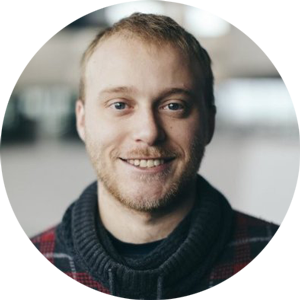
Much like the spambot problem on social media, climate anxiety has never been more prominent. It can be hard to see the bright side of things and a path to a healthier planet. That’s why folks like Charly Frisk and her work with Time for Better is so important.
In this episode of Fissionary, Mary and Jordan chat with Charly Frisk, Director of Climate Action at Time for Better, about her mission to reshape the climate conversation. Charly and her team are redefining what it means to gather around climate issues by creating vibrant spaces like the Hope House, where optimism thrives and meaningful connections are made. From engaging events at Climate Week NYC to innovative approaches to climate communication, she shares how they’re turning traditional events into inspiring hubs of creativity and collaboration.
Often in the climate space, especially at these large-scale climate movements—although it is changing—these events can be very stuffy ... It's actually very doom and gloom, people are frustrated. And Sierra and I are really passionate about making a space that's really different from that because we really believe in taking care of people and providing for people.
If you were to walk into Hope House, you would have no idea you’re at a climate event. There aren’t guys in black suits trying to stuff their agendas down your throats or someone being overtly preachy. There is climate art, chill conversation, food, and sometimes even friendship bracelets. Charly found that events like this helped create more constructive and meaningful conversations.
We start planning how we want people to feel pretty much from the inception of when we start getting a Hope House together. Sierra and I are really passionate about this human design component with climate because we know that we can really bring out people's best selves when they are taken care of... it's very important at the inception at the Hope House to have this vision of what that looks like.
Whether it is working with Bill Nye or creating murals with Nuclear Matters, Charly has had a lot of fun moments at a Hope House. But she loves working through our shared climate anxiety with young people from around the globe. Some folks have been working to fight climate change for years and others have just begun their journey. No matter what road someone took to a Hope House, everyone is there for a similar reason. Even Charly’s road was a little unique.
I grew up in a rural part of Colorado. I had fossil fuel companies coming into my classroom when I was in kindergarten talking about how fossil fuels were needed to support and uplift my Christmas traditions and other different, you know, ways to spread misinformation...I was pretty skeptical about climate change. Even up until my high school senior year, I was in an AP environmental class and my teacher told me that climate change is not happening, and if it was, it was not human caused.
Charly wants to use communication, storytelling, and art to further the movement to clean energy. Learn all about Hope House, Time for Better, and Charly’s work on documentaries by listening to this week’s episode of Fissionary.
Mary Carpenter This is Fissionary, a show exploring how nuclear powers your world. I'm Mary Carpenter.
Jordan Houghton And I'm Jordan Houghton. Let's jump in.
Mary Carpenter Hey, Jordan!
Jordan Houghton Hey, Mary, hello, Fissionaries! welcome back, everybody.
Mary Carpenter Yeah, welcome back. This is a fun episode, Jordan.
Jordan Houghton Very excited to talk to Charly Frisk from Time for Better today about climate action. I have worked with Charly over the past year on a couple of Time for Better's Hope House events and got to finally go to one for the first time at Climate Week this year and I had so much fun. They had the most amazing space. We had this great view of New York. Sierra, who is one of the founders of Time for Better, had her dog there, and having a pet onsite just made the whole thing that much better.
Mary Carpenter Yeah, I love the work they're doing, and Charly will talk a bit about this in the episode, but they're creating events at places that are a little bit more exciting than a usual event, right? Like, the Hope House has cocktails, and I know it in New York, they had friendship bracelets and I think some painting activities. You know, things that—you're they're really drawing people in, in a very friendly and warm and welcoming way at events that might not have other places like that, and then they're fostering these important conversations on climate change and solutions for it, including nuclear energy. So, it just feels like a very welcoming, warm approach to what can be kind of an intense topic like climate change in places that are can be intense and very, you know, government, official.
Jordan Houghton I have to say, having been at Climate Week for the first time, the week is exhausting. There's so many things you can do, so many places you can see, and there's just a lot of information to take in, and something that we talk about with Charly is how people have climate anxiety as it is, so the temperature's already a little high because people are worried about this and the folks who are showing up to actually engage in these events are there because they care and they want to make a difference. Hope House was like a wellness break in a way.
Mary Carpenter Yeah! Yeah.
Jordan Houghton It was nice to be able to show up to something and it wasn't necessarily showing up to a panel that I had to take all these notes to. I got to make some friendship bracelets, hang around while I was doing that and talk to other people who are interested in climate and hear how they're impacting the space through their work. And it was just a really different, cool approach. And yes, snacks and cocktails always help.
Mary Carpenter Yeah, and I'm glad they're doing it because a lot of people aren’t. Somebody needs to be there and create exciting events that especially younger people want to be involved in and Charly talks about this, how we reach the youth, and how we help them understand that nuclear is a great solution for climate change, and it helps with climate anxiety. So, I think you guys are going to like this episode. Let's dive in. We are excited to welcome Charly Frisk to the podcast. As a director of Climate Action at Time for Better and a documentary filmmaker, Charly Frisk is a passionate climate advocate dedicated to driving meaningful environmental change. She leads innovative climate communication initiatives, managed social media campaigns, and coordinates impactful events like Climate Week NYC. Holding a master's of environmental management from Yale and a dual degree in environmental studies and peace studies, Charly is committed to climate education and advocacy, particularly at the intersection of climate change and agriculture. Welcome, Charly! Thanks for joining us today.
Charly Frisk Thank you so much for having me today!
Mary Carpenter So, you're currently the director of Climate Action at Time for Better. Can you explain what the organization is and how you got started there?
Charly Frisk Yes, I would love to. Time for Better is a creative climate communications agency that focuses on climate storytelling through the lens of hope and optimism. And I started working at Time for Better, which is founded by the lovely Sierra Quitiquit, she's a pro skier. During my first year at grad school, I had seen that she was going to be hosting an event activation in New York City over Instagram, and I thought it would be a great opportunity to go volunteer and meet some people, so I started working with her about three years ago, and I have been able to do some really creative and fun climate activation through those years and everything.
Jordan Houghton We'd love to hear more about those actually. You've had the opportunity to travel quite a bit with Time for Better, having gone to events like COP, and you just mentioned Climate Week. Your team creates these events to have a space that fosters collaboration and promotes while being around themes of hope, which you mentioned, and climate change. Why was it important that you create these spaces and what's the response been?
Charly Frisk Yes. So, Time for Better focuses on digital communications and also these wonderful event activations that you just described, and we're best known for our Hope House, which gets put up alongside UN COP and then Climate Weeks as well. And what we've really tried to create is this hub for optimism and action. Often in the climate space, especially at these large-scale climate movements—although it is changing—these events can be very stuffy. You know, you're walking into these global climate events, everybody is in a bad mood, everybody's dehydrated, everybody's hungry, there's fluorescent lighting everywhere, people have been walking all day on linoleum floors, the conversation, not super fun all the time. It's actually very doom and gloom, people are frustrated. And Sierra and I are really passionate about making a space that's really different from that because we really believe in taking care of people and providing for people, creating a space where people just feel like they're at home, and we find that when you kind of provide these spaces that are a little bit more, yeah, homey and comfortable, that you have more beautiful conversations that happen, especially in these high stress climate events, and yeah, occasions like that.
Mary Carpenter Walk our listeners through what the Hope House is, help them envision what it looks like.
Charly Frisk Okay, so I've kind of described what the typical climate events look like, but if you were to walk into the Hope House, it's a side event activation. So, it's separate from where those leading events happen during Climate Week or the climate conferences, and it's held in a different space, and it looks different every year. During our COP27 Activation in Sharm El Sheikh, Egypt, it was on the coast of the Red Sea, soo we had a view of the Red Sea, we had people going snorkeling and scuba diving in between climate events. At COP28, it was held in an arts district in Dubai, so you walked in and there is these beautiful high ceilings where we had beautiful climate art, like saris hanging down. There's always food at the Hope House. And then our most recent activation, which we got to partner with NEI and Nuclear Matters on during Climate Week NYC, this was held in a rooftop penthouse in New York City on top of Pennsylvania Station and it had a skyline view of the whole city. So, it looked different every year. But there's always food, there's always good vibes, people are having conversations. They’re climate events, but they're more creative. Like, you know, you may see a person rapping on stage. You may have cocktails flowing about as you're talking about nuclear energy. So, it's just fun and creative.
Jordan Houghton I have to say, having just been at Hope House in New York for Climate Week, just to sort of add to what Charly said, because I was attending—I attended Hope House but attended more of the traditional panel events as well throughout the week. And it really is a very different vibe that you—I can tell, intentionally foster where it has a bit of a more casual feel to it, which I think helps inspire more connectivity and conversation. I feel like you can get in a little bit deeper. And I'm wondering, you mentioned the food, you mentioned the drinks, and that was great, the snacks were totally wonderful. Always, always good to have a good snack! But like, do you plan that in—like, how much do you plan in advance about how you want people to feel when they come in and—like, how that supports the conversation?
Charly Frisk Absolutely. Yeah, we start planning how we want people to feel pretty much from the inception of when we start getting a Hope House together. Sierra and I are really passionate about this human design component with climate because we know that we can really bring out people's best selves when they are taken care of. So, we spend a lot of time visioning what that will look like, how we want people to feel during the course of the event, if they're staying with us for multiple events, what that would look like as well, but it's very important at the inception at the Hope House to have this vision of what that looks like.
Mary Carpenter Do you have a favorite moment from COP or Climate Week, whether it was at Hope House or somewhere else?
Charly Frisk Oh my goodness, that's a great question! I think one of the coolest moments that happened this past Climate Week was, we did a voting event and happened to have Bill Nye, definitely a hero of mine! And I got to escort him outside and he kind of stepped out onto the rooftop terrace of the Hope House and there was about 50 to 100 different climate content creators who were all really getting excited about civic engagement and getting really revved up by Bill Nye, and also we had the lovely Nuclear Matters activation out there as well, who are creating some friendship bracelets and murals and educating people about nuclear energy as well.
Jordan Houghton I've noticed when I've been talking, when Mary and I have had conversations with—I'm going to generalize a little bit and say Gen Z, but I'm thinking a lot about people under 30, that there is a lot of anxiety around climate, what they describe as climate anxiety, and I know that the topic inspires fear, and for good reason, in a lot of people. And I'm wondering why—why do you think that is? And on the flip side, what do you think we can do to bring the hope back to people who are scared?
Charly Frisk That is a wonderful question and also very hard. I think that climate anxiety, it just hits people really hard because it takes our future of what we had imagined away. You don't get to imagine yourself doing and exploring all of the wonderful things on planet Earth with climate change. And I think maybe to explain this a little bit better, I'll talk a little bit about my own climate journey.
Jordan Houghton Please.
Charly Frisk But, I grew up in a rural part of Colorado. I had fossil fuel companies coming into my classroom when I was in kindergarten talking about how fossil fuels were needed to support and uplift my Christmas traditions and other different, you know, ways to spread misinformation.
Mary Carpenter Wait, Christmas?
Charly Frisk Yeah! They would, like, come in and they had these papers that you had to draw how fossil fuels, or like, energy helped in your Christmas traditions. And I remember that being just jarring, and I was like, what is going on? But also, most of my peers were not engaged in the climate conversation yet. I mean, in my community, you'd walk around and you'd see, like, the fracking equipment and everything. So, it was very important to our economy. And so, I was pretty skeptical about climate change. Even up until my high school senior year, I was in an AP environmental class and my teacher told me that climate change is not happening, and if it was, it was not human caused. So, there is a lot of climate misinformation and even though I was really passionate about biodiversity and the environment, climate was really not part of the conversation. So, when I went to college and had my environmental 101 course, I was like, whoa, this is a huge problem. And my teacher showed me, you know, images of the Keeling Curve and all of these climate data points but I don't think I really understood until I started listening to the stories of the people on the front lines, and I think that is what makes me most kind of anxious is just, yeah, I feel very privileged to be in the Global North, and even though we're seeing that even in the US, there's climate catastrophes. And yeah, I felt sort of insulated, where you don't have like as much of a risk as a rural woman farmer that may be living in the Global South whose livelihood is connected to the earth. So, I start getting really sad about the climate crisis with a lot of my peers, but at that same time, that was when Greta Thunberg was getting really big, and I think that I’ve really fallen in love with climate optimism through the climate movement and the community that we bring, and I think that's one of the things that I love most about working at the Hope House is because a lot of the work that we do is different. It's either global, it's in our community, but these mass mobilizations like climate we can see offer an opportunity for us to connect and remind each other that we're doing important work, that we have these amazing solutions and that we can support each other.
Mary Carpenter Talk more about climate optimism. How do you get more people on board with that? Because I know a lot of people are—have climate anxiety, so how do you spread climate optimism?
Charly Frisk How do you spread climate optimism? I think that one of the most powerful tools in spreading climate optimism is through storytelling. And I just told you that a lot of the stories can be doom and gloom, and we see that most of the news stories about climate change are often doom and gloom. But then there are these amazing stories of solutions that are happening on the ground, and I think that amplifying those positive solutions, those leaders that are making a difference in their communities, that's how you spread climate optimism. Not saying that everything is perfect, but definitely turns people off of, yeah, climate optimism. It's acknowledging that this is the reality, but that we have the power to make a difference and I think that that's best told through stories.
Jordan Houghton When you're talking about climate with people, especially people who maybe don't work in the space, but they're interested in engaging and they want to do something to help, you're asking them to digest a lot of really complex topics. You just—you just mentioned some of the data that you were exposed to when you started in college, and you were actually taking a university class to study these. But what strategies have you found to be most effective in breaking these down, either complex or even a topic that has been controversial, like nuclear energy, so that people feel empowered to engage rather than avoid them?
Charly Frisk Yes. So, I think that that is a great part about the storytelling component. I think that you're not going to change anybody's mind by hitting them over the head with some data, and I think that these stories really help become a good vector for that. Something that we learned during our first nuclear event during COP28 in Dubai, was that a lot of these lovely climate content creators that were coming to the event felt like they didn't want to speak about nuclear energy because they felt like they would get outcasted, they felt like they were just a little bit nervous, but as we started having conversations with people—I remember we had a roundtable with all these content creators and then some nuclear engineers as well. We just started having more free flowing conversation with one another and everybody was like, yeah, I think that nuclear is a great solution, and just was a little bit—yeah, hesitant to talk about it because the science is really complex and figuring out how to break down this nuanced conversation on social media bites can be hard, but I think that making it digestible, making it resonate with your audience as much as you can, whether talking about nuclear is talking about jobs, whether it's talking about clean energy options, whether it's talking about, yeah, the fact that it's 24/7 and how it can complement other renewable options, I think that you just try to make it resonate more with your audience.
Mary Carpenter I was going to ask a little bit more about influencers. So, I know you guys have obviously done a lot of work with them. Do you have good relationships with them, or do you feel like those relationships are growing and more people are getting into the space?
Charly Frisk Yeah, absolutely. Something that we really loved working with NEI and Nuclear Matters on this past fall was creating a nuclear communications toolkit and some conversation starters for influencers and content creators who are involved in the climate space and we have really enjoyed getting that information out into our community and have had a really positive response through providing those kinds of information, because resources like that are not always super accessible. I'm not sure a resource that is like that has ever existed before, that creates kind of digestible content like that. But yeah, our relationships with the influencers and content creators are very long term. And I think that that kind of long-term rapport is really important when doing this kind of work.
Jordan Houghton When I was at Climate Week this year, traversing around New York City, I mentioned that I went to a lot of events. Hope House by far had engaged the youngest demographic. I think pretty much everywhere else I went, I was among the youngest in the room, and that's not saying a lot at this point. I am very curious about how you have cultivated and engaged the younger demographic to stand up and take action. Obviously, they are there, they are engaged, Hope House was full. But we need to pull them into all of these other places as well, and I would love if you could offer some thoughts on that for anyone else maybe listening that wants to pull in a younger demographic to what they're working on, too.
Charly Frisk This is super important. I think that we can do a much better job of involving youth at climate events. I feel like—yeah, when I step outside of the Hope House and try to go to different climate events, if they're not youth-led and youth-focused, then I am often the younger person in the room, and I think that we can really work to change that by involving youth within your planning process. As you're planning events for Climate Week, as you're planning events for COP, as you're planning your climate events in general, have youth be meaningfully involved through the process, through the invitation, through the setup, through your organization of your panel, because by incorporating them in the beginning, you have a very intentional perspective on involving the youth.
Jordan Houghton To tie together what we were just talking about, I'll back up for a second—we're talking about engaging younger people in climate action and you were talking about the Nuclear Matters toolkits. Do you find that that younger demographic is really hungry for the educational component before they get involved and start advocating on behalf of something?
Charly Frisk Yeah, so I didn't know exactly the best way to reengage these young people on nuclear communication. We had this event during COP28 and we had interest from these young people that were interested in communicating about nuclear energy, but we weren't sure exactly how to reengage them. So, what we did at Time for Better was send out a poll to our climate community to ask them what they needed. If they wanted to communicate about nuclear energy, what is it that we could provide that would help them in their communication? And the overwhelming response was that there was a lack of educational materials that they could easily access and digest for their community. So, when we were thinking about this activation for Climate Week, it was really important to have this toolkit component because I think that the younger generation, we do want our sources cited on figuring out what exactly a certain technology could provide, or certain solutions could provide, we need to have the background information. And I feel like people are pretty hungry for that. And of course, there's an argument of time, that sometimes people don't have a lot of time or energy to sit through and read a huge educational resource, but having that broken down to be more digestible, I think definitely helps people.
Mary Carpenter So, how do we get young people involved in the first place? I know at Climate Week I saw some of the cute friendship bracelets you guys made and there were some cool charms and stuff, so—I mean, how do we get people involved, like, just in the door being interested about nuclear?
Charly Frisk I think that getting more people involved, getting your foot in the door is showing up in more spaces like this, whether that is at Climate Week at the Hope House or at different activations, showing up, is a huge component of making sure that the young people are involved. And maybe it's not at these climate events specifically, but it's also at arts and cultural events, I think that that's a huge component too. And I would say also that if I can build on that a little bit, I would say that showing up to arts and cultural events and places where the young people are is really important and making sure that you're supporting young people intentionally. So, maybe you're providing these opportunities for creative activations and then also having this long term support with the youth as well.
Mary Carpenter So we know that Time for Better emphasizes the importance of collaboration and partnerships in its climate work, so how do you bring diverse voices and perspectives together in a way that builds a sense of community?
Charly Frisk So within Time for Better, we support youth, which Jordan got to see at the Hope House. But also, we are able to create these environments where we can create a space of really cross-sectoral partnerships. So, we are able to create spaces where business leaders can come together, where government leaders can come together, where indigenous leaders can come together, and really create a lot of impact together. And something that I think really showcased that was with our Later is Too Late campaign that we were able to get off the ground during COP28 last year, where we garnered about 27 million impressions in 48 hours with the social media campaign where we engage these business leaders, indigenous leaders, youth leaders.
Mary Carpenter Tell us more about that.
Charly Frisk So at COP28, there was a lot of different climate initiatives that were going on, so we were able to coalesce together and create a campaign that championed more of a unified voice for change. And we focused on making sure that we were addressing the COP presidency to call on a historic and unprecedented COP. And to do this, we garnered a swell of business leaders, indigenous leaders, youth leaders to push this letter that addressed him, which pretty much told him that later is too late, that we need action now. And that phrase, “later is too late”, it was proven by some of our colleagues about potential energy and yield climate change communication as some of the one of the most powerful phrases. So, we really championed that, created a hashtag, and then I worked with a lot of digital content creators and really influential climate figures like Jane Fonda, Mark Ruffalo, to push out this Later Is Too Late messaging. And in the end, we were able to garner 27 million impressions in about 48 hours.
Mary Carpenter That's amazing.
Jordan Houghton That's incredible. And shout out to season one guest, John Marshall, from Potential Energy, so refer back to that one if you want to hear more about the research that goes into these campaigns.
Mary Carpenter Do you have any big plans for COP this year?
Charly Frisk So right now, we are working alongside our partners at Global Optimism, Earthrise, and our other coalition members to garner a lot of support for the Biodiversity COP. These Biodiversity COPs are not as well-known as the Climate COP, that it's currently going on right now in Cali in Colombia, and they are working on uplifting, nature based, indigenous-led solutions and really championing that initiative during COP16 leading up to the next year, which will be COP30. We were going to go to COP29 but have decided against it, just to focus our initiatives more locally, but we will be supporting digital advocacy efforts during COP29 this year.
Jordan Houghton I'm curious from your perspective, you grew up with the fossil fuel industry near you promoting their work. What was your initial impression of nuclear? Were you always in favor of it? Did you have a negative impression of it? What was your personal journey there?
Charly Frisk Yes. So, I feel like I did not hear much about nuclear energy growing up, but I didn't really think about nuclear energy as a part of the climate solution pie. Even in college, I feel like nuclear energy was not talked about as much as a part of our energy profile, which I think is very interesting, and I feel like now nuclear energy is having an increasing moment for being a climate solution, and all these wonderful nuclear partners like NEI and Constellation are really working on showcasing how big of a solution that nuclear energy can be to the climate crisis. So, I think that my foray into the nuclear energy industry was a little bit different, but I'm really happy to have learned through these different experiences.
Mary Carpenter So, for our listeners who might be hesitant to engage in climate action or feel unsure about nuclear, what would you say to encourage them to get involved?
Charly Frisk I would say to get involved with nuclear energy is to come with an open mind. I think that I have a lot of experience with this, with learning about the climate crisis and that it's hard to learn about something when you have these beliefs that have kind of been baked through your community, or you see things on media that maybe kind of influence your belief system, but I would advocate for young people to be brave and to take some time to really educate yourself on a subject and to talk about it with people, to talk about it with your friends, to talk about it with your community, because people in your community might know of somebody that has a job in nuclear energy, or they might know of somebody whose life is affected by nuclear energy. I think the more that we can have these open ended, nuanced conversations, which of course is sometimes hard to have on social media, it's much easier to have that kind of conversation in person. The more that we can have these conversations, the better it can be. So, have a conversation with somebody about nuclear energy is something I would say, and then also to follow along with these really great nuclear leaders. NEI has so many great resources, Nuclear Matters has so many great resources to get the conversation started. And if you are interested in following along with people that do communicate about nuclear energy, to check out some of these wonderful digital content creators like Grace Stanke and also Isodope, Isabelle Boemeke, to learn more about nuclear energy through them, because they make it very accessible and fun to learn about.
Jordan Houghton So, you have such a diverse background in climate action and communications, but I want to ask about the documentary that you produced, and I would love for you to talk a little bit about it and how you were involved with it and what drew you to it.
Charly Frisk Yes. Thank you so much for asking that question. So I have been making films since I was about ten years old. My dad was a—big into the home videos and so when I was ten, he gave me, like, millions of megabytes of different, you know, home videos to go through it. He sat me down in front of the computer and that was my chore, was to go through and re-label all of the home videos and to edit them into little shorts. So, you know, we're going to the mountains to go Christmas tree hunting, then we're going to make a video about it. So, I got really good at video editing, got trained on Adobe Premiere Pro, which was really a great lesson to learn! And then in college, I was a part of a student-led documentary team called Extending the Link. I started out as a marketer and made my way up from that to be the director of the documentary team, and we got to produce films in Germany and Peru and also locally as well. So I became very intimate with the idea that what you could make a film about could create change, because our films were about creating stories on under told social justice issues. And it was only natural for me to match that with my passion for the environment. So, when I started my degree at the Yale School of Environment, I knew that I wanted to create a documentary as part of my master's research. I'm very passionate about writing, but I did not want to write a thesis because I wanted something that I could go back to my hometown community and show them and say, this is why climate change is important, and I wanted something that was very personal in that way. So, I decided to make a documentary about seeds. I notoriously have a very bad green thumb. I'm not able to grow much, but I wanted to make it about seeds because I had recently met a seed saver in Denmark the summer before getting my dual citizenship there, and I learned that seed saving and seed exchange is illegal in Denmark, or was illegal for 47 years. And I thought that that was really weird! And so I started learning more about seeds and how seeds are a solution to climate change, how more diverse fields can be more adaptive and resilient to climate change, and so I produced a documentary where I interviewed seed savers in Denmark, Norway and Sweden. And yeah, I got to do some pretty insane things, like walk two and a half hours to random farm in Denmark, where I got to visit the Svalbard Global Seed Vault, and it had a bunch of guards that had guns on them because we are in a polar bear restricted area. So, that was very fun to produce, and I've gone on to show that some in Colorado, in my hometown, I’ve gone to show in the middle of Iowa, literally in the middle of the cornfields, and talk to people in the heartland of the US about climate change, and tomorrow I leave for Vado, Norway, which is a small fishing village, it's the most northwest village in Norway. I'm going to go screen it up there! So, it's taken me some diverse places, and I feel like I can really live my values of the impact of storytelling to inspire climate action when I get to show it to people as well.
Mary Carpenter That's so cool. If our listeners want to watch, is there a place they can find it?
Charly Frisk Yes, it's on YouTube and I will send you the link.
Mary Carpenter Awesome.
Jordan Houghton Do you have any other films in progress or ideas?
Charly Frisk That's a good question. Well, you know, I have been very inspired by all of the nuclear conversations that we have been having, so, I don't know! Maybe a nuclear conversation? I just think that there is so much that you can do with films and storytelling. And I think like as a young person, as a young female filmmaker, that perspective is very important as well, because there aren't many films that are made by young women filmmakers, and making sure that you have stories from that perspective are really important. So, maybe something on nuclear. I've been toying with the idea of going back to Denmark and telling the story of seaweed. There's a small village that I got to visit that has a seaweed and mussels beer festival every summer, which sounds really cool and I would love to document that. But yeah, anything that's focused on climate solutions would be my preference.
Mary Carpenter That's awesome. I can't wait to see more of your films. I'm going to watch the seed one too, that's awesome.
Charly Frisk Thank you.
Mary Carpenter This is a perfect segue, actually, to a question we've been asking all of our guests this season. We're trying to get show recommendations. So, what's the last show you binge watched?
Charly Frisk I wish I could say something that's more climate-conscious! But I've been binge watching Modern Family with my partner, which has been really fun. And yeah, I feel like I did try to watch some things that were more climate focused, like the Extrapolations Apple TV series, which I highly recommend if you're looking for something climate storytelling-esque, but sometimes I just want to turn my brain off, and I think that that's self-care too. So Modern Family has been what I've been binge watching.
Jordan Houghton That's exactly what we're looking for here. Does not—does not have to be climate related whatsoever, just needs to know what to tune into next, also just to turn the brain off for a little while.
Mary Carpenter We'll have a great trip! I can't wait to hear about your next documentary. That's really cool.
Charly Frisk Thank you. I'm super excited. It's, like, a multi-day trip to get up there. But I will definitely be sending you guys some photos of what it looks like and hope to see the Northern Lights when I’m up there.
Mary Carpenter It's so amazing. That's so cool.
Jordan Houghton How do you get there? Like, you're flying and then do you fly more or you have to drive or?
Charly Frisk Yes, so I am flying to Iceland and then I fly into Oslo and I have a 20 hour layover there. And then I'm flying from Oslo to Kirkenes, which is, like, a very small town up north. And then I'm driving to Bardu, which is like a three-and-a-half-hour drive. And I'm sure that the plane journey could have been less complicated, but I actually bought tickets for it last week because I wasn't sure I was going to be able to go because it's quite expensive to get there, and then two amazing organizations, Scandinavian Seminar and then WINGS—I asked them if they had funding and they were able to provide funding for me to go, which I think is—yeah, just huge for young people to make sure that they're able to do these opportunities and get the opportunity to, yeah, show their work or go experience events or go learn something, which I think is a huge component of involving youth.
Mary Carpenter So, is this a film festival?
Charly Frisk Yes! It's a film festival called Crossing. It's a—yeah. Very niche film festival.
Mary Carpenter Yeah, very cool to check it out. Awesome. Well, Charly, anything that we miss that we should chat about?
Charly Frisk I think that that is perfect. Yeah.
Mary Carpenter Cool. That is so cool that she's a film filmmaker. I—do we need to become filmmakers, Jordan?
Jordan Houghton I don't know. It made me think I need to put my kids to work, though, because she talked about editing videos for her dad when she was, like, ten, and once again, I'm over here like, well, they're just wasting time on phone apps, and I could—I could be putting them to work and teaching them valuable life skills.
Mary Carpenter Yeah, exactly. And that is so cool. I mean, the film festival she shows at and the topic of her documentary. I am definitely going to go check it out.
Jordan Houghton I am definitely jealous of both Charly and Sierra because every time we've done a call with them, they're coming in from some incredible location all over the world. My first priority is like, where are you talking to us from today? They get—I mean, she's talking about a multi-day journey to get there, but what amazing opportunity.
Mary Carpenter I know. It's so cool. I mean, I didn't know they had film festivals in that part of the world, but I bet there's a lot of cool climate-related stuff just because of the location.
Jordan Houghton Yeah, absolutely. So, if you're interested in learning more about Time for Better, you can visit their website at TimeforBetter.org. We'll also link that and Charly's documentary in our shownotes.
Mary Carpenter Yeah, and if you enjoyed the show, we'd love to hear from you. Support the podcast by subscribing on Apple, Spotify or wherever you listen. And don't forget to leave a comment and let us know your thoughts on this episode. Thanks for listening and we'll see you next time.
The next episode airs on Thursday, December 5—make sure you tune in, Fissionaries!
Sign up for updates and new episodes: