Every year we celebrate Black History Month to commemorate the triumphs, sacrifices, contributions, and struggles of Black Americans. We honor the legacies of pioneers and leaders. We explore the story of Black Americans.
Black History Month also reminds us how important diversity is as we seek to build stronger, more comprehensive, and innovative work environments; and, in turn, more inclusive communities.
We write often about the tremendous demand for nuclear energy. About the federal tax incentives to expand the lives of existing nuclear plants. About funding that will usher in the next generation of nuclear in a few short years. And about private companies investing in bringing back shuttered nuclear plants or building new.
That demand creates opportunities – and necessity – for careers in nuclear energy. We will need to triple, or more, the number of engineers and technicians, security guards and storytellers. We need to expand the workforce in partnership with community colleges and universities, vocational schools and job fairs.
We are working to ensure the workforce is diverse. And Black History Month reminds us just how important representation is as we recognize the Black Americans who have been a part of building this industry. It is in that spirit that we wanted to highlight a few African Americans who have impacted the nuclear energy industry over the course of the last 80 years.
Ciara Sivels
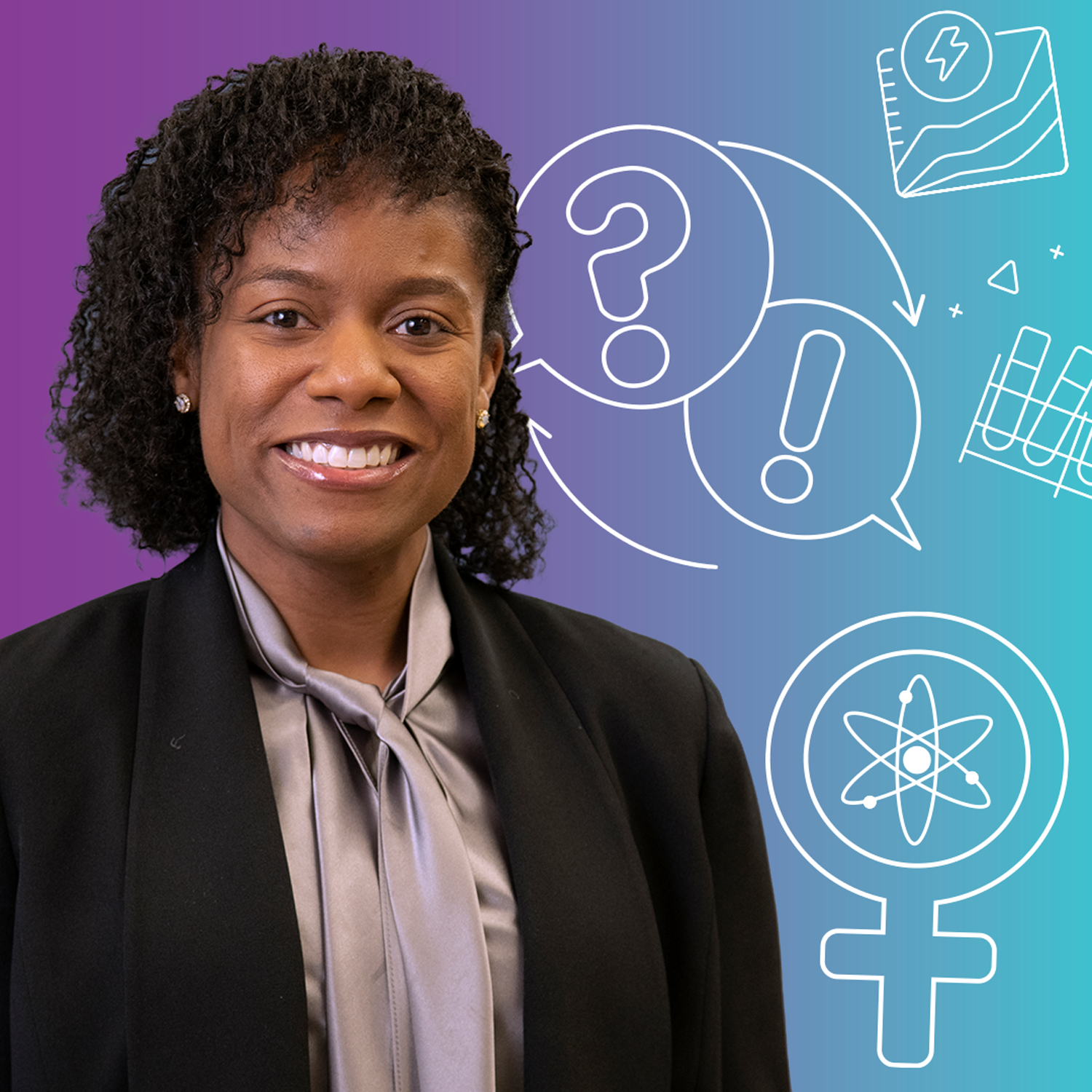
In 2019 at the University of Michigan, Ciara Sivels became the first (but certainly not last) Black woman to earn a PhD in nuclear engineering from the school. Dr. Sivels now works at Johns Hopkins University, where she researches how radiation interacts with and changes the properties of various types of materials.
In 2019 Dr. Sivels was named an IF/THEN ambassador. She joins IF/THEN in doing critical work to empower girls in STEM as well as provide funding for girls to grow in STEM fields. “If she can see it, then she can be it.”
Bill Magwood
Bill has contributed to various facets of the nuclear industry, from serving as the director-general of the Nuclear Energy Agency to being a commissioner with the U.S. Nuclear Regulatory Committee. Prior to his work at the NEA and NRC, Bill was the director of the Office of Nuclear Energy at DOE from 1998-2005. At the DOE, he had an incredible list of accomplishments. He established the Idaho National Laboratory, created activities that reversed the decline of U.S. nuclear technology education, and launched important initiatives such as the Generation IV International Forum (GIF) and the U.S. “Nuclear Power 2010,” which helped restart nuclear plant construction in the United States.
Moddie Taylor
Nuclear energy may not be possible today without the work of Moddie Taylor. In 1942, Moddie was one of over a dozen Black scientists who were instrumental in the Manhattan Project. What you didn’t see when you watched Oppenheimer was the work that people like Moddie were doing at the University of Chicago through the end of World War II to study and understand the properties of elements like plutonium.
Even after his time at the University of Chicago, Moddie continued to push the industry forward by becoming the chair of the chemistry department at Howard University and being a professor for just under 30 years. The work he did to help shape young minds will have a positive impact on the scientific community for years to come.
Shirley Ann Jackson
Shirley Ann Jackson has a track record that would make just about anybody envious. She was the first Black woman to receive a doctorate at MIT (in Theoretical Elementary Particle Physics) and the second Black woman to earn a physics doctorate in the U.S. She was appointed to chair the NRC in 1995 and was the first Black American and first woman to serve in that role. She later became the first Black American and woman to become president of Rensselaer Polytechnic Institute (RPI) in 1999. RPI is known for helping develop some of the brightest scientific minds in the country. Shirley now serves on the board of the Nature Conservancy, an organization fighting to preserve the environment. Like the others mentioned here, Shirley’s impact is lasting for the nuclear industry.
The Center for Energy Workforce Development conducted a survey as recently as 2023 to learn more about diversity in the energy industry. It showed that there is still work to do in diversifying the workforce, but there has been progress.
By sharing the stories of people like Ciara, Bill, Moddie, and Shirley, hopefully we can help inspire the next leader who can propel our industry forward.