Culture, and how we engage with it, is always changing. In the last century, we’ve seen those changes accelerate. We’ve gone from getting the news from newspapers and the radio to getting it on TV to getting it from social media and so on. And with those changes, what we think the future can contain has changed too. That leads us to this week’s guests, who spend a lot of time looking into the past to get an idea of the future.
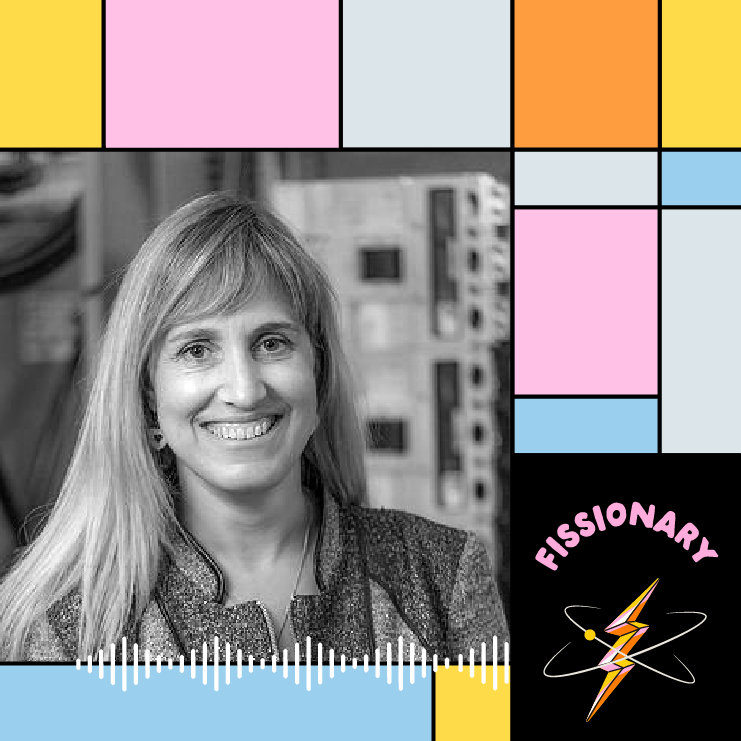
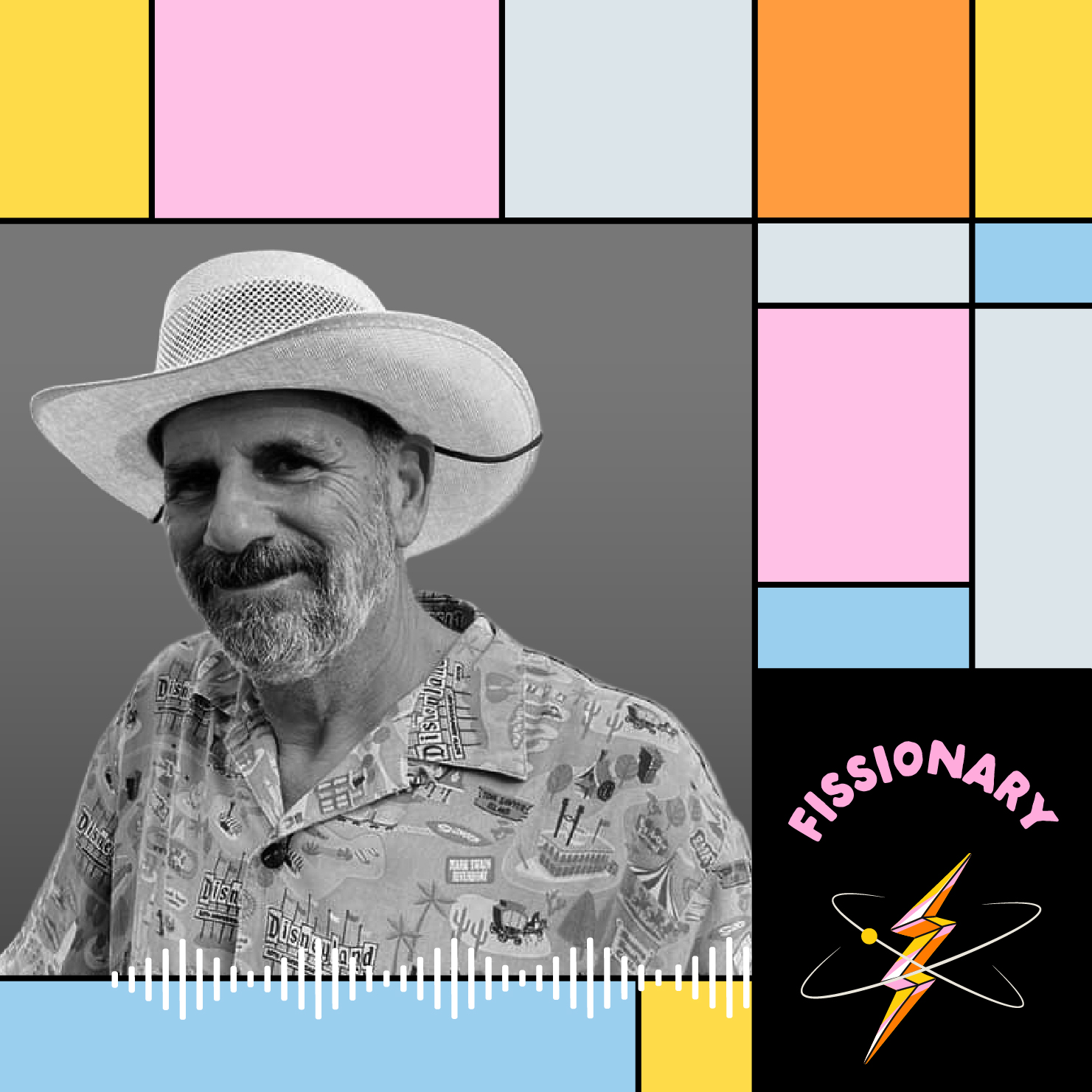
This week on Fissionary, hosts Mary Carpenter and Jordan Houghton sit down with historian Alan Carr and archivist Patty Templeton from Los Alamos National Laboratory to explore how the Atomic Age reshaped not just science, but culture. From the birth of the phrase “Atomic Age” to Godzilla, Googie architecture, Star Trek, and the nuclear rocket engines that almost took us to Mars, this conversation traces how fear, optimism, and imagination collided in the mid-20th century.
I do think that early on, in the later 40s and especially in the 50s, there was a lot of interest in kind of that optimism. What could the future be? Where could this technology take us? And so, you had largely the public and largely the government, which had similar goals. We're going to use this technology to open up an entirely new chapter in human history.
Patty told us a bit about the first interactions the American public had with nuclear science: pre-WWII with science communications writing in The New York Times. Eventually, these interactions moved to radio, more newspapers, newsreels, movies, and so on. It even made its way into architecture.
It's all actually under the very, very strange name of Googie architecture. And Googie architecture has a whole lot of new usage of materials that weren't traditionally seen in home and commercial use before. You've had steel. You have atoms appearing as the cartoon depiction of an atom on a road sign. You see a lot more neon. You see things that people are starting to recognize as futuristic.
Alan and Patty also talked about the role Los Alamos played in the Space Race—things like the Rover program. It was this moment when science, government, and culture all started to revolve around the same thing.
I think the Space Race follows this pattern within technology and usage of technology where, wow, you have a new technology. And then, oh my god, maybe there's a little bit of anxiety... And then there's these other technological points that then the public keeps hearing about it. The anxiety has turned more familiar, once these terms are coming around, people understand what a satellite is now, and they had never previously used that term.
The past and present can always tell us a little bit about the future, but sometimes a new variable in pop culture gets thrown in and changes everything. If you spend a lot of time thinking about that, then this is the episode for you.
Alan Carr I do think that early on, in the later 40s and especially in the 50s, there was a lot of interest in, kind of, that optimism. What could the future be? Where could this technology take us? And so, you had largely the public and largely the government, which had similar goals. We're going to use this technology to open up an entirely new chapter in human history.
Mary Carpenter This is Fissionary, a show exploring how nuclear powers your world. I'm Mary Carpenter.
Jordan Houghton And I'm Jordan Houghton. Let's jump in. Hey Mary, hello Fissionaries! Welcome back.
Mary Carpenter Hey Fissionaries. This season we're asking a big question: what powers wonder? And in this episode, we're going back in time to a moment when nuclear wasn't just a source of power but a symbol of possibility.
Jordan Houghton Super interesting episode today. We're talking with Alan Carr and Patty Templeton from Los Alamos National Laboratory. Mary, I feel like we should acknowledge up at the top that this episode necessarily references the atomic bomb, probably more than any of our other episodes have. And there's just not a way to talk about the dawn of the Atomic Age and how nuclear science came into the public consciousness without talking about the bomb.
Mary Carpenter It's an unusual episode for us because it really does focus on weapons, pretty much the whole episode, but we really wanted to do this episode because it lays a foundation for the Atomic Age, and it is such a large role in how nuclear was perceived at the beginning and how it's transitioned over the years. So, just remember, most of the time we're talking about weapons today, not energy, but it really is a good foundation for a lot of the other conversations that we've had.
Jordan Houghton I think having come from where I come from, having worked in a museum focused on the nuclear weapons program and testing, I—I've gotten sort of used to holding two thoughts in my head at the same time. We had a lot of challenging conversations with guests at the museum, which was good. This is, like, the right way to go about it. Let's have hard conversations and acknowledge that the bomb exists, but is also the reason a lot of other incredible science and technology exists. Some of which we talk about in this episode; going to space, the rover program, which is so cool, and heat pipes, which that was actually a trivia tidbit I did not know.
Mary Carpenter Yeah, I had no idea. And it also goes even beyond that to architecture and TV shows and movies and music. And that's some of the stuff we'll get into today as well.
Jordan Houghton It was interesting to talk about how pop culture, when the Atomic Age was dawning, pop culture started embracing it in different ways. On the one side, there was some anxiety, but also on the other side, hope, and the idea that there could be a better future. And Mary, it made me kind of think about where we're at with AI right now, where there are people who see the possibility in it, and how it can make aspects of our lives better, and then there are people—and I'm one of them—who are more hesitant and reticent to adopt it. And so, it's just—it's interesting. I drew a lot of parallels in my mind as we were having this conversation.
Mary Carpenter Yeah, I mean, no matter how you look at AI, if you like it, if you don't like it, or if it's annoying, always constantly popping up trying to read my emails for me, it's still a groundbreaking technology that has the potential to change the world. Very similar to nuclear. It's—it was a groundbreaking technology that had a chance to change the world, which I think it is now in nuclear energy, and nuclear medicine, in space in so many different ways. So, I mean, that really is a good parallel. And our guests just do a great job of explaining, kind of, the roots of what we've been talking about.
Jordan Houghton Yeah, so let's get into it. This week, we are joined by two amazing guests, Alan Carr, a senior historian at Los Alamos National Laboratory. He spent more than 20 years uncovering stories of nuclear innovation, many of which still shape our world today. We're also joined by Patty Templeton, who is an archivist and cultural researcher at the National Security Research Center. She specializes in the media, music, and public storytelling that helps shape how we feel about nuclear science. Thank you so much, both of you, for joining us today.
Patty Templeton It's great to be here.
Alan Carr Yeah, it's awesome, and it's good to see you, Jordan, again, it's been a few years.
Jordan Houghton Yeah, it's good to see you too, Alan! So, this season, we're asking all of our guests, what powers wonder? So, from your perspectives as a historian and an archivist, what powers wonder in the stories you work with every day?
Alan Carr To me, it's people. I get to work with amazing people. We've met so many incredible people. Patty and I have done interviews with other people for projects that we've worked on, literally from coast to coast. And to me, when I think of my friends who've worked at the laboratory, they've retired, they've gone on, they'll say, the one thing that I miss the most is the people. And so, when we're talking about discovery and innovation and getting people excited about science and technology, it goes back to these incredible ambassadors that we get to meet who are in these fields. So, to me, that's what provides the power, it’s—is all of these people with these great perspectives and stories and education and experiences.
Patty Templeton I think to piggyback off of what Alan is saying, from the archival perspective, what I view as truly wondrous in the history of science and technology is the preservation of these stories, of these fascinating people, of scientists, of engineers, of the people surrounding them. I think being able to preserve and make accessible the technical content but also the cultural context that it appeared in makes these discoveries more available to researchers and the public today.
Mary Carpenter So, before we dive into the questions, I want to hear a little bit more about that. Would each of you just tell us a little about your day-to-day jobs, and just explain what you guys do to our listeners?
Patty Templeton As the collection manager of the National Security Research Center, what my day-to-day looks like is that I have a team of historians, archivists, researchers, subject matter experts who preserve technical content regarding the history and accomplishments of the Los Alamos Laboratory from right before the Manhattan Project, before it was even built, all the way through modern day. So, what that looks like is a lot of media preservation, AV preservation, a lot of digitization is going on that my team helps. It also looks like making sure that researchers know these things exist once we have fantastic finds, making sure fabulous historians like Alan Carr and also Nicholas Lewis, who's our other historian, have the ability to find these materials. And then also when we can and when it's appropriate, kind of pipelining those materials into the public sphere.
Alan Carr I wouldn't have a profession if it were not for people like Patty, who work in the archives, who not only preserve, but as she alluded to, make all of these records accessible. Because if you're just throwing something in perfectly preserved conditions, if there's no way to get to the information that you need, then what good is it? So, we have just an incredible staff of specialists, archivists, librarians, digitizers, that make my job possible. In a sense, part of my job is kind of being an ambassador for the laboratory. I'm a corporate historian. I work for an institution, and I interpret the history of that institution. And so that is part of it, kind of being an ambassador and letting people know that we're here and what we do. It's really a lot of fun most days. I mean, it's really privilege to be able to be a historian, especially at Los Alamos. I've had people tell me that I have the best job at the lab, and and I think that most days they're certainly right. And so, yeah, you never know what's going to show up in my inbox.
Jordan Houghton That's great. So, I'm curious to start off, I think a lot of people are exposed to nuclear science initially through culture. And Patty, I'm gonna ask you, if you can talk a little bit about where everyday people first come in contact around nuclear in their daily lives.
Patty Templeton Sure, so the first spaces where the American general public would have experienced anything about nuclear science, nuclear history, nuclear usage, would have been pre-World War II. You had science communications writing within the New York Times. And within journals that are scientific journals. And so, you mainly have this scientific community who are learning about things like fission. We're learning about all of these processes that then, during the war, turn into the Manhattan Project. So, the American public is seeing nuclear usage through the lens of radio then. It's seeing it through, right after that, the lens of newspaper articles about what's happening and all of the leads trying to find out more about how it was used, why it was used, how it is built, we didn't even know it was built. And then the next phase that you really truly see it starting moving into is then books that are being published as extensions of newspaper reports. So, you see it in radio, newspapers, newsreels, and then slowly the books start warming off of it, and then much more fast comes the music.
Mary Carpenter So it seems like that's a point in time where nuclear became kind of mainstream. How would you define nuclear pop-culture, and what would you say were some of the most significant moments in nuclear pop-culture history?
Patty Templeton So, well, one of the original historian of the Manhattan product was hired by Leslie R. Groves, the general who spearheaded the Manhattan Project along with Oppenheimer, at least, at Los Alamos. He hires William Laurence, who is a New York Times writer, to write the official Manhattan Project history. And William Laurence is also credited as the person who came up with the phrase, the Atomic Age. And so, the Atomic Age is basically from 1945, 1946, all the way through about 1967. It's these 20 years in time when all of a sudden you have a new technology, it's on trend. And so, this is a new existential world, but also a somewhat exciting world where we didn't even know we could do the things that have been done. And it moves into, well, what else can we possibly do that we don't know we can do yet? And so, I would say the Atomic Age was that, and then there were so many moments over—over 80 years, right? And there's so many. So, I would say going in a few really just high note spaces are John Hersey's Hiroshima in 1946, a non-fiction book that explores a survivor's side of things. Then you have in 1954, the film Godzilla, originally produced and distributed by Toho. It's a gigantic monster movie, but it's also Japan attempting to deal with the trauma of having these bombs dropped on their cities. And so, you start seeing an expansion of immediate impacts and effects in pop culture to the parody of these technologies, into the fantasizing of what could come from these technologies.
Mary Carpenter Patty, you mentioned architecture a couple of minutes ago. Now I'm curious. Tell us a bit more about the Atomic Age and nuclear's impact on architecture.
Patty Templeton Sure. So, there's two, kind of, very specific timelines of like interesting architecture, and it's all actually under the very, very strange name of Googie architecture. And Googie architecture has a whole lot of new usage of materials that weren't traditionally seen in home and commercial use before. You've had steel. You have atoms appearing as the cartoon depiction of an atom on a road sign. You see a lot more neon. You see things that people are starting to recognize as futuristic. And as we get into the Space Age, it becomes then that switch in Googie architecture goes into, instead of seeing the atom on the road sign, you see the satellite on the road sign, right? And these cartoonish, but also whimsical depictions, that at the time were not just somewhat whimsical and colorful, they were embracing something completely new and different, and just going hard on an imaginative future.
Jordan Houghton Patty, you've set a great stage here for how a lot of the early pop culture was born out of a fear of the bomb and the bomb being used at the end of World War II. And then you're talking a little bit about how it's evolving in architecture and design into sort of what I want to talk about next, which is this other huge moment of the Space Race. And in 1955, Los Alamos started Project Rover, which was originally meant to be used with H-bombs, but shifted to a focus on space exploration, which I feel like is kind of in line with the Atoms for Peace, kind of shifting the cultural narrative from fear to excitement and wonder. And Alan, I would love if you could tell us a little bit more about this moment in history and what its significance was to Americans.
Alan Carr The space propulsion story. It's a great story, and I think that it's largely forgotten. Even within Los Alamos, we haven't landed on Mars yet for one thing, but maybe when we do, people will get interested in this story again. So, long story very short, first generation hydrogen bombs were extremely heavy, unwieldy heavy, and at the same time in the early 1950s, conventional rocket technology was not really that good. So, they thought, well, conventional rockets can't get the job done. What if we developed a nuclear rocket? Now, the thing is, we've heard the cliche. It's not rocket science. Well, you know what's harder than rocket science? Nuclear rocket science. And so that's how the program starts. So, in 1955, 1956, a couple things change. One, conventional rocketry gets a lot better. The other thing is that H-bombs pretty quickly get much smaller. All of a sudden, by 1956, 1957, you can use conventional rocket technology to deliver an H-bomb, potentially. So, the program almost goes away. There just wasn't a need for a nuclear rocket, and it almost died until October 1957, Sputnik. And so, the Soviets put a man-made object in space. So again, kind of one of these moments where people are really excited, but they're also really nervous. Well, Sputnik saves the nuclear rocket program. Because just as it was about to completely go away, oh, wait a minute, the United States needs a response to the Soviet Union in the Space Race. What if we, kind of, resurrected the dying nuclear rocket program, but instead of delivering H-bombs, we used it to explore the solar system. If we could get one of these to work, we could get someone to Mars maybe in three months instead of a year, nine months, something like that. This could be a really useful technology, but again, it was really hard to do. And so, NASA was created in 1958 as part of America's response to the Soviet Union, part of the space race. Los Alamos had already kind of been in the business for several months at that point in time of space exploration. So, that's something that we're proud of at the laboratory. But they were very successful. We kind of measure success—well, did they reach the ultimate goal of putting someone on Mars? No, they didn't. But they did a lot of really neat things along the way.
Mary Carpenter So, how did the Space Race shift pop culture and how did space exploration change the way energy was portrayed or imagined by people across America?
Alan Carr Within the realm of the laboratory, at least, because as a historian, that's where my expertise is, is interpreting Los Alamos's history within the laboratory itself. It was a very dynamic time because on the one hand, okay, so we now have a purpose for the rover program moving forward. That's really exciting. By 1960, when the rover program was really growing at Los Alamos, several films were made on this technology—you can see them on YouTube these days—but I remember the 1960 Rover report, there's this great line by the narrator, and I'm gonna paraphrase a little bit of it, but he says, 1945 comes along and the atomic age is born, and he says now nothing is impossible. And I think that that was kind of characteristic of the nuclear age, not just within the laboratory, but I would say throughout the country and the world. It was mentioned earlier, Atoms for Peace, I think Jordan mentioned that. At the heart of it, this is an energy source. It's an energy source. What can you do with this new energy source, the likes of which the world has never known? And so, there was a lot of optimism and fear. I think that's one thing with any energy source that we see throughout history. When something new emerges, there is the optimism, but it is also accompanied with that fear. There was a lot of optimism technologically that we could use this new energy source, maybe, to help prevent global wars again through nuclear deterrence. But maybe we could use it to explore the solar system, maybe we can use it in medicine. Maybe we could use nuclear devices for construction instead of destruction. That was the old plowshares program, different things like that. So, we don't really see that anymore today. But that was emblematic of the era. And I would imagine that with most people in the public, when this topic came up, that you had kind of multiple emotions that came up as a result.
Jordan Houghton As someone working at Los Alamos, Alan, is there one outcome of the Rover program that still excites you the most? Or particular achievements that stand out?
Alan Carr There's several that come to mind. In Los Alamos today—so, Los Alamos builds three nuclear rocket engines that worked, and could have been adapted for flight testing. This was ultimately canceled in the 1970s, but they were successful in creating these rocket engines. One of them, the most powerful, is the Phoebus 2A, it was tested in 1968. I believe that the housing for that is still on display at the nuclear testing museum out there in Las Vegas, one of my favorite artifacts. That was a 4,000 plus megawatt reactor. You think about that. A lot of people hear ‘megawatts’, well, what does that mean? Well, to try and put that in terms that are more approachable to a very wide audience, 4,000 megawatts would be enough to provide power for a city of a quarter million people while it's fired up. And this is something small, it's something that you could put in the trailer of a semi, something like that. And so, that is really unbelievable. And I think that that was the most powerful reactor of any type ever created, even to this day. And that leads to one other thing, is that when you think of something that small that is producing that much energy, how do you control the heat? And they had to invent a solution for that, and the invention was the heat pipe. That's not going to be overwhelming to most people who hear it. They might not even know what it is. But heat pipes are ubiquitous these days. They're in your car, they're in all kinds of different things. They’re in your phone. And all that goes back to Los Alamos to the nuclear rocket program. So, one thing that I like to do is when people think about Los Alamos, they may not realize that we're a multidisciplinary laboratory, and we have been for a long time, and that we have technologies that affect just the everyday life of people. So, as you can probably tell, that gets me excited, and hopefully it does others as well.
Mary Carpenter That's awesome. So, the Space Race was a rare moment when science, government, and pop culture all aligned around a shared sense of wonder. Why, either of you, do you think that alignment worked so well at that time? And how did it show up in what people saw and heard?
Patty Templeton I think the Space Race follows this pattern within technology and usage of technology where, wow, you have a new technology. And then, oh my god, maybe there's a little bit of anxiety. Sputnik is within the satellite sphere, within the heavens by 1957, and it sets that anxiety for a whole lot of Americans being very unsettled. If the Soviet Union has a technology to get into space before us, what other technologies do they have that we don't know about? So, then you have JFK, President Kennedy, with his Moonshot speech in 1961, saying, we are going to beat the Soviets to the moon, we are going—we're going to get this technology. And then there's these other technological points that then the public keeps hearing about it. The anxiety has turned more familiar, once these terms are coming around, people understand what a satellite is now, and they had never previously used that term. Outer space becomes a reachable place to a normal average human being in their mind. And so, you have the future becoming now. You have technology entering these spaces that no one ever understood it could go before. So, exploration and the reaches of new frontiers, eventually through shows like sci-fi shows such as Star Trek, where you see the progressive, almost near utopian sorts of futures where there may be conflict, but it can be resolved within a very short period of time.
Jordan Houghton Alan, from a historian's perspective, why does this moment stand out not just scientifically, but emotionally in the broader nuclear story?
Alan Carr I would say that although nuclear technology was controversial from day one, I do think that early on in the later 40s and especially in the 50s, there was a lot of interest in, kind of that optimism. What could the future be? Where could this technology take us? And so, you had largely the public and largely the government, which had similar goals. We're going to use this technology to open up an entirely new chapter in human history, whatever that may be. And that changes over time. As the 60s progress, things change. We start to sign arms control treaties with the Soviet Union. We start as a nation to focus on different things. Okay, maybe we need to kind of reassess the consequences of having those priorities in the past. And I think having those priorities in past were understandable. We want to defeat Adolf Hitler in World War II, right? We don't want to let Stalin take over the world. But there was a price to be paid for that. And so that shared goal that we talked about kind of starts to diverge. There is fear about the technology. And in the 1970s, you see a lot of change. There is a lot of visible activism, Greenpeace, for instance. So, there is a lot of emotion. You see these movements, you see changes, and you see the government, too, reflecting that change in, for instance, at Los Alamos. Los Alamo's had been a nuclear weapons laboratory in the early days, and it evolved into a nuclear science laboratory. So, we did testing and design, but we also did other things as well, nonproliferation technologies, we've talked about Rover, which is rooted there. But in the 70s, Los Alamos, I think very much in—as a result, in response to public emotion, and the government's response to that, it develops into a multidisciplinary laboratory where we start doing work in all of these other areas, and that continues to this day.
Mary Carpenter So ,this is a question for both of you. If you could pick just one thing to show someone to spark their wonder about nuclear, whether it's an image, a story, a moment, what would you share?
Alan Carr There are so many things. We've already talked about a couple of them. Thanks to Patty and her colleagues and their predecessors, we have maintained so many records that we still use for our programs today at the laboratory. Some of those things that we still maintain, I can use to help interpret our history. And I think that that's always a neat experience, to show someone a historical object, an artifact. Maybe it's a notebook of a famous scientist or something like that to make it real. When you're talking about this famous person that may just be, to them, a picture on Wikipedia or something like that to say, no, they wrote this, this object that we're carefully holding in our hands with gloves, things like that. So, it helps to make it real. But one thing that I like that I can take beyond the laboratory, that is portable, and I think helps to make the technology and the energy source real, is a piece of trinitite. What I'm holding in my hand—we all know the story, the Trinity Test, the first full-scale nuclear test in history. And you can look at pictures and they're impressive, but they can't do it justice, can't experience what it was like to be there. But to me, this is even more real. When you consider that the new energy source melted hundreds of tons of earth, and that much of it in molten form, rained back to the ground, re-solidified into a mineral which never existed on earth before. This was in the fireball of the world's first nuclear test. And I think that when you stop and you think about it, you actually consider it's not just a rock, that that can be very powerful in helping people to understand, wow.
Patty Templeton I should have gone first because how do you follow that? Since I'm in the cultural sphere, I'm gonna just stick in the cultural sphere. And I think I'm just gonna name check a song that I—there is a band called Fishbone. They're an amazing punk, funk, weird band who still exists, who still play. But in 1985, they released an EP self-titled Fishbone, and there's a song called Party at Ground Zero. And it is still a killer song. It's a band trying to express profound anxiety and profound joy at living and balancing both what's happening policy spaces where they are not players to what can we control how we live our daily lives. So, the song Party at Ground Zero by Fishbone brought me into a deep moment of awe where I appreciated it greatly, and had a living room dance party.
Jordan Houghton These are both great answers. I have one final question for you, kind of related to what we just asked. Is there a person, place, or thing that has left you in awe recently?
Alan Carr I have a granddaughter due in about a month. And so, I'm about to be awed by meeting a new person. So, I'm very excited about that.
Mary Carpenter Congratulations!
Jordan Houghton Congrats!
Alan Carr Thank you. Thank you.
Mary Carpenter That's great. That's a great answer.
Jordan Houghton Patty, what about you?
Patty Templeton Something that left me in awe recently was there is an author. His name is Zig Zag Claybourne. He has a book series that's called Khumalo Trilogy. Book one is called Breath, Warmth, and Dream, and it's about family, and fantasy, and a few—how to love fearlessly, how to travel extensively, and then how to also rest. And I love this author, I love this book. It made me sigh in restful relaxation so many times when I read it. And I can't wait to read the second one.
Jordan Houghton I love that, that's awesome. We actually—one of our previous seasons, we asked guests what their favorite book was. So, I love that it's like a throwback as well. Thanks both of you for sharing your time and expertise.
Patty Templeton Yeah, thanks for the invite, guys!
Alan Carr Yes, thank you very much.
Jordan Houghton Patty and Alan, thank you both so much for joining us. Very excited to have another book recommendation added to our Fissionary reading list. Also, have to second Alan's shoutout to go visit the Phoebus reactor at my former employer, the National Atomic Testing Museum in Las Vegas. It is very cool to be able to get up close and see that reactor that could have taken us to space. It didn't, but it's there, and it worked, and it's a cool thing to get to visit.
Mary Carpenter That's awesome. I love that it’s a throwback to your previous life. I feel like I have so many action items from this episode. I have songs I have to listen to listen to, books I need to read, books, museums I need to visit, yes, so many films! TV shows. And there's so much of, like, the architecture stuff that I want to dig deeper into. That's so interesting.
Jordan Houghton Really interesting. Fissionaries, there's a lot of homework from this episode. So, get into it, let us know what you liked, what you've read, what's you've seen. If you have any feedback on any of these things brought up during the episode, we'd love to keep the conversation going.
Mary Carpenter Yeah, leave a comment. And if you enjoyed this episode, make sure to follow Fissionary on Apple, Spotify, or wherever you listen. Bye, Fissionaries!