Last time on Fissionary, we explored how mid-20th century advancements in nuclear science brought on the Atomic Age and left their mark on everything from pop culture to architecture. This week’s guest digs deeper into one facet of nuclear’s influence: interior design.
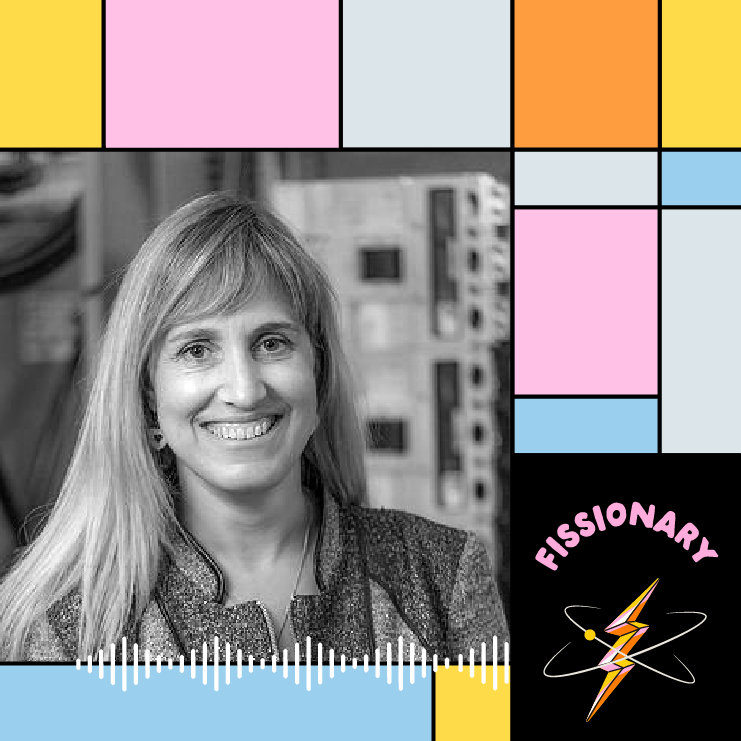
Alessandra Wood, a design historian, professor, and expert in interiors and decorative arts, sat down with Mary and Jordan to explore how the things we surround ourselves with in our homes can reflect what is happening in the world around us.
Today, your interior is so deeply personal to you. We spend so much time in them, we're living in them, sometimes we're working in them, we're having our families, our pets, everything is centered around this place as being ours. And that wasn't always the case, but when we start to understand those spaces, that people have such personal connections, we get to really understand more cultural ideas about family, about privacy, and about work
Alessandra explains that midcentury home design was partially inspired by the advancements being made in nuclear science at the time. For example, the iconic Sputnik chandelier and Ball clock resemble drawings of atoms, and new materials like plastic and metal, usually reserved for industrial uses, were starting to be used in kitchens for their durability and customizability.
When you look at the appliances and you look at their knobs and dials … it almost looks like a control center. … It's very analog, and it's really tactile, and it really does feel like a control center. You start to see these relationships between, like, what you might expect to see in a space center at the time. … When they have access to the future and to the technology that comes out of scientific advancements, they start to support it a lot more because they can see how it directly impacts their life.
And these design elements didn’t die out with the next set of trends—elements of Atomic Age design are still seen in homes today! Alessandra discusses how design elements like spokes and starbursts were meant to look futuristic at the time they were developed, and they still represent the future to us today.
Even if it's not the most trending style today, we still see people gravitating towards really special pieces from that era. So, things like the Sputnik chandelier, the Ball chair, that's another one where you have—it's such an iconic design. And we can see it today, and we can think about it as being so different, and so iconic, and so much of a representation of a future that I'm not sure if we ever got there.
Listen to the full episode to hear Alessandra’s prediction for the next big design trend. And leave us a comment if you spot any Atomic Age-inspired decor in your own home!
Alessandra Wood The fact that you could purchase what felt like parts of the future really made it special and it made people want it more. We see these visual expressions of atomic energy and we see this larger cultural movement embracing technology and incorporating it into domestic spaces, for example, and it's fun, it's bright, it's happy.
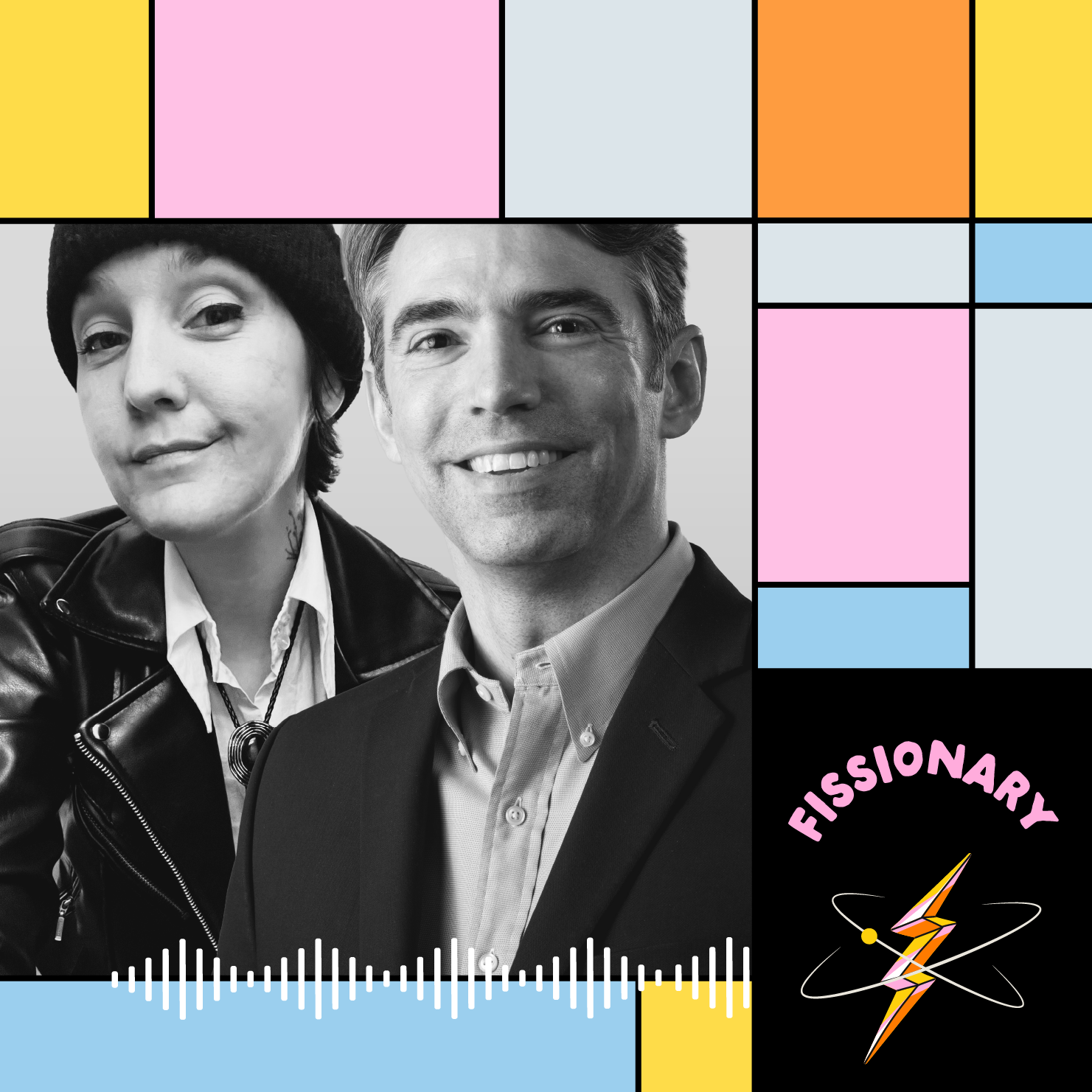
Mary Carpenter This is Fissionary, a show exploring how nuclear powers your world. I'm Mary Carpenter.
Jordan Houghton And I'm Jordan Houghton. Let's jump in.
Mary Carpenter Hey, Fissionaries! Hey, Jordan!
Jordan Houghton Hey, Mary!
Mary Carpenter This is such a fun topic today. So, who knew your living room decor might have been inspired by nuclear energy?
Jordan Houghton It sounds wild, but during the Atomic Age, the atom didn't just power reactors. It also inspired how we design furniture, lighting, architecture, and even entire neighborhoods.
Mary Carpenter And it's still inspiring decor today, because I have a light in my home that is from the Atomic Age. Not actually from the Atomic Age, but inspired by it.
Jordan Houghton Yeah, the Sputnik chandelier, we're going to talk about that later in the episode, but it's called Sputnik, obviously after Sputnik, but I always think of it as looking like an atom.
Mary Carpenter Yeah. No, it is. I see my atom hanging in my stairwell every day before I go to work!
Jordan Houghton I love it. I think it's so interesting how when you look at some of these things, they look simultaneously retro but also still super-duper modern and futuristic. And it's really cool to me that the design exists in, like, both ways.
Mary Carpenter Yeah. That design will always feel futuristic, no matter what.
Jordan Houghton No matter what, yeah.
Mary Carpenter Yeah.
Jordan Houghton And the other thing that we talk about in this episode that I think is so interesting is this idea that the Atomic Age started with fear because of the bomb. And obviously, we just talked about this a couple of weeks ago with Alan and Patty, but evolved into this hope and excitement for the future. And I think it's interesting to see pieces in your home that reflect that and that can make you feel hopeful about technology instead of scared of it.
Mary Carpenter Yeah, and you guys might be wondering why are we talking about this on a nuclear energy podcast, and that's the exact reason! I mean, we're always talking about public opinion and making sure people understand nuclear and how they feel about it, and this is really where it all started, where it moved from fear to hope to excitement.
Jordan Houghton Yeah, so let's get into today's interview.
Mary Carpenter Today, we're joined by Alessandra Wood, design historian, professor, and expert in interiors and decorative arts. Her work explores how design reflects culture, consumer behavior, and the unwritten history of the world. And today she's helping us unpack how the Atomic Age reshaped the visual language of the 20th century. Welcome Alessandra, thanks for joining us!
Alessandra Wood Thank you for having me! I'm so excited to be here.
Mary Carpenter As someone who studies design and cultural history, what sparks that feeling of wonder for you?
Alessandra Wood I think when you encounter something that is unexplainable or extremely beautiful or hits one of these extremes that you want to know more about it, that I think powers wonder. Where you're really—you're looking and you're thinking and you're questioning, like, huh, why did someone do that, or why does something work some way?
Mary Carpenter I love that answer. Finding it in little things every day.
Jordan Houghton That's a good one. So, Alessandra, tell us a little bit more about yourself and what initially drew you into the world of design history.
Alessandra Wood When I was young, I loved art. I couldn't get enough of looking at art books, going to museums when I could. I had the soul of an old person, really, as a five or six-year-old. And finally, when it was time to go to college, I thought, art history, this is the thing to study. I went to Johns Hopkins for undergrad, and while I was there, I worked at the Homewood House Museum, which is this historic home that the Homewood campus is named after. It was built right around 1800, and one of my jobs in the mornings was to open the interior wooden shutters. And it was just like this really performative event for me where I would go into each room, and all the rooms were just filled with furniture from the time period. And I would unlock the little latch, and I would open the shutters, and I loved doing this because I felt like I was someone who lived or worked in that house in the early 19th century. So, my experience with that, like, everyday objects, really kind of pushed me to my next—my next, like, field of study, which was at Parsons, I studied the history of decorative arts and design. So, decorative arts is kind of what we call all of the things that bring, maybe bring beauty to us, so furniture, you could put clothing in there, jewelry, decorative objects, and those things, while they are often pieces of art, they're also pieces that we own and we use every day. So, they have this really amazing tapestry that tells the story of the people who used them. When we look at these objects, we can start to realize and understand how people navigated their lives, what they thought, what they did in their homes. And so, they have this beautiful unwritten story that if we just look a little closer and ask questions, we can see an amazing historical narrative.
Mary Carpenter That’s so interesting. So, you mentioned interior design teaches us about our past. What can we actually learn about a culture by looking at how it decorates its spaces?
Alessandra Wood I think the study of interior design is so special for a few reasons. Specifically, too, when we think of domestic interiors. So, we all know today, your interior is so deeply personal to you. We spend so much time in them, we're living in them, sometimes we're working in them, we're having our families, our pets, everything is centered around this place as being ours. And that wasn't always the case, but when we start to understand those spaces that people have such personal connections, we get to really understand more cultural ideas about family, about privacy, and about work. If we reflect back on the 21st century, we'll see lots of conversations in the news about remote work and working from home and returning to office. But if we study these spaces in 50 years or 70 years, we'll start to realize a lot of the ways where people set their spaces up to be—maybe to work better, to work faster, or to be able to have more balance in their life. And so those are the things that sometimes get missed in the traditional historical narrative. When we think of interior design specifically also, for most of history, the concept of interior design was really reserved for elites, think of like royals, really upper-class people who were incredibly wealthy, who had the means to decorate and design their homes. With the growth of the middle class and the Industrial Revolution's democratization of goods, including household goods, we started to see more ordinary people can view their interiors as a reflection of their interests and tastes. So, in the beginning of the 20th century, we start to see people really designing their spaces the same way we might think about our spaces today. And thinking about them as a reflection of their self, of their personality. Emily Post—like Miss Manners Emily Post—she wrote a book called The Personality of a House in 1930. And she basically argued that your home and the objects within it, the colors, the art, the furniture, should tell a story about who you are. It should be a reflection of you. And that, I think, is such a key moment when we think about interior design history, especially domestic interiors, because it really shows that these spaces, they tell stories about who lives in them, and they might tell very personal stories.
Jordan Houghton Before we talk about atomic design specifically, I would love to have you help us define the Atomic Age from a cultural standpoint. So, for you, when you're thinking about this, when did it begin and how did it show up in our everyday life?
Alessandra Wood When we think about the Atomic Age, we're looking at a period from about the 1940s to the 1960s. So, the beginning of this time period is really defined by rapid scientific development of nuclear technology. So, we start to see those discussions in the 1940s. I think the key here is the public perception of the technology. In August, 1945, the New York Times magazine declares in a headline, ‘we enter a new era, the Atomic Age’. So, they're literally even using the phrase atomic, as we get into the 1950s and 60s, we start to see the term ‘atomic’ being used a lot, and we start to see a lot of interest in the many facets of that science. A lot of it, again, comes from pop culture and popular media. So first, simply thinking about what's in the news. What's atomic energy? How is it used? Of course, we can't ignore the atomic bomb and the nuclear arms race, because that's, like, a key part of the definition of the Atomic Age for the general public. They're hearing a lot about that. But then we obviously have those negative associations combated with more positive associations for the power of nuclear energy. With power plants opening up, futuristic dreams for nuclear energy, I would say that's more in like the 1950s in the 60s. There's kind of a balance here of the kind of scary associations of atomic and then the positive ones. And you see that push and pull in pop culture and in media.
Jordan Houghton Alessandra, can you give us some examples of what Atomic Age design looks like?
Alessandra Wood So, during the Atomic Age, so we have this, like, 1940s to 1960s, we do see design trends that start to reflect the idea of the future through stylized shapes of atomic science. And that really starts to come out in the 50s and 60s coupled with Space Age visuals in architecture, interiors, industrial design, and advertising. And so, there's this really, kind of, fun partnership, I think we'll call it, between the Atomic Age and what we also might call the Space Age. Because nuclear technology is so associated with the future, we sort of see this, like, popular movement that sort of bridges all of the ideas of the future together to create a very cool visual style that is part inspired by, literally, atomic shapes, and also inspired by visions of the future that really align a lot with space travel and orbit, and that future technology that's popping up during this era as well.
Mary Carpenter So, what's an atomic design trend that people might still have in their homes today without even knowing it?
Alessandra Wood One trend I think that probably most people have in their homes too, is the use of plastic and metal furniture. So, this was not something that really happened prior to this era. If you have a chair that's made of plastic, a piece of furniture with a high-shine plastic veneer on it, these design elements we can squarely say are coming out of the Atomic Age. They represent new materials and they also look like things that are part of the sleek, sort of Space Age visuals that are happening during this time. It looks modern, it looks minimal, and that's something that we really start to see popularizing during that time period.
Mary Carpenter Never thought about it like that, that's awesome.
Jordan Houghton When I think about Atomic Age interior design, I think kind of like, about the Jetsons.
Alessandra Wood Absolutely.
Jordan Houghton It has the sort of, like, the futuristic, and it feels very playful in a way and exciting, and so I'm curious about capturing that movement and the energy. How did designers visually communicate that, like, sense of possibility?
Alessandra Wood This was a really amazing moment where we do see design is following in these trends, these scientific trends, in very particular, fun and quirky ways. And so, like you said, right, the 1940s, I agree, I think it really is more of this time period of fear. I mean, we're really—we're coming off of the A-bomb, right? And so, there's like, there is a lot of fear. So then as we get into the 50s and 60s, because I think we start to see, culturally, a lot more, like you said, positive associations with nuclear energy. I think because this is a topic that is talked about all the time, we start to see a sort of fun approach or even just an approach where designers kind of take something because it's within the cultural zeitgeist, and they incorporate it into their work. There's something that happens twofold, which is almost—people are reacting to the optimism and reusing these shapes and it's kind of creating more optimism and maybe desensitizing some of the fear around it. So, things that we see specifically, in—we see stylized forms of the atom’s shape. So this is something where, again, with all of the popular media and coverage about atomic science, people are seeing kind of rudimentary shapes of the atom, and then that shape becomes part of the trends. So, we'll see starbursts—which, you can actually think about a starburst as a sort of stylized, simplified version of an atom, where you have, kind o,f the sphere in the middle and the spokes coming out—then you also have shapes that look even more like the atom. So, one great example is the Ball clock by George Nelson, which is a starburst and then each spoke has a sphere on the end, and kind of mimics that spoke-sphere shape that we see in scientific drawings of the atom. Those shapes start to become incorporated in, like, wallpaper, in sometimes, like, surface design, then we also see them abstracted and used in other sort of industrial design, even architecture, where you might see lighting fixtures, like decorative objects like lighting fixtures also—there's one lighting fixture called the Sputnik lighting fixture, so we know it's referencing satellites, but it's speaking to the visuals of this era. So, these visuals are no longer just scientific drawings of what an atom is, but we see those shapes, the spheres and the spokes, coming out into things that people are buying and decorating their homes with or designing into industrial design pieces and works of architecture. And I think it really, it showcases again, the immense amount of public media and popular culture coverage of this topic, that it becomes part of that cultural zeitgeist, and it becomes something that is incorporated into, sometimes people's day-to-day lives without even if they're not thinking, like, oh, that's an atom, it has that similar representation to the shape that they're seeing all the time that is the atom.
Mary Carpenter Yeah. We have a Sputnik chandelier. I love it!
Alessandra Wood Oh yeah, yeah! It's so fun! And I mean they're still popular today. It's such a great shape. There is this, like, quirkiness to it and this poppiness to it that is so defining of the moment it comes out of, but also has this lasting impact to even how we might think today. Something—it still sort of looks futuristic to us. And there's other things too. There's other stylistic tropes that come out of this era, things like these sort of organic shapes. So, when I think of organic shapes, one thing that's happening from a scientific perspective too, is we see a lot of images of organisms under a microscope. And when you think about those images, like, think about the microscope images that you see, they're kind of these, like, blobby, sort of soft forms. We also see that incorporated into the design world. And so, this is something again that's super tied to scientific achievements and scientific discoveries. But then from this design perspective, we start to get this whole new language of these soft, supple, blobby, organic shapes, where instead of having a hard right angle, we might now see a curved angle, or we might see, again, those smooth edges. This is also where we see smooth plastic and, like, smooth materials that sort of suggest this sort of sleekness. The other things we see too are bright poppy colors, such as orange and yellow, which, those are colors that we oftentimes align with feelings of optimism. So, you have these designers who are making choices, incorporating colors, and then you have a larger cultural trend that happens where people are gravitating towards those colors. So, all of these scientific forms, these futuristic ideas and these futuristic visuals are then coupled with colors that make people happy. You kind of start to force people to think about the future as being a happy place because that's the association they're having with all of these visuals constantly, either in their own homes or in popular media and pop culture.
Jordan Houghton Why do you think they caught on the way they did? Like, Mary's got the Sputnik chandelier in the year 2026, so not only did these things have a peak of popularity, many threads of them are still popular in design. Why did that catch on? Why did it become so popular?
Alessandra Wood I think twofold. So, the first thing I think about is why it caught on during the time is—these were new trends. They were fun trends. Obviously, there was no Pinterest or Instagram for people to trend-spot. But when they were looking through magazines or watching TV, they would see these trends, and they would—you would have a trickle-down effect where people would want to incorporate those trends. You also have major changes in how people are buying their furniture. So, in the mid-century you have this booming middle class, and they have a lot of money to spend, the depression is over, and these are the objects that are being marketed to them. So, you have large manufacturers who are also buying into these trends and producing products out of these sleek materials with these organic forms with the atomic shape, in the poppy colors, so when they're going shopping, that's what they're seeing, and it sort of reinforces the trend in a way. And then the other thing is, because this style was so aligned with notions of the future, and that was really solidified in pop culture, like, the Jetsons is such a good example of where we look at that, and even still today, if we saw that, and if you'd never seen the Jetsons before, you would know that's the future. Still culturally today, that style is what we think of when we think of the future. And so, I think that sticks, that's what has made this style remain a popular style, a fun style. Even if it's not the most trending style today, we still see people gravitating towards really special pieces from that era. So, things like the Sputnik chandelier, the Ball chair, that's another one where you have—it's such an iconic design. And we can see it today, and we can think about it as being so different, and so iconic, and so much of a representation of a future that I'm not sure if we ever got there. So, there's still this sort of hopefulness that maybe one day we will have Rosie the Robot and flying cars, and we will get to this future that was promised to us.
Mary Carpenter And the machine where you can just sit down and take you through and get your hair done and your makeup done and pick your outfit. I was always hoping one day that that would become reality.
Alessandra Wood Yeah, we're not there yet, so we need to hold on to hope.
Mary Carpenter Yeah, for sure. So unlike earlier design movements, atomic style was widely accessible. The US had a booming middle class, suburban expansion, and strong consumer buying power. How did that prosperity and economic situation help turn atomic optimism into something people could literally purchase and live inside and decorate their homes with?
Alessandra Wood Yeah, I think this is where the focus on future and the benefits of the technology really impacted people's day-to-day life. Because, like you said, they're able to buy this. So, the fact that you could purchase what felt like parts of the future really made it special and it made people want it more. We see these visual expressions of atomic energy and we see this larger cultural movement embracing technology and incorporating it into domestic spaces, for example. And it's fun, it's bright, it's happy. One great example is the kitchen where we can see new modern materials that make cleaning a breeze. So, thinking about metal kitchen cabinets. Metal is not a material that people would have used prior to this for kitchen cabinets. It is—it's a more industrial material. And it's more industrial materials that's used in automotive cars, spaceships, and here it is providing durability in the kitchen and allowing you to choose the enamel color that you would want it in. So, it's easy to clean, it is customizable, also still in the kitchen. You could pick out whatever color you wanted to, you could match your whole kitchen, you could have your full pink kitchen. Everything could be coordinating colors, including your appliances, which were also state of the art new appliances. First of all, actually refrigerators and freezers in the mid-century, those are still relatively new appliances when you think about the design of the kitchen, you can really clearly see the future coming to life in people's homes. And actually, even when you look at the appliances and you look at their knobs and dials, you'll see starbursts all over the dials. It almost looks like a control center. There's buttons to push and dials to turn. It's very analog, and it's really tactile, and it really does feel like a control center. You start to see these relationships between, like, what you might expect to see in a space center at the time. Now granted, on one small appliance, not the whole room of operators, but you have these similarities between what's happening in actual science and technology and in your home. And because people now, because in the mid-century too, you have this crazy boom of homes being built, the suburbs are growing like crazy, people have money, and it's affordable to purchase homes in the American middle class, and they are able to get these homes, brand new homes, that are really designed with these new futuristic ideas in mind. They're not Jetsons homes, but they are modest homes that are incorporating new materials and new technology. Even things like televisions and radios are being designed into these spaces so they feel really cutting edge. That really starts to sell people on the future technology. And that, like—when they have access to the future and to the technology that comes out of scientific advancements, they start to support it a lot more because they can see how it directly impacts their life. I think you start to forget about the scarier parts of it because you are so, your day-to-day life is benefiting from it so much.
Jordan Houghton What I think is interesting is that people were able to bring this style into their homes, but it wasn't just in homes. It showed up in Googie architecture. So, buildings, I'm thinking about the, there's the one retro McDonald's design that had like the big golden arches that also looked futuristic for a fast food restaurant. So, talk a little bit about this, because earlier this season we talked with Sam Gennawey, and he told us about how it inspired designs for Disney's Tomorrowland, for example. Disney is another really good example of this. So, what did it mean for the future to be something you could physically walk into, into a building?
Alessandra Wood I think it was just an amazing cultural moment. It's like, you're here. You're here at the future. When you see things like that Googie architecture—so even if you lived in an old home. You didn't have a new kitchen. You personally were not benefiting from any of this new domestic technology or designs, you could go out and you could see these roadside attractions, restaurants, motels. One thing I always think about when I think of Googie architecture is the ‘Welcome to Las Vegas’ sign. You see things like this, and you, too, have this opportunity to experience a little piece of that future. With the Las Vegas sign, all you're doing is seeing it. But because of these visuals, there's such a strong visual vocabulary at the time, even driving by that sign or getting a postcard of that sign, taking a picture with that sign, you're associating yourself with the future. Now, when we think about more public architecture and spaces like the McDonald's or the coffee shop—so, the Googie architecture is named after a coffee shop called Googie's, and when you could go—I mean, it was very affordable to go to a coffee shop, right? So, you go get a cup of coffee and you would be surrounded by this new look and this new style. And I think when people are in a space that is so distinct and different than what they know or what they've seen, it gives them a new perspective. And it might be a forced new perspective, but they're walking in, they're looking at the architecture. So, you have this emotional reaction to, like, wow. That cultural reaction I think is so powerful. And so even, again, if you don't have the opportunity to have a new home and fill your house with this, you can experience this in a larger cultural scale based on what's happening through architecture and exhibitions and even things like Tomorrowland, where you're not living in the house of tomorrow, but you can visit it, and you can imagine what it would be like, and you might see one or two things that make it to your house in the next decade.
Mary Carpenter So, what's the design trend you're excited about right now, and what do you think it says about our current values and hopes for the future?
Alessandra Wood The thing I'm most excited about would be antiques. So, even like, behind me, I have one of my favorite antique pieces! I love old furniture for a number of reasons. We're seeing more designers and people incorporating antiques in their spaces. So, we're seeing the antiques market, things that were really depressed, are kind of ticking a little bit up and they're a little more valuable than they were even a year ago. So, there's definitely more interest. For those people out there who watch Antiques Roadshow, the keynotes are always saying, brown is down, which really means for so many years, the past couple of decades, everybody was kind of gravitating towards, like, light woods, even that very minimalist aesthetic, the white shiny plastic furniture. So, this has been out of fashion for a couple of decades now. But, we're starting to see more interest in pieces that are 100 and 200 years old. I think some of it is because people, or designers in particular, are kind of tired of these spaces that have no history to them, that are kind—it feels, like, drab. Also, I think because people are more conscious of what the furniture industry is doing to the world, which is some pretty terrible things. If you think about fast fashion, there's a whole industry around fast furniture, and people are buying furniture literally with the intention of throwing it away in a few years. That's incredibly destructive. So, people who are more, like, conscious of climate and the globe are kind of thinking, like, oh, secondhand is a better way to go. I think the market is starting to reflect on this and we are starting to see people becoming more interested in antique furniture. And I just love that, just not because people are collecting antiques, but also from a sustainability perspective.
Mary Carpenter Yeah, totally agree. I love a good antique.
Jordan Houghton I have another unrelated, related question. We were talking about architecture. How do you feel about the design of cooling towers, nuclear cooling towers? We've talked about this a little bit on the show before, because we've talked about, like, do they look scary? Do we embrace them? Do we, like, take them for what they are? What do you think about them?
Alessandra Wood I think it's interesting. I think, it's definitely a functional design. So, functional, it's definitely something where when they were being designed, that was the core—the core thought process. That's a tough one because they're also so easy to recognize. It's kind of like the early days of the Atomic Era where it's in your face. Like you can't—you can look away because everywhere you look people are talking about and atomic energy, they're there. So, you have to confront it. I mean, we could like spin off here from a cultural acceptance point. You know that that's what's powering your life and your world. And you probably do sort of ultimately, kind of, turn towards being in favor of it because you can see it, it is constantly in your face, and you reap the benefits of it every day.
Mary Carpenter They are there. And they're big!
Jordan Houghton We've talked about, like, do we like them better if there were, like, murals painted on them, and they were very, like, colorful or whatever and or do we are do we just like the brutalist nature of—it's a debate, Alessandra.
Mary Carpenter After this conversation, I feel like they're Atomic Age just the way they are. I don't know if they need the paint.
Alessandra Wood Yeah.
Mary Carpenter We've got one question that we've been asking everyone to wrap up our conversations this season. Is there a person, place or thing that's left you in awe recently?
Alessandra Wood Well, I have two kids who are three and five. So, I am—honestly, every single day I'm in awe of how their brains work. It's like—it's wild. And I know it's so cliche for parents, but when you—once you're a grownup and you're not a child anymore, we totally forget what that time period is like. And when you watch a three-year-old or a five-year-old, you can see their brain working, and you see all the connections that are being made, and they're so much smarter than we think they are. I think that's, like, the joy of having little kids and being present is being able to see how amazing our brains are and kind of remember and reflect that if we look around and we notice things, our brains are making these connections that we wouldn't be making otherwise if we don't just stop and take time to look.
Mary Carpenter Interesting. I loved this conversation. Thank you so much for joining us.
Alessandra Wood Yeah, it was fun. Thanks for having me!
Mary Carpenter That was such an interesting conversation. I'm just so fascinated by everything Alessandra said.
Jordan Houghton I'm going to be going through my house and trying to figure out, like, all of the different things that are actually inspired by Atomic Age design now. So, thank you, Alessandra, for this amazing conversation. But before we sign off, Mary, I want to know, you—you were resonating with what she was saying about antiques. Do you have a favorite antique piece in your home?
Mary Carpenter I'm so glad you asked, because I do! And I love that it's a trend right now that people are bringing beautiful antique pieces in their homes. It's really such a good way to have a little personality. And my favorite antique that I have is a full-size swan punch bowl. And the ladle is its tail feather, and it's just stunning.
Jordan Houghton Oh! That's awesome. Was this passed down through the family, or did you pick it up at an antique shop?
Mary Carpenter No, I got it at an antique shop in Lancaster, Pennsylvania.
Jordan Houghton I love that.
Mary Carpenter Yes, and they have great antiques. If you ever want to take a little day trip up to the antique shops, highly recommend.
Jordan Houghton I have to say that I know we're talking primarily about furniture, but buying like secondhand handbags has become a thing for me that I really like to try and do.
Mary Carpenter Oh yeah. I mean, beautiful handbags deserve a second life.
Jordan Houghton Well, if you enjoyed this episode, make sure to follow Fissionary on Apple, Spotify, or wherever you listen. And while you're at it, leave us a rating or review, it really helps others discover the show.
Mary Carpenter Thanks for listening! We'll see you next time on Fissionary.