In the face of increased shareholder pressure and ESG requirements, companies are increasingly committing to net zero, with the number of science-based targets topping 2,940 in the first quarter of this year.
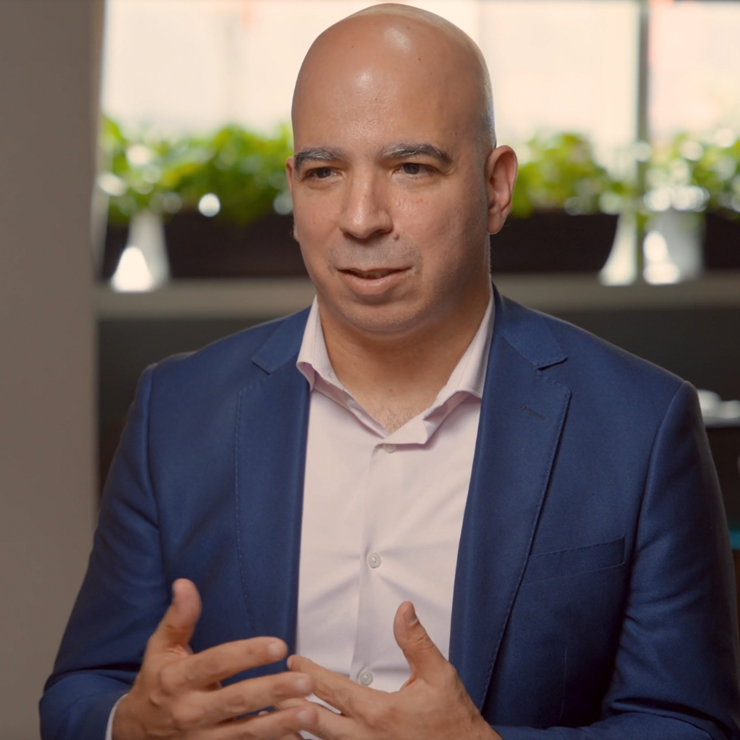
Transitioning our electric grid—and eventually our entire economy—to clean energy will take massive investment. NEI’s Monica Trauzzi sat down with Arshad Mansoor, the Electric Power Research Institute’s President and Chief Executive Officer, to talk about the investment needed for decarbonization.
“There is not a single utility on the electricity side that I know that have not committed to a clean energy future,” said Mansoor. “If you look at what’s happening on the financial side, the bottom line is meeting the ambition for clean energy.”
New technologies will bridge the gap in order to move away from burning carbon-emitting sources of energy such as fossil fuels, as well as create the carbon-free grid of the future that can support increasing electricity demand.
“I’ve been having so many conversations with the financial community about ESG and beyond,” said Trauzzi. “They are hungry for this education about all the tools for decarbonization, whether it is nuclear or batteries or CCUS.”
The need for reliable, carbon-free, affordable energy is more important than ever with extreme weather events, grid challenges, and supply disruptions occurring more frequently. Nuclear energy is our largest source of carbon-free energy, and our reactors work 24/7/365 to deliver electricity to communities across the nation. Advanced rectors build on this technology to be even more versatile—to deliver clean electricity in all shapes and sizes. This is important because, ultimately, the transition must serve everyone.
“This transition to a clean energy future has to be just, especially for the people who can ill afford it,” said Mansoor.
The expansion of carbon-free energy such as nuclear and renewables will bring environmental benefits, and as financial stakeholders look at these projects, they will also consider how they will boost local economies, create jobs, and foster sustainable developments.
Companies’ net-zero targets are ambitious and fast approaching, but Mansoor said he is an optimist.
“Where there is a will, there is a way. I think on the technology side, there is a will. I think the industry, especially in the electricity sector, there is a will. I think we are seeing good advancement in policy in different parts of the world and even in the US,” said Mansoor. “Not everything is aligned, but we have to be in alignment. There is no other option but to be successful.”
Transcript
Monica Trauzzi:
With companies setting ambitious climate goals, how do we bridge the gap between tech innovators and investors, all while ensuring a clean and just energy transition?
Arshad Mansoor of the Electric Power Research Institute joins me today for a conversation at Logan Circle’s Maiz 64. I’m Monica Trauzzi. This is Off the Menu.
Arshad it’s so nice to see you.
Arshad Mansoor:
Monica, pleasure. Pleasure.
Monica Trauzzi:
Thank you for joining me for lunch today. Why don’t we head into the dining room?
Arshad Mansoor:
Why don’t we do that. Thank you.
Monica Trauzzi:
We seem to get mixed signals from the private sector. On the one hand, many companies are setting these huge decarbonization goals. A lot of them attached to 2050, right? It’s a long way out, but if you’re in this world, you know that 2050 is actually not that far out. On the other hand, a lot of the actions and investments are really just about the bottom line, right. So, if they serve the shareholders, those are the actions that are taken. At what point do we kind of bridge that gap and get to a place where the private sector is really behaving in a way that is centered around decarbonizing the economy?
Arshad Mansoor:
This transition to a clean energy future has to be just, especially for the people who can ill afford it. There is not a single utility on the electricity side that I know that have not committed to a clean energy future. If you look at what’s happening on the financial side, the bottom line is meeting the ambition for clean energy. The ESG requirements that are coming up, the ESG metrics that are coming up. That is also incentivizing the private sector to invest in a clean energy future. But it has to be just for the people who can afford the least.
I grew up in Bangladesh. I have a personal motivation, not just for EPRI, but for countries like Bangladesh that would be impacted the most when sea level rises.
Monica Trauzzi:
I’ve been having so many conversations with the financial community about ESG and beyond. And what I hear from them is they want to know more, right? They are hungry for this education about all the tools for decarbonization, whether it is nuclear or batteries or CCUS. How do we go about making the connections in a better way between the folks who have the cash and the people who are developing the technologies, right, because I think that really needs to happen. We’re at that moment now.
Arshad Mansoor:
What the community needs is the truth. They need to know what the state of the technology is. They need to know what has the potential. They need to know what are the milestones. And if you’re talking about advanced nuclear, this decade is about execution to make sure we have at least one SMR, multiple advanced nuclear reactors, and a micro reactor that is operational by the end of this decade. And we got to make sure we do that so that investors have trust on these new emerging technologies.
We had an event with JP Morgan, EEI, you were there. And last year, it was amazing. You had a bunch of technologists like us, talking with a lot of financial people. And it’s not just JP Morgan, it’s if you look at EPRI, we have Morgan Stanley in our board, we have JP Morgan. We have other financial—because they’re a key stakeholder in this clean energy transition.
Monica Trauzzi:
Yeah. And they get it. They’re bought in to really being a part of the decarbonization solution. It’s just a question of, okay, where does the money go now? Do you think we’re going to get to that place where our grid is resilient in the way that it needs to be, where we have decarbonized to the point that’s necessary to combat climate change?
Arshad Mansoor:
So, you’re talking with a technologist, we are eternal optimists. Where there is a will, there is a way. I think on the technology side, there is a will. I think the industry, especially in the electricity sector, there is a will. I think we are seeing good advancement in policy in different parts of the world and even in the US. Not everything is aligned, but we have to be in alignment. There is no other option but to be successful.
Monica Trauzzi:
I love your optimism. It was nice to see you for lunch. Thank you for joining me while you’re in town. I appreciate it. It is my pleasure, thank you.