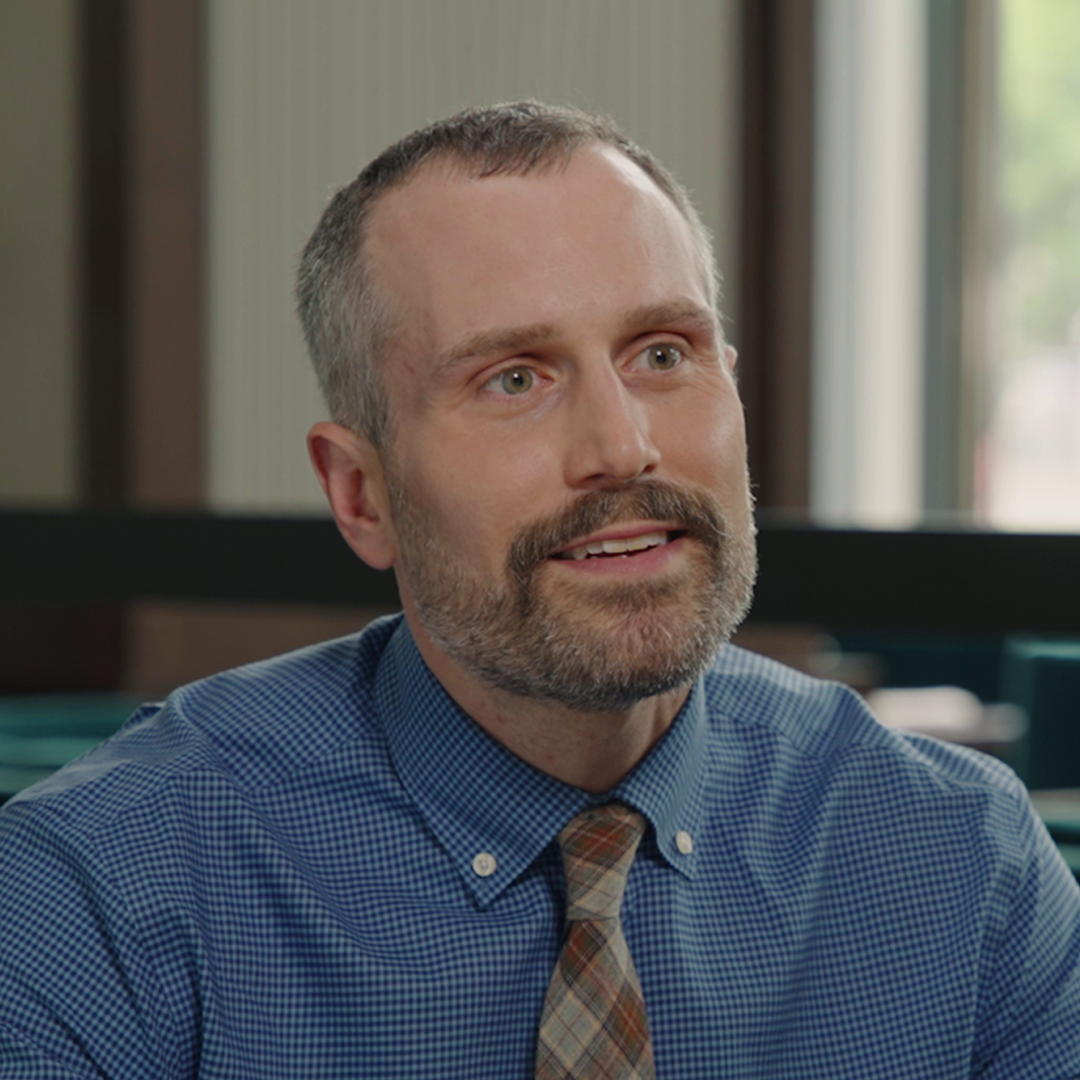
The fashion industry accounts for nearly 10 percent of global carbon emissions, and at the current pace of manufacturing, emissions will surge more than 50 percent by 2030. The good news is that there are industry experts seeking solutions to this climate issue—and one, in particular, Rickey Ruff, is taking the fashion industry to new places: nuclear energy.
Monica Trauzzi sat down with Rickey Ruff, who is the senior global brand process & operations manager at Adidas, to talk about his company called Global Nuclear Concepts which seeks to deploy microreactors at clothing factories and other more remote industrial sites. Ruff explains that always-on, carbon-free energy would transform the energy-intensive fashion industry.
Currently, modern textiles depend on petrochemical products, which rely heavily on oil and gas. To put this into perspective, in 2015, 70 million barrels of crude oil were used to make the manufactured synthetic fiber known as polyester.
In an effort to correct the course, companies from Zara to Burberry to Adidas are making commitments to achieve net zero by 2050. These climate goals are driven, in part, by demonstrated consumer desire to shop green, and market analysts project that demand for sustainable fashion labels is set to grow by over 10 percent in the year ahead.
“I'm impressed with the consumer,” said Ruff. “This idea that it's now a demand, and now almost a requirement, for consumers to have visibility into how what they're purchasing is being produced, and why.”
Global Nuclear Concepts’ plans put energy at the center of the communities where clothes are actually created—whether this is in Shanghai or in the mountains of Nepal.
“Not only will it provide the needs for manufacturing, but it would also provide some peripheral energy for the communities that then spring up around these factories,” said Ruff. “If we look at how it can really transform our world for what we need in the future, it just became such an elegant solution and such a great idea.”
Watch the final Off the Menu episode now to hear more about Ruff’s vision, as well as his plans for Fashion Week!
Transcript:
Monica Trauzzi:
Sustainable fashion is in, and carbon emissions are out. Adidas's Rickey Ruff is tackling one of the fashion industry's biggest challenges: decarbonization, through his Global Nuclear Concepts initiative.
Rickey joins me today for a conversation at Fiola. I'm Monica Trauzzi. This is Off the Menu.
Rickey, hi, how are you?
Rickey Ruff:
Monica, how are you?
Monica Trauzzi:
I'm good. Welcome to Washington.
Rickey Ruff:
Thank you so much. I'm happy to be here.
Monica Trauzzi:
Thanks for joining me. Let's head back to the table. Rickey, thank you so much for joining me for lunch today.
Rickey Ruff:
Thank you so much for having me. It’s such a pleasure to be here with you.
Monica Trauzzi:
You have been in the fashion industry, an industry that's very near and dear to my heart, for your entire career. And you've also taken on a passion for zero-carbon energy. If you had to rate the fashion industry right now, on how it's doing on sustainability, which we hear a lot about, how would you rate the industry?
Rickey Ruff:
I'm very impressed with some of the things that I'm seeing, and I'm also impressed with the consumer, right? This idea that it's now a demand, and now almost a requirement, for consumers to have visibility into how what they're purchasing is being produced, and why. And just to have that sort of demand, on behalf of the industry, has been incredibly positive and refreshing to see.
I'm proud of the industry overall, for taking this seriously, but I also want to be very serious about the fact that I think there's an incredible space and incredible opportunity that is not being addressed at all that I would love to attack. And that's been the crux of my passion project so far.
Monica Trauzzi:
So, you see this, sort of, need within the industry to decarbonize, to create more sustainable manufacturing processes. So, there's sort of the problem, right?
Rickey Ruff:
Correct.
Monica Trauzzi:
And somehow, you get to nuclear energy as the solution, which is not always the top-of-mind answer for everyone. I am so curious to understand, kind of, how you got there, and what it is about nuclear energy that excites you so much as the solution.
Rickey Ruff:
Well, my master's thesis was about nuclear energy, right? I just came across it. The perception overall, especially in North America, especially in the United States, is that it has this legacy and this history of being unsafe or being, somehow, not aligned with the goals of society. And there was a whole mismatch with the branding, a whole mismatch in terms of how it's perceived by the average person.
And for me that was just such a sad misconception, but a great opportunity. And then, if we look at the yields, obviously, and if we look at things like energy security.
Monica Trauzzi:
Yeah.
Rickey Ruff:
And if we look at how it can really transform our world for what we need in the future, it just became such an elegant solution and such a great idea, that I decided to just dive more into. So really, to answer your question, to get back to it, this idea of merging my career path with this new technology that I'm just so impressed and so curious with. I just saw a huge opportunity. And so, it was like a project, a passion project, that's evolved into a company, Global Nuclear Concepts.
Monica Trauzzi:
What's a real-life example of how nuclear might plug in to a fashion manufacturing process?
Rickey Ruff:
At the moment, factories are using oil and coal and gas to support their energy needs for manufacturing. It's energy-intensive. So, the goal is to be able to utilize a microreactor and, onsite, at a facility, to really provide all of their energy needs. And not only will it provide the needs for manufacturing, but it would also provide some peripheral energy for the communities that then spring up around these factories.
So, it's hitting some ideas about, you know, overall health of the human population, and really putting energy at the center of what these factory communities really need. And in developing countries, especially, where many things are manufactured.
Monica Trauzzi:
And you have a case study that you did in Nepal with cashmere manufacturing. Talk a little bit about that and how you see nuclear playing in there.
Rickey Ruff:
I got a chance to spend some amazing time in Nepal, and, first of all, the people there, amazing, amazing, amazing. Some of the most pure hearts, some of the most amazing, peaceful people that you'll ever meet on the planet. So, I fell in love with Nepal for that reason.
But they're, in a lot of ways, energy-insecure, especially if we look at some of the communities in the periphery of society. Right, so, let's just take it back to fashion, as well, for a second. So, if we think about cashmere and the highest caliber, highest quality, finest cashmere in the world, we're talking, like, 12 microns of cashmere. It's only available in certain regions of the world. Mount Everest, the Himalayas, and Nepal being prime among those regions.
Monica Trauzzi:
Yep.
Rickey Ruff:
So, first of all, we have a community that can produce this cashmere, but ironically, at the same time, it’s energy insecure.
So, first of all, to be able to provide them with energy, with a reactor, a microreactor, that number one, leaves a lot of the actual, you know, face of the planet untouched, leaves a lot of that natural beauty untouched, leaves a lot of what they would consider the most beautiful landscapes in the world untouched. That's what a microreactor could provide there. But also, these communities without energy, really don't have anything.
So again, it's so ironic that companies in Italy, in Paris, I'll be visiting later this year, and also next year, to help them participate in the global market, and participate in a global economy to really get their product to where it needs to be. And allow them to participate, again, on that scale of the finest fashion companies, but also providing them, at the same time, with a pure, clean, zero-carbon energy source. That is really the idea and concept around the work that I'm doing in Nepal.
Monica Trauzzi:
And a company who is getting their cashmere from that manufacturing will be able to say that the production is zero-carbon.
Rickey Ruff:
That is correct.
Monica Trauzzi:
So, you launch Global Nuclear Concepts, and you are planning to, sort of, take it on the road, to fashion weeks around the globe. Tell me a little bit about what we can expect to see at fashion week, and what the goal is, of what you'll be trying to do at fashion week.
Rickey Ruff:
I'm actually focused on New York, Paris, Milan, London, and at fashion week, I would like to, the goal is to, if I could just walk you through the concept, is to have a pop-up museum at fashion week that highlights everything that's great about nuclear, and really shows how we're going to incorporate that into fashion.
So, the solution would be to decarbonize manufacturing in the fashion industry through the supply chain, through displacing oil and coal and gas at factories. That's really the, really the goal here. But I need to communicate that story in a way that's palatable for the public, in a way that's exciting, in a way that helps to rebrand how nuclear is actually perceived in the minds of Americans, North Americans, global citizens around the world.
Monica Trauzzi:
Yeah. Well, I'm really excited to see where that all goes. And thank you so much for joining me for lunch today. Thank you for coming into town. I know you had to fly quite a way to have lunch together, so I really appreciate it.
Rickey Ruff:
Amazing. Thank you so much for having me. This has been really great to talk to you.
Monica Trauzzi:
Thank you.